AAVogen, Inc., Rockville, MD, USA.
Department of Orthopedics and Center for Biomedical Engineering and Technology (BioMET), University of Maryland School of Medicine , Baltimore, MD, USA.
Endocr Rev. 2022 Mar 9;43(2):329-365. doi: 10.1210/endrev/bnab030.
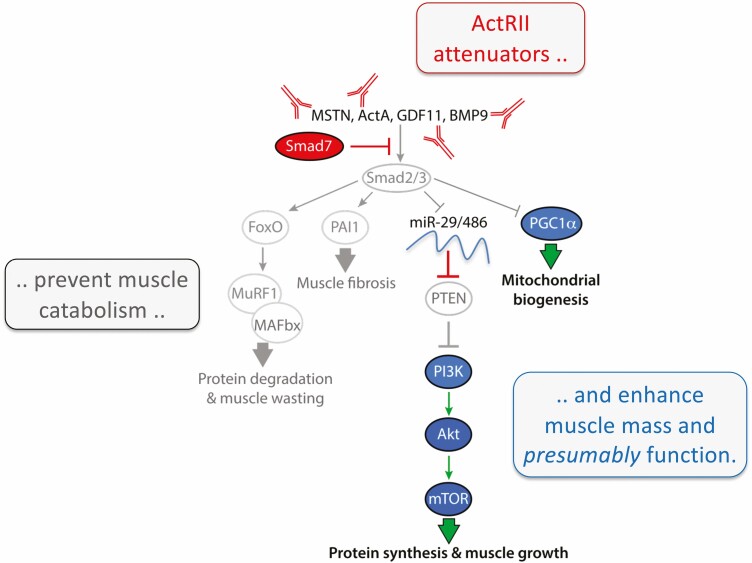
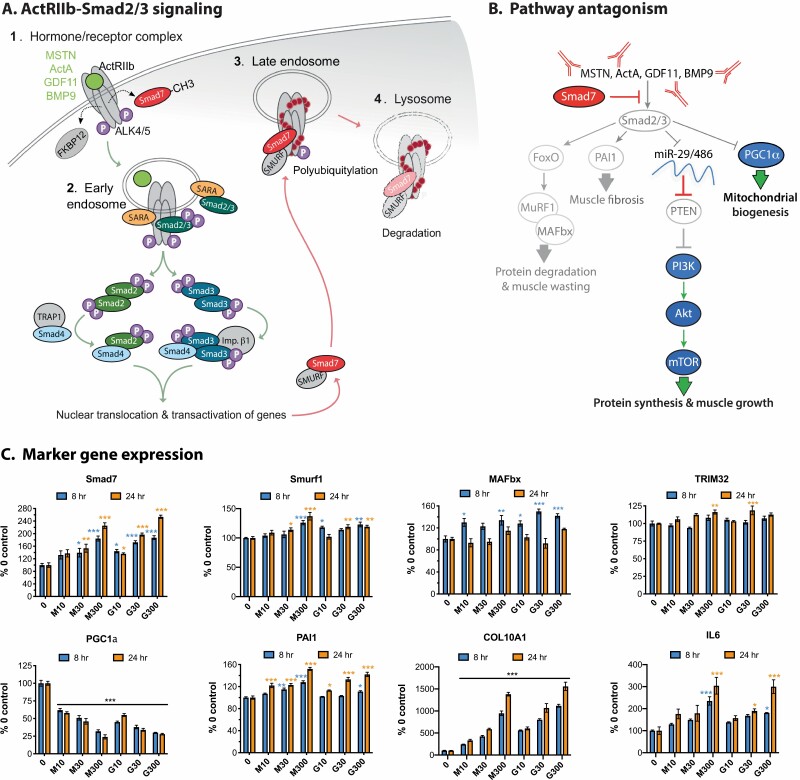
Muscle wasting disease indications are among the most debilitating and often deadly noncommunicable disease states. As a comorbidity, muscle wasting is associated with different neuromuscular diseases and myopathies, cancer, heart failure, chronic pulmonary and renal diseases, peripheral neuropathies, inflammatory disorders, and, of course, musculoskeletal injuries. Current treatment strategies are relatively ineffective and can at best only limit the rate of muscle degeneration. This includes nutritional supplementation and appetite stimulants as well as immunosuppressants capable of exacerbating muscle loss. Arguably, the most promising treatments in development attempt to disrupt myostatin and activin receptor signaling because these circulating factors are potent inhibitors of muscle growth and regulators of muscle progenitor cell differentiation. Indeed, several studies demonstrated the clinical potential of "inhibiting the inhibitors," increasing muscle cell protein synthesis, decreasing degradation, enhancing mitochondrial biogenesis, and preserving muscle function. Such changes can prevent muscle wasting in various disease animal models yet many drugs targeting this pathway failed during clinical trials, some from serious treatment-related adverse events and off-target interactions. More often, however, failures resulted from the inability to improve muscle function despite preserving muscle mass. Drugs still in development include antibodies and gene therapeutics, all with different targets and thus, safety, efficacy, and proposed use profiles. Each is unique in design and, if successful, could revolutionize the treatment of both acute and chronic muscle wasting. They could also be used in combination with other developing therapeutics for related muscle pathologies or even metabolic diseases.
肌肉消耗性疾病的表现是最具破坏性的,往往也是致命的非传染性疾病状态之一。作为一种合并症,肌肉消耗与多种神经肌肉疾病和肌病、癌症、心力衰竭、慢性肺部和肾脏疾病、周围神经病变、炎症性疾病以及当然还有肌肉骨骼损伤有关。目前的治疗策略相对无效,最多只能限制肌肉退化的速度。这包括营养补充和食欲刺激剂以及可能加剧肌肉损失的免疫抑制剂。可以说,开发中最有前途的治疗方法试图破坏肌肉生长抑制素和激活素受体信号,因为这些循环因子是肌肉生长的有效抑制剂,也是肌肉祖细胞分化的调节剂。事实上,几项研究表明了“抑制抑制剂”的临床潜力,可增加肌肉细胞蛋白合成、减少降解、增强线粒体生物发生并维持肌肉功能。这种变化可以预防各种疾病动物模型中的肌肉消耗,但许多针对该途径的药物在临床试验中失败了,有些是由于严重的治疗相关不良事件和脱靶相互作用。然而,更常见的是,尽管保持肌肉质量,但仍无法改善肌肉功能导致失败。仍在开发中的药物包括抗体和基因疗法,它们都有不同的靶点,因此具有不同的安全性、疗效和预期用途。每个药物的设计都很独特,如果成功,可能会彻底改变急性和慢性肌肉消耗的治疗方法。它们也可以与其他相关肌肉病理甚至代谢疾病的开发疗法联合使用。