Hamm Shelby E, Fathalikhani Daniel D, Bukovec Katherine E, Addington Adele K, Zhang Haiyan, Perry Justin B, McMillan Ryan P, Lawlor Michael W, Prom Mariah J, Vanden Avond Mark A, Kumar Suresh N, Coleman Kirsten E, Dupont J B, Mack David L, Brown David A, Morris Carl A, Gonzalez J Patrick, Grange Robert W
Department of Human Nutrition, Foods, and Exercise and Metabolism Core, Virginia Tech, Blacksburg, VA 24060, USA.
Department of Pathology and Laboratory Medicine and Neuroscience Research Center, Medical College of Wisconsin, Milwaukee, WI 53226, USA.
Mol Ther Methods Clin Dev. 2021 Mar 3;21:144-160. doi: 10.1016/j.omtm.2021.02.024. eCollection 2021 Jun 11.
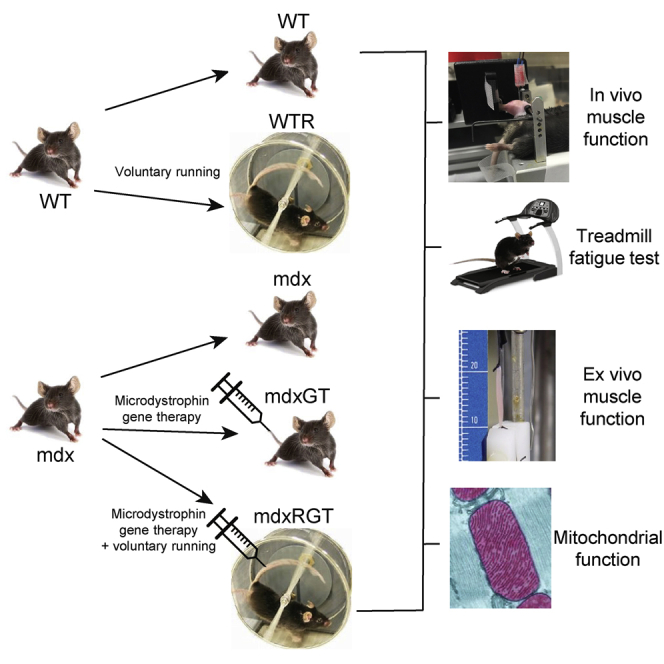
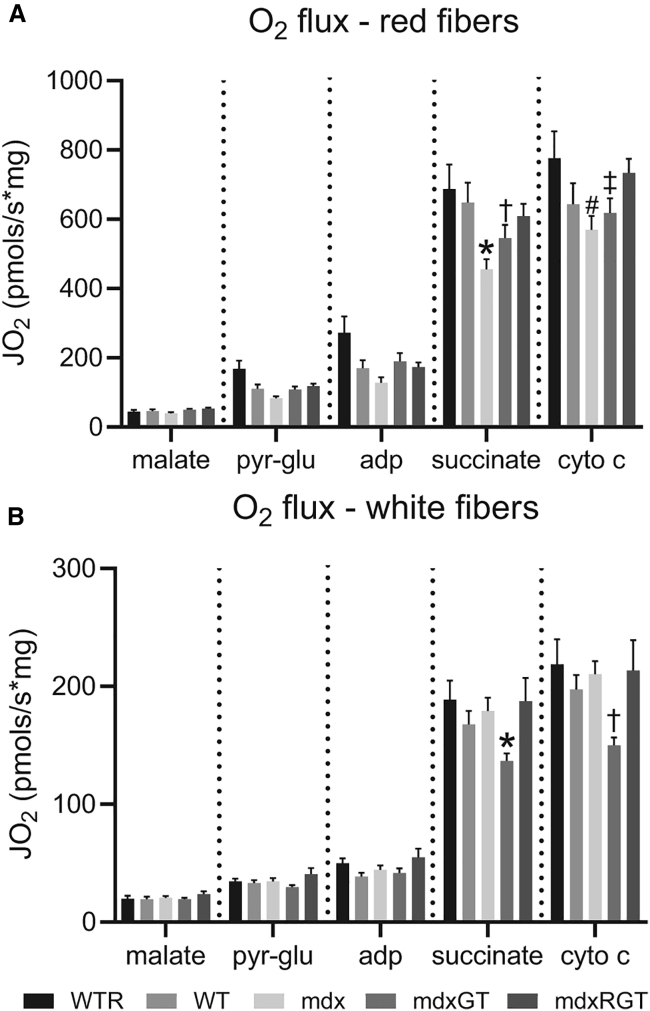
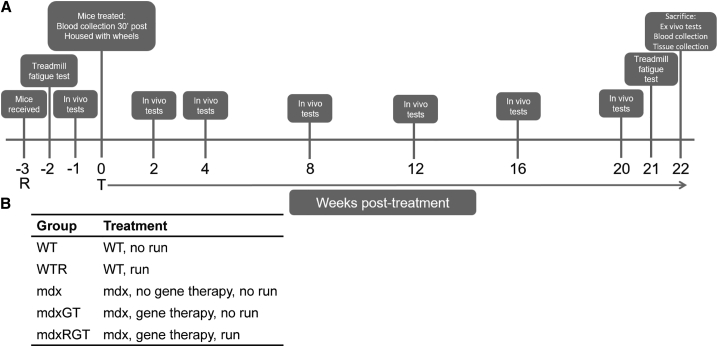
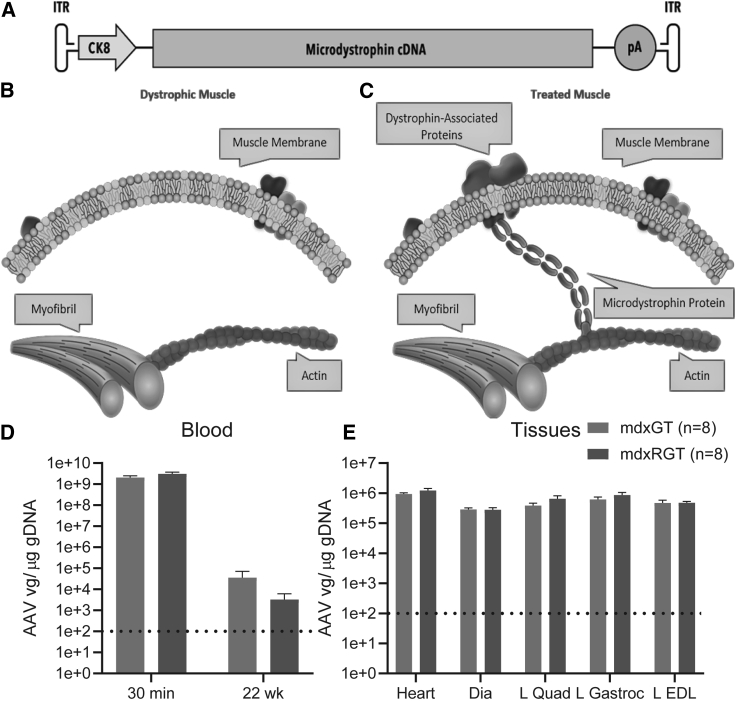
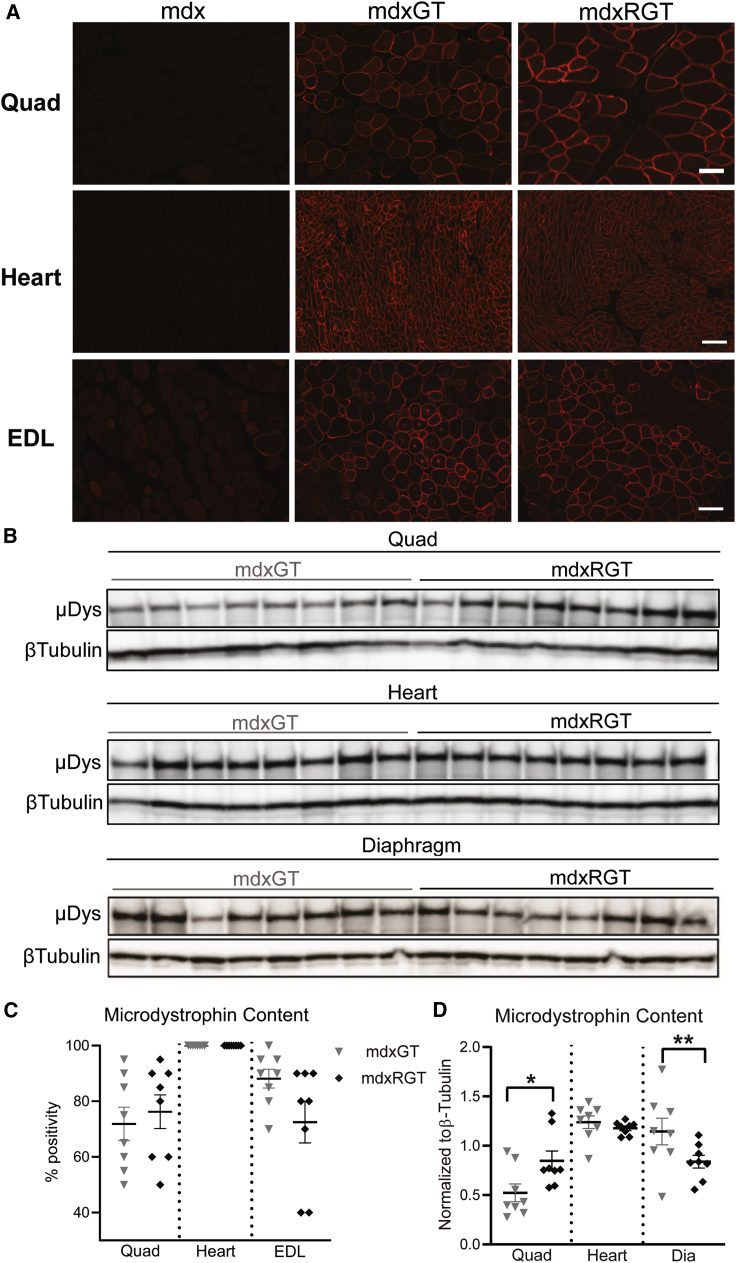
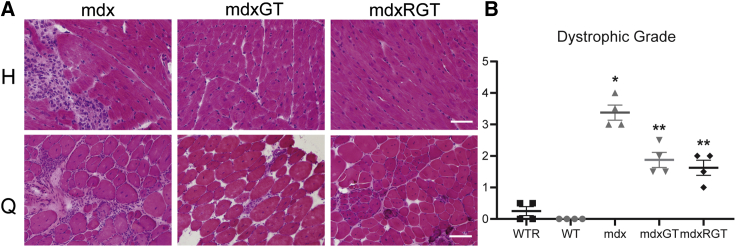
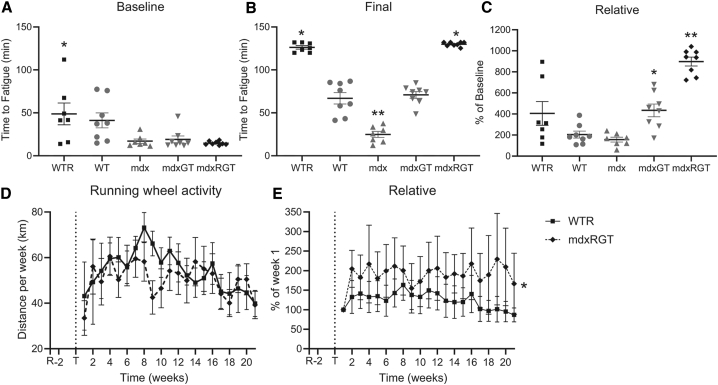
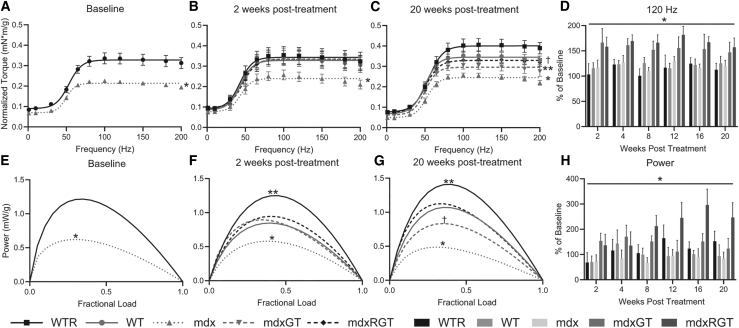
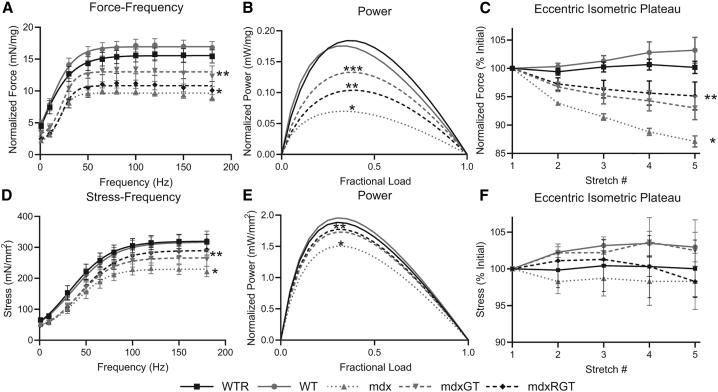
We tested the hypothesis that voluntary wheel running would complement microdystrophin gene therapy to improve muscle function in young mdx mice, a model of Duchenne muscular dystrophy. mdx mice injected with a single dose of AAV9-CK8-microdystrophin or vehicle at age 7 weeks were assigned to three groups: mdxRGT (run, gene therapy), mdxGT (no run, gene therapy), or mdx (no run, no gene therapy). Wild-type (WT) mice were assigned to WTR (run) and WT (no run) groups. WTR and mdxRGT performed voluntary wheel running for 21 weeks; remaining groups were cage active. Robust expression of microdystrophin occurred in heart and limb muscles of treated mice. mdxRGT versus mdxGT mice showed increased microdystrophin in quadriceps but decreased levels in diaphragm. mdx final treadmill fatigue time was depressed compared to all groups, improved in mdxGT, and highest in mdxRGT. Both weekly running distance (km) and final treadmill fatigue time for mdxRGT and WTR were similar. Remarkably, mdxRGT diaphragm power was only rescued to 60% of WT, suggesting a negative impact of running. However, potential changes in fiber type distribution in mdxRGT diaphragms could indicate an adaptation to trade power for endurance. Post-treatment maximal plantar flexor torque relative to baseline values was greater for mdxGT and mdxRGT versus all other groups. Mitochondrial respiration rates from red quadriceps fibers were significantly improved in mdxGT animals, but the greatest bioenergetic benefit was observed in the mdxRGT group. Additional assessments revealed partial to full functional restoration in mdxGT and mdxRGT muscles relative to WT. These data demonstrate that voluntary wheel running combined with microdystrophin gene therapy in young mdx mice improved whole-body performance, affected muscle function differentially, mitigated energetic deficits, but also revealed some detrimental effects of exercise. With microdystrophin gene therapy currently in clinical trials, these data may help us understand the potential impact of exercise in treated patients.
在杜兴氏肌营养不良症模型的幼年mdx小鼠中,自愿进行轮转跑步将补充微肌营养不良蛋白基因疗法以改善肌肉功能。7周龄时注射单剂量AAV9-CK8-微肌营养不良蛋白或载体的mdx小鼠被分为三组:mdxRGT(跑步,基因治疗)、mdxGT(不跑步,基因治疗)或mdx(不跑步,不进行基因治疗)。野生型(WT)小鼠被分为WTR(跑步)和WT(不跑步)组。WTR和mdxRGT进行了21周的自愿轮转跑步;其余组在笼中活动。微肌营养不良蛋白在治疗小鼠的心脏和肢体肌肉中大量表达。与mdxGT小鼠相比,mdxRGT小鼠股四头肌中的微肌营养不良蛋白增加,但膈肌中的水平降低。与所有组相比,mdx小鼠最终的跑步机疲劳时间缩短,mdxGT小鼠有所改善,mdxRGT小鼠最高。mdxRGT和WTR的每周跑步距离(公里)和最终跑步机疲劳时间相似。值得注意的是,mdxRGT膈肌力量仅恢复到WT的60%,表明跑步有负面影响。然而,mdxRGT膈肌中纤维类型分布的潜在变化可能表明为了耐力而牺牲力量的一种适应。与所有其他组相比,mdxGT和mdxRGT治疗后相对于基线值的最大跖屈扭矩更大。mdxGT动物红色股四头肌纤维的线粒体呼吸速率显著提高,但mdxRGT组观察到最大的生物能量益处。额外评估显示,相对于WT,mdxGT和mdxRGT肌肉部分或完全恢复了功能。这些数据表明,在幼年mdx小鼠中,自愿轮转跑步与微肌营养不良蛋白基因疗法相结合可改善全身性能,对肌肉功能有不同影响,减轻能量缺陷,但也揭示了运动的一些有害影响。鉴于微肌营养不良蛋白基因疗法目前正在进行临床试验,这些数据可能有助于我们了解运动对接受治疗患者的潜在影响。