Ege University, Engineering Faculty, Chemical Engineering Department, 35100 Bornova, Izmir, Turkey.
Ege University, Engineering Faculty, Chemical Engineering Department, 35100 Bornova, Izmir, Turkey.
Ultrason Sonochem. 2021 Oct;78:105749. doi: 10.1016/j.ultsonch.2021.105749. Epub 2021 Sep 6.
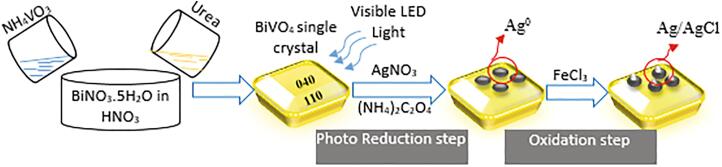
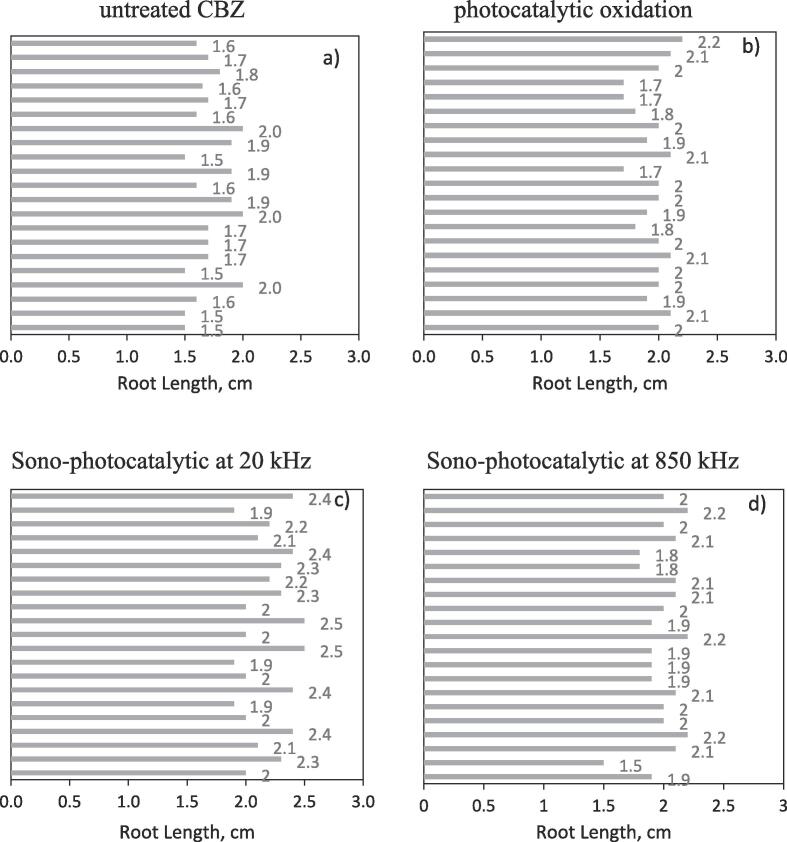
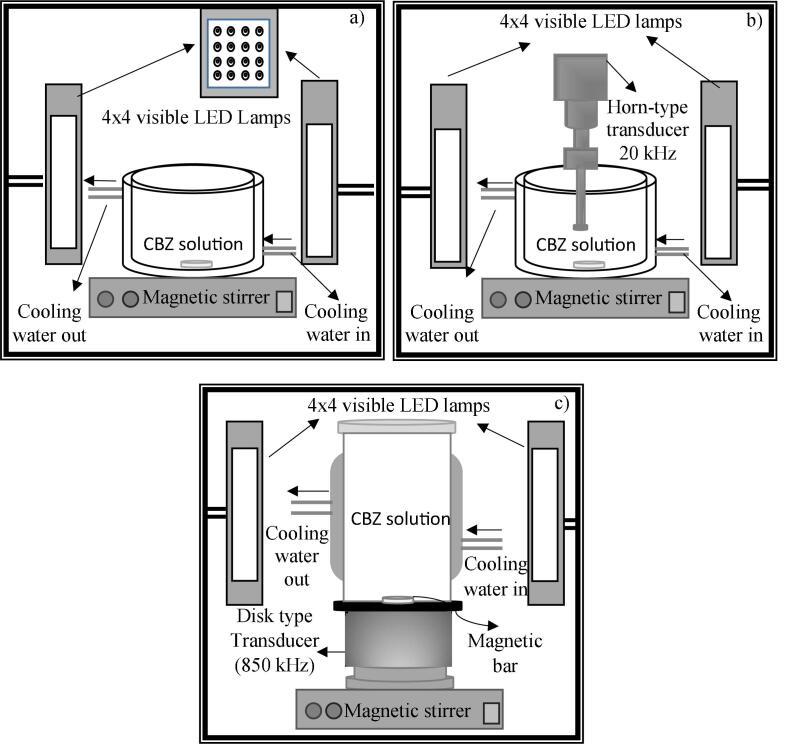
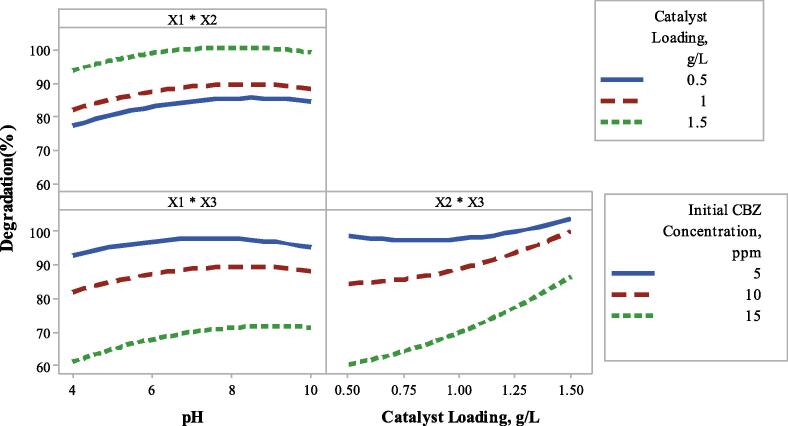
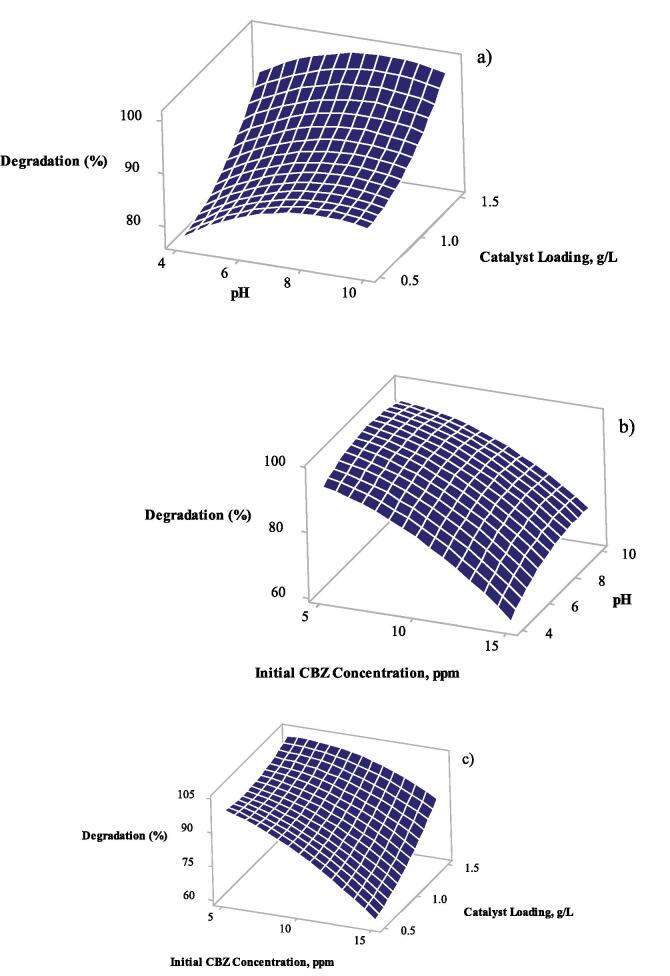
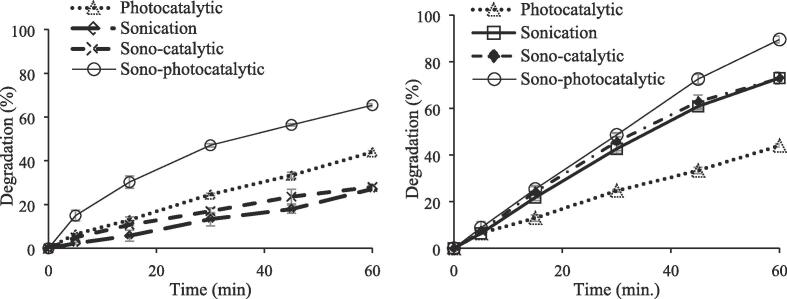
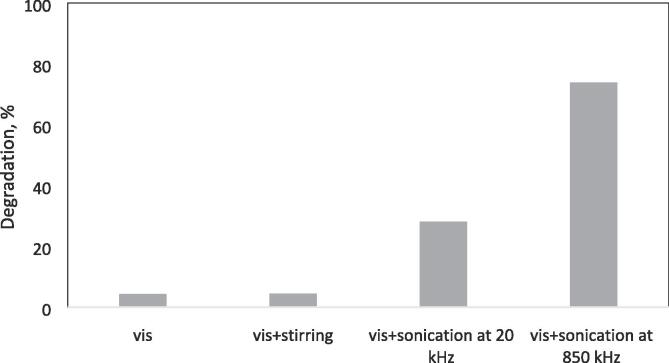
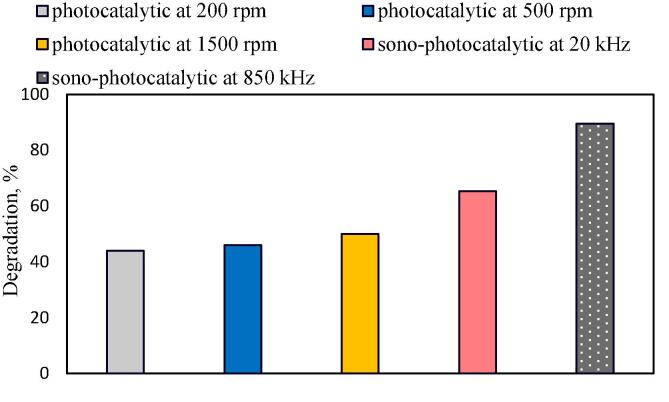
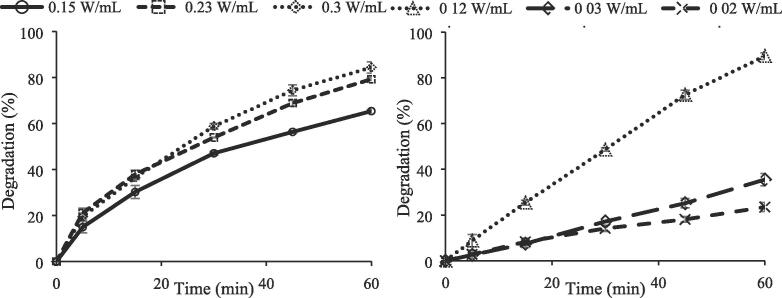
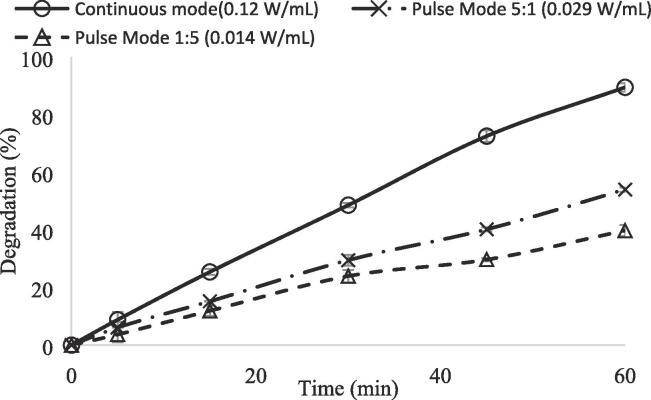
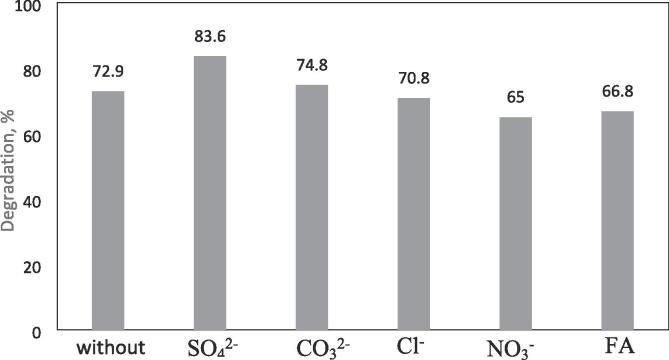
Photocatalytic, sono-photocatalytic oxidation of pharmaceutical drug of carbamazepine was successfully carried out using Ag/AgCl supported BiVO catalyst. For this purpose, firstly, photocatalytic oxidation was optimized by central composite design methodology and then synergistic effect of sonication was investigated. Low frequency (20 kHz) probe type and high frequency (850 kHz) plate type sonication at pulse and continuous mode were studied to degrade the carbamazepine (CBZ) containing wastewater. Pulse duties of 1:5 and 5:1 (on : off) were tested using the high frequency sonication system in the sono-photocatalytic oxidation of CBZ. The effects of frequency, power density measured from calorimetry by changing amplitudes were discussed in the sono-photocatalytic oxidation of CBZ. Complete carbamazepine removal was achieved at the optimum conditions of 5 ppm CBZ initial concentration with 1.5 g/L of catalysts loading and at an alkaline pH of 10 at the end of 4 h of photocatalytic reaction under visible LED light irradiation. Both low frequency and high frequency sonication systems caused an increase in photocatalytic efficiency in a shorter treatment time of 60 min. CBZ removal increased from 44% to 65.42% in low frequency sonication of 20 kHz at the amplitude of 20% (0.15 W/mL power density). In the case of high frequency ultrasonic system (850 kHz), CBZ removal increased significantly from 44% to 89.5 % at 75% amplitude (0.12 W/mL power density) within 60 min of reaction. Continuous mode sonication was observed to be more effective than that of pulse mode sonication not only for degradation efficiency and also for electrical energy consumption needed to degrade CBZ. Sono-catalytic oxidation was also conducted with simulated wastewater that contains SO, CO, NO, Cl anions and natural organic component of fulvic acid. The CBZ degradation was inhibited slightly in the presence of NO and Cl, and fulvic acid, however, the existence of SO and CO increased the degradation degree of CBZ. Toxicity tests were performed to determine the toxicity of untreated CBZ, and treated CBZ by photocatalytic, and sono-photocatalytic oxidations.
采用 Ag/AgCl 负载 BiVO 催化剂成功地进行了卡马西平药物的光催化、声-光催化氧化。为此,首先通过中心复合设计方法优化了光催化氧化,然后研究了声的协同效应。研究了低频(20 kHz)探头式和高频(850 kHz)板式在脉冲和连续模式下对含卡马西平(CBZ)废水的降解。使用高频超声系统,在 CBZ 的声-光催化氧化中测试了脉冲占空比为 1:5 和 5:1(开:关)。讨论了在 CBZ 的声-光催化氧化中通过改变振幅从量热法测量的频率和功率密度的影响。在可见光 LED 照射下,在 4 小时的光催化反应结束时,在最佳条件下,初始浓度为 5 ppm 的 CBZ、催化剂负载量为 1.5 g/L 和碱性 pH 值为 10 时,可实现完全去除卡马西平。在较短的 60 分钟处理时间内,低频和高频超声系统均导致光催化效率提高。在 20 kHz 的低频声下,当振幅为 20%(0.15 W/mL 功率密度)时,CBZ 的去除率从 44%增加到 65.42%。在高频超声系统(850 kHz)的情况下,在 75%的振幅下(0.12 W/mL 功率密度),CBZ 的去除率从 44%显著增加到 89.5%,在 60 分钟的反应时间内。连续模式的声处理比脉冲模式的声处理更有效,不仅对于降解效率,而且对于降解 CBZ 所需的电能消耗也是如此。还进行了含有 SO、CO、NO、Cl 阴离子和腐殖酸天然有机成分的模拟废水的声催化氧化。在存在 NO 和 Cl 的情况下,CBZ 的降解略有抑制,而腐殖酸的存在增加了 CBZ 的降解程度。进行了毒性测试以确定未经处理的 CBZ 和通过光催化和声-光催化氧化处理的 CBZ 的毒性。