MMDN, Univ. Montpellier, EPHE, INSERM, Montpellier, France; Department of Neurosurgery, CHU, Montpellier, France.
MMDN, Univ. Montpellier, EPHE, INSERM, Montpellier, France.
Theranostics. 2021 Jul 31;11(18):8640-8659. doi: 10.7150/thno.61833. eCollection 2021.
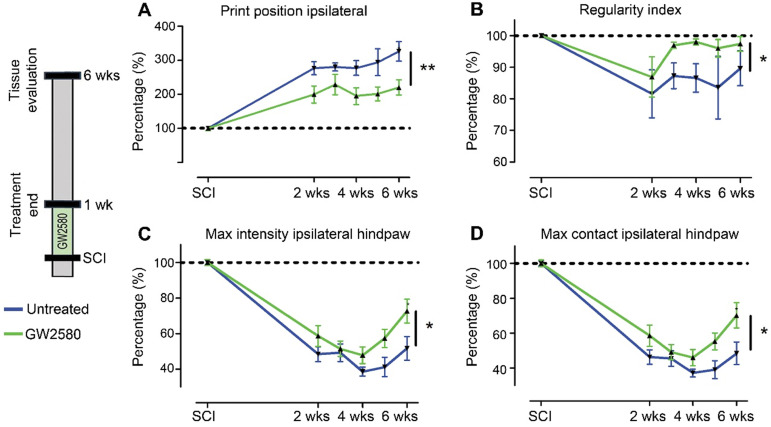
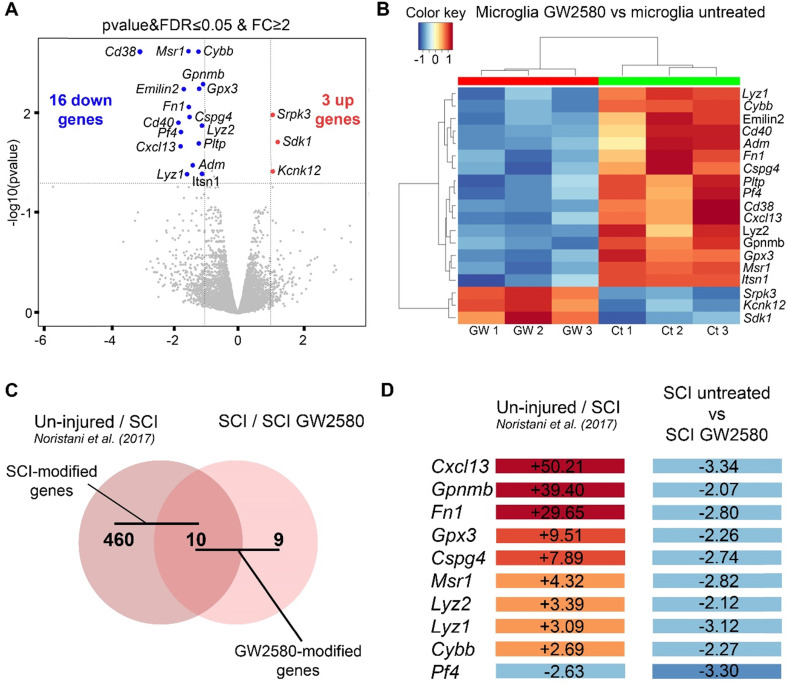
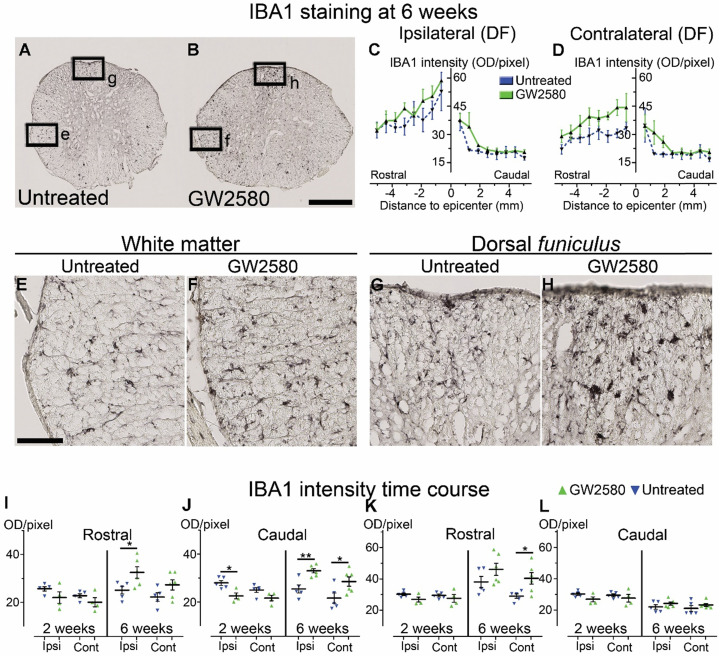
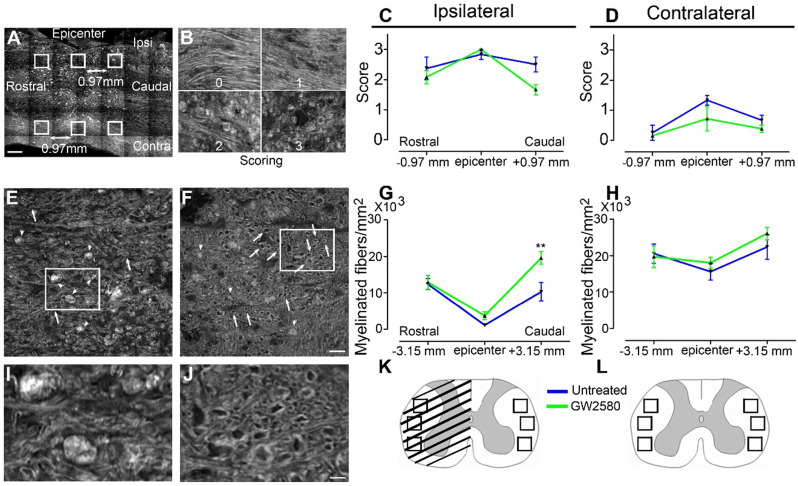
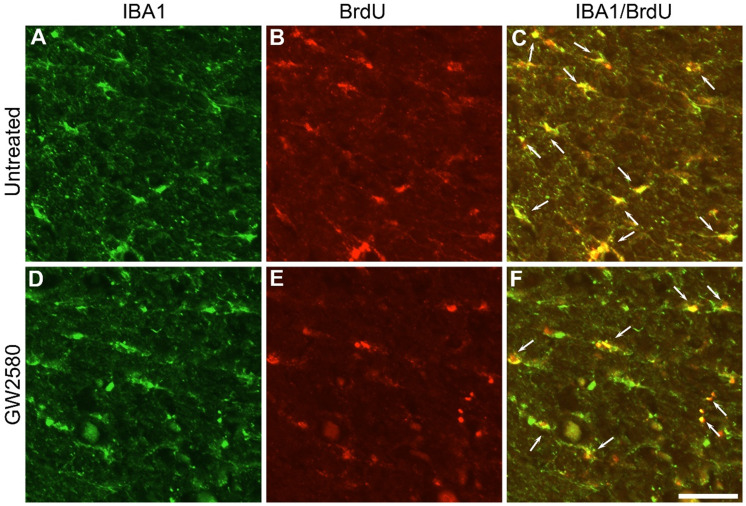
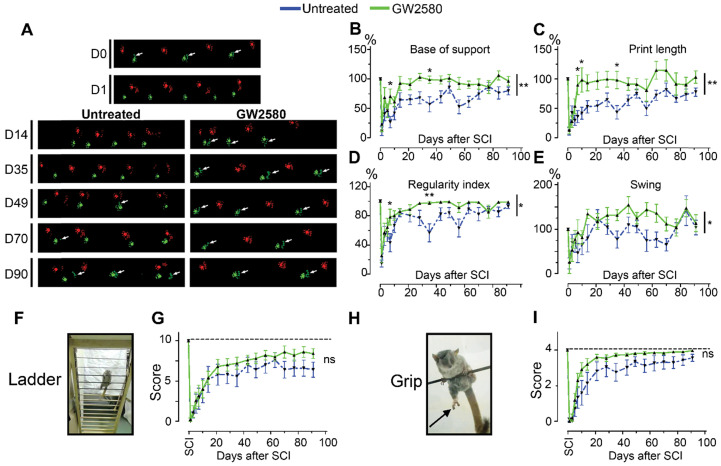
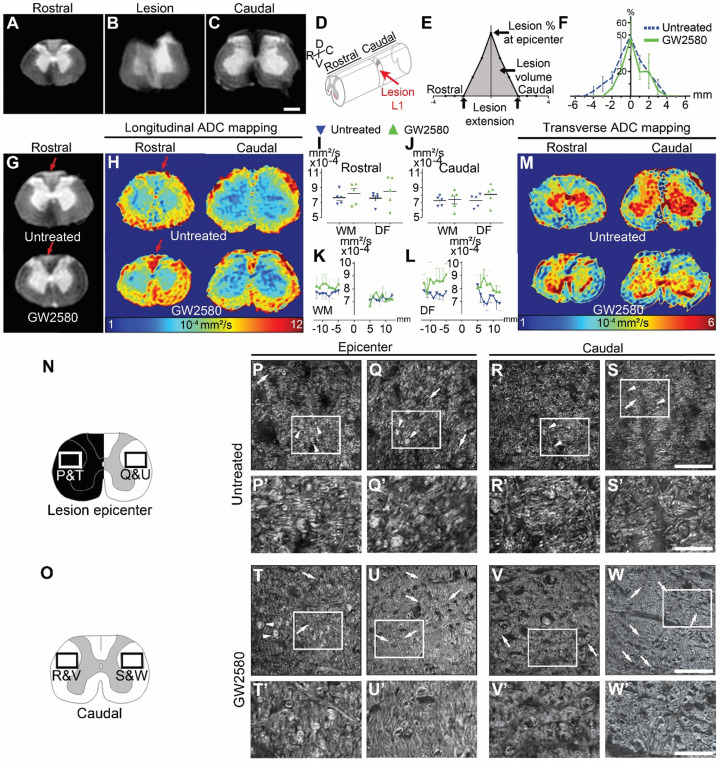
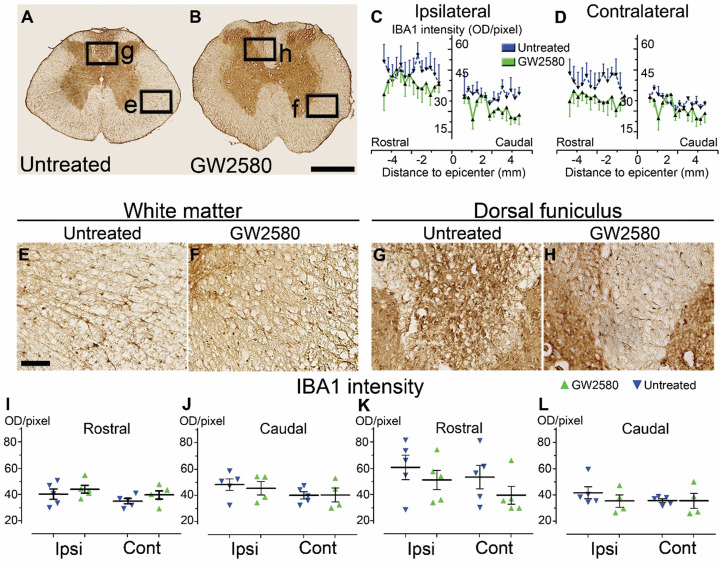
No curative treatment is available for any deficits induced by spinal cord injury (SCI). Following injury, microglia undergo highly diverse activation processes, including proliferation, and play a critical role on functional recovery. In a translational objective, we investigated whether a transient pharmacological reduction of microglia proliferation after injury is beneficial for functional recovery after SCI in mice and nonhuman primates. The colony stimulating factor-1 receptor (CSF1R) regulates proliferation, differentiation, and survival of microglia. We orally administrated GW2580, a CSF1R inhibitor that inhibits microglia proliferation. In mice and nonhuman primates, we then analyzed treatment outcomes on locomotor function and spinal cord pathology. Finally, we used cell-specific transcriptomic analysis to uncover GW2580-induced molecular changes in microglia. First, transient post-injury GW2580 administration in mice improves motor function recovery, promotes tissue preservation and/or reorganization (identified by coherent anti-stokes Raman scattering microscopy), and modulates glial reactivity. Second, post-injury GW2580-treatment in nonhuman primates reduces microglia proliferation, improves motor function recovery, and promotes tissue protection. Finally, GW2580-treatment in mice induced down-regulation of proliferation-associated transcripts and inflammatory associated genes in microglia that may account for reduced neuroinflammation and improved functional recovery following SCI. Thus, a transient oral GW2580 treatment post-injury may provide a promising therapeutic strategy for SCI patients and may also be extended to other central nervous system disorders displaying microglia activation.
目前,针对脊髓损伤(SCI)导致的任何损伤,尚无有效的治疗方法。损伤后,小胶质细胞经历高度多样化的激活过程,包括增殖,并在功能恢复中发挥关键作用。在转化目标中,我们研究了损伤后小胶质细胞增殖的短暂药理学抑制是否有利于 SCI 后小鼠和非人灵长类动物的功能恢复。集落刺激因子 1 受体(CSF1R)调节小胶质细胞的增殖、分化和存活。我们口服给予 CSF1R 抑制剂 GW2580,以抑制小胶质细胞增殖。然后,在小鼠和非人灵长类动物中,我们分析了运动功能和脊髓病理学的治疗结果。最后,我们使用细胞特异性转录组分析来揭示 GW2580 诱导的小胶质细胞分子变化。首先,损伤后短暂给予 GW2580 可改善运动功能恢复,促进组织保存和/或重组(通过相干反斯托克斯拉曼散射显微镜识别),并调节神经胶质反应。其次,损伤后给予 GW2580 可减少非人类灵长类动物的小胶质细胞增殖,改善运动功能恢复,并促进组织保护。最后,GW2580 在小鼠中的治疗诱导了小胶质细胞中与增殖相关的转录物和炎症相关基因的下调,这可能解释了 SCI 后神经炎症减少和功能恢复改善。因此,损伤后短暂的口服 GW2580 治疗可能为 SCI 患者提供一种有前途的治疗策略,也可能扩展到其他表现出小胶质细胞激活的中枢神经系统疾病。