Li Qi, Xiao Mulun, Shi Yibo, Hu Jinhao, Bi Tianxiang, Wang Chaoliang, Yan Liang, Li Xiaoyan
Department of Urology, The First Affiliated Hospital of Zhengzhou University, Zhengzhou City, 450052, Henan Province, China.
Department of Neonatel Intensive Care Unit, Zhengzhou First People's Hospital, Zhengzhou City, 450004, Henan Province, China.
BMC Cancer. 2021 Sep 15;21(1):1022. doi: 10.1186/s12885-021-08749-w.
Eukaryotic translation initiation factors (eIFs) are the key factors to synthesize translation initiation complexes during the synthesis of eukaryotic proteins. Besides, eIFs are especially important in regulating the immune function of tumor cells. However, the effect mechanism of eIFs in prostate cancer remains to be studied, which is precisely the purpose of this study.
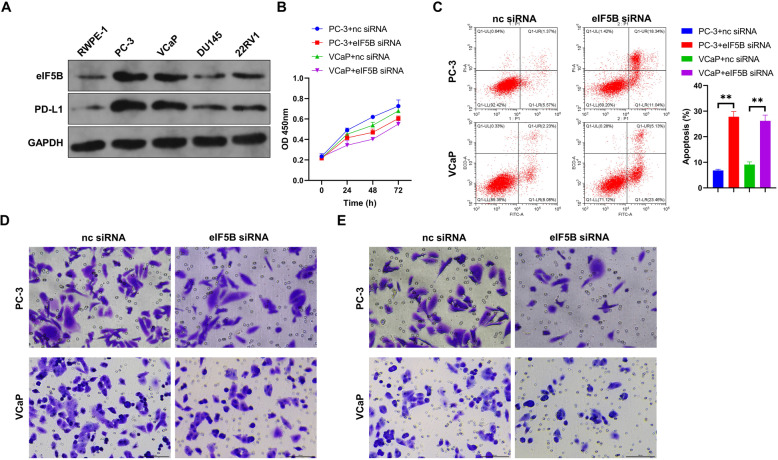
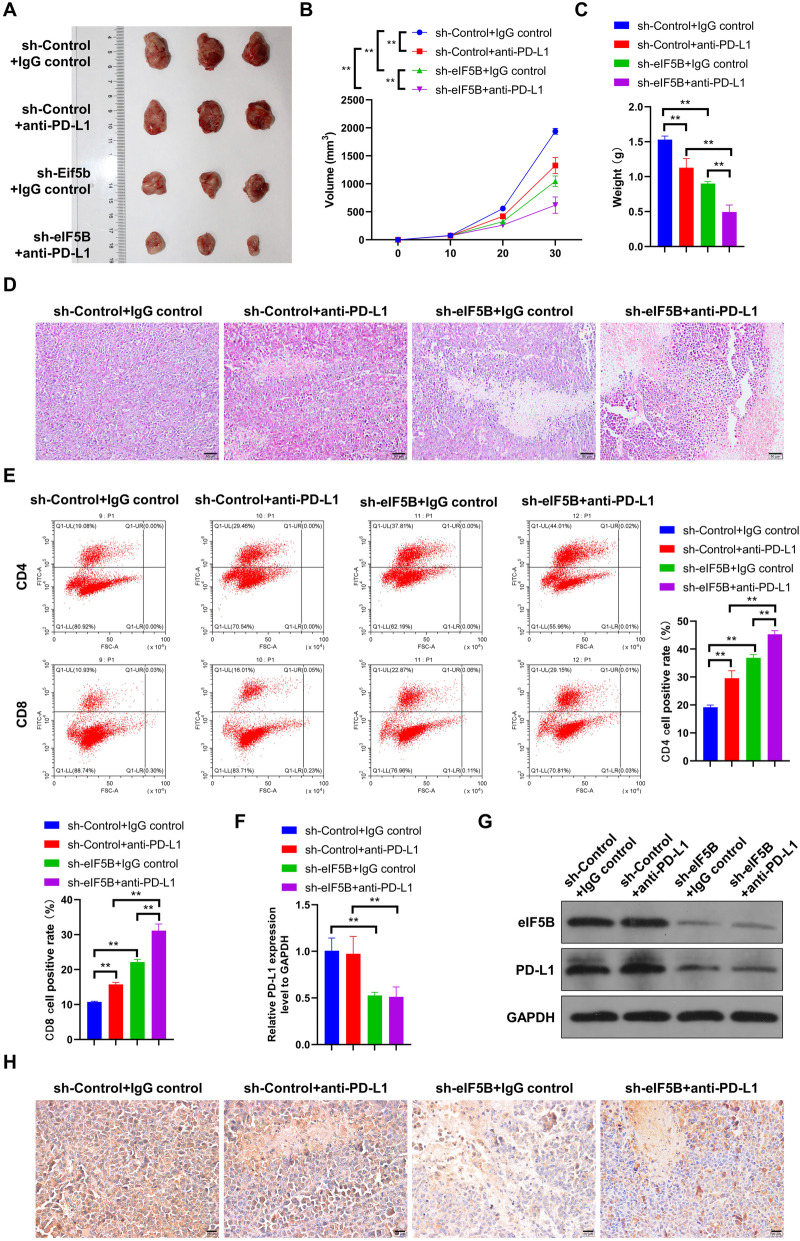
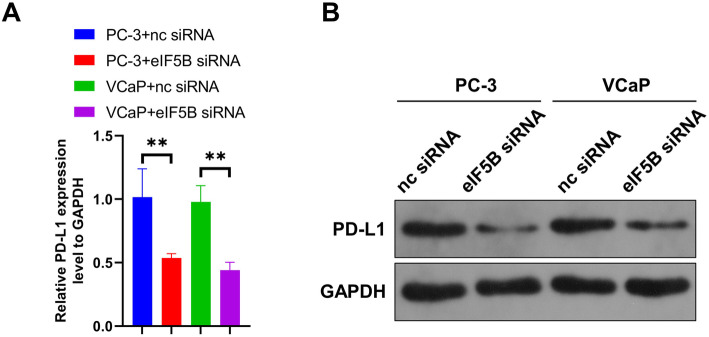
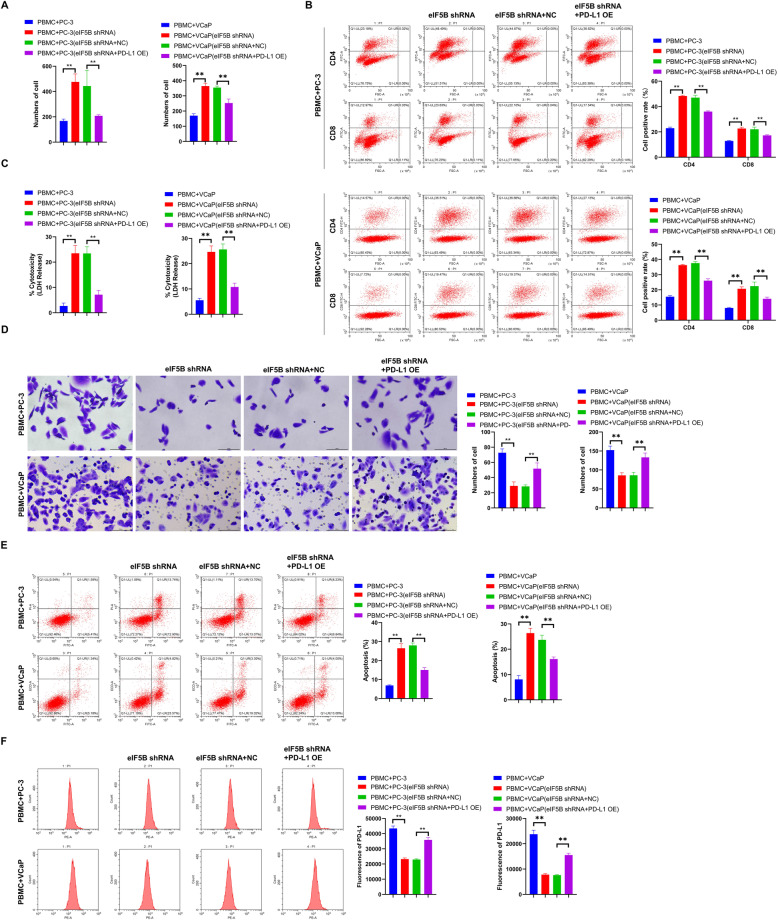
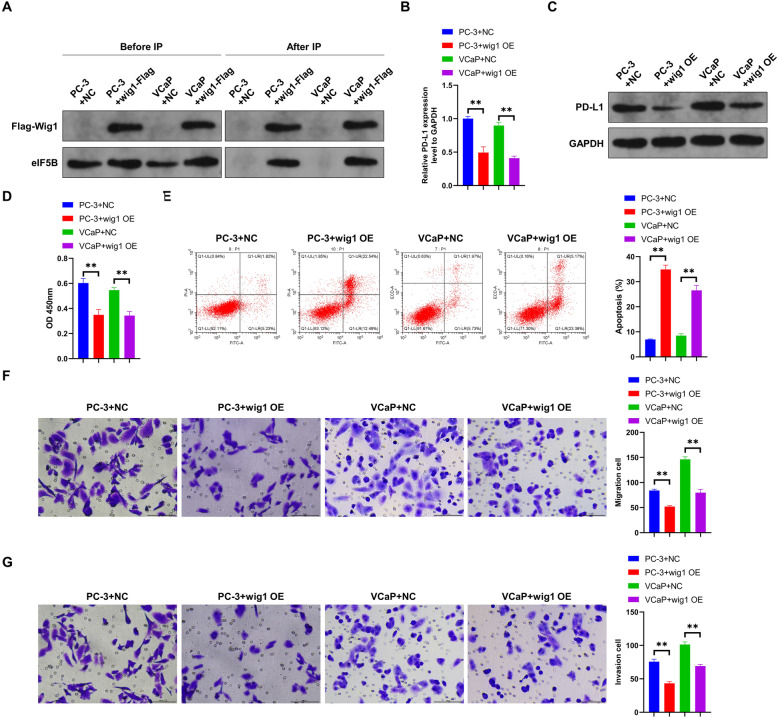
In this study, three groups of prostate cancer cells were investigated. One group had its eIF5B gene knocked down; another group had its Programmed death 1 (PD-L1) overexpressed; the final group had its Wild-type p53-induced gene 1 (Wig1) overexpressed. Genetic alterations of the cancer cells were performed by plasmid transfection. The expression of PD-L1 mRNA was detected by quantitative real-time PCR (qRT-PCR), and the expressions of PD-L1 and eIF5B proteins were observed by western blot assays. Cell Counting Kit-8 (CCK-8), flow cytometry, Transwell and Transwell martrigel were used to investigated cell proliferation, apoptosis, migration and invasion, respectively. The effect of peripheral blood mononuclear cells (PBMCs) on tumor cells was observed, and the interaction between eIF5B and Wig1 was revealed by co-immunoprecipitation (CoIP) assay. Finally, the effects of interference with eIF5B expression on the growth, morphology, and immunity of the tumor, as well as PD-L1 expression in the tumor, were verified by tumor xenograft assays in vivo.
Compared with normal prostate epithelial cells, prostate cancer cells revealed higher expressions of eIF5B and PD-L1 interference with eIF-5B expression can inhibit the proliferation, migration, invasion and PD-L1 expression of prostate cancer cells. Meanwhile, the cancer cell group with interference with eIF5B expression also demonstrated greater, apoptosis and higher vulnerability to PBMCs. CoIP assays showed that Wig1 could bind to eIF5B in prostate cancer cells, and its overexpression can inhibit the proliferation, migration, invasion and PD-L1 expression of cancer cells while promoting apoptosis. Moreover, interference with eIF5B expression can inhibit tumor growth, destroy tumor morphology, and suppress the proliferation of tumor cells.
eIF5B can promote the expression of PD-L1 by interacting with Wig1. Besides, interference with eIF5B expression can inhibit the proliferation, migration, invasion and immunosuppressive response of prostate cancer cells. This study proposes a new target, eIF5B, for immunotherapy of prostate cancer.
真核生物翻译起始因子(eIFs)是真核生物蛋白质合成过程中合成翻译起始复合物的关键因子。此外,eIFs在调节肿瘤细胞免疫功能方面尤为重要。然而,eIFs在前列腺癌中的作用机制仍有待研究,这正是本研究的目的。
本研究调查了三组前列腺癌细胞。一组敲低其eIF5B基因;另一组过表达程序性死亡1(PD-L1);最后一组过表达野生型p53诱导基因1(Wig1)。通过质粒转染对癌细胞进行基因改造。通过定量实时PCR(qRT-PCR)检测PD-L1 mRNA的表达,通过蛋白质免疫印迹法观察PD-L1和eIF5B蛋白的表达。分别使用细胞计数试剂盒-8(CCK-8)、流式细胞术、Transwell和Transwell基质胶研究细胞增殖、凋亡、迁移和侵袭。观察外周血单核细胞(PBMCs)对肿瘤细胞的影响,并通过免疫共沉淀(CoIP)试验揭示eIF5B与Wig1之间的相互作用。最后,通过体内肿瘤异种移植试验验证干扰eIF5B表达对肿瘤生长、形态和免疫的影响,以及肿瘤中PD-L1的表达。
与正常前列腺上皮细胞相比,前列腺癌细胞中eIF5B和PD-L1的表达较高。干扰eIF-5B表达可抑制前列腺癌细胞的增殖、迁移、侵袭和PD-L1表达。同时,干扰eIF5B表达的癌细胞组也表现出更大的凋亡和对PBMCs更高的易感性。CoIP试验表明,Wig1可在前列腺癌细胞中与eIF5B结合,其过表达可抑制癌细胞的增殖、迁移、侵袭和PD-L1表达,同时促进凋亡。此外,干扰eIF5B表达可抑制肿瘤生长,破坏肿瘤形态,并抑制肿瘤细胞的增殖。
eIF5B可通过与Wig1相互作用促进PD-L1的表达。此外,干扰eIF5B表达可抑制前列腺癌细胞的增殖、迁移、侵袭和免疫抑制反应。本研究为前列腺癌免疫治疗提出了一个新靶点eIF5B。