KITE- Toronto Rehabilitation Institute, University Health Network, 550 University Ave., Toronto, ON, M5G 2A2, Canada.
Department of Psychiatry, University of Toronto, Toronto, ON, Canada.
J Neuroeng Rehabil. 2021 Sep 15;18(1):139. doi: 10.1186/s12984-021-00933-0.
Many of the available gait monitoring technologies are expensive, require specialized expertise, are time consuming to use, and are not widely available for clinical use. The advent of video-based pose tracking provides an opportunity for inexpensive automated analysis of human walking in older adults using video cameras. However, there is a need to validate gait parameters calculated by these algorithms against gold standard methods for measuring human gait data in this population.
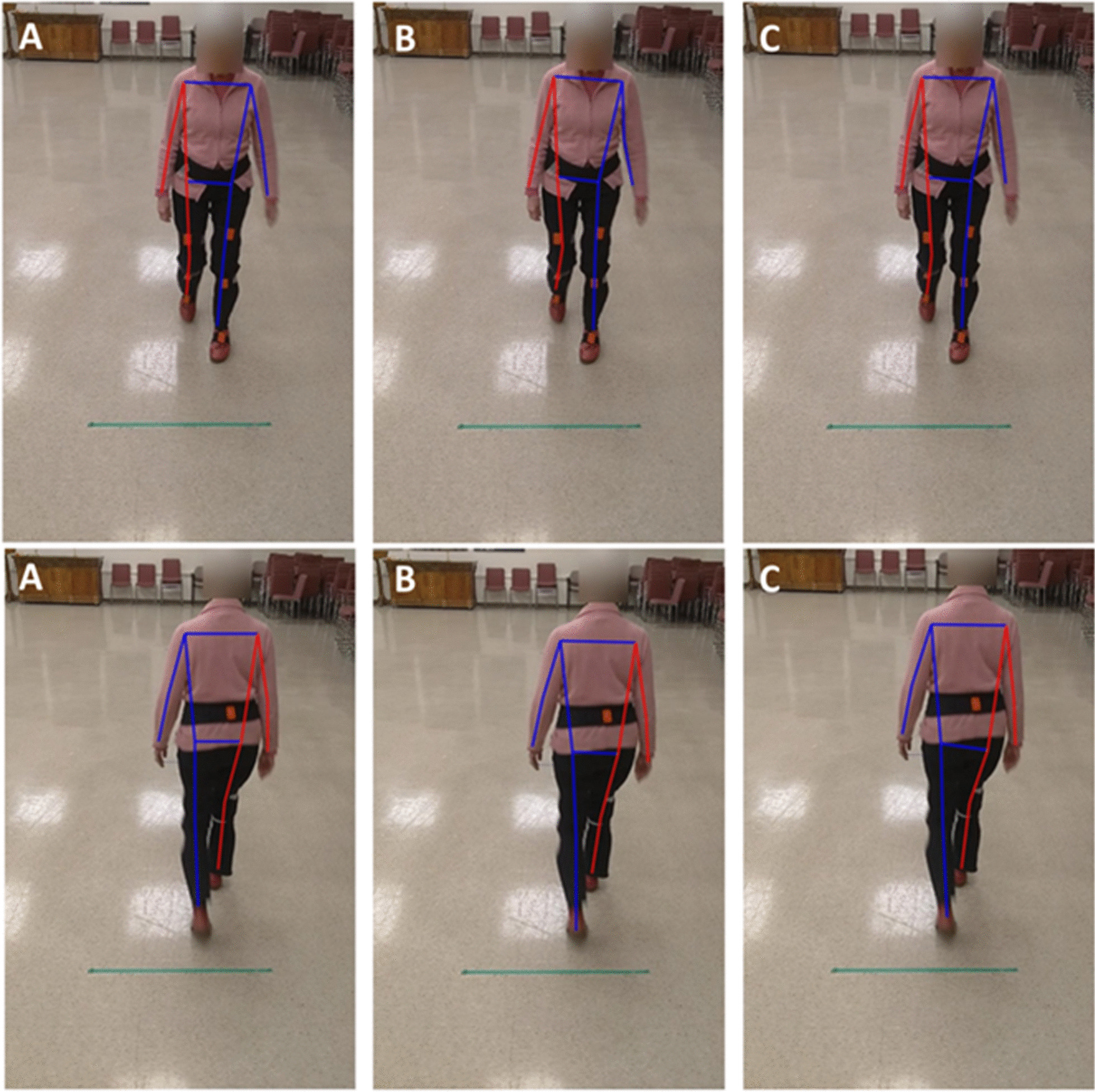
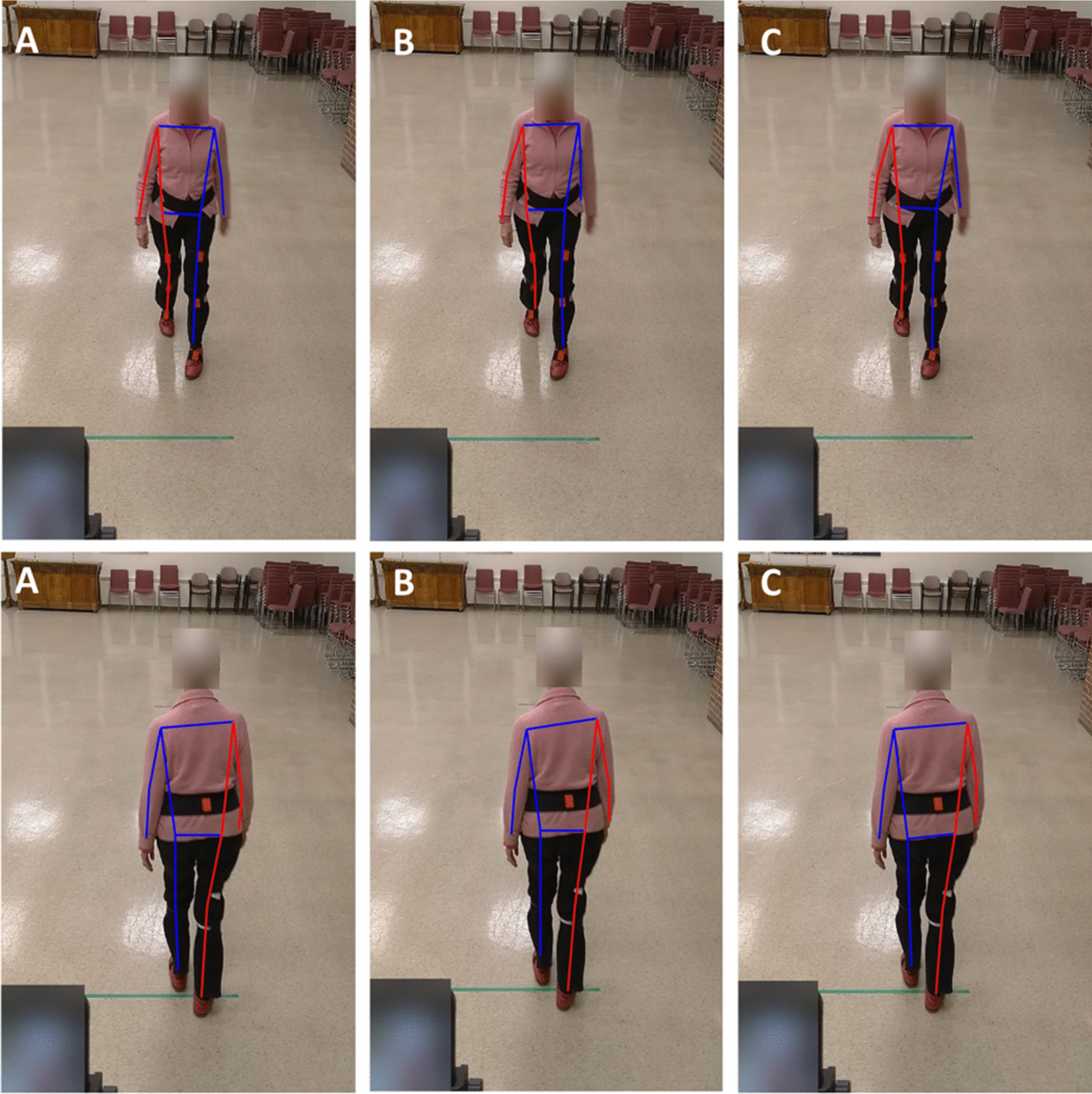
We compared quantitative gait variables of 11 older adults (mean age = 85.2) calculated from video recordings using three pose trackers (AlphaPose, OpenPose, Detectron) to those calculated from a 3D motion capture system. We performed comparisons for videos captured by two cameras at two different viewing angles, and viewed from the front or back. We also analyzed the data when including gait variables of individual steps of each participant or each participant's averaged gait variables.
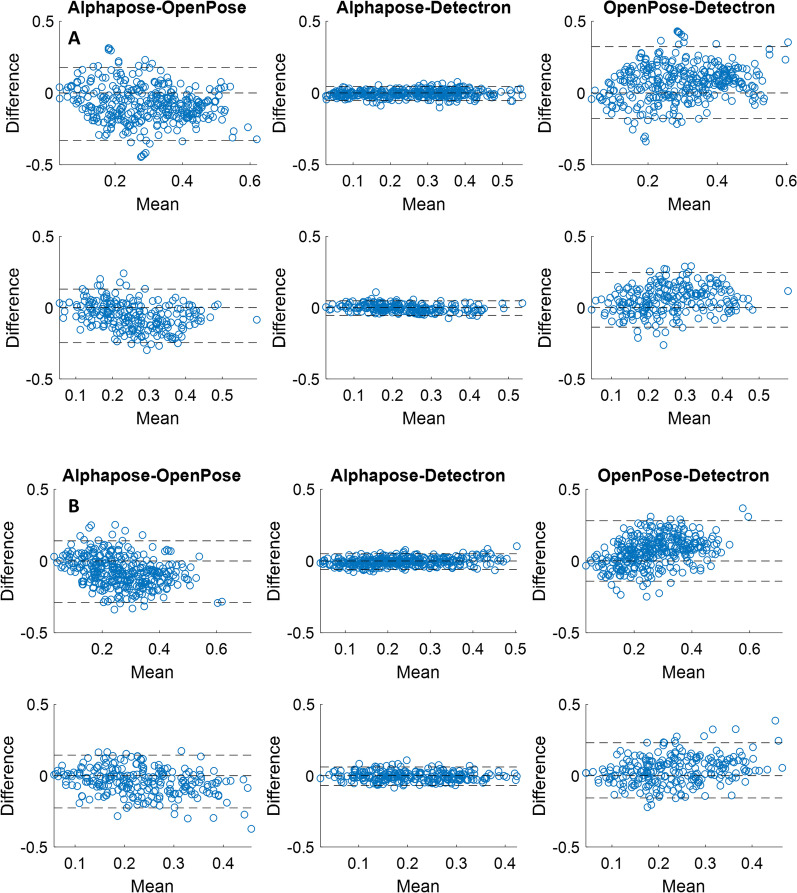
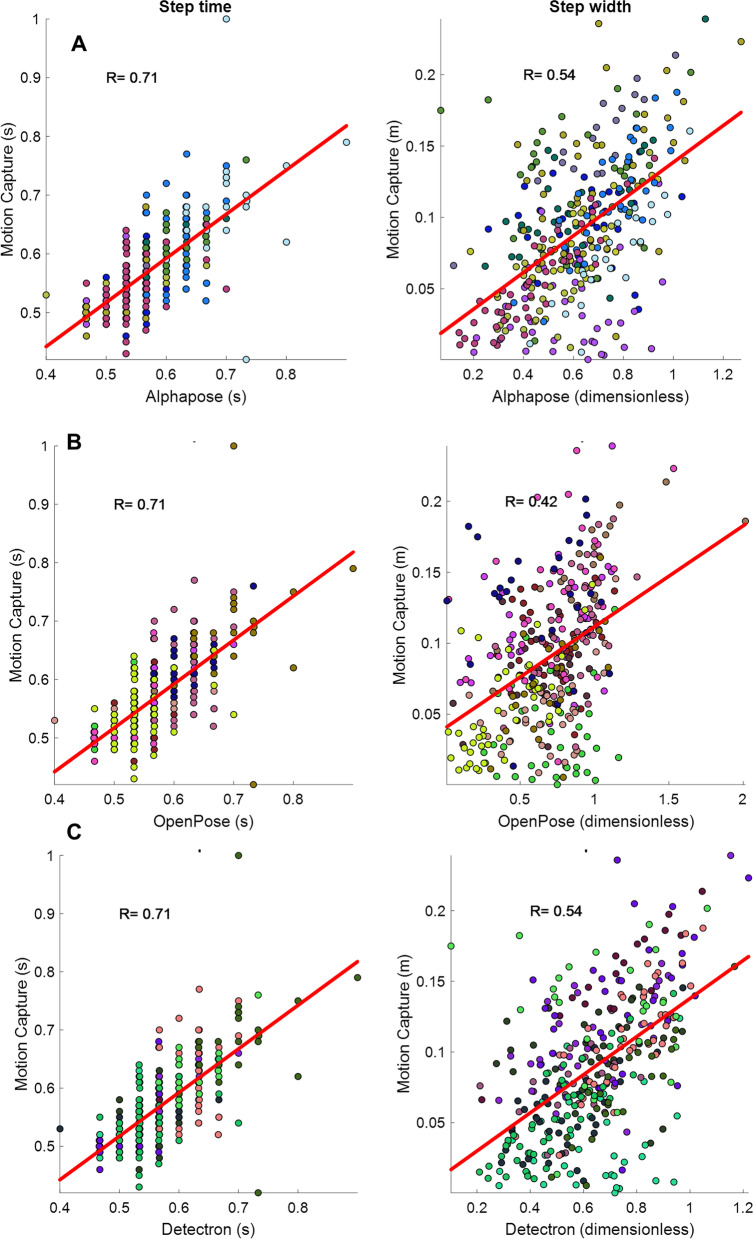
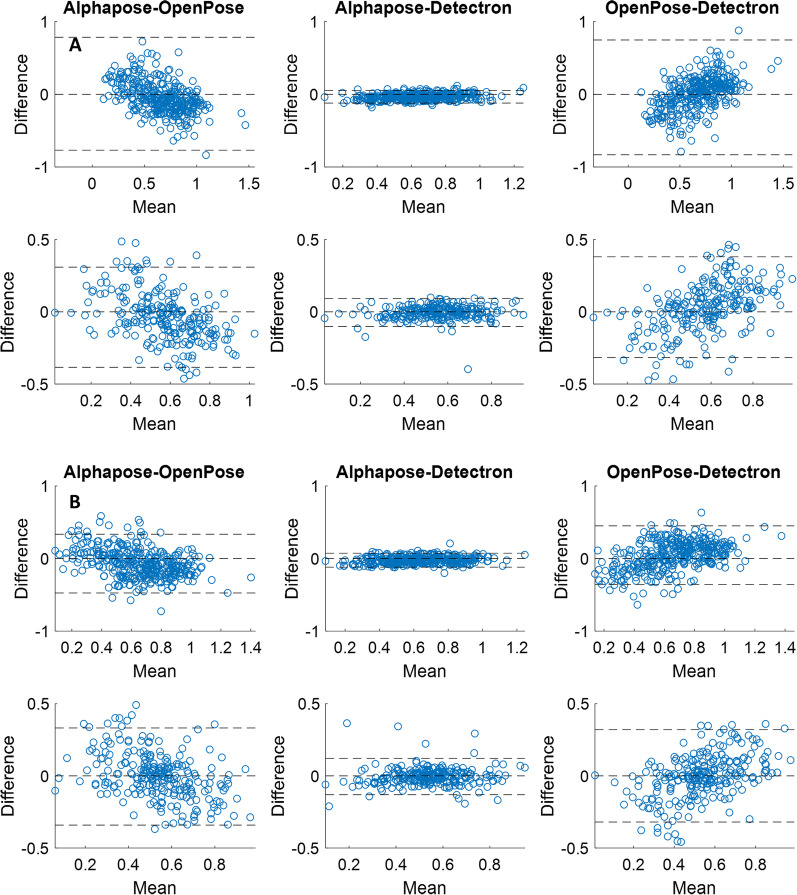
Our findings revealed that, i) temporal (cadence and step time), but not spatial and variability gait measures (step width, estimated margin of stability, coefficient of variation of step time and width), calculated from the video pose tracking algorithms correlate significantly to that of motion capture system, and ii) there are minimal differences between the two camera heights, and walks viewed from the front or back in terms of correlation of gait variables, and iii) gait variables extracted from AlphaPose and Detectron had the highest agreement while OpenPose had the lowest agreement.
There are important opportunities to evaluate models capable of 3D pose estimation in video data, improve the training of pose-tracking algorithms for older adult and clinical populations, and develop video-based 3D pose trackers specifically optimized for quantitative gait measurement.
许多现有的步态监测技术都很昂贵,需要专业知识,使用起来耗时,并且临床应用并不广泛。基于视频的人体姿态跟踪技术的出现为使用摄像机对老年人进行廉价的自动步态分析提供了机会。但是,需要根据该人群的人体步态数据的金标准方法来验证这些算法计算出的步态参数。
我们将使用三种人体姿态跟踪器(AlphaPose、OpenPose、Detectron)从视频记录中计算得出的 11 名老年人(平均年龄 85.2 岁)的定量步态变量与从 3D 运动捕捉系统计算得出的变量进行了比较。我们比较了从两个不同视角拍摄的两个摄像机拍摄的视频,以及从前或从后观看的视频。我们还分析了包含每个参与者的单个步骤的步态变量或每个参与者的平均步态变量的数据。
我们的研究结果表明,i)从视频人体姿态跟踪算法计算得出的时间(步频和步幅时间),但不是空间和变异性步态测量(步幅宽度、估计稳定裕度、步幅时间和宽度的变异系数),与运动捕捉系统的测量值有显著相关性,ii)在与步态变量的相关性方面,两个摄像机高度、从前或从后观看之间几乎没有差异,iii)AlphaPose 和 Detectron 提取的步态变量具有最高的一致性,而 OpenPose 的一致性最低。
评估能够在视频数据中进行 3D 人体姿态估计的模型具有重要意义,为老年人和临床人群的人体姿态跟踪算法的训练提供了改进的机会,并为专门针对定量步态测量的视频人体 3D 姿态跟踪器的开发提供了机会。