Supercomputer Education and Research Centre, Indian Institute of Science, Bangalore, India.
Institute for the Advanced Study of Human Biology, Kyoto University, Kyoto, Japan.
Sci Rep. 2021 Sep 15;11(1):18392. doi: 10.1038/s41598-021-97418-w.
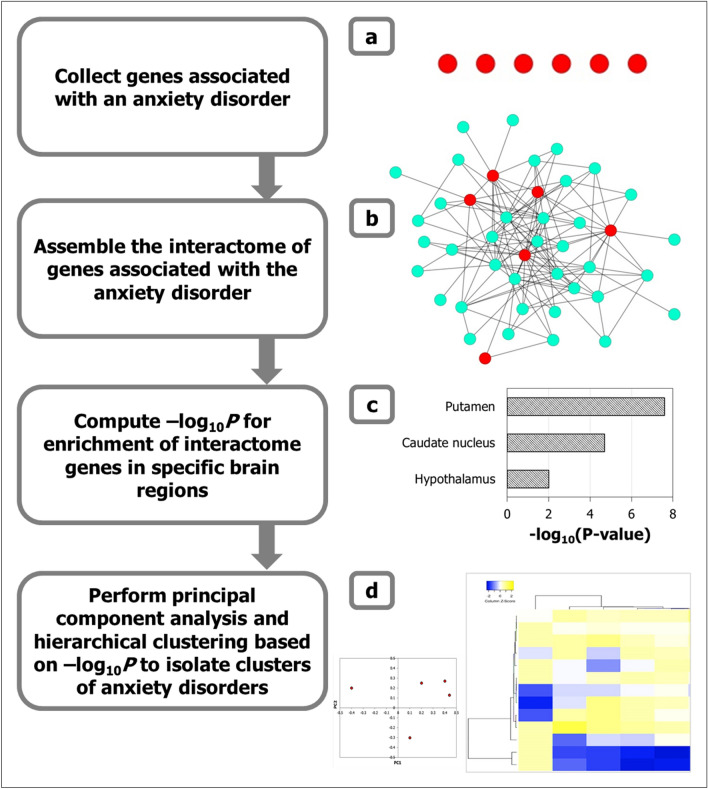
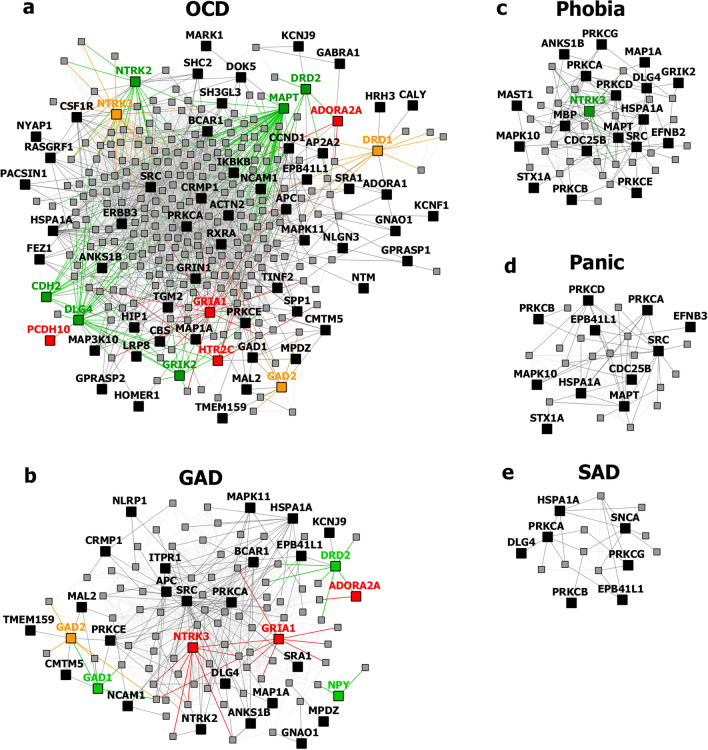
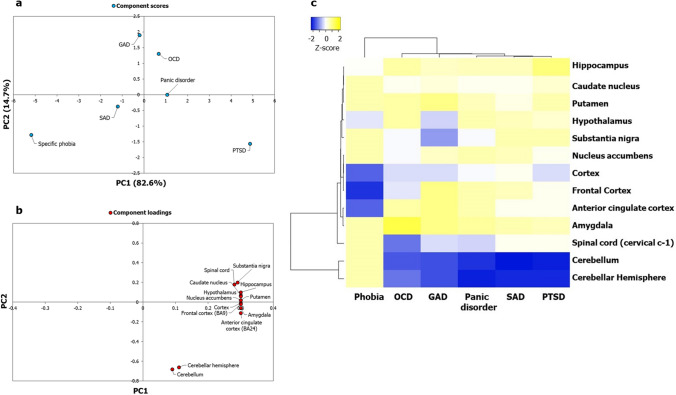
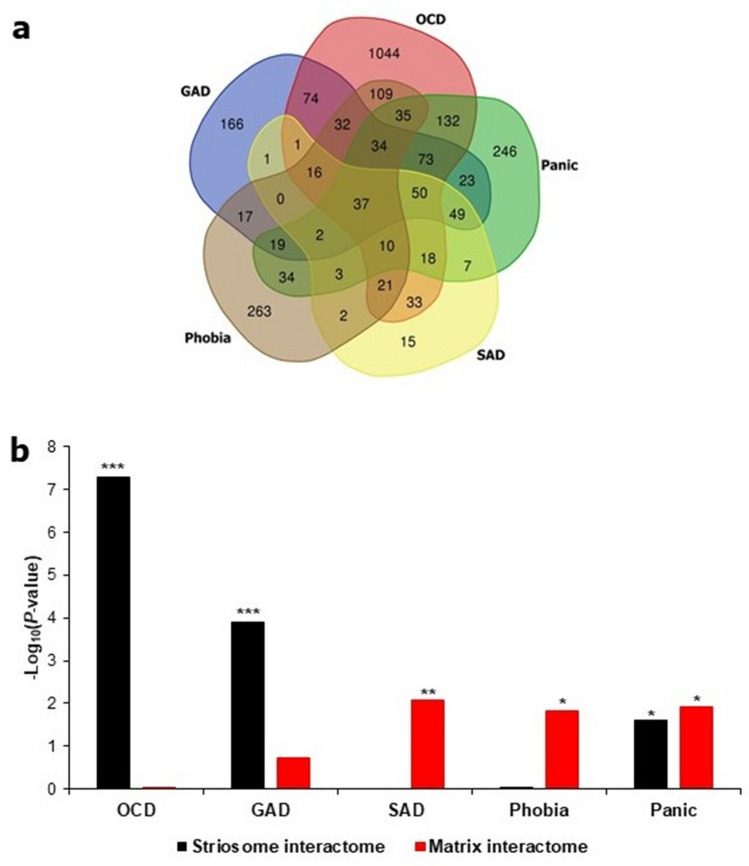
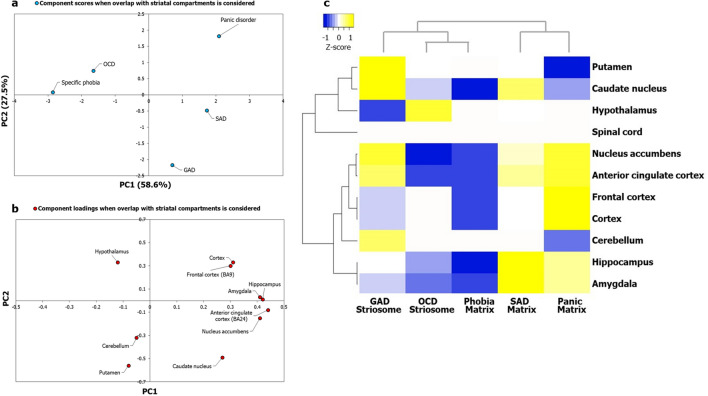
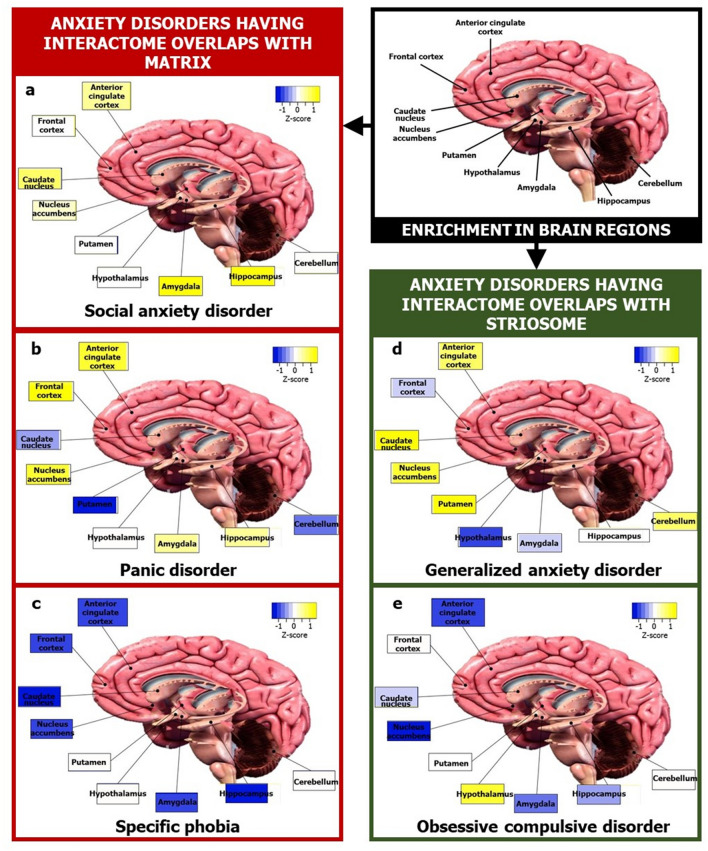
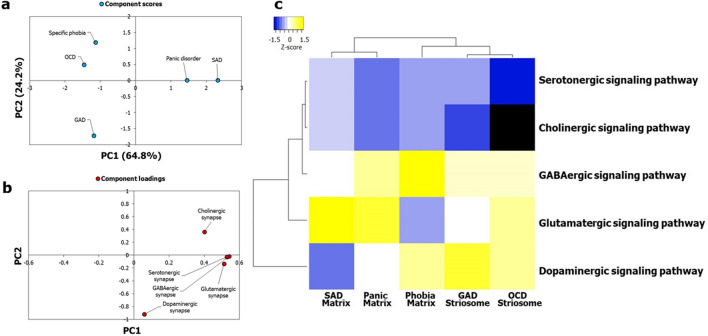
Mechanisms underlying anxiety disorders remain elusive despite the discovery of several associated genes. We constructed the protein-protein interaction networks (interactomes) of six anxiety disorders and noted enrichment for striatal expression among common genes in the interactomes. Five of these interactomes shared distinctive overlaps with the interactomes of genes that were differentially expressed in two striatal compartments (striosomes and matrix). Generalized anxiety disorder and social anxiety disorder interactomes showed exclusive and statistically significant overlaps with the striosome and matrix interactomes, respectively. Systematic gene expression analysis with the anxiety disorder interactomes constrained to contain only those genes that were shared with striatal compartment interactomes revealed a bifurcation among the disorders, which was influenced by the anterior cingulate cortex, nucleus accumbens, amygdala and hippocampus, and the dopaminergic signaling pathway. Our results indicate that the functionally distinct striatal pathways constituted by the striosome and the matrix may influence the etiological differentiation of various anxiety disorders.
尽管已经发现了几个与焦虑症相关的基因,但焦虑症的发病机制仍难以捉摸。我们构建了六种焦虑症的蛋白质-蛋白质相互作用网络(相互作用组),并注意到在相互作用组中常见基因的纹状体表达富集。这五个相互作用组与两个纹状体隔室(纹状体和基质)中差异表达的基因的相互作用组具有独特的重叠。广泛性焦虑症和社交焦虑症相互作用组分别与纹状体相互作用组和基质相互作用组具有独特且具有统计学意义的重叠。使用仅包含与纹状体隔室相互作用组共享的基因的焦虑症相互作用组进行系统的基因表达分析,揭示了这些疾病之间的分支,这受到前扣带皮层、伏隔核、杏仁核和海马体以及多巴胺能信号通路的影响。我们的研究结果表明,由纹状体和基质组成的功能不同的纹状体通路可能影响各种焦虑症的病因学分化。