Instituto de Biofísica Carlos Chagas Filho, Universidade Federal do Rio de Janeiro, Rio de Janeiro, 21941-900, Brazil.
Instituto de Veterinária, Universidade Federal Rural do Rio de Janeiro, Seropédica, 23890-000, Brazil.
Sci Rep. 2021 Sep 15;11(1):18397. doi: 10.1038/s41598-021-97041-9.
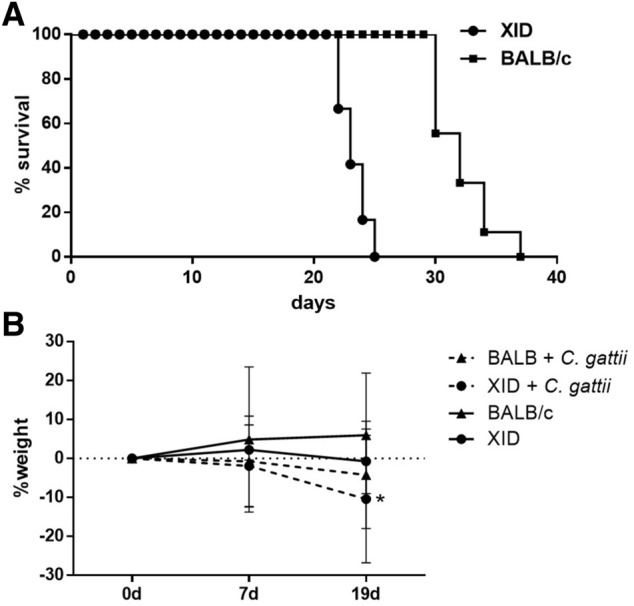
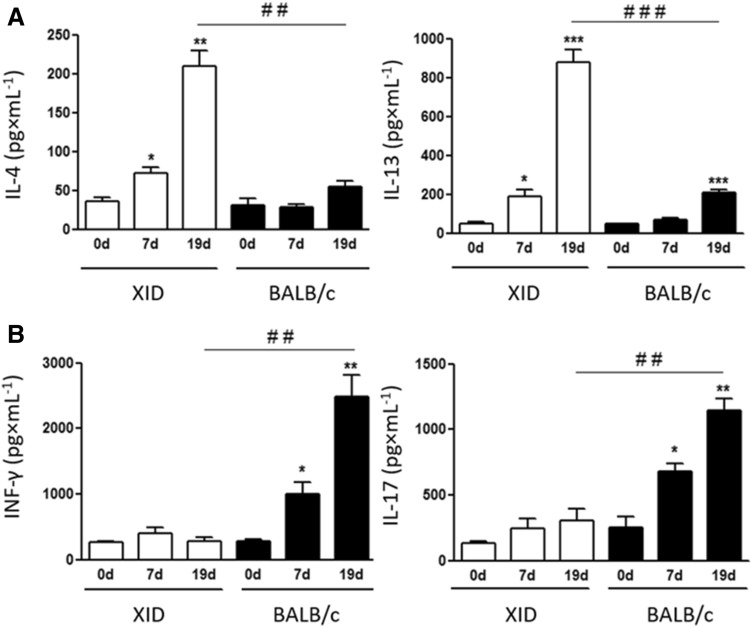
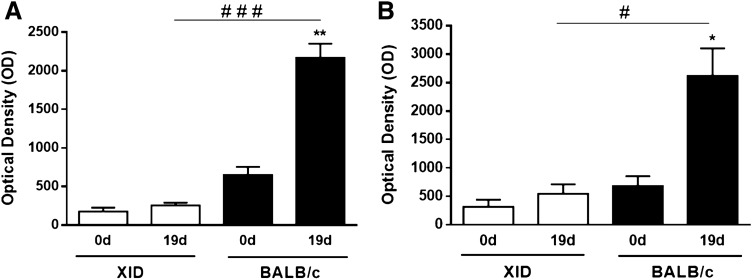
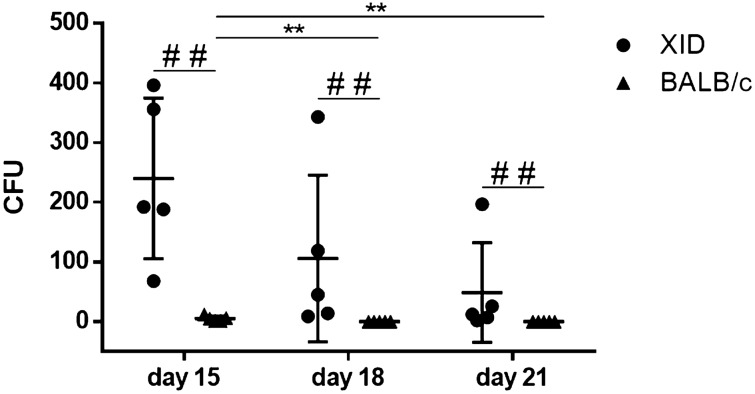
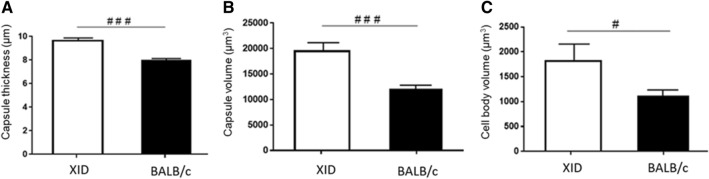
Cryptococcosis is an opportunistic disease caused by the fungus Cryptococcus neoformans and Cryptococcus gattii. It starts as a pulmonary infection that can spread to other organs, such as the brain, leading to the most serious occurrence of the disease, meningoencephalitis. The humoral response has already been described in limiting the progression of cryptococcosis where the B-1 cell seems to be responsible for producing natural IgM antibodies, crucial for combating fungal infections. The role of the B-1 cell in C. neoformans infection has been initially described, however the role of the humoral response of B-1 cells has not yet been evaluated during C. gattii infections. In the present study we tried to unravel this issue using XID mice, a murine model deficient in the Btk protein which compromises the development of B-1 lymphocytes. We use the XID mice compared to BALB/c mice that are sufficient for the B-1 population during C. gattii infection. Our model of chronic lung infection revealed that XID mice, unlike the sufficient group of B-1, had early mortality with significant weight loss, in addition to reduced levels of IgM and IgG specific to GXM isolated from the capsule of C. neoformans. In addition to this, we observed an increased fungal load in the blood and in the brain. We described an increase in the capsular size of C. gattii and the predominant presence of cytokines with a Th2 profile was also observed in these animals. Thus, the present study strongly points to a higher susceptibility of the XID mouse to C. gattii, which suggests that the presence of B-1 cells and anti-GXM antibodies is fundamental during the control of infection by C. gattii.
隐球菌病是一种由新型隐球菌和格特隐球菌引起的机会性疾病。它最初是一种肺部感染,可以传播到其他器官,如大脑,导致最严重的疾病发生,即脑膜炎。体液免疫反应已被描述为限制隐球菌病的进展,其中 B-1 细胞似乎负责产生天然 IgM 抗体,这对于对抗真菌感染至关重要。B-1 细胞在新型隐球菌感染中的作用已初步描述,但在格特隐球菌感染中,B-1 细胞的体液免疫反应的作用尚未得到评估。在本研究中,我们试图使用 XID 小鼠来解决这个问题,XID 小鼠是一种缺乏 Btk 蛋白的鼠模型,该蛋白会影响 B-1 淋巴细胞的发育。我们使用 XID 小鼠与 BALB/c 小鼠进行比较,BALB/c 小鼠在格特隐球菌感染期间 B-1 细胞充足。我们的慢性肺部感染模型表明,与 B-1 细胞充足的组不同,XID 小鼠在感染早期就出现了早期死亡率和明显的体重减轻,此外,针对从新型隐球菌荚膜中分离出的 GXM 的 IgM 和 IgG 特异性水平也降低了。除此之外,我们还观察到血液和大脑中的真菌负荷增加。我们描述了格特隐球菌荚膜大小的增加,并且还观察到这些动物中存在 Th2 特征的细胞因子增多。因此,本研究强烈表明 XID 小鼠对格特隐球菌的易感性更高,这表明 B-1 细胞和抗 GXM 抗体的存在对于控制格特隐球菌感染是至关重要的。