National Institute of Allergy and Infectious Diseases, Bethesda, Maryland, USA.
National Institutes of Healthgrid.94365.3d Clinical Center, Bethesda, Maryland, USA.
mBio. 2021 Oct 26;12(5):e0270821. doi: 10.1128/mBio.02708-21.
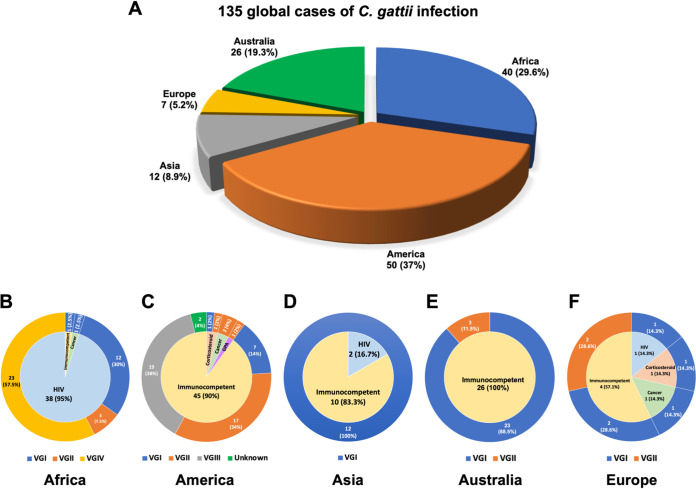
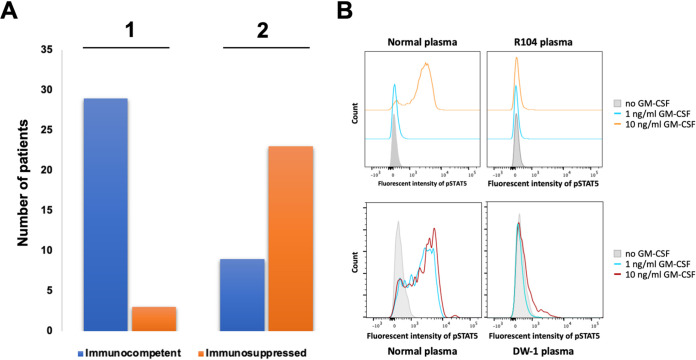
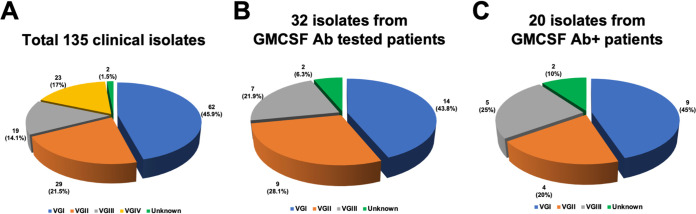
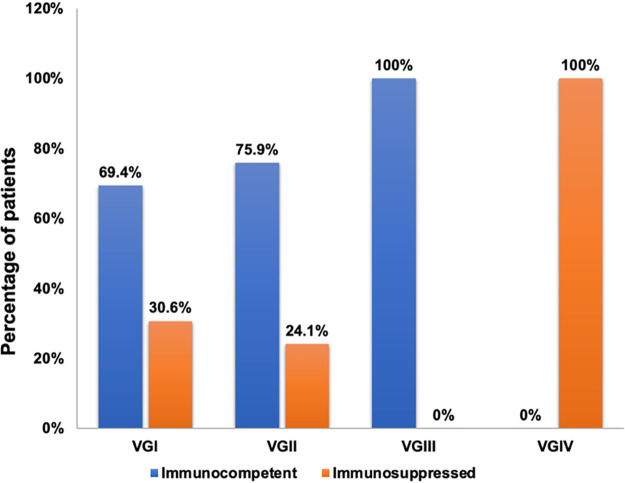
The Cryptococcus gattii species complex has often been referred to as a primary pathogen due to its high infection frequency among apparently immunocompetent patients. In order to scrutinize the immune status of patients and the lineages of etiologic agents, we analyzed patient histories and the molecular types of etiologic agents from 135 global C. gattii cases. Eighty-six of 135 patients had been diagnosed as immunocompetent, although some of them had underlying medical issues, and 49 were diagnosed as immunocompromised with risk factors similar to those seen in Cryptococcus neoformans infection. We focused on the 86 apparently immunocompetent patients and were able to obtain plasma from 32 (37%) to analyze for the presence of autoantibodies against the granulocyte-macrophage colony-stimulating factor (GM-CSF) since these antibodies have been reported as a hidden risk factor for C. gattii infection. Among the 32 patients, 25 were free from any known other health issues, and 7 had various medical conditions at the time of diagnosis for cryptococcosis. Importantly, plasma from 19 (76%) of 25 patients with no recognized underlying medical condition showed the presence of GM-CSF autoantibodies, supporting this antibody as a major hidden risk factor for C. gattii infection. These data indicate that seemingly immunocompetent people with C. gattii infection warrant detailed evaluation for unrecognized immunologic risks. There was no relationship between molecular type and underlying conditions of patients. Frequency of each molecular type was related to its geographic origin exemplified by the overrepresentation of VGIV in HIV-positive (HIV+) patients due to its prevalence in Africa. The C. neoformans and C. gattii species complex causes cryptococcosis. The C. neoformans species complex is known as an opportunistic pathogen since it primarily infects immunocompromised patients. C. gattii species complex has been referred to as a primary pathogen due to its high infection frequency in apparently immunocompetent people. We analyzed 135 global cases of C. gattii infection with documented patient history. Eighty-six of 135 patients were originally diagnosed as immunocompetent and 49 as immunosuppressed with similar underlying conditions reported for C. neoformans infection. A significant number of C. gattii patients without known underlying conditions possessed autoantibodies against granulocytes-macrophage colony-stimulating factor (GM-CSF) in their plasma, supporting the presence of GM-CSF antibodies as a hidden risk factor for C. gattii infection. No relationship was found between C. gattii lineages and the underlying conditions except for overrepresentation of the molecular type VGIV among HIV+ patients due to the prevalence of VGIV in Africa.
新生隐球菌复合群通常被称为原发性病原体,因为其在明显免疫功能正常的患者中的感染频率较高。为了仔细检查患者的免疫状态和病原体的谱系,我们分析了 135 例全球新生隐球菌感染病例的患者病史和病原体的分子类型。135 例患者中有 86 例被诊断为免疫功能正常,尽管其中一些患者存在潜在的医疗问题,49 例被诊断为免疫功能低下,其潜在风险因素与新型隐球菌感染相似。我们重点关注 86 例明显免疫功能正常的患者,并能够从其中 32 例(37%)获得血浆,以分析是否存在针对粒细胞-巨噬细胞集落刺激因子(GM-CSF)的自身抗体,因为这些抗体已被报道为新生隐球菌感染的隐藏风险因素。在 32 例患者中,25 例无任何已知的其他健康问题,7 例在诊断 cryptococcosis 时存在各种医疗状况。重要的是,25 例无已知潜在医疗状况的患者中有 19 例(76%)的血浆中存在 GM-CSF 自身抗体,这支持了该抗体是新生隐球菌感染的主要隐藏风险因素。这些数据表明,患有新生隐球菌感染的看似免疫功能正常的人群需要对未被识别的免疫风险进行详细评估。患者的分子类型与潜在疾病之间没有关系。每个分子类型的频率与地理起源有关,例如由于 VGIV 在非洲的流行,VGIV 在 HIV+ 患者中过度表达。新型隐球菌和新生隐球菌复合群引起隐球菌病。新型隐球菌复合群被称为机会性病原体,因为它主要感染免疫功能低下的患者。新生隐球菌复合群被称为原发性病原体,因为其在明显免疫功能正常的人群中的感染频率较高。我们分析了 135 例有记录患者病史的全球新生隐球菌感染病例。135 例患者中有 86 例最初被诊断为免疫功能正常,49 例被诊断为免疫抑制,与新型隐球菌感染报告的潜在疾病相似。大量无已知潜在疾病的新生隐球菌患者的血浆中存在粒细胞-巨噬细胞集落刺激因子(GM-CSF)自身抗体,支持 GM-CSF 抗体作为新生隐球菌感染的隐藏风险因素的存在。除了由于 VGIV 在非洲的流行导致 HIV+ 患者中分子类型 VGIV 的过度表达外,新生隐球菌谱系与潜在疾病之间没有发现关系。