Medical School, The University of Western Australia, Perth, 6009, Australia.
School of Population and Global Health, The University of Western Australia, Perth, 6009, Australia.
Sci Rep. 2021 Sep 15;11(1):18314. doi: 10.1038/s41598-021-97643-3.
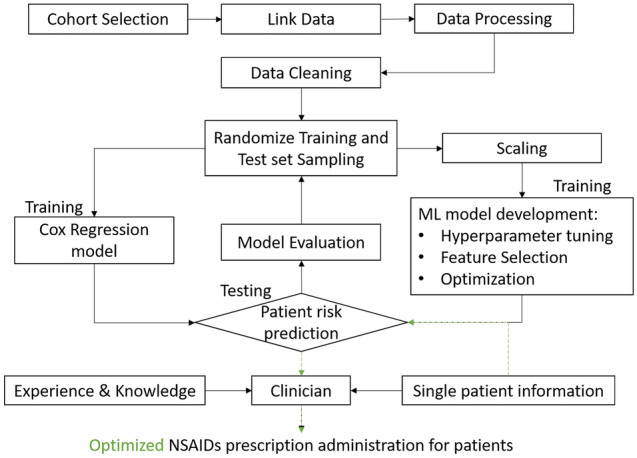
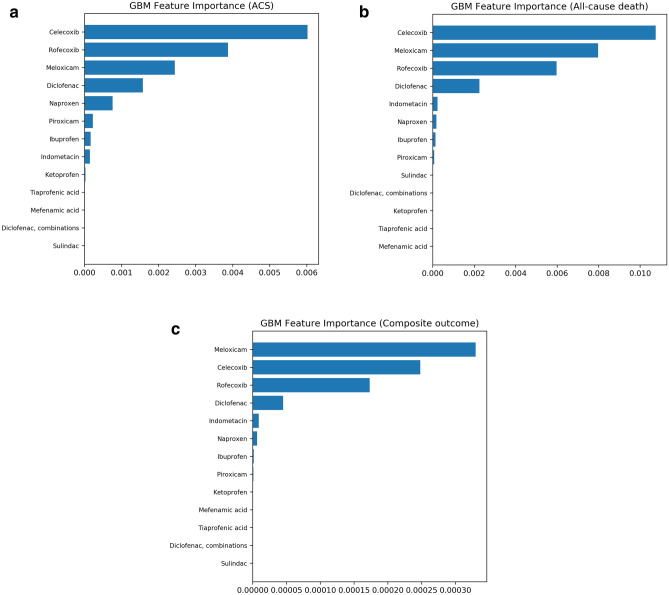
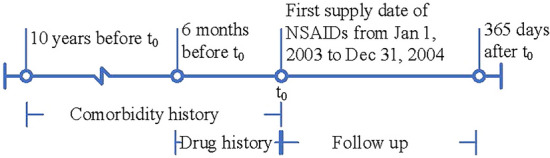
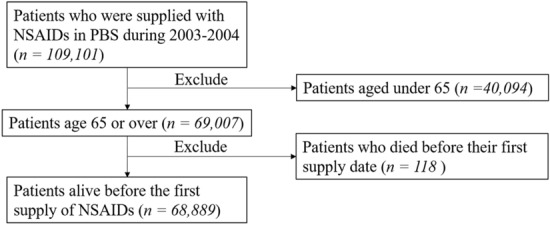
Our aim was to investigate the usefulness of machine learning approaches on linked administrative health data at the population level in predicting older patients' one-year risk of acute coronary syndrome and death following the use of non-steroidal anti-inflammatory drugs (NSAIDs). Patients from a Western Australian cardiovascular population who were supplied with NSAIDs between 1 Jan 2003 and 31 Dec 2004 were identified from Pharmaceutical Benefits Scheme data. Comorbidities from linked hospital admissions data and medication history were inputs. Admissions for acute coronary syndrome or death within one year from the first supply date were outputs. Machine learning classification methods were used to build models to predict ACS and death. Model performance was measured by the area under the receiver operating characteristic curve (AUC-ROC), sensitivity and specificity. There were 68,889 patients in the NSAIDs cohort with mean age 76 years and 54% were female. 1882 patients were admitted for acute coronary syndrome and 5405 patients died within one year after their first supply of NSAIDs. The multi-layer neural network, gradient boosting machine and support vector machine were applied to build various classification models. The gradient boosting machine achieved the best performance with an average AUC-ROC of 0.72 predicting ACS and 0.84 predicting death. Machine learning models applied to linked administrative data can potentially improve adverse outcome risk prediction. Further investigation of additional data and approaches are required to improve the performance for adverse outcome risk prediction.
我们的目的是调查机器学习方法在预测使用非甾体抗炎药(NSAIDs)后,老年患者一年内发生急性冠状动脉综合征和死亡风险方面在人群水平上利用链接的行政健康数据的有效性。从 2003 年 1 月 1 日至 2004 年 12 月 31 日期间,从药品福利计划数据中确定了在西澳大利亚心血管人群中接受 NSAIDs 治疗的患者。将来自链接的住院记录数据和药物使用史的合并症作为输入。一年内首次供应日期后因急性冠状动脉综合征或死亡而入院的患者作为输出。使用机器学习分类方法构建模型来预测 ACS 和死亡。通过接受者操作特征曲线下的面积(AUC-ROC)、敏感性和特异性来衡量模型性能。在 NSAIDs 队列中有 68889 名患者,平均年龄为 76 岁,其中 54%为女性。1882 名患者因急性冠状动脉综合征入院,5405 名患者在首次接受 NSAIDs 治疗后一年内死亡。多层神经网络、梯度提升机和支持向量机被应用于构建各种分类模型。梯度提升机的表现最佳,预测 ACS 的平均 AUC-ROC 为 0.72,预测死亡的 AUC-ROC 为 0.84。应用于链接行政数据的机器学习模型有可能提高不良结果风险预测。需要进一步研究其他数据和方法来提高不良结果风险预测的性能。