Lv Shuangyu, Li Xiaotian, Zhao Shizhen, Liu Huiyang, Wang Honggang
Henan International Joint Laboratory of Nuclear Protein Regulation, School of Basic Medical Sciences, Henan University, Kaifeng, China.
Front Cell Dev Biol. 2021 Aug 30;9:723569. doi: 10.3389/fcell.2021.723569. eCollection 2021.
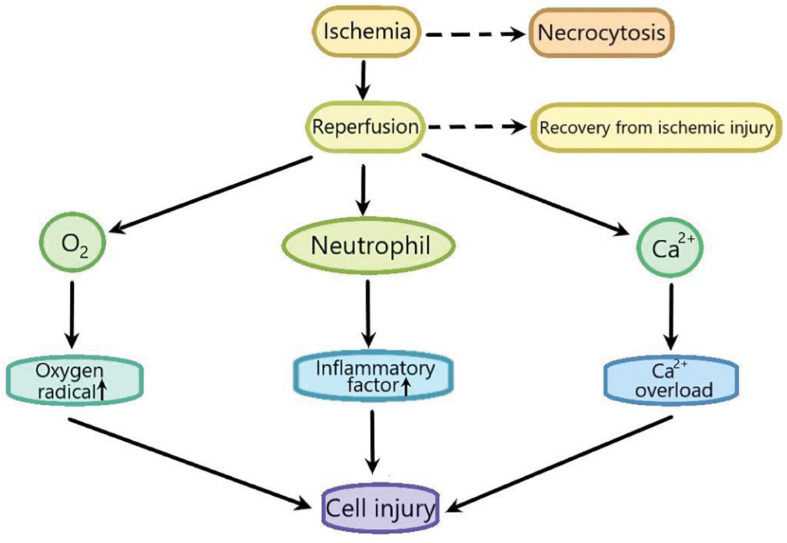
Ischemia/reperfusion (I/R) injury refers to the functional and structural changes in the process of blood flow recovery after ischemia. In addition to ischemia, the blood flow recovery can also lead to very harmful damage, such as the obvious cell swelling and the irreversible cell necrosis. I/R injury is related with many diseases, including myocardial I/R injury. Myocardial I/R injury refers to the aggravation of ischemic myocardial tissue injury due to sudden disorder of blood circulation. Although there are many studies on myocardial I/R injury, the exact mechanism is not fully understood. Hydrogen sulfide (HS), like carbon monoxide and nitric oxide, is an important gas signal molecule. It plays an important role in many physiological and pathological processes. Recent studies indicate that HS can improve myocardial I/R injury, however, its mechanism is not fully understood, especially the involved signal pathways. In this review, we summarize the related researches about the role of the signaling pathways involved in the protective effects of exogenous HS on myocardial I/R injury, so as to provide theoretical reference for the future in-depth researches.
缺血/再灌注(I/R)损伤是指缺血后血流恢复过程中的功能和结构变化。除了缺血外,血流恢复也会导致非常有害的损伤,如明显的细胞肿胀和不可逆的细胞坏死。I/R损伤与许多疾病有关,包括心肌I/R损伤。心肌I/R损伤是指由于血液循环突然紊乱导致缺血心肌组织损伤加重。尽管对心肌I/R损伤有很多研究,但其确切机制尚未完全阐明。硫化氢(HS)与一氧化碳和一氧化氮一样,是一种重要的气体信号分子。它在许多生理和病理过程中发挥重要作用。最近的研究表明,HS可以改善心肌I/R损伤,然而,其机制尚未完全阐明,尤其是所涉及的信号通路。在本综述中,我们总结了关于参与外源性HS对心肌I/R损伤保护作用的信号通路作用的相关研究,以便为未来的深入研究提供理论参考。