Earth and Environmental Sciences Area, Lawrence Berkeley National Laboratory, Berkeley, California, 94720, USA.
Ecol Appl. 2021 Dec;31(8):e02458. doi: 10.1002/eap.2458. Epub 2021 Oct 20.
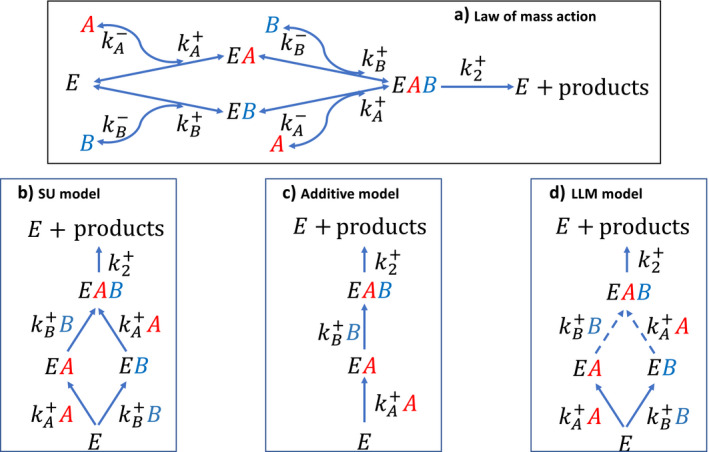
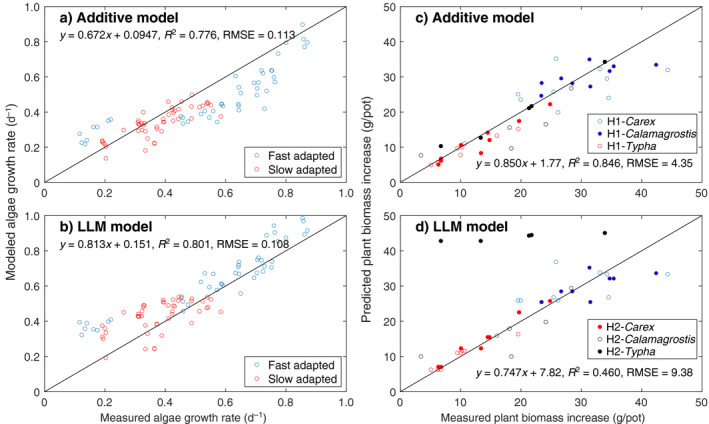
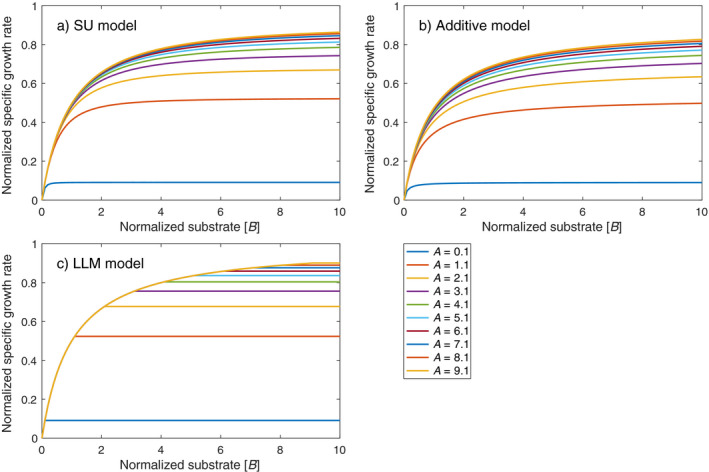
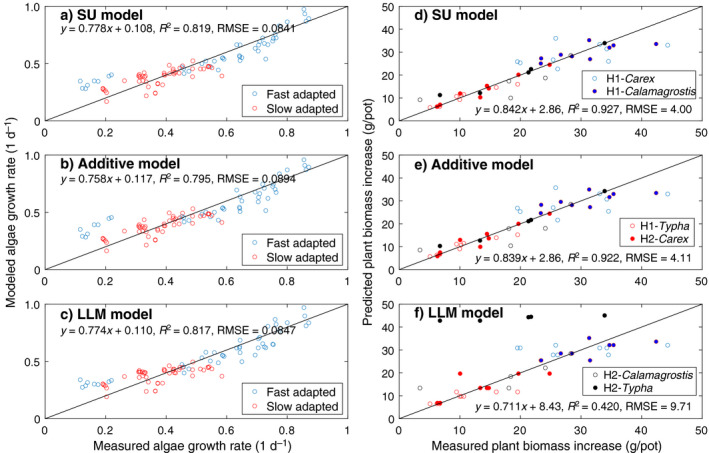
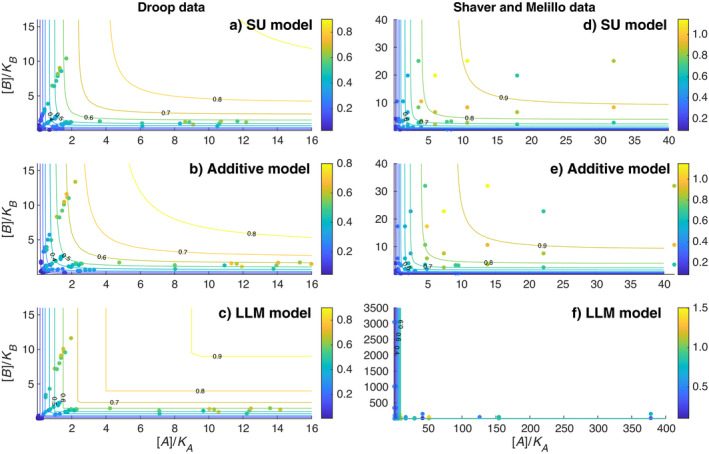
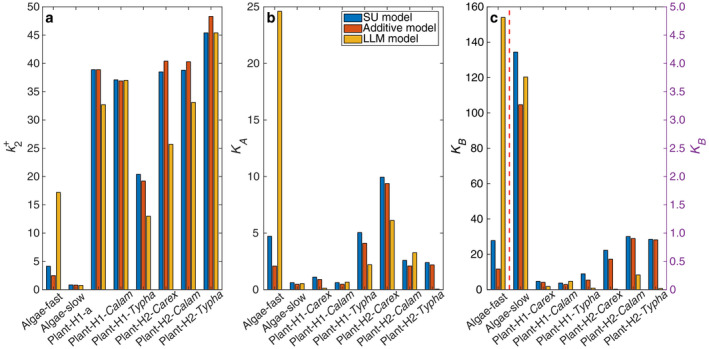
Liebig's law of the minimum (LLM) is often used to interpret empirical biological growth data and model multiple substrates co-limited growth. However, its mechanistic foundation is rarely discussed, even though its validity has been questioned since its introduction in the 1820s. Here we first show that LLM is a crude approximation of the law of mass action, the state of art theory of biochemical reactions, and the LLM model is less accurate than two other approximations of the law of mass action: the synthesizing unit model and the additive model. We corroborate this conclusion using empirical data sets of algae and plants grown under two co-limiting substrates. Based on our analysis, we show that when growth is modeled directly as a function of substrate uptake, the LLM model improperly restricts the organism to be of fixed elemental stoichiometry, making it incapable of consistently resolving biological adaptation, ecological evolution, and community assembly. When growth is modeled as a function of the cellular nutrient quota, the LLM model may obtain good results at the risk of incorrect model parameters as compared to those inferred from the more accurate synthesizing unit model. However, biogeochemical models that implement these three formulations are needed to evaluate which formulation is acceptably accurate and their impacts on predicted long-term ecosystem dynamics. In particular, studies are needed that explore the extent to which parameter calibration can rescue model performance when the mechanistic representation of a biogeochemical process is known to be deficient.
利比希最小定律(LLM)常被用来解释经验生物生长数据,并对多种基质共同限制生长进行建模。然而,尽管自 19 世纪 20 年代引入以来,其有效性一直受到质疑,但它的机械基础却很少被讨论。在这里,我们首先表明,LLM 是生化反应的艺术理论——质量作用定律的一个粗略近似,并且 LLM 模型不如质量作用定律的另外两个近似模型:合成单元模型和加和模型准确。我们使用在两种共同限制基质下生长的藻类和植物的经验数据集来证实这一结论。基于我们的分析,我们表明,当直接将生长建模为基质摄取的函数时,LLM 模型不适当地将生物体限制为固定的元素化学计量,从而使其无法一致地解决生物适应、生态进化和群落组装问题。当将生长建模为细胞营养物质份额的函数时,与从更准确的合成单元模型推断出的参数相比,LLM 模型可能会获得良好的结果,但存在模型参数不正确的风险。然而,需要有生物地球化学模型来评估这三种表述形式中的哪一种是可接受的准确的,以及它们对预测长期生态系统动态的影响。特别是,需要进行研究,探索在已知生物地球化学过程的机械表示存在缺陷的情况下,参数校准在多大程度上可以挽救模型性能。