Center for Nanotechnology in Drug Delivery, Division of Molecular Pharmaceutics, Eshelman School of Pharmacy, University of North Carolina at Chapel Hill, Chapel Hill, NC, United States.
Center for Drug Delivery and Nanomedicine and Department of Pharmaceutical Sciences, College of Pharmacy, University of Nebraska Medical Center, Omaha, NE, United States.
Nanomedicine. 2022 Jan;39:102459. doi: 10.1016/j.nano.2021.102459. Epub 2021 Sep 13.
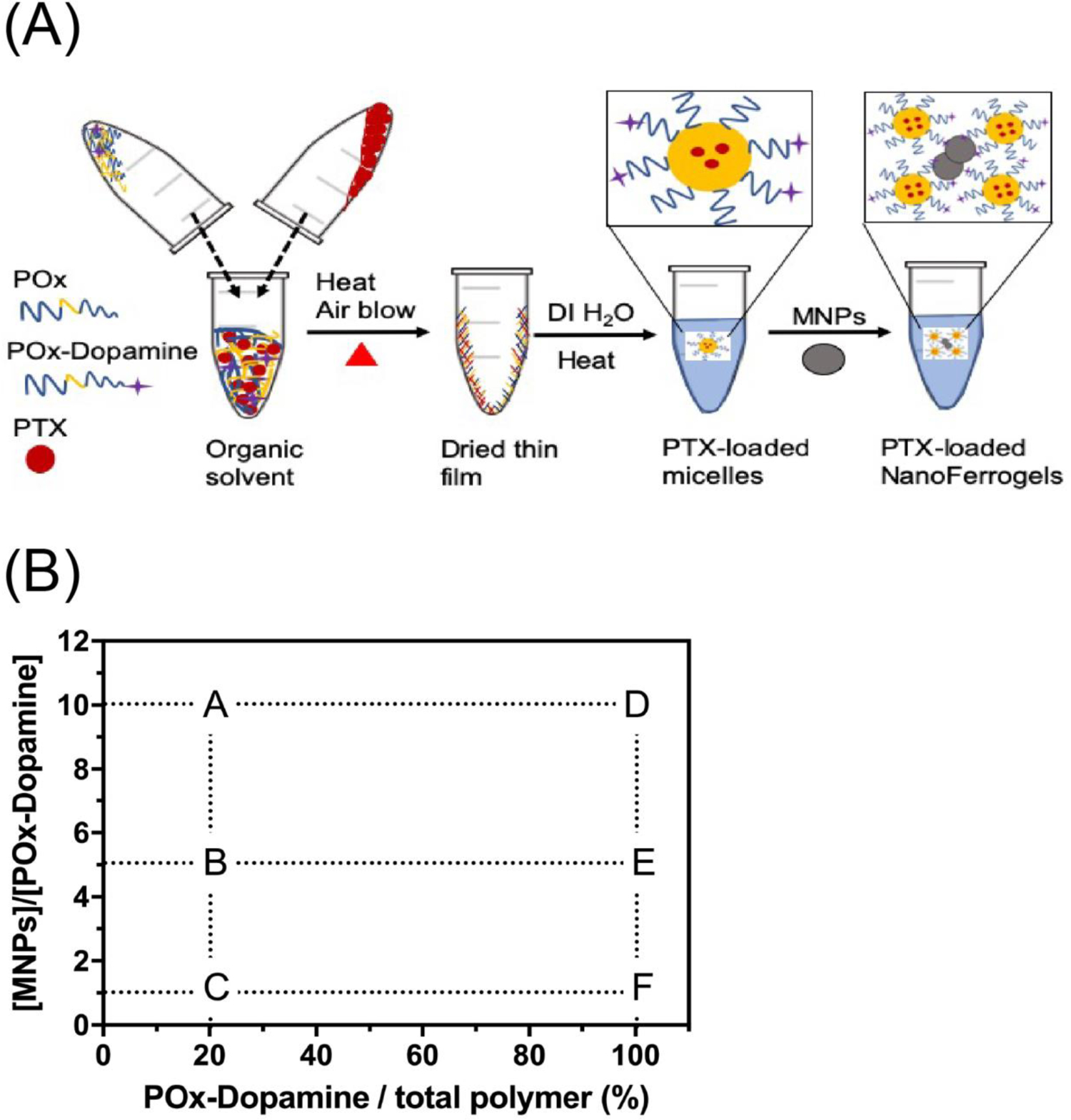
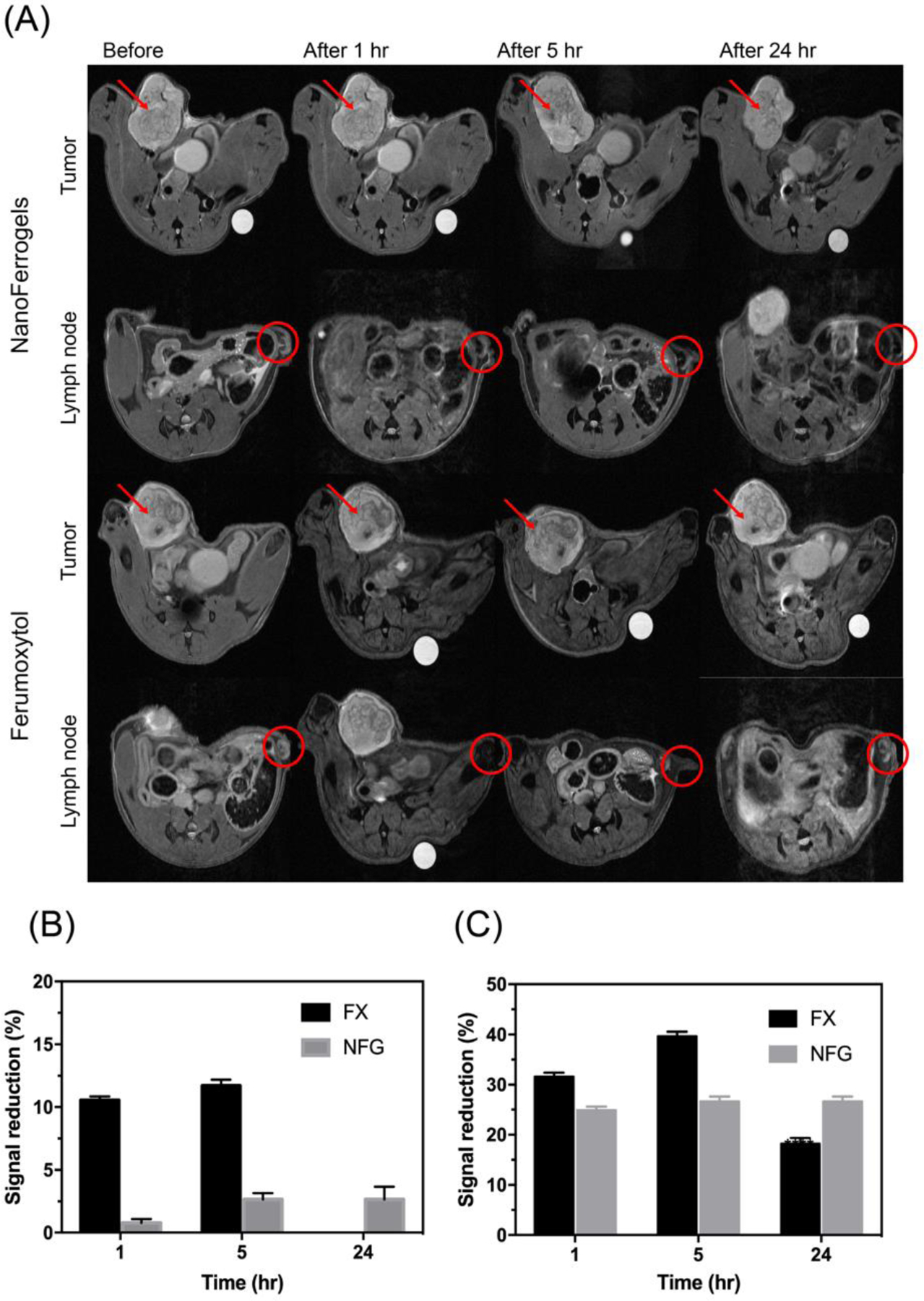
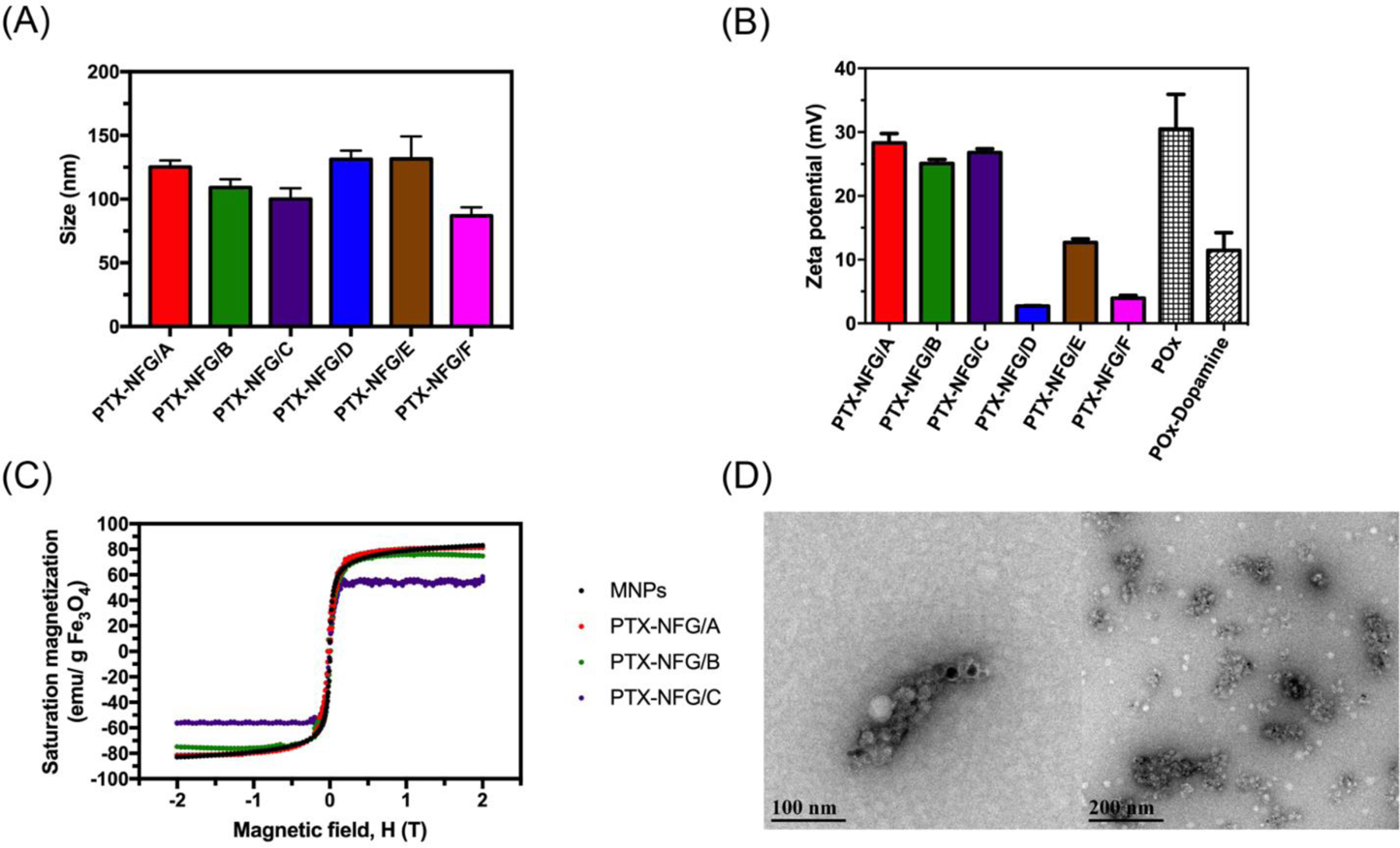
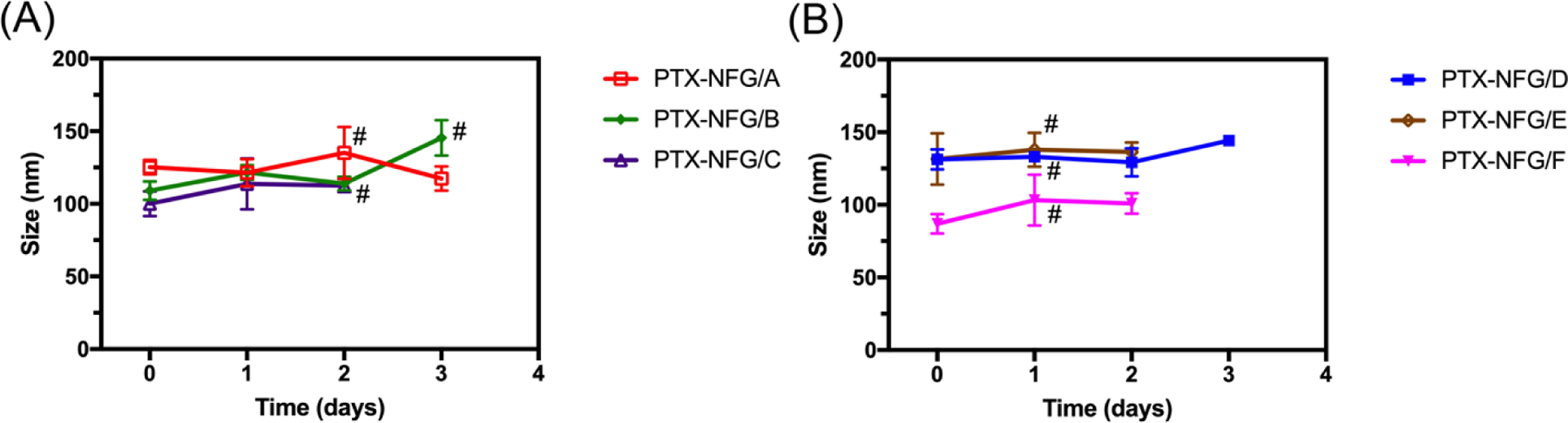
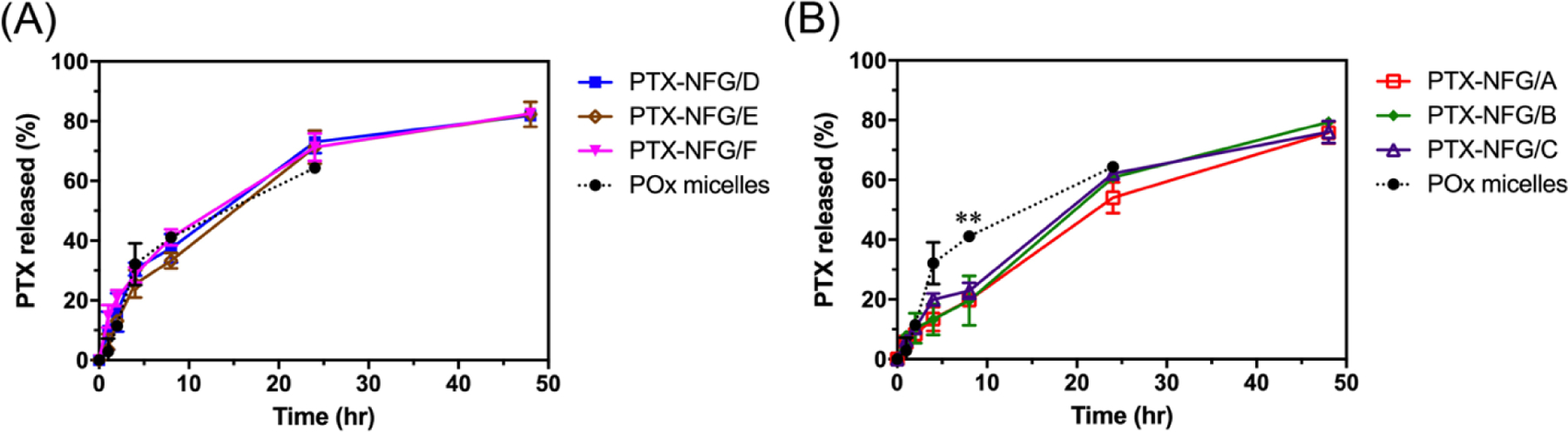
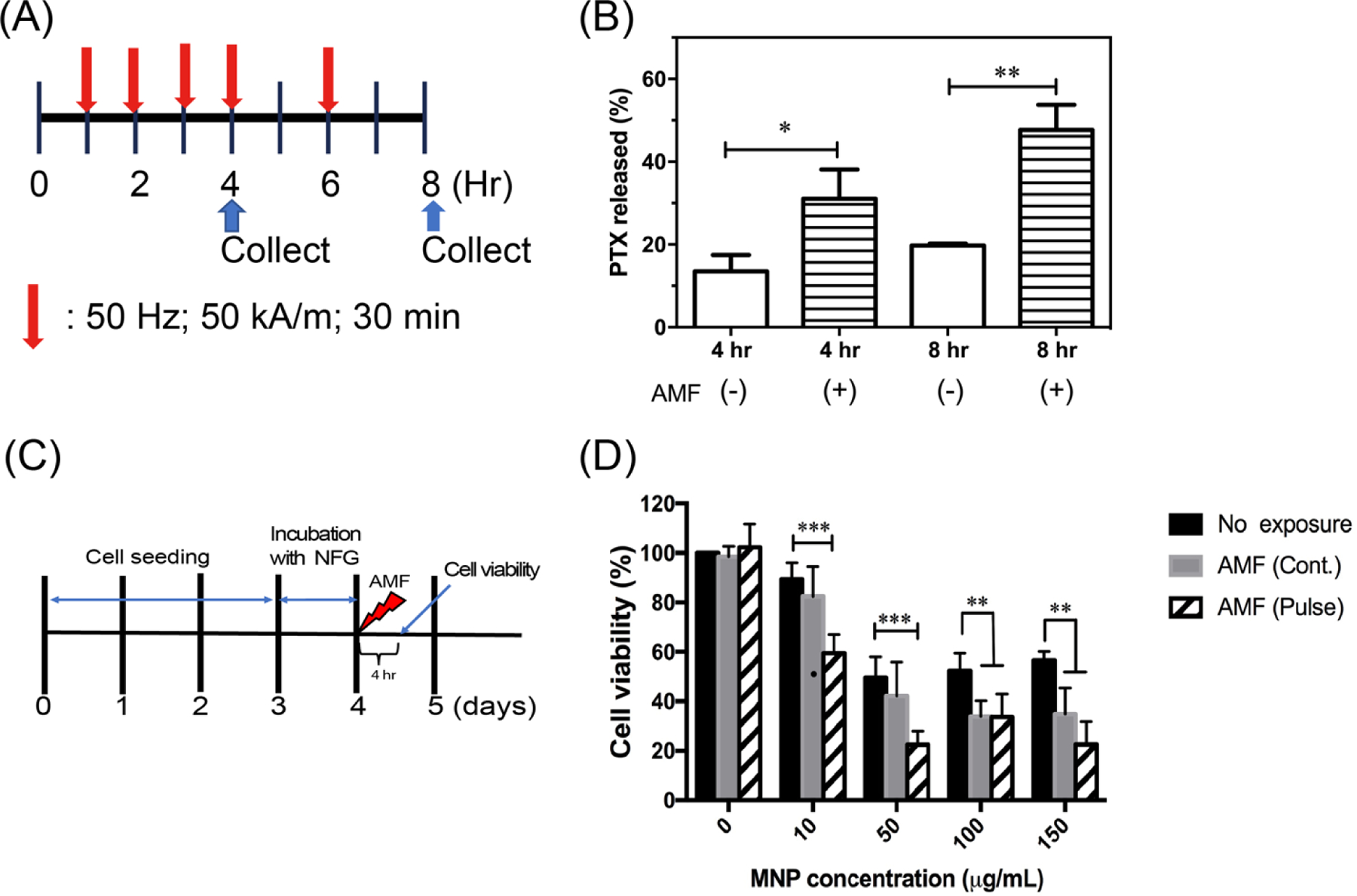
Combining diagnosis and treatment approaches in one entity is the goal of theranostics for cancer therapy. Magnetic nanoparticles have been extensively used as contrast agents for nuclear magnetic resonance imaging as well as drug carriers and remote actuation agents. Poly(2-oxazoline)-based polymeric micelles, which have been shown to efficiently solubilize hydrophobic drugs and drug combinations, have high loading capacity (above 40% w/w) for paclitaxel. In this study, we report the development of novel theranostic system, NanoFerrogels, which is designed to capitalize on the magnetic nanoparticle properties as imaging agents and the poly(2-oxazoline)-based micelles as drug loading compartment. We developed six formulations with magnetic nanoparticle content of 0.3%-12% (w/w), with the z-average sizes of 85-130 nm and ξ-potential of 2.7-28.3 mV. The release profiles of paclitaxel from NanoFerrogels were notably dependent on the degree of dopamine grafting on poly(2-oxazoline)-based micelles. Paclitaxel loaded NanoFerrogels showed efficacy against three breast cancer lines which was comparable to free paclitaxel. They also showed improved tumor and lymph node accumulation and signal reduction in vivo (2.7% in tumor; 8.5% in lymph node) compared to clinically approved imaging agent ferumoxytol (FERAHEME®) 24 h after administration. NanoFerrogels responded to super-low frequency alternating current magnetic field (50 kA m, 50 Hz) which accelerated drug release from paclitaxel-loaded NanoFerrogels or caused death of cells loaded with NanoFerrogels. These proof-of-concept experiments demonstrate that NanoFerrogels have potential as remotely actuated theranostic platform for cancer diagnosis and treatment.
将诊断和治疗方法结合在一个实体中是癌症治疗热疗的目标。磁性纳米粒子已被广泛用作磁共振成像的对比剂以及药物载体和远程致动剂。已证明基于聚(2-恶唑啉)的聚合物胶束能够有效地溶解疏水性药物和药物组合,对紫杉醇的载药量(高于 40%w/w)很高。在这项研究中,我们报告了新型治疗诊断系统 NanoFerrogels 的开发,该系统旨在利用磁性纳米颗粒作为成像剂和基于聚(2-恶唑啉)的胶束作为药物装载隔室的特性。我们开发了六种制剂,其磁性纳米颗粒含量为 0.3%-12%(w/w),Z 均粒径为 85-130nm,ξ-电位为 2.7-28.3mV。紫杉醇从 NanoFerrogels 的释放曲线明显取决于多巴胺在基于聚(2-恶唑啉)的胶束上的接枝程度。负载紫杉醇的 NanoFerrogels 显示出对三种乳腺癌细胞系的疗效,与游离紫杉醇相当。与临床批准的造影剂 ferumoxytol(FERAHEME®)相比,它们在体内也显示出改善的肿瘤和淋巴结积聚和信号减少(肿瘤中为 2.7%;淋巴结中为 8.5%)。在给药后 24 小时,NanoFerrogels 对超低频率交流磁场(50kAm,50Hz)有响应,这加速了负载紫杉醇的 NanoFerrogels 中的药物释放或导致负载 NanoFerrogels 的细胞死亡。这些概念验证实验表明,NanoFerrogels 具有作为癌症诊断和治疗的远程致动治疗诊断平台的潜力。