Sumbele Irene Ule Ngole, Tabi Doris Bennen, Teh Rene Ning, Njunda Anne Longdoh
Department of Zoology and Animal Physiology, University of Buea, Buea, Cameroon.
Department of Microbiology and Immunology, College of Veterinary Medicine, Cornell University, Ithaca, NY, USA.
Trop Med Health. 2021 Sep 16;49(1):75. doi: 10.1186/s41182-021-00362-8.
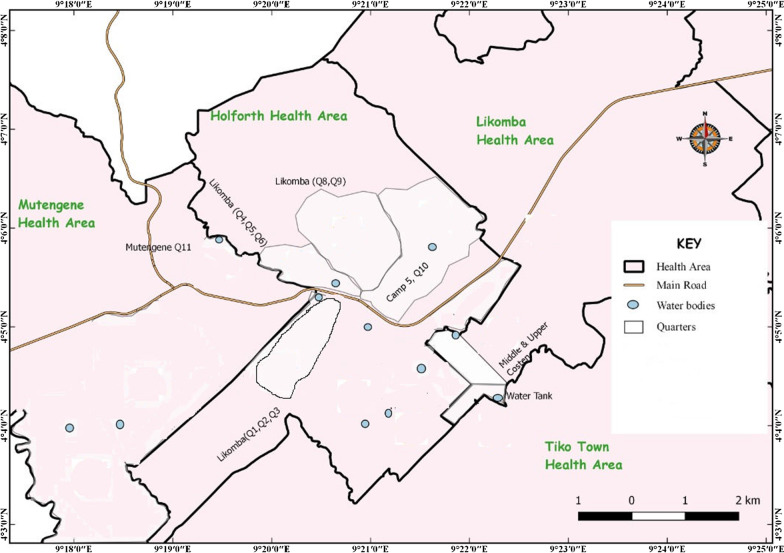
This study aimed at determining urogenital schistosomiasis (UGS) prevalence, intensity, knowledge and risk factors in school-aged children (SAC) in the new endemic focus of Tiko, Cameroon.
A cross-sectional study including 389 SAC of both sexes aged 5-15 years was carried out between April and June 2018. A structured questionnaire was used to collect demographic data, clinical and predisposing factors. Urine sample collected was used to detect Schistosoma haematobium eggs by filtration technique and microhaematuria by Heme dipstick COMBI 11. Logistic regression model was used to determine risk factors of UGS.
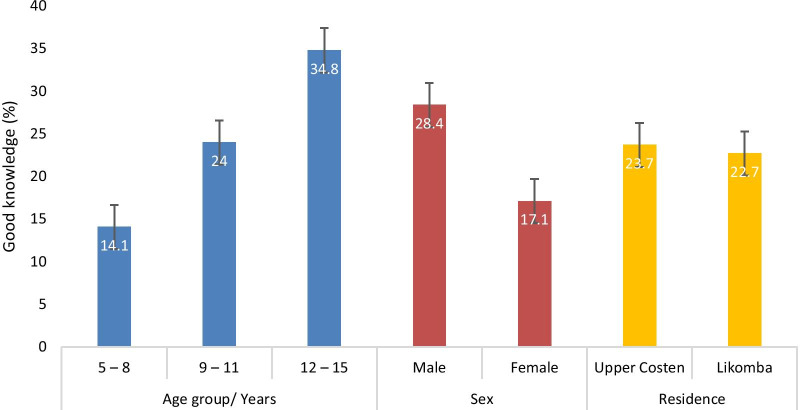
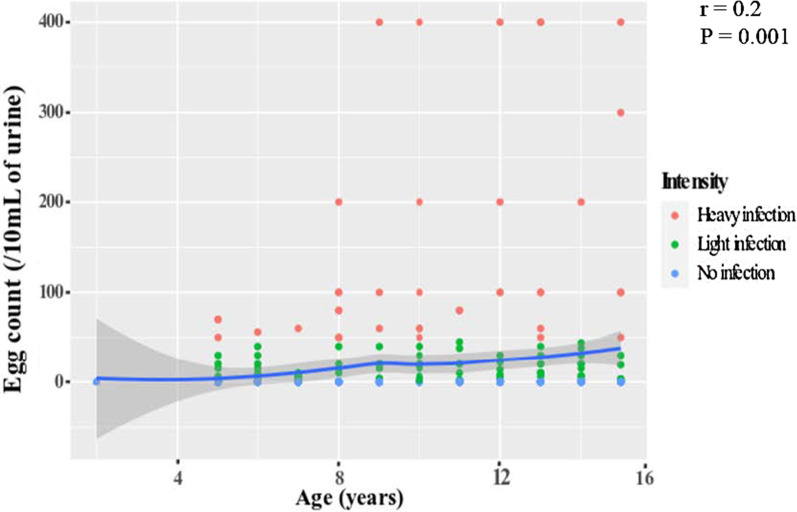
The overall prevalence of UGS was 37.0% (CI 32.4-41.9) and 32.6% (CI 28.2-37.5) were positive by egg excretion while 24.4% (CI 20.4-28.9) by haematuria. S. haematobium egg excretion and haematuria were significantly higher in males (P = 0.016; P = 0.049) and children 12-15 years old (P = 0.009; P = 0.002), respectively. The mean number of eggs per 10 mL of urine was 77.6 (10.2) and ranged from 2 to 400. The proportion of light intensity of infection was higher (67.7%, CI 59.2-75.2) with no significant differences by sex, age and residence. However, the older children were more heavily infected when compared to the younger children, who had more of light infection. Overall, the mean knowledge score 1.42 (CI 1.32-1.51) on a scale of 6, was poor and the proportion of good knowledge of the disease (23.14%, CI 19.2-27.6) was low. Stream water contact (AOR = 4.94; P = 0.001) was the only significant risk factor identified.
Urogenital schistosomiasis is of public health concern among SAC in Tiko, Cameroon. Most participants have poor knowledge about the disease, hence education on vector-borne diseases and the avoidance of stream water contact should be implemented.
本研究旨在确定喀麦隆蒂科新流行区学龄儿童泌尿生殖系统血吸虫病(UGS)的患病率、感染强度、认知情况及危险因素。
2018年4月至6月开展了一项横断面研究,纳入389名年龄在5至15岁的男女学龄儿童。使用结构化问卷收集人口统计学数据、临床及诱发因素。收集的尿液样本采用过滤技术检测埃及血吸虫卵,使用血红素试纸条COMBI 11检测镜下血尿。采用逻辑回归模型确定UGS的危险因素。
UGS的总体患病率为37.0%(95%置信区间32.4 - 41.9),虫卵排泄阳性率为32.6%(95%置信区间28.2 - 37.5),血尿阳性率为24.4%(95%置信区间20.4 - 28.9)。男性(P = 0.016;P = 0.049)及12至15岁儿童(P = 0.009;P = 0.002)的埃及血吸虫虫卵排泄及血尿发生率显著更高。每10 mL尿液中的虫卵平均数为77.6(10.2),范围为2至400。轻度感染比例较高(67.7%,95%置信区间59.2 - 75.2),在性别、年龄和居住地区方面无显著差异。然而,与年龄较小、感染程度较轻的儿童相比,年龄较大的儿童感染更严重。总体而言,在满分为6分的评分中,平均知识得分1.42(95%置信区间1.32 - 1.51)较低,对该疾病了解良好的比例(23.14%,95%置信区间19.2 - 27.6)也较低。接触溪水(比值比 = 4.94;P = 0.001)是唯一确定的显著危险因素。
在喀麦隆蒂科,泌尿生殖系统血吸虫病是学龄儿童的公共卫生问题。大多数参与者对该疾病了解甚少,因此应开展关于媒介传播疾病的教育并避免接触溪水。