Wang Peiyuan, Wang Feng, He Hao, Chen Yujie, Lin Hui, Chen Peng, Chen Xiaofeng, Liu Shuoyan
Department of Thoracic Oncology Surgery, Fujian Medical University Cancer Hospital, Fujian Cancer Hospital, Fuzhou, China.
Fujian Key Laboratory of Translational Cancer Medicine, Fuzhou, China.
Ann Transl Med. 2021 Aug;9(16):1330. doi: 10.21037/atm-21-3709.
Lung squamous cell carcinoma (LUSC) is characterized by frequent mutations of tumor protein p53 (TP53) and cyclin dependent kinase inhibitor 2A (CDKN2A). However, to date, the impact of TP53/CDKN2A status on the clinical outcome of patients with early-stage LUSC is unclear.
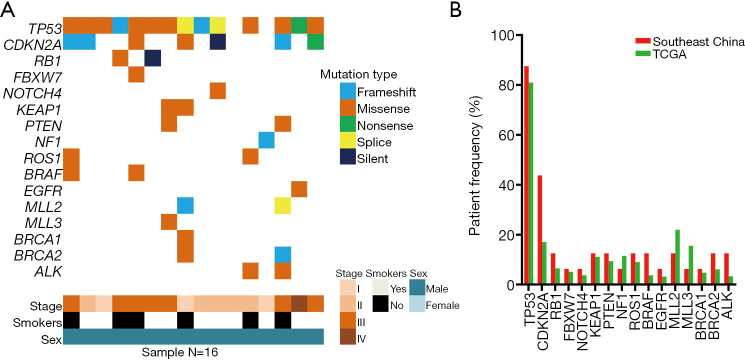
Tissue samples from 16 early-stage, surgically resected LUSCs were analyzed by next-generation sequencing (NGS). Information regarding TP53 and CDKN2A alterations and patient survival time was downloaded from The Cancer Genome Atlas (TCGA) database. The associations between TP53 and CDKN2A status and tumor characteristics, outcomes including overall survival (OS) and disease-free survival (DFS), and mutation counts were investigated.
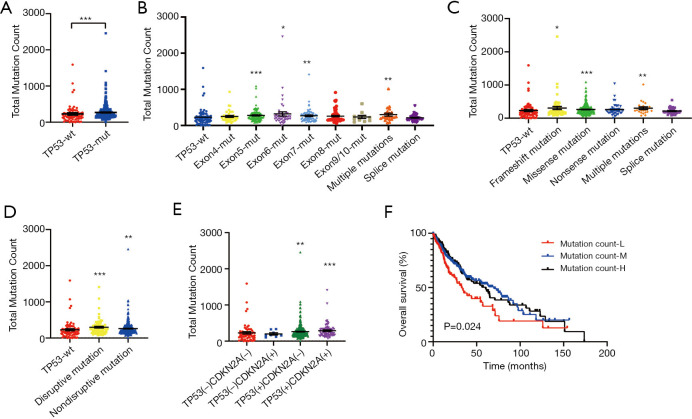
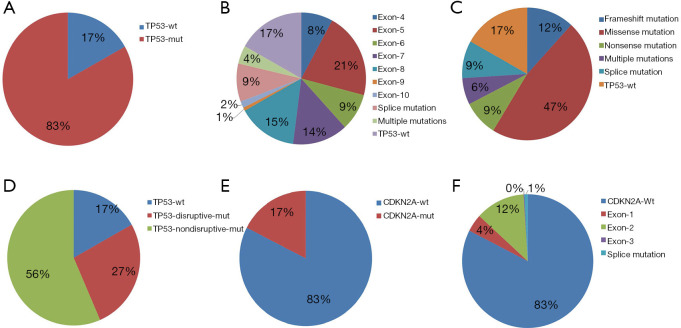
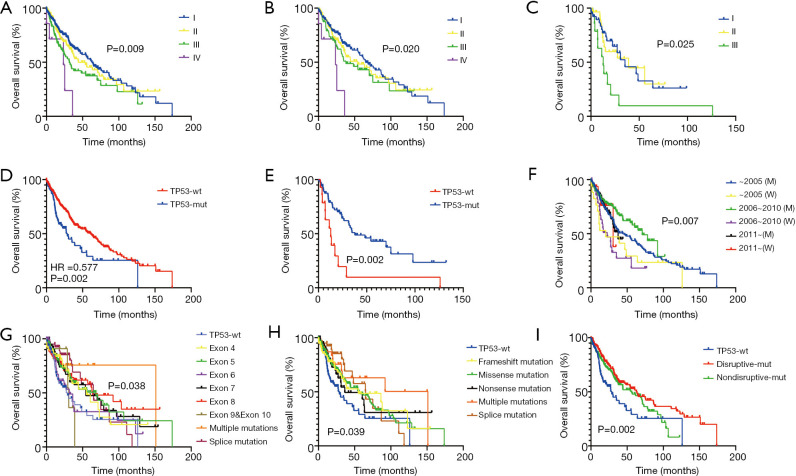
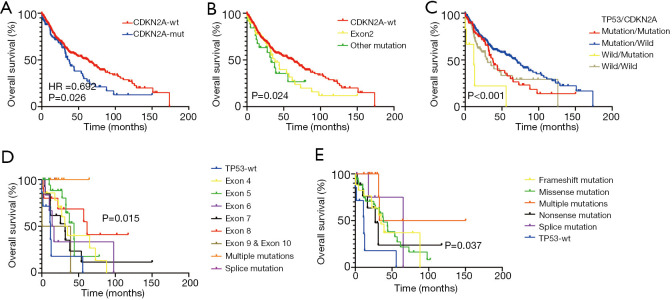
TP53 and CDKN2A exhibited a high frequency of somatic mutations in early-stage LUSC in our center. Data for 1,176 samples were collected from TCGA. CDKN2A mutation status was associated with TP53 mutation status (P=0.040). TP53 mutation was a favorable prognostic factor for early-stage LUSC. The OS times of patients with wild-type and mutated TP53 were 28.94 and 60.48 months, respectively (P=0.002). In contrast, CDKN2A mutations were significantly associated with a shorter survival time in early-stage LUSC. The OS times for wild-type and mutated CDKN2A patients were 62.81 and 37.55 months, respectively (P=0.026). Patients with TP53 mutations had higher total mutation counts compared to patients with wild-type TP53. Furthermore, OS was significantly shorter in patients with a low mutation count compared to patients with a median or high mutation count.
Early-stage LUSC patients with TP53 mutations had a longer OS, while those with CDKN2A mutations had a shorter OS. Furthermore, patients with TP53 mutation/CDKN2A wild-type status had a longer OS. CDKN2A mutation is a vital indicator for prognostic assessment according to TP53 status. The prolonged survival of patients with TP53 mutations may be due to their high mutation counts. Larger datasets are required to validate these observations.
肺鳞状细胞癌(LUSC)的特征是肿瘤蛋白p53(TP53)和细胞周期蛋白依赖性激酶抑制剂2A(CDKN2A)频繁发生突变。然而,迄今为止,TP53/CDKN2A状态对早期LUSC患者临床结局的影响尚不清楚。
对16例早期手术切除的LUSC组织样本进行二代测序(NGS)分析。从癌症基因组图谱(TCGA)数据库下载有关TP53和CDKN2A改变以及患者生存时间的信息。研究TP53和CDKN2A状态与肿瘤特征、包括总生存期(OS)和无病生存期(DFS)在内的结局以及突变计数之间的关联。
在本中心的早期LUSC中,TP53和CDKN2A表现出较高的体细胞突变频率。从TCGA收集了1176个样本的数据。CDKN2A突变状态与TP53突变状态相关(P = 0.040)。TP53突变是早期LUSC的一个有利预后因素。TP53野生型和突变型患者的OS时间分别为28.94个月和60.48个月(P = 0.002)。相比之下,CDKN2A突变与早期LUSC患者较短的生存时间显著相关。CDKN2A野生型和突变型患者的OS时间分别为62.81个月和37.55个月(P = 0.026)。与TP�3野生型患者相比,TP53突变患者的总突变计数更高。此外,与突变计数处于中位数或高位的患者相比,突变计数低的患者OS明显更短。
TP53突变的早期LUSC患者OS更长,而CDKN2A突变的患者OS更短。此外,TP53突变/CDKN2A野生型状态的患者OS更长。根据TP53状态,CDKN2A突变是预后评估的重要指标。TP53突变患者生存期延长可能归因于其高突变计数。需要更大的数据集来验证这些观察结果。