Health Services Management Training Centre, Semmelweis University, Budapest, Hungary.
MTA-ELTE Statistical and Biological Physics Research Group, Dept. of Biological Physics, Eötvös University, Budapest, Hungary.
PLoS Comput Biol. 2021 Sep 17;17(9):e1009327. doi: 10.1371/journal.pcbi.1009327. eCollection 2021 Sep.
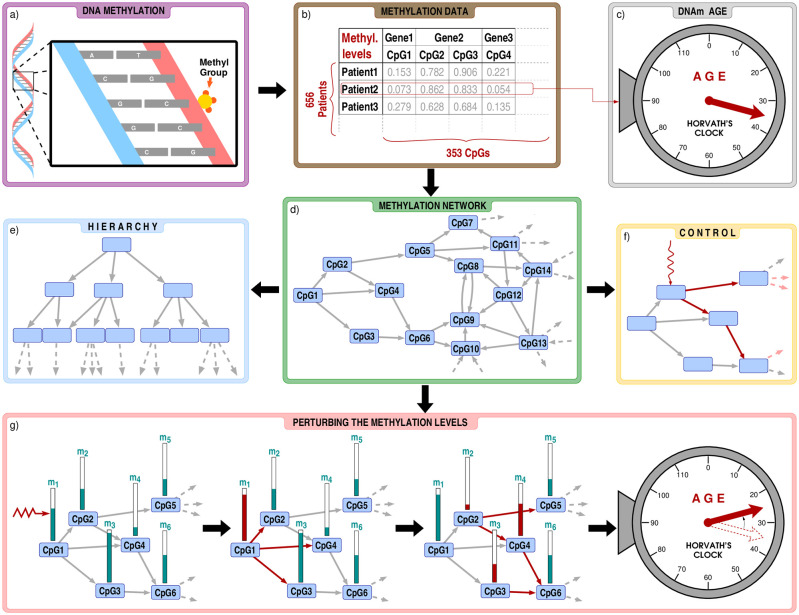
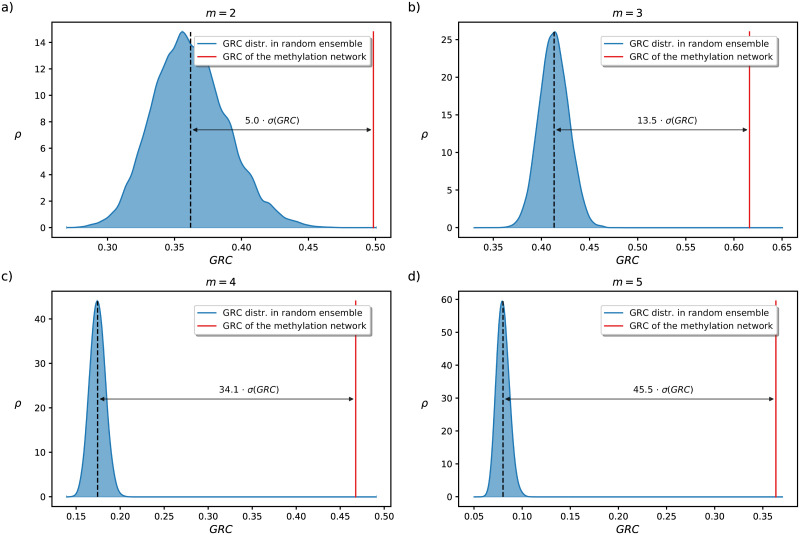
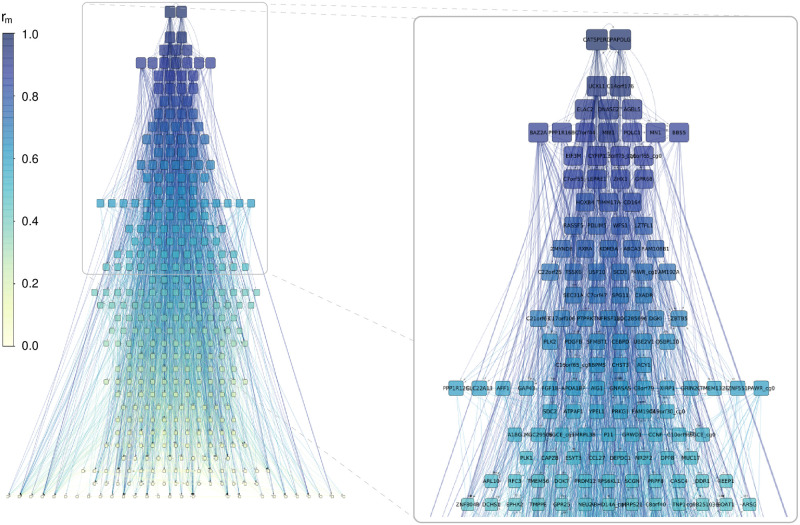
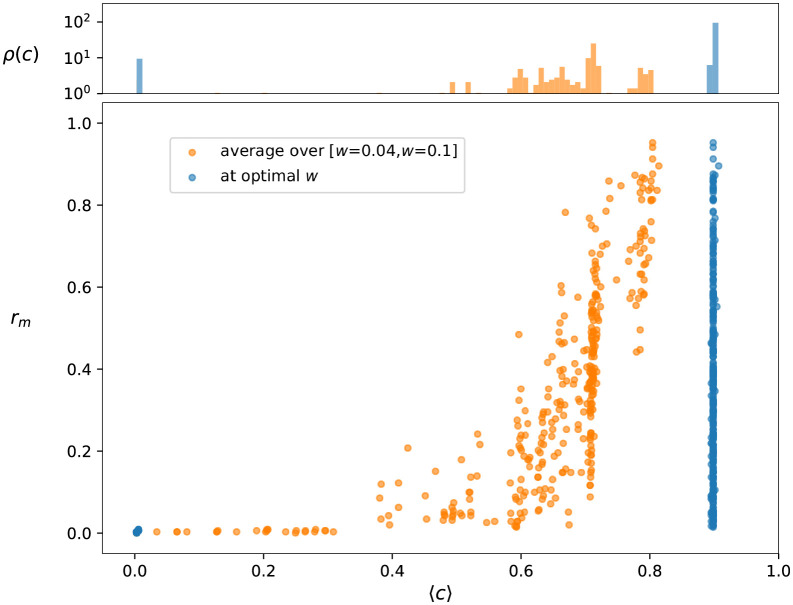
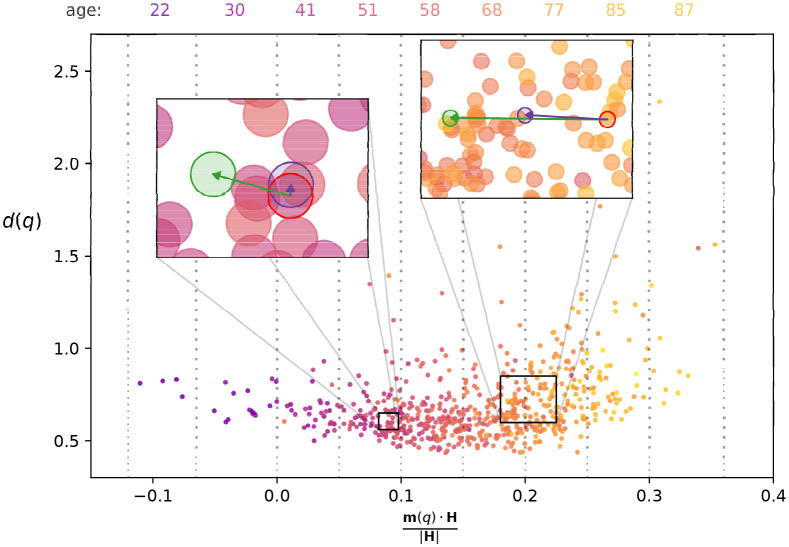
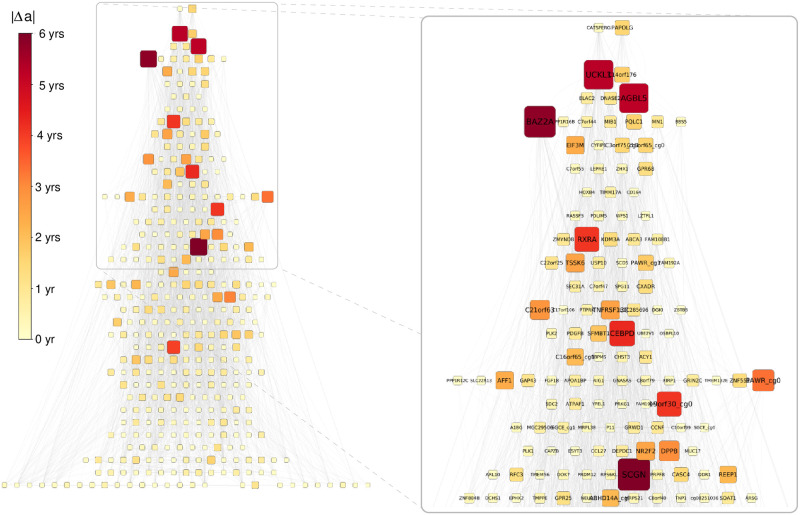
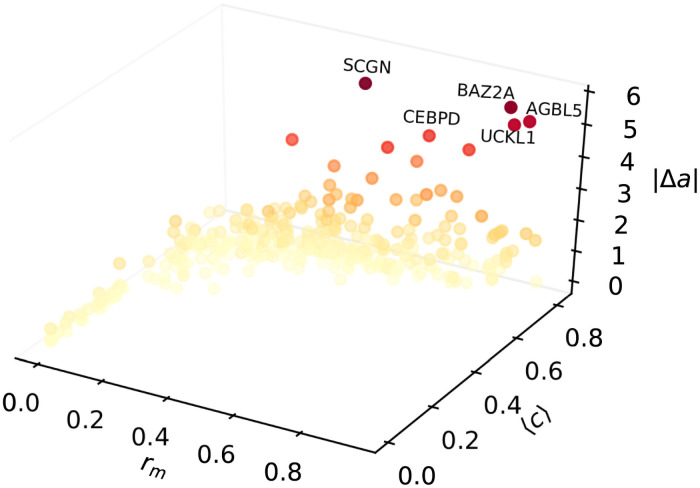
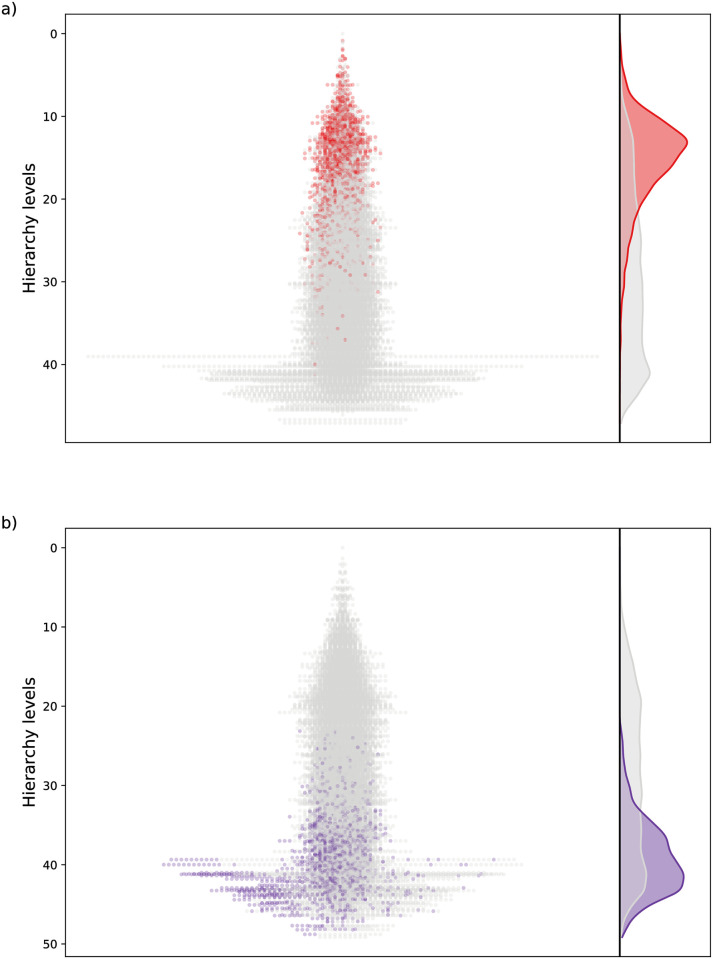
DNA methylation provides one of the most widely studied biomarkers of ageing. Since the methylation of CpG dinucleotides function as switches in cellular mechanisms, it is plausible to assume that by proper adjustment of these switches age may be tuned. Though, adjusting hundreds of CpG methylation levels coherently may never be feasible and changing just a few positions may lead to biologically unstable state. A prominent example of methylation-based age estimators is provided by Horvath's clock, based on 353 CpG dinucleotides, showing a high correlation (not necessarily causation) with chronological age across multiple tissue types. On this small subset of CpG dinucleotides we demonstrate how the adjustment of one methylation level leads to a cascade of changes at other sites. Among the studied subset, we locate the most important CpGs (and related genes) that may have a large influence on the rest of the sub-system. According to our analysis, the structure of this network is way more hierarchical compared to what one would expect based on ensembles of uncorrelated connections. Therefore, only a handful of CpGs is enough to modify the system towards a desired state. When propagation of the change over the network is taken into account, the resulting modification in the predicted age can be significantly larger compared to the effect of isolated CpG perturbations. By adjusting the most influential single CpG site and following the propagation of methylation level changes we can reach up to 5.74 years in virtual age reduction, significantly larger than without taking into account of the network control. Extending our approach to the whole methylation network may identify key nodes that have controller role in the ageing process.
DNA 甲基化提供了最广泛研究的衰老生物标志物之一。由于 CpG 二核苷酸的甲基化作为细胞机制中的开关,因此可以假设通过适当调整这些开关,可能可以调整年龄。尽管如此,协调数百个 CpG 甲基化水平可能永远无法实现,而仅仅改变几个位置可能会导致生物不稳定状态。Horvath 时钟提供了基于 353 个 CpG 二核苷酸的甲基化年龄估算器的一个突出示例,它在多个组织类型中显示出与实际年龄高度相关(不一定是因果关系)。在这个 CpG 二核苷酸的小子集上,我们展示了一个甲基化水平的调整如何导致其他位置的级联变化。在所研究的子集中,我们定位了最重要的 CpG(和相关基因),它们可能对子系统的其余部分有很大影响。根据我们的分析,与基于不相关连接的集合相比,该网络的结构更加层次化。因此,只需要少数几个 CpG 就足以将系统修改为所需状态。当考虑到网络中的变化传播时,与孤立的 CpG 扰动相比,预测年龄的变化修饰可以显著更大。通过调整最有影响力的单个 CpG 位点并遵循甲基化水平变化的传播,我们可以在虚拟年龄减少方面达到 5.74 年,明显大于不考虑网络控制的效果。将我们的方法扩展到整个甲基化网络可能会识别出在衰老过程中具有控制器作用的关键节点。