Molecular Pathology, Institute of Pathology, Faculty of Medicine and University Hospital Cologne, University of Cologne, 50931, Cologne, Germany.
Department of Translational Genomics, Faculty of Medicine and University Hospital Cologne, University of Cologne, 50931, Cologne, Germany.
Nat Commun. 2021 Sep 17;12(1):5505. doi: 10.1038/s41467-021-25728-8.
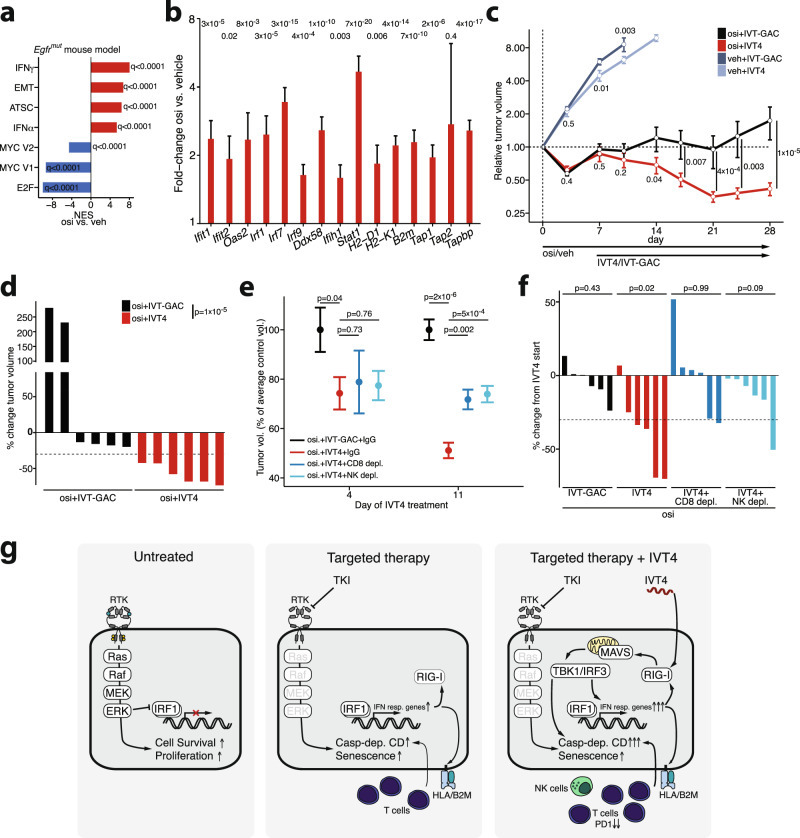
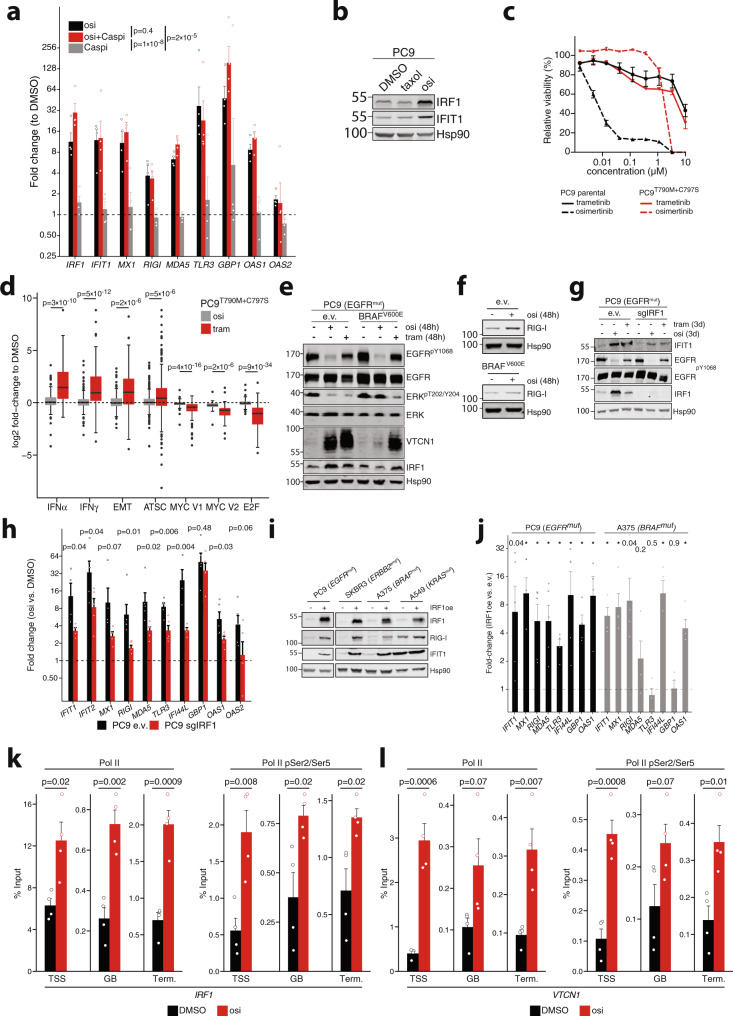
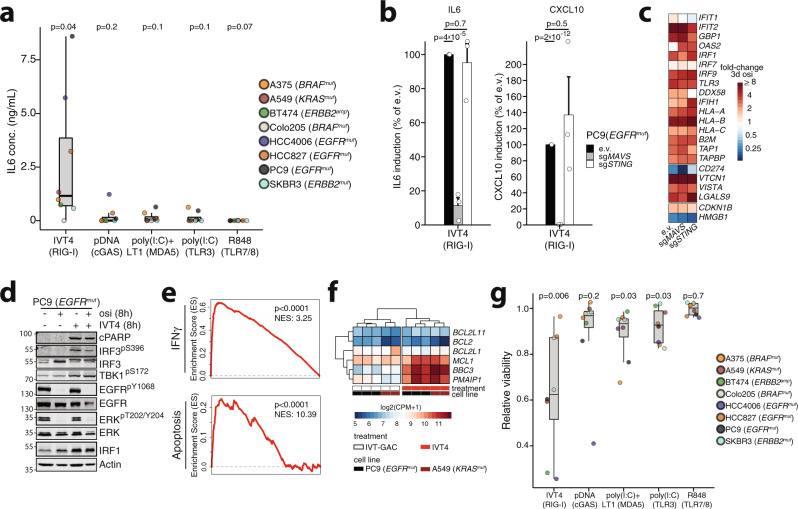
Kinase inhibitors suppress the growth of oncogene driven cancer but also enforce the selection of treatment resistant cells that are thought to promote tumor relapse in patients. Here, we report transcriptomic and functional genomics analyses of cells and tumors within their microenvironment across different genotypes that persist during kinase inhibitor treatment. We uncover a conserved, MAPK/IRF1-mediated inflammatory response in tumors that undergo stemness- and senescence-associated reprogramming. In these tumor cells, activation of the innate immunity sensor RIG-I via its agonist IVT4, triggers an interferon and a pro-apoptotic response that synergize with concomitant kinase inhibition. In humanized lung cancer xenografts and a syngeneic Egfr-driven lung cancer model these effects translate into reduction of exhausted CD8 T cells and robust tumor shrinkage. Overall, the mechanistic understanding of MAPK/IRF1-mediated intratumoral reprogramming may ultimately prolong the efficacy of targeted drugs in genetically defined cancer patients.
激酶抑制剂抑制致癌基因驱动的癌症生长,但也会迫使选择治疗耐药细胞,这些细胞被认为会促进患者肿瘤复发。在这里,我们报告了在激酶抑制剂治疗期间持续存在的不同基因型的细胞和肿瘤及其微环境中的转录组学和功能基因组学分析。我们揭示了一种保守的、MAPK/IRF1 介导的炎症反应,该反应发生在经历干性和衰老相关重编程的肿瘤中。在这些肿瘤细胞中,通过其激动剂 IVT4 激活先天免疫传感器 RIG-I,触发干扰素和促凋亡反应,与伴随的激酶抑制协同作用。在人源化肺癌异种移植和同种基因驱动的肺癌模型中,这些效应转化为耗尽的 CD8 T 细胞减少和肿瘤明显缩小。总的来说,对 MAPK/IRF1 介导的肿瘤内重编程的机制理解可能最终延长靶向药物在遗传定义的癌症患者中的疗效。