Department of Experimental Oncology, IEO European Institute of Oncology IRCCS, Milan, Italy.
Department of Oncology and Hemato-oncology, Università degli Studi di Milano, Milan, Italy.
Mol Oncol. 2021 Dec;15(12):3385-3403. doi: 10.1002/1878-0261.13104. Epub 2021 Oct 21.
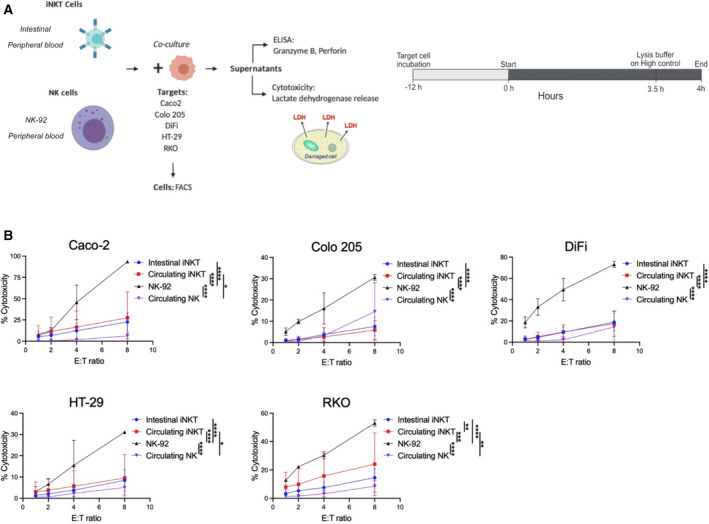
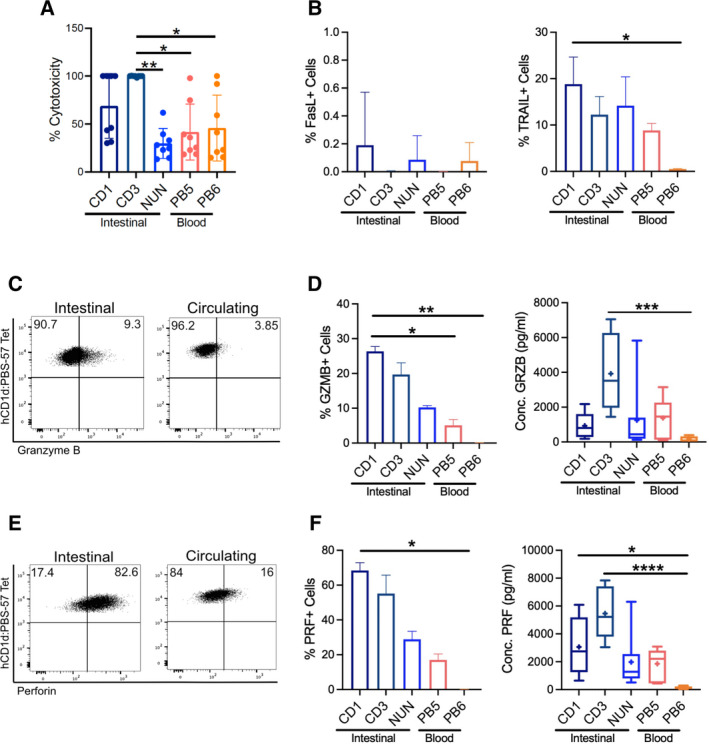
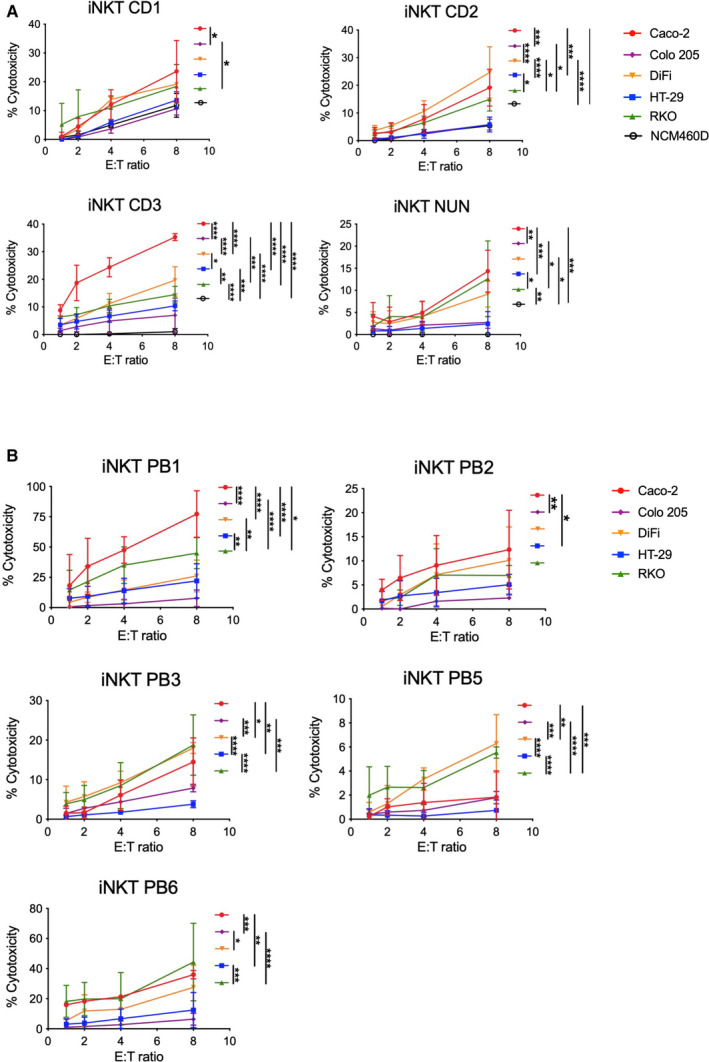
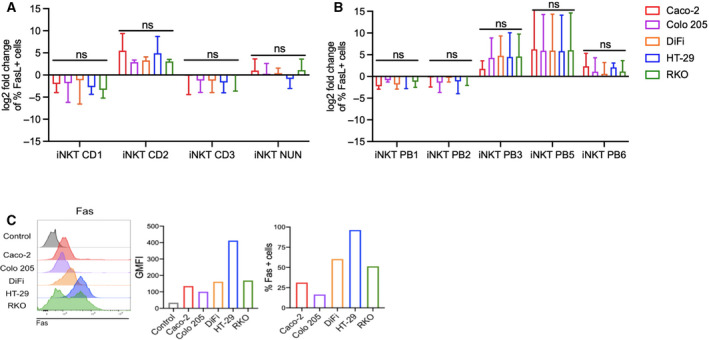
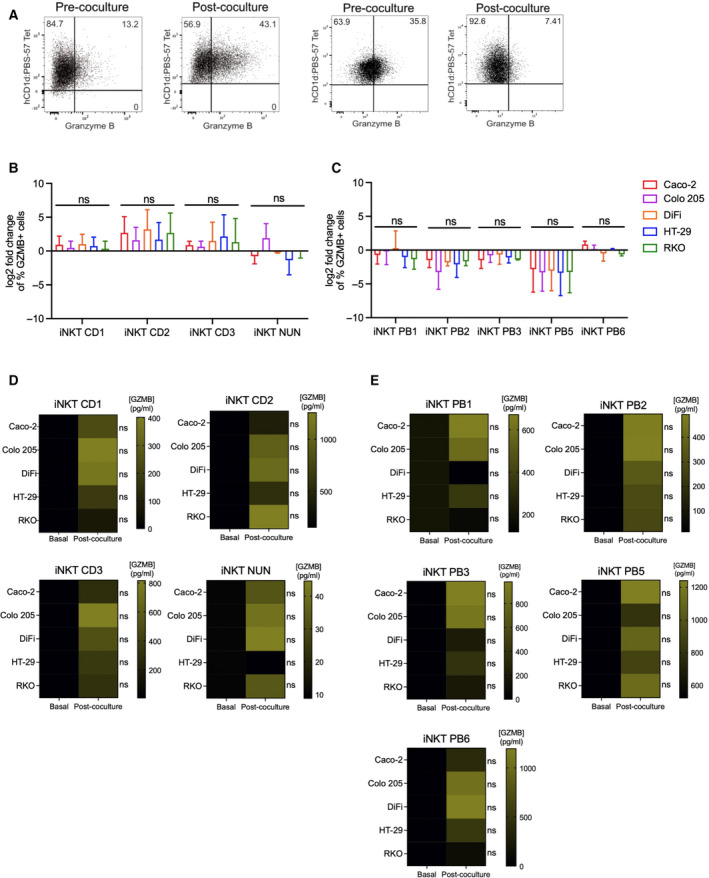
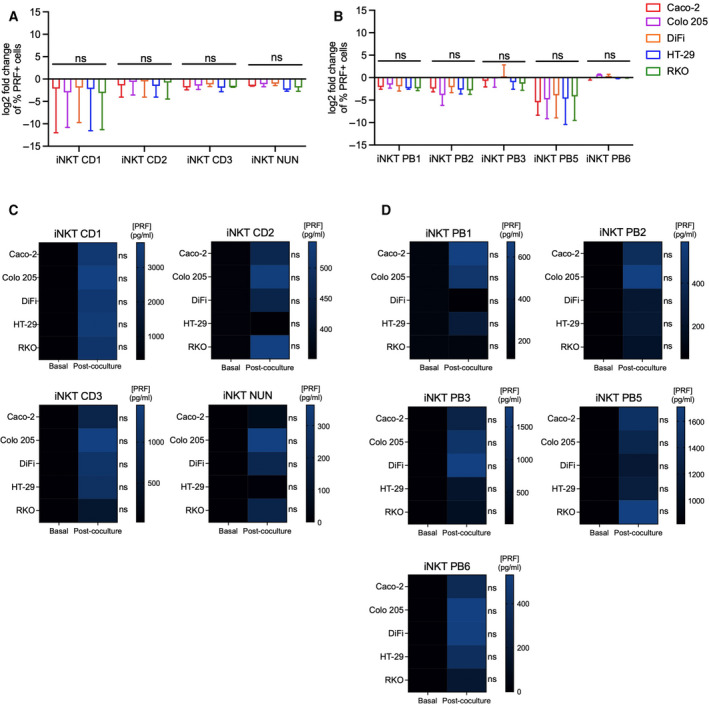
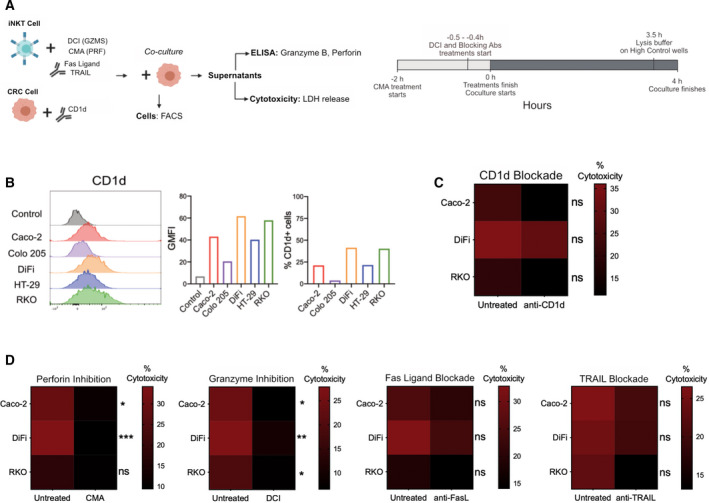
Invariant natural killer T (iNKT) cells are lipid-specific T lymphocytes endowed with cytotoxic activities and are thus considered important in antitumor immunity. While several studies have demonstrated iNKT cell cytotoxicity against different tumors, very little is known about their cell-killing activities in human colorectal cancer (CRC). Our aim was to assess whether human iNKT cells are cytotoxic against colon cancer cells and the mechanisms underlying this activity. For this purpose, we generated stable iNKT cell lines from peripheral blood and colon specimens and used NK-92 and peripheral blood natural killer cells as cell-mediated cytotoxicity controls. In vitro cytotoxicity was assessed using a panel of well-characterized human CRC cell lines, and the cellular requirements for iNKT cell cytotoxic functions were evaluated. We demonstrated that both intestinal and circulating iNKT cells were cytotoxic against the entire panel of CRC lines, as well as against freshly isolated patient-derived colonic epithelial cancer cells. Perforin and/or granzyme inhibition impaired iNKT cell cytotoxicity, whereas T-cell receptor (TCR) signaling was a less stringent requirement for efficient killing. This study is the first evidence of tissue-derived iNKT cell cytotoxic activity in humans, as it shows that iNKT cells depend on the perforin-granzyme pathway and both adaptive and innate signal recognition for proper elimination of colon cancer cells.
天然不变自然杀伤 T(iNKT)细胞是具有细胞毒性作用的脂类特异性 T 淋巴细胞,因此被认为在抗肿瘤免疫中具有重要作用。虽然有几项研究表明 iNKT 细胞对不同的肿瘤具有细胞毒性,但对其在人结直肠癌(CRC)中的细胞杀伤活性知之甚少。我们的目的是评估人 iNKT 细胞是否对结肠癌细胞具有细胞毒性,以及这种活性的潜在机制。为此,我们从外周血和结肠标本中生成了稳定的 iNKT 细胞系,并将 NK-92 和外周血自然杀伤细胞作为细胞介导的细胞毒性对照。我们使用一组经过充分表征的人 CRC 细胞系评估了体外细胞毒性,并评估了 iNKT 细胞细胞毒性功能的细胞要求。我们证明,肠道和循环中的 iNKT 细胞均对整个 CRC 细胞系以及新鲜分离的患者来源的结肠上皮癌细胞具有细胞毒性。穿孔素和/或颗粒酶抑制会损害 iNKT 细胞的细胞毒性,而 T 细胞受体(TCR)信号是有效杀伤的要求较低。这项研究首次证明了组织来源的 iNKT 细胞在人类中的细胞毒性活性,因为它表明 iNKT 细胞依赖于穿孔素-颗粒酶途径以及适应性和先天信号识别来正确消除结肠癌细胞。