National Influenza Centre, National Centre of Communicable Diseases, Ulaanbaatar, Mongolia.
Mongolian Academy of Medical Sciences, Ulaanbaatar, Mongolia.
Western Pac Surveill Response J. 2021 Jun 7;12(2):28-37. doi: 10.5365/wpsar.2020.11.4.003. eCollection 2021 Apr-Jun.
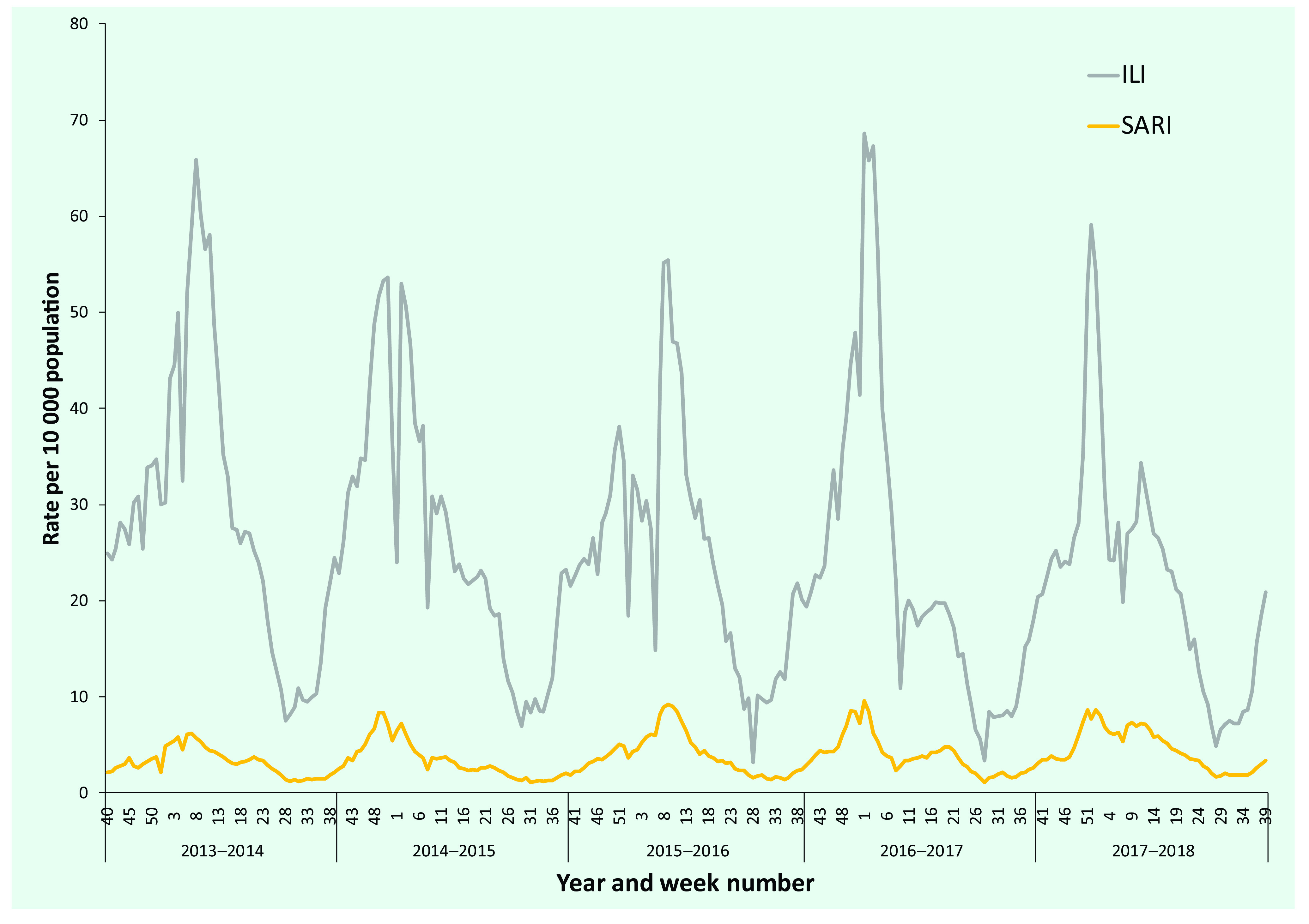
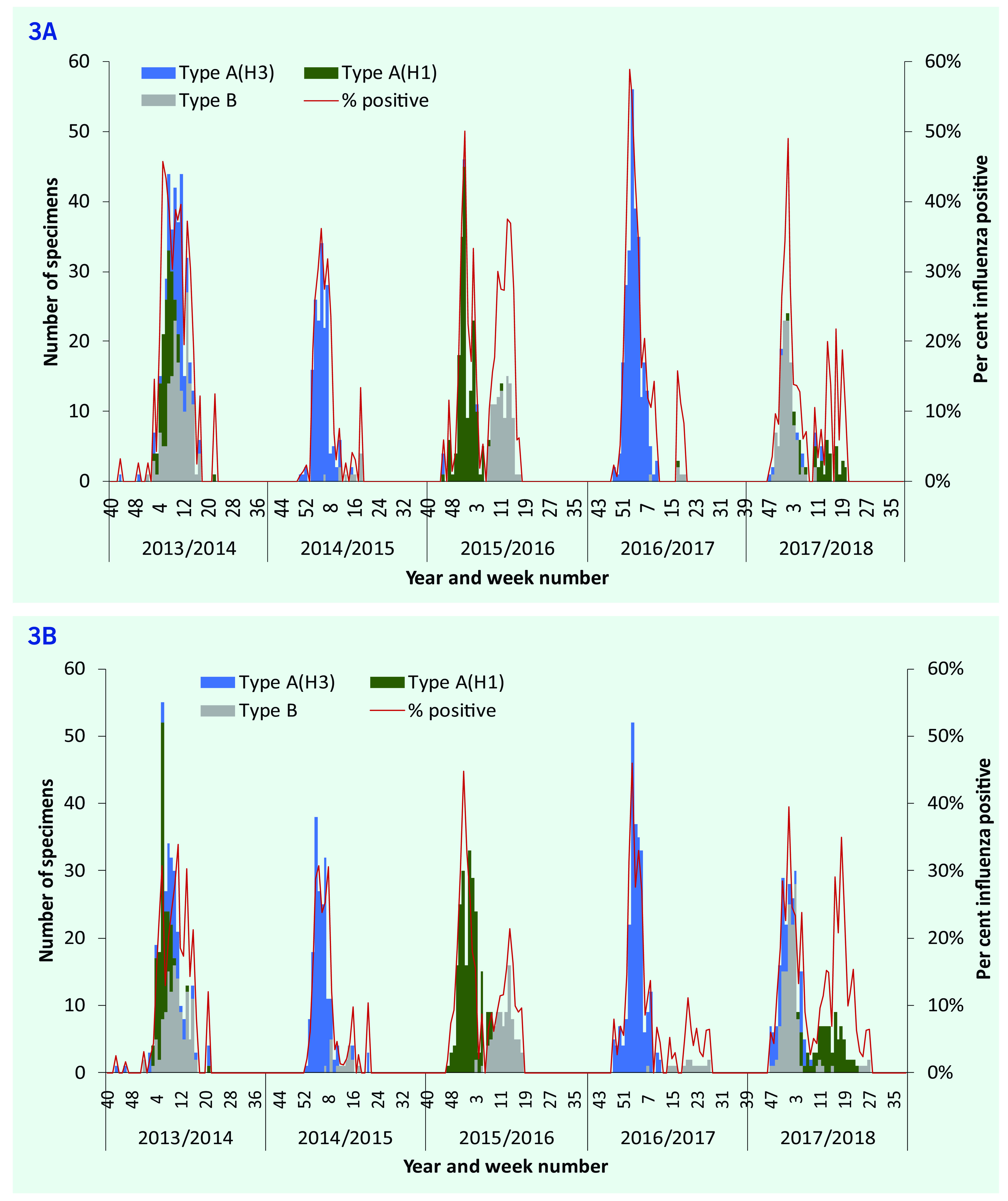
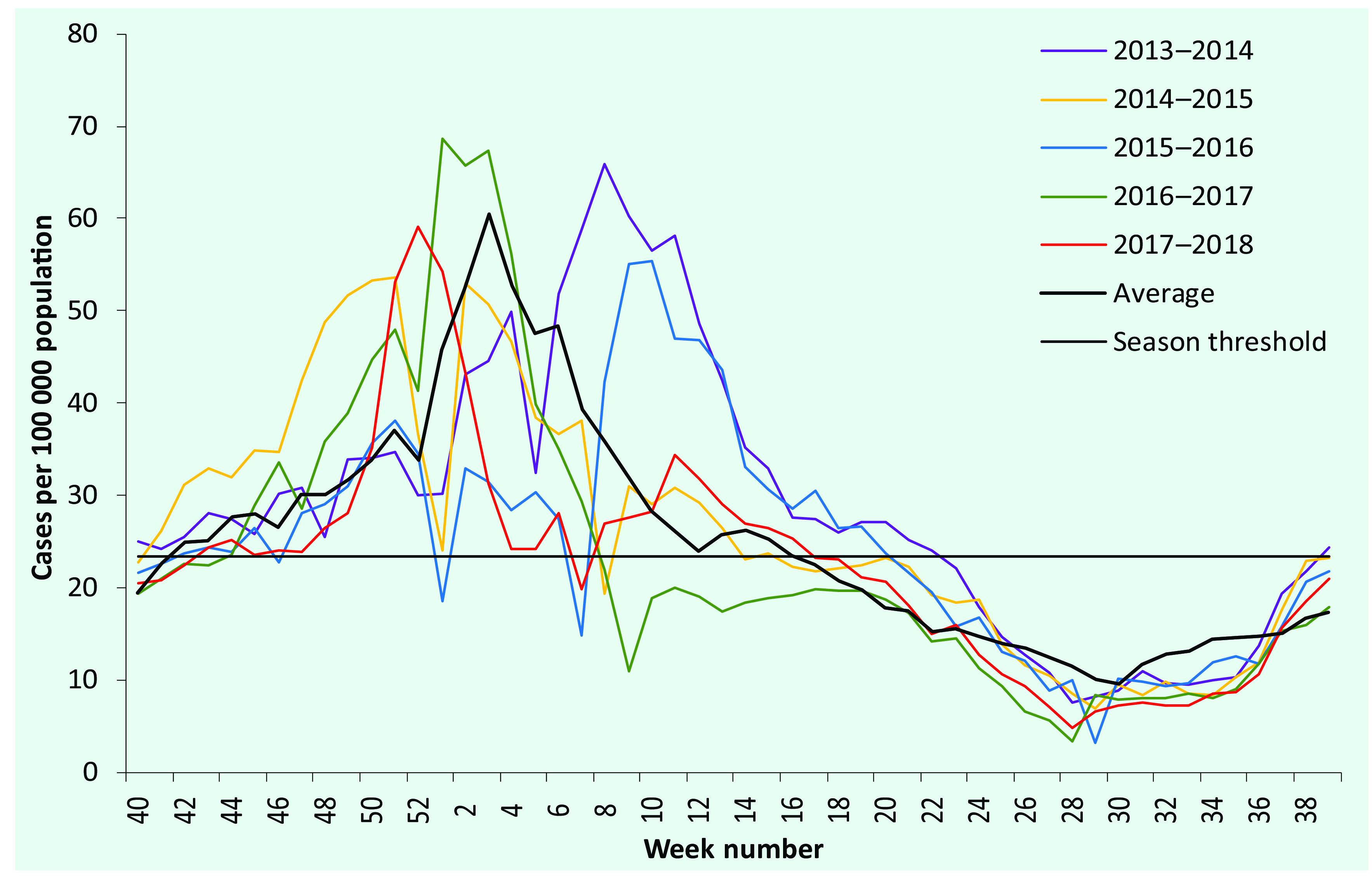
Mongolia is a vast, sparsely populated country in central Asia. Its harsh climate and nomadic lifestyle make the population vulnerable to acute respiratory infections, particularly influenza. Evidence on the morbidity, mortality and socioeconomic impact of influenza in Mongolia is scarce; however, routine surveillance for influenza-like illness (ILI), severe acute respiratory infection (SARI) and laboratory-detected influenza is conducted. This paper describes the epidemiology of influenza and the estimated burden of influenza-associated illness in Mongolia in the five influenza seasons between 2013-2014 and 2017-2018.
Demographic and laboratory data from 152 sentinel surveillance sites on all patients who met the case definitions of ILI and SARI between October 2013 and May 2018 were extracted and analysed as described in .
The estimated annual influenza-associated ILI and SARI rates, presented as ranges, were 1279-2798 and 81-666 cases per 100 000 population, respectively. Children aged < 5 years accounted for 67% of all ILI cases and 79% of all SARI cases. The annual specimen positivity for influenza was highest (11-30% for ILI and 8-31% for SARI) for children aged 5- < 15 years and children < 2 years old, respectively. The annual mortality rate due to pneumonia and SARI was highest among children aged < 2 years (15.8-54.0 per 100 000 population). Although the incidence of influenza-associated ILI and SARI was lowest for people aged 65 years, the mortality rate due to pneumonia and SARI (1.2-5.1 per 100 000) was higher than that for those aged 15-64 years.
The estimated influenza-associated ILI and SARI incidence rates are high in Mongolia, and children, especially those aged < 5 years, have the highest influenza-associated burden in Mongolia. These findings provide evidence for decision-makers in Mongolia to consider targeted influenza vaccination, particularly for children.
蒙古国是一个位于亚洲中部、幅员辽阔但人口稀少的国家。其恶劣的气候和游牧生活方式使民众易患急性呼吸道感染,尤其是流感。目前蒙古国的流感发病率、死亡率和社会经济影响的相关证据有限;然而,该国仍在对流感样病例(ILI)、严重急性呼吸道感染(SARI)和实验室检测到的流感进行常规监测。本文描述了 2013-2014 年至 2017-2018 年五个流感季节期间蒙古国流感的流行病学情况和流感相关疾病的估计负担。
从 2013 年 10 月至 2018 年 5 月期间符合 ILI 和 SARI 病例定义的所有患者的 152 个哨点监测点收集了人口统计学和实验室数据,并按照 中的描述进行了提取和分析。
ILI 和 SARI 的年估计发病率分别为 1279-2798 例和 81-666 例/10 万人。所有 ILI 病例中,年龄<5 岁的儿童占 67%,所有 SARI 病例中,年龄<5 岁的儿童占 79%。ILI 患者中,年龄为 5-<15 岁和<2 岁的儿童中流感病毒阳性率最高(分别为 11-30%和 8-31%),SARI 患者中,年龄<2 岁的儿童流感病毒阳性率最高(8-31%)。<2 岁儿童的肺炎和 SARI 死亡率最高(15.8-54.0/10 万人)。尽管 65 岁以上人群的ILI 和 SARI 发病率最低,但肺炎和 SARI 的死亡率(1.2-5.1/10 万人)高于 15-64 岁人群。
蒙古国的ILI 和 SARI 发病率估计较高,儿童,尤其是<5 岁的儿童,在蒙古国流感负担最重。这些发现为蒙古国决策者考虑针对流感的疫苗接种提供了依据,特别是针对儿童。