Sinai Health System, Infectious Disease Epidemiology Research Unit, University of Toronto, Toronto, ON, Canada.
Influenza Other Respir Viruses. 2018 Jan;12(1):22-29. doi: 10.1111/irv.12504. Epub 2017 Dec 2.
To determine factors associated with a serious outcome (hospital admission or severe outcome: critical care or death) and associated with illness caused by laboratory-confirmed influenza, with a specific interest in low- and middle-income countries (LMIC).
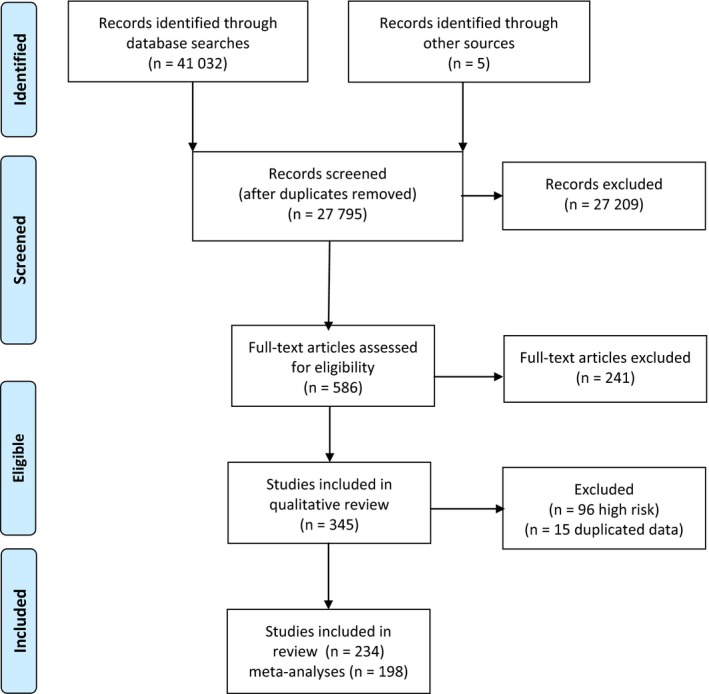
Databases were searched on 11 March 2016 for reports of influenza and factors associated with mortality or morbidity in humans, with no language restrictions. Pooled risks were estimated using random-effects models.
Despite the heterogeneity of results across studies, known risk factors for serious disease were associated with both hospital admission and severe outcomes (critical care and/or death). In LMIC, but not in high income countries (HIC), pregnant women, people with HIV/AIDS and children < 5 years old (compared with older children) were at increased risk of a severe outcome. Also, although all patients with neurological conditions were at higher risk of severe outcomes than those without, children were at higher risk than adults and children who lived in a LMIC were at significantly higher risk than those living in HIC. Adults were more likely than children to suffer a severe outcome if they had diabetes or a hematologic condition, were obese or had liver disease. Asthma is a risk factor for hospital admission but not for severe outcomes.
Known risk factors for serious disease remain important predictors of hospital admission and severe outcomes with few differences between HIC and LMIC countries. These differences likely reflect differences in health-seeking behaviours and health services, but high heterogeneity between studies limits conclusions about the effect size.
确定与严重结局(住院或严重结局:重症监护或死亡)相关的因素,并确定与实验室确诊流感相关的疾病的相关因素,特别关注中低收入国家(LMIC)。
2016 年 3 月 11 日,在没有语言限制的情况下,对流感报告以及与人类死亡率或发病率相关的因素进行了数据库搜索。使用随机效应模型估计汇总风险。
尽管研究结果存在异质性,但已知的严重疾病危险因素与住院和严重结局(重症监护和/或死亡)均相关。在中低收入国家(而不是高收入国家),孕妇、艾滋病毒/艾滋病患者和<5 岁的儿童(与年龄较大的儿童相比)发生严重结局的风险增加。此外,尽管所有患有神经系统疾病的患者发生严重结局的风险均高于无此类疾病的患者,但儿童的风险高于成人,生活在中低收入国家的儿童的风险明显高于生活在高收入国家的儿童。与儿童相比,患有糖尿病或血液疾病、肥胖或肝脏疾病的成年人更有可能发生严重结局。哮喘是住院的危险因素,但不是严重结局的危险因素。
严重疾病的已知危险因素仍然是住院和严重结局的重要预测因素,高收入国家和中低收入国家之间几乎没有差异。这些差异可能反映了就医行为和卫生服务的差异,但研究之间的高度异质性限制了对效应大小的结论。