Oliva Salvatore, Veraldi Silvio, Cucchiara Salvatore, Russo Giusy, Spagnoli Alessandra, Cohen Stanley Allen
Pediatric Gastroenterology and Liver Unit, Maternal and Child Health Department, Sapienza University, Rome, Italy.
Department of Public Health and Infectious Diseases, Sapienza University of Rome, Rome, Italy.
Endosc Int Open. 2021 Sep 16;9(10):E1480-E1490. doi: 10.1055/a-1522-8723. eCollection 2021 Oct.
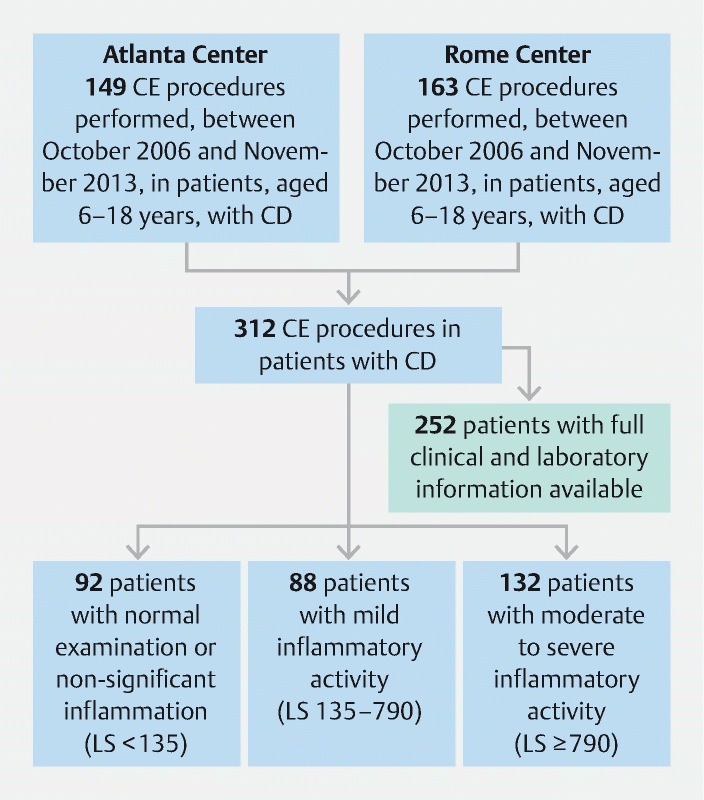
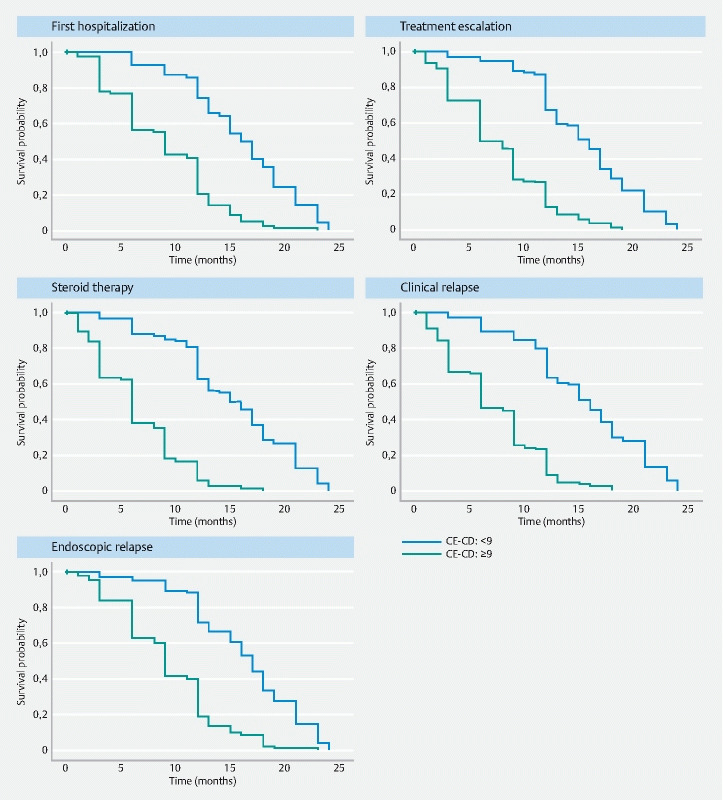
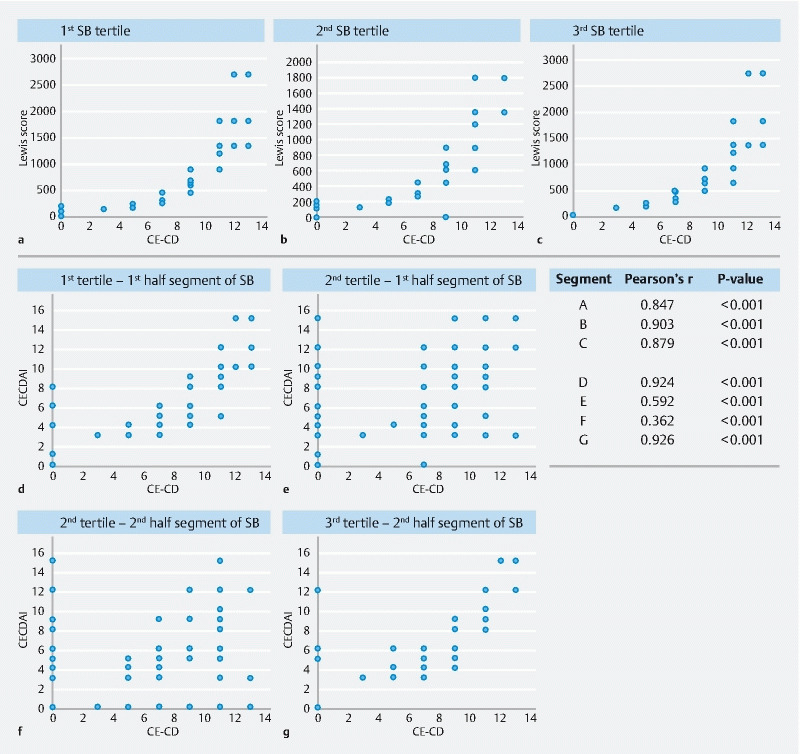
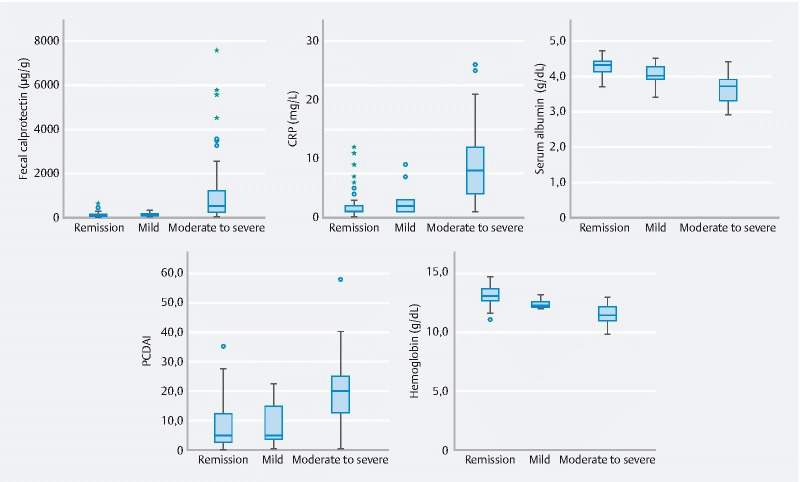
Two scores have been implemented to standardize capsule endoscopic (CE) findings in patients with Crohn's disease (CD): Lewis score (LS) and Capsule Endoscopy Crohn's Disease Activity Index (CECDAI). Both have limitations and are not well validated in the pediatric population. The aim of our study was to assess a new score (capsule endoscopy - Crohn's disease index, CE-CD) in pediatric patients with CD and to compare it to preexisting scores. This was a double-center, retrospective study involving pediatric subjects with CD who underwent CE. Correlation analyses between CE-CD, endoscopy scores and noninvasive markers of disease activities were performed. The ability of different CE scores to predict clinical and endoscopic outcomes was evaluated with regression and survival analyses. A total of 312 subjects were analyzed. The CE-CD score showed a moderate (Pearson's r = 0.581, < 0.001) and strong (r = 0.909, < 0.001) association with LS and CECDAI, respectively. CE-CD was a statistically significant predictor of hospitalization (hazard ratio [HR]1.061), treatment escalation (HR 1.062), steroid therapy (HR 1.082), clinical (HR 1.064) and endoscopic (HR 1.060) relapse over the twenty-four months ( < 0.001). Subjects with mucosal inflammation according to CE-CD (CE-CD ≥ 9) had worse outcomes compared to patients without inflammation (CE-CD < 9) (Log rang test < 0.001). The CE-CD score is a simple, reliable, reproducible, and predictive score for evaluation of small bowel inflammation in pediatric patients with CD. Prospective validation is needed to confirm the applicability of this new index in clinical practice.
已经采用了两种评分系统来标准化克罗恩病(CD)患者的胶囊内镜(CE)检查结果:刘易斯评分(LS)和胶囊内镜克罗恩病活动指数(CECDAI)。这两种评分系统都有局限性,并且在儿科人群中未得到充分验证。我们研究的目的是评估一种新的评分系统(胶囊内镜 - 克罗恩病指数,CE-CD)在患有CD的儿科患者中的应用,并将其与现有的评分系统进行比较。这是一项双中心回顾性研究,纳入了接受CE检查的患有CD的儿科受试者。对CE-CD、内镜检查评分和疾病活动的非侵入性标志物之间进行了相关性分析。通过回归分析和生存分析评估了不同CE评分预测临床和内镜检查结果的能力。总共分析了312名受试者。CE-CD评分与LS和CECDAI分别显示出中度(Pearson相关系数r = 0.581,P < 0.001)和高度(r = 0.909,P < 0.001)相关性。在24个月期间,CE-CD是住院治疗(风险比[HR]1.061)、治疗升级(HR 1.062)、类固醇治疗(HR 1.082)、临床(HR 1.064)和内镜检查(HR 1.060)复发的统计学显著预测指标(P < 0.001)。与无炎症的患者(CE-CD < 9)相比,根据CE-CD显示有黏膜炎症的患者(CE-CD≥9)预后更差(对数秩检验P < 0.001)。CE-CD评分是评估患有CD的儿科患者小肠炎症的一种简单、可靠、可重复且具有预测性的评分系统。需要进行前瞻性验证以确认这一新指标在临床实践中的适用性。