Hsieh Ronan W, Borson Steven, Tsagianni Anastasia, Zandberg Dan P
Division of Hematology/Oncology, UPMC Hillman Cancer Center, Pittsburgh, PA, United States.
Front Oncol. 2021 Sep 1;11:705614. doi: 10.3389/fonc.2021.705614. eCollection 2021.
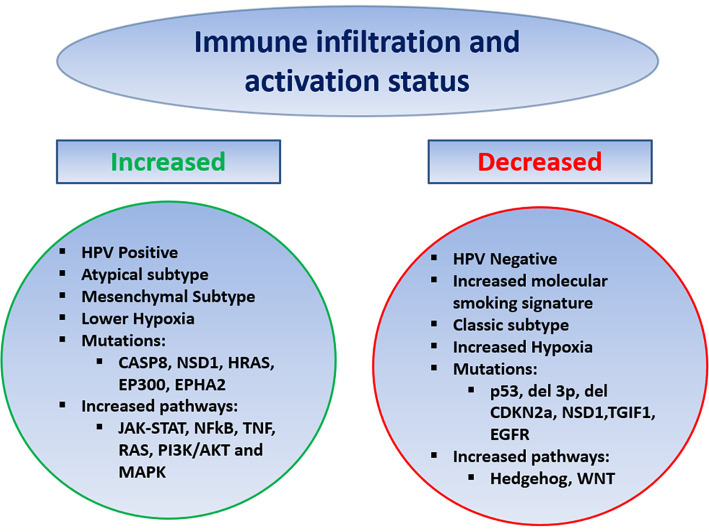
Head and neck cancer is the 6 most common cancer worldwide with the most common histology being squamous cell carcinoma (HNSCC). While the majority of patients present at a stage where curative intent therapy is possible, when patients recur and/or develop metastatic disease, outcomes are generally poor, especially with systemic therapy alone, and they lag behind other solid tumors. Over the last decade immunotherapy has revolutionized the field of oncology, and anti-PD-1-based therapy has changed the standard of care in recurrent/metastatic (R/M) HNSCC as well. With these gains have come new questions to continue to move the field forward. In this review, we discuss the tumor immune microenvironment and predictive biomarkers and current status and future directions for immunotherapy in recurrent/metastatic head and neck cancer.
头颈癌是全球第六大常见癌症,最常见的组织学类型为鳞状细胞癌(头颈部鳞状细胞癌)。虽然大多数患者就诊时处于可进行根治性治疗的阶段,但当患者复发和/或发生转移性疾病时,总体预后通常较差,尤其是仅采用全身治疗时,其预后落后于其他实体瘤。在过去十年中,免疫疗法彻底改变了肿瘤学领域,基于抗程序性死亡蛋白1(PD-1)的疗法也改变了复发/转移性(R/M)头颈部鳞状细胞癌的治疗标准。随着这些进展,也出现了新的问题,以推动该领域继续向前发展。在本综述中,我们讨论了肿瘤免疫微环境和预测性生物标志物,以及复发/转移性头颈癌免疫治疗的现状和未来方向。