Department of Life Sciences and Public Health, Section of Genomic Medicine, Università cattolica del Sacro Cuore, Roma, Italy.
Center For Life Nano Science@Sapienza, Istituto Italiano di Tecnologia; Department of Molecular Medicine, Università degli Studi di Roma "La Sapienza", Roma, Italy, Roma, Italy.
Elife. 2021 Sep 20;10:e68054. doi: 10.7554/eLife.68054.
Spinal muscular atrophy (SMA) is a neuromuscular disorder characterized by the degeneration of the second motor neuron. The phenotype ranges from very severe to very mild forms. All patients have the homozygous loss of the gene and a variable number of (generally 2-4 copies), inversely related to the severity. The amazing results of the available treatments have made compelling the need of prognostic biomarkers to predict the progression trajectories of patients. Besides the products, few other biomarkers have been evaluated so far, including some miRs.
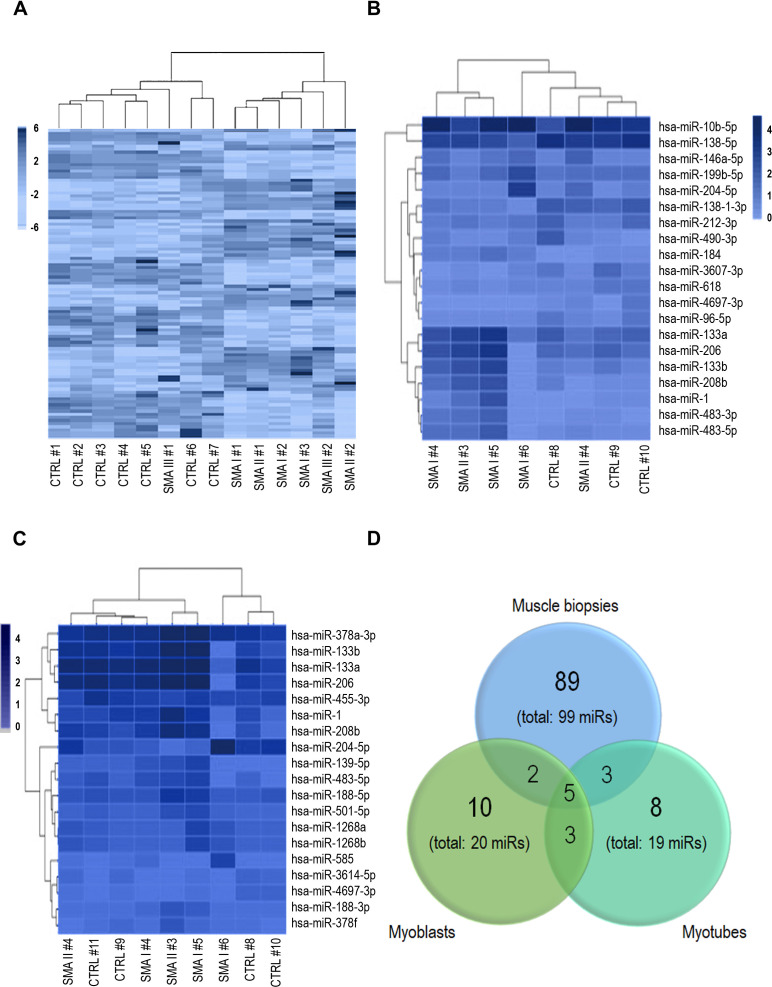
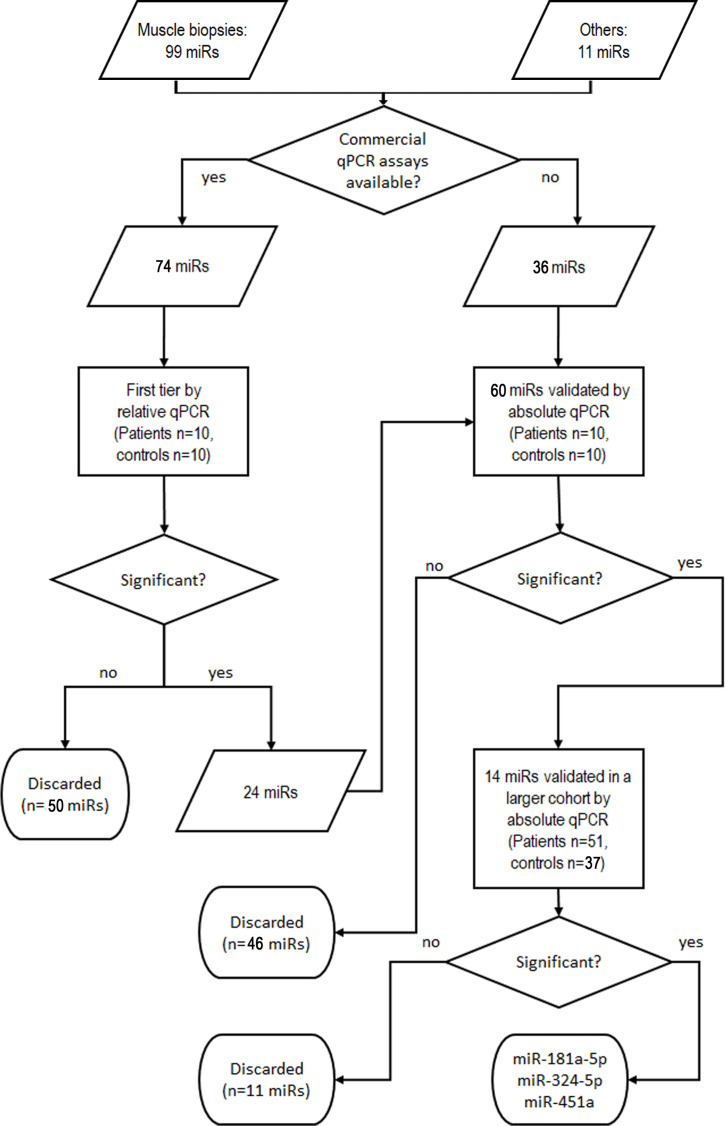
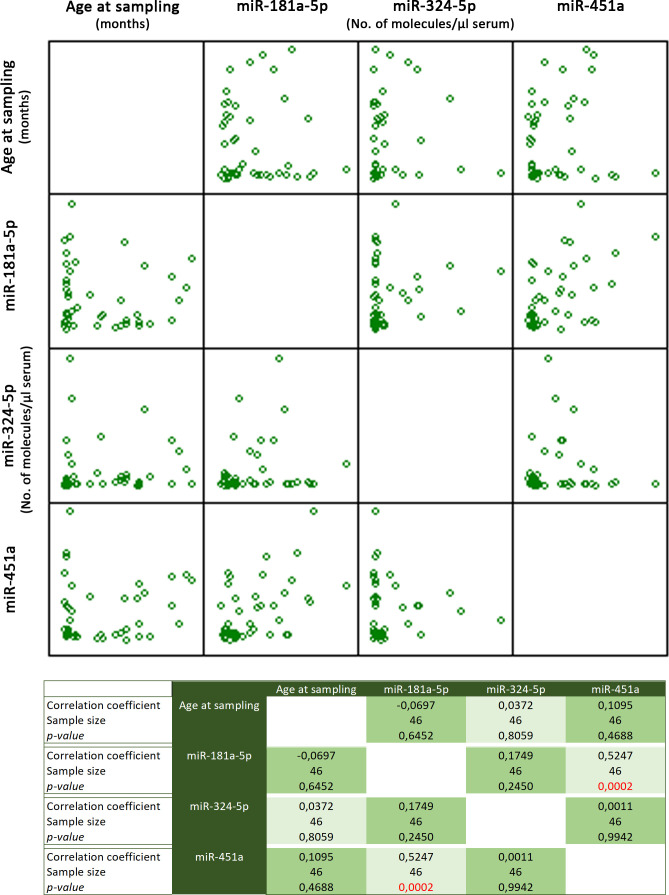
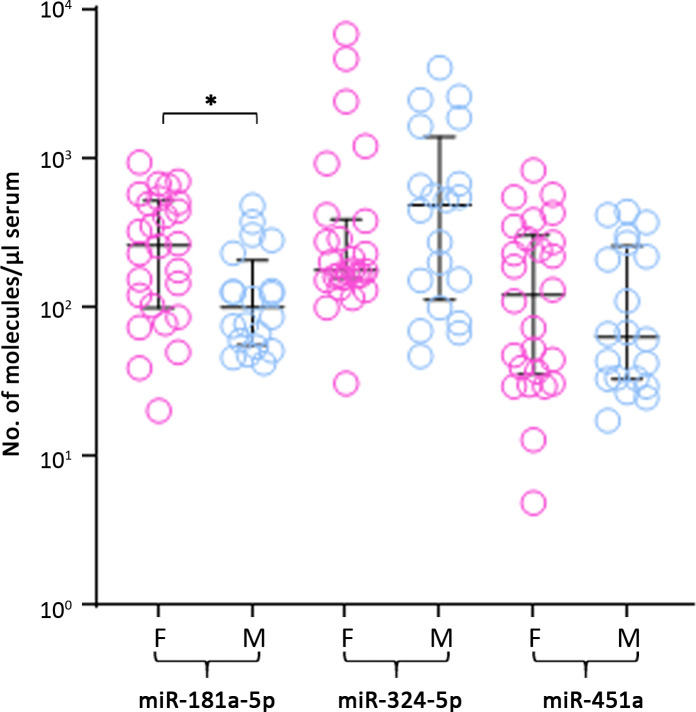
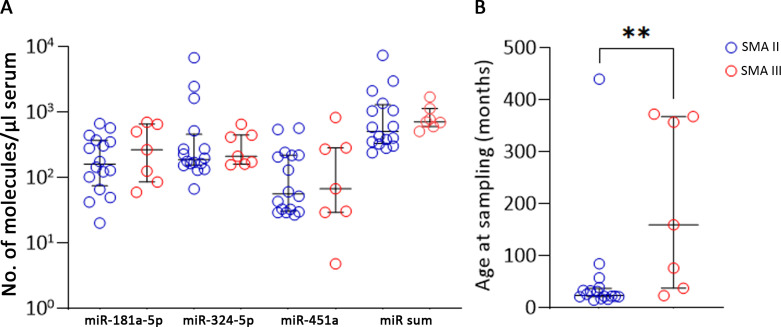
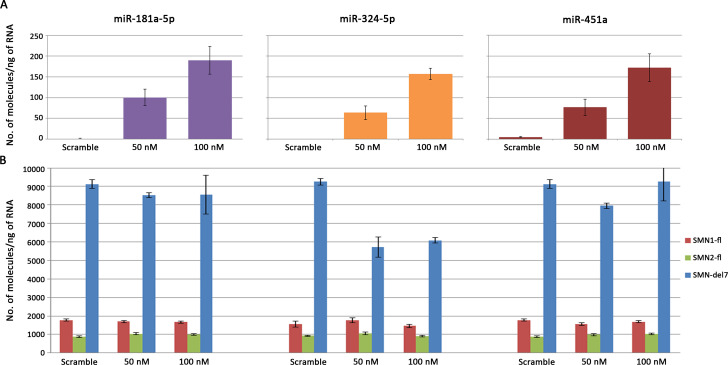
We performed whole miRNome analysis of muscle samples of patients and controls (14 biopsies and 9 cultures). The levels of muscle differentially expressed miRs were evaluated in serum samples (51 patients and 37 controls) and integrated with copies, full-length transcript levels in blood and age (SMA-score).
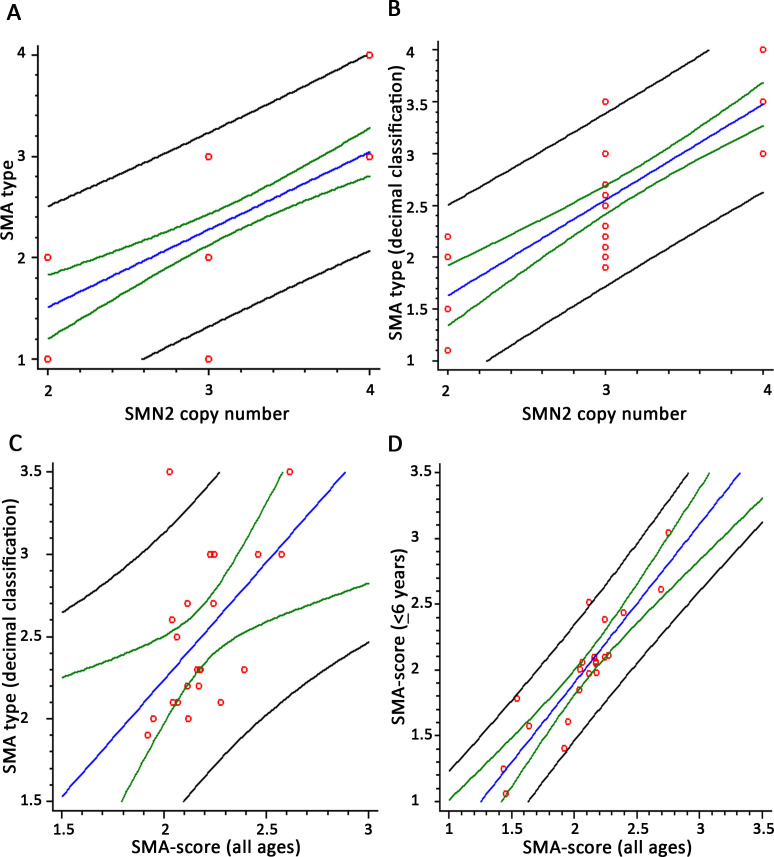
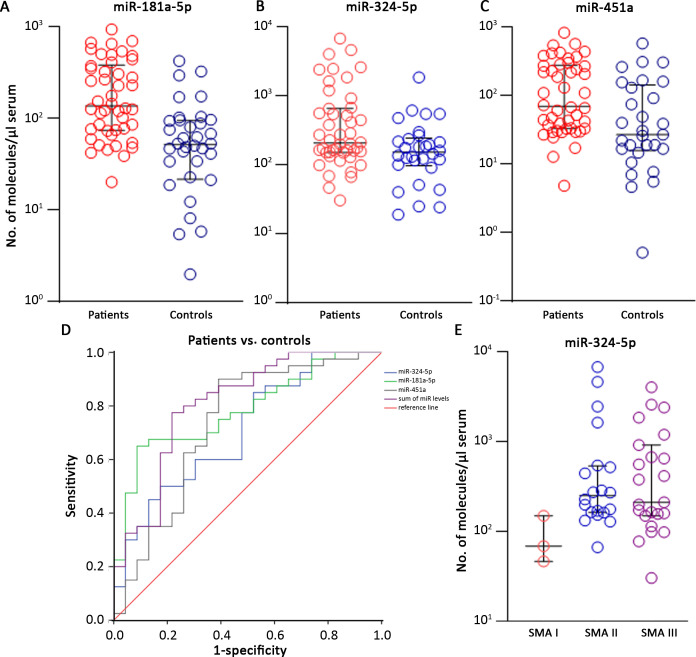
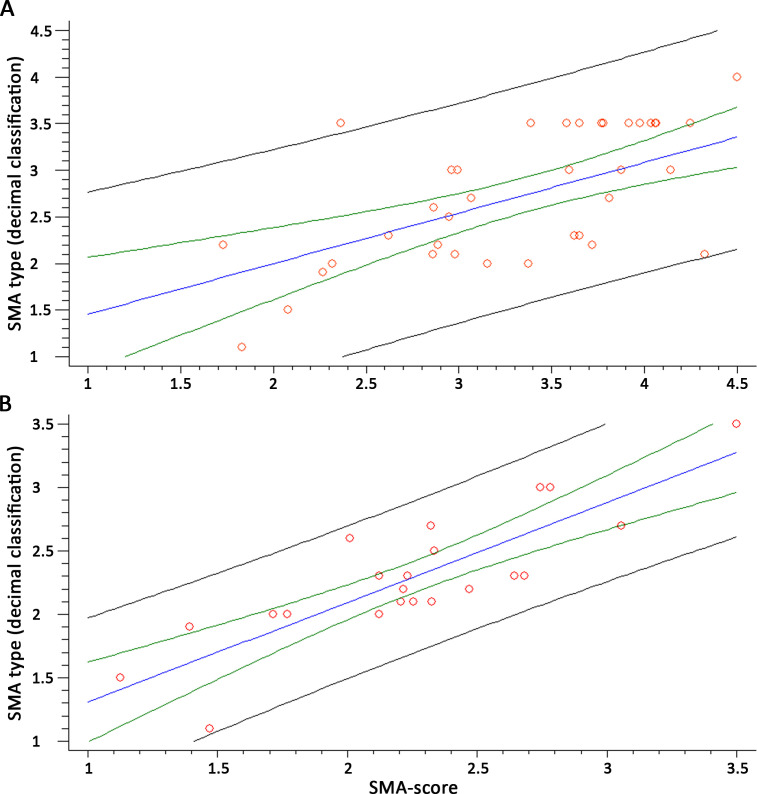
Over 100 miRs were differentially expressed in SMA muscle; 3 of them (hsa-miR-181a-5p, -324-5p, -451a; SMA-miRs) were significantly upregulated in the serum of patients. The severity predicted by the SMA-score was related to that of the clinical classification at a correlation coefficient of 0.87 (p<10).
miRNome analyses suggest the primary involvement of skeletal muscle in SMA pathogenesis. The SMA-miRs are likely actively released in the blood flow; their function and target cells require to be elucidated. The accuracy of the SMA-score needs to be verified in replicative studies: if confirmed, its use could be crucial for the routine prognostic assessment, also in presymptomatic patients.
Telethon Italia (grant #GGP12116).
脊髓性肌萎缩症(SMA)是一种以第二运动神经元变性为特征的神经肌肉疾病。表型范围从非常严重到非常轻微。所有患者均存在基因的纯合缺失和可变数量的(通常为 2-4 个拷贝),与严重程度呈反比。现有治疗方法的惊人效果使得迫切需要预测患者进展轨迹的预后生物标志物。除了 产物外,迄今为止还评估了其他一些生物标志物,包括一些微小 RNA。
我们对患者和对照者(14 例活检和 9 例培养)的肌肉样本进行了全微小 RNA 组分析。在血清样本(51 例患者和 37 例对照者)中评估肌肉差异表达微小 RNA 的水平,并与 拷贝数、血液中的全长转录物水平和年龄(SMA 评分)进行整合。
SMA 肌肉中存在 100 多种差异表达的微小 RNA;其中 3 种(hsa-miR-181a-5p、-324-5p、-451a;SMA-miRs)在患者的血清中显著上调。SMA 评分预测的严重程度与临床分类的严重程度相关,相关系数为 0.87(p<10)。
微小 RNA 组分析表明骨骼肌在 SMA 发病机制中起主要作用。SMA-miRs 可能在血流中被主动释放;其功能和靶细胞需要阐明。SMA 评分的准确性需要在复制研究中进行验证:如果得到证实,其在常规预后评估中的应用,包括在无症状患者中,可能至关重要。
意大利 Telethon 基金会(拨款号 GGP12116)。