Department of Anesthesiology and Pain Medicine, Juntendo University Graduate School of Medicine, 2-1-1 Hongo, Bunkyo-ku, Tokyo, 113-8421, Japan.
Department of Pharmacology, Hoshi University School of Pharmacy and Pharmaceutical Sciences, 2-4-41 Ebara, Shinagawa-ku, Tokyo, 142-8501, Japan.
Mol Brain. 2021 Sep 20;14(1):146. doi: 10.1186/s13041-021-00854-y.
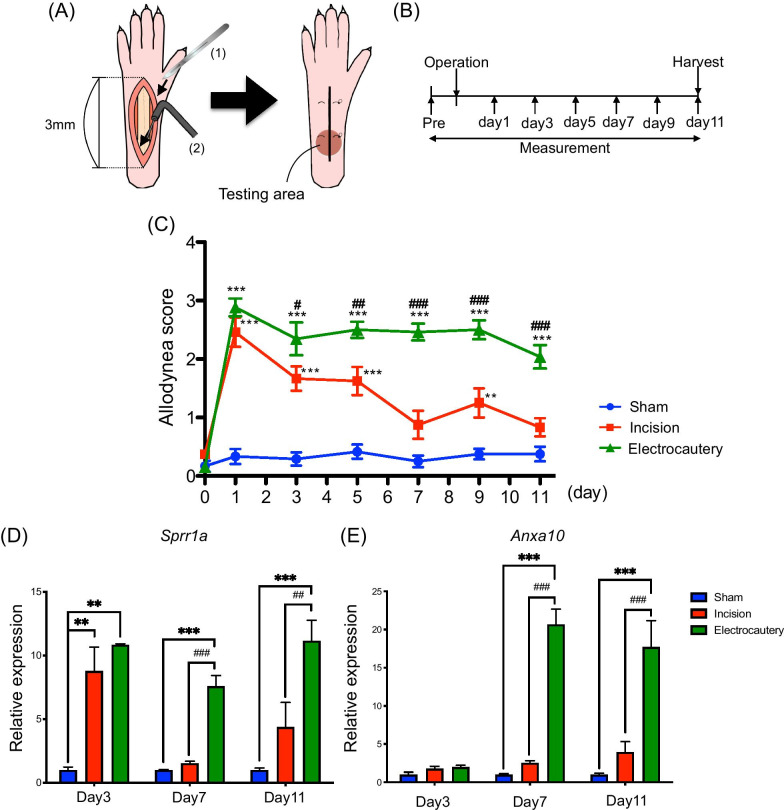
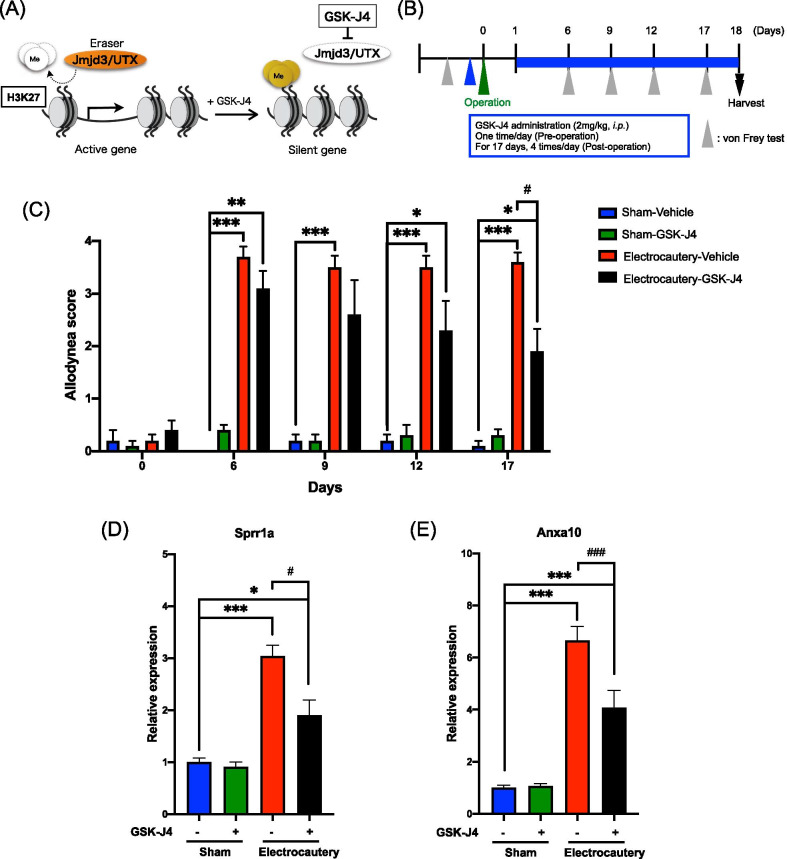
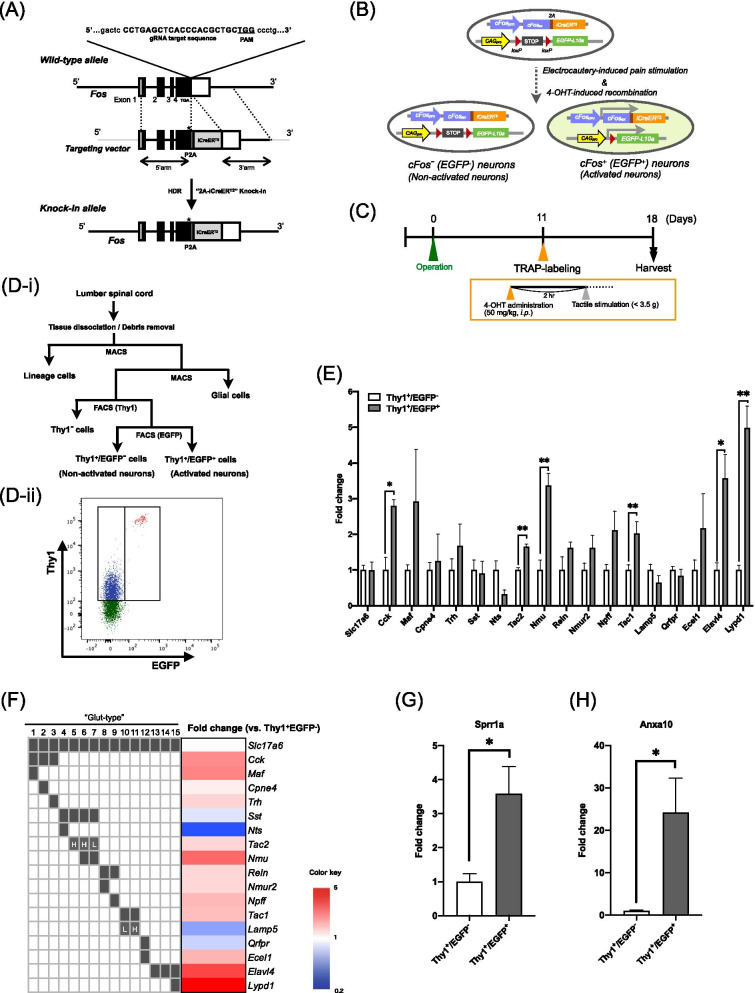
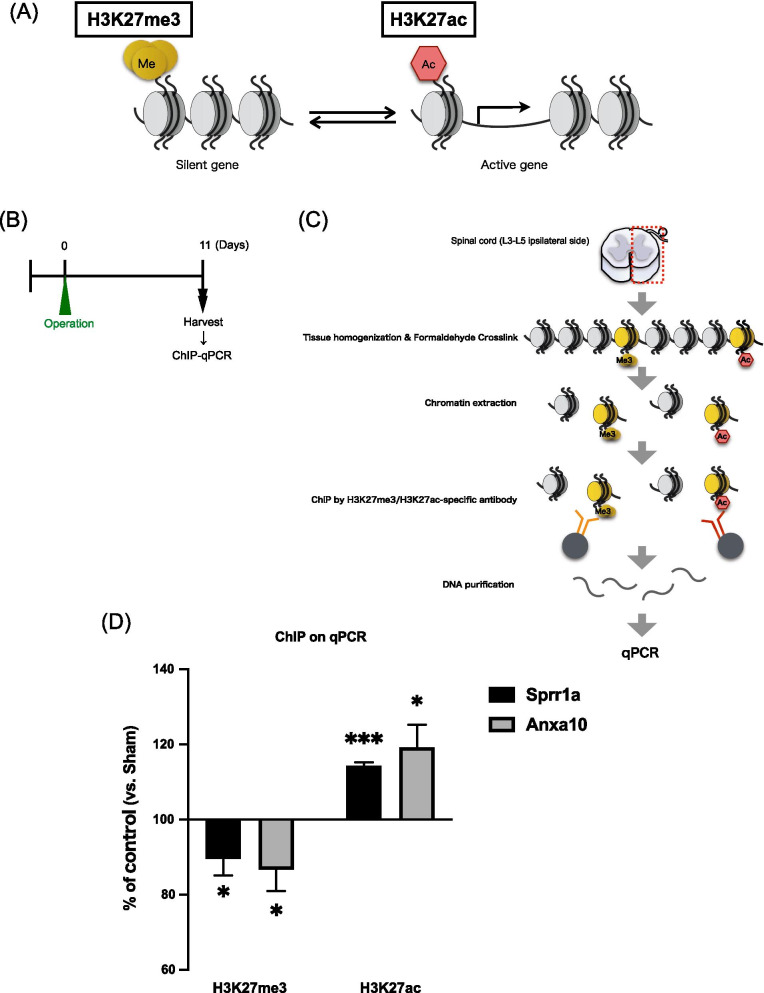
Chronic postsurgical pain (CPSP) is a serious problem. We developed a mouse model of CPSP induced by electrocautery and examined the mechanism of CPSP. In this mouse model, while both incision and electrocautery each produced acute allodynia, persistent allodynia was only observed after electrocautery. Under these conditions, we found that the mRNA levels of Small proline rich protein 1A (Sprr1a) and Annexin A10 (Anxa10), which are the key modulators of neuropathic pain, in the spinal cord were more potently and persistently increased by electrocautery than by incision. Furthermore, these genes were overexpressed almost exclusively in chronic postsurgical pain-activated neurons. This event was associated with decreased levels of tri-methylated histone H3 at Lys27 and increased levels of acetylated histone H3 at Lys27 at their promoter regions. On the other hand, persistent allodynia and overexpression of Sprr1a and Anxa10 after electrocautery were dramatically suppressed by systemic administration of GSK-J4, which is a selective H3K27 demethylase inhibitor. These results suggest that the effects of electrocautery contribute to CPSP along with synaptic plasticity and epigenetic modification.
慢性术后疼痛(CPSP)是一个严重的问题。我们建立了一种由电灼引起的 CPSP 小鼠模型,并研究了 CPSP 的发病机制。在该小鼠模型中,虽然切口和电灼都会产生急性痛觉过敏,但只有电灼后才会出现持续性痛觉过敏。在这些条件下,我们发现电灼比切口更强烈和持久地增加了脊髓中小富含脯氨酸的蛋白 1A(Sprr1a)和膜联蛋白 A10(Anxa10)的 mRNA 水平,这两种蛋白是神经病理性疼痛的关键调节剂。此外,这些基因几乎仅在慢性术后疼痛激活的神经元中过度表达。这一事件与组蛋白 H3 在赖氨酸 27 位的三甲基化水平降低和乙酰化组蛋白 H3 在赖氨酸 27 位的水平升高有关,这些变化发生在其启动子区域。另一方面,全身性给予 GSK-J4(一种选择性 H3K27 去甲基化酶抑制剂)可显著抑制电灼后持续性痛觉过敏和 Sprr1a 和 Anxa10 的过度表达。这些结果表明,电灼的作用与突触可塑性和表观遗传修饰一起导致了 CPSP。