Centre for Discovery Brain Sciences, University of Edinburgh, Edinburgh EH16 4SB, United Kingdom.
Perelman School of Medicine, University of Pennsylvania, Philadelphia, Pennsylvania 19104.
J Neurosci. 2021 Nov 3;41(44):9099-9111. doi: 10.1523/JNEUROSCI.0842-21.2021. Epub 2021 Sep 20.
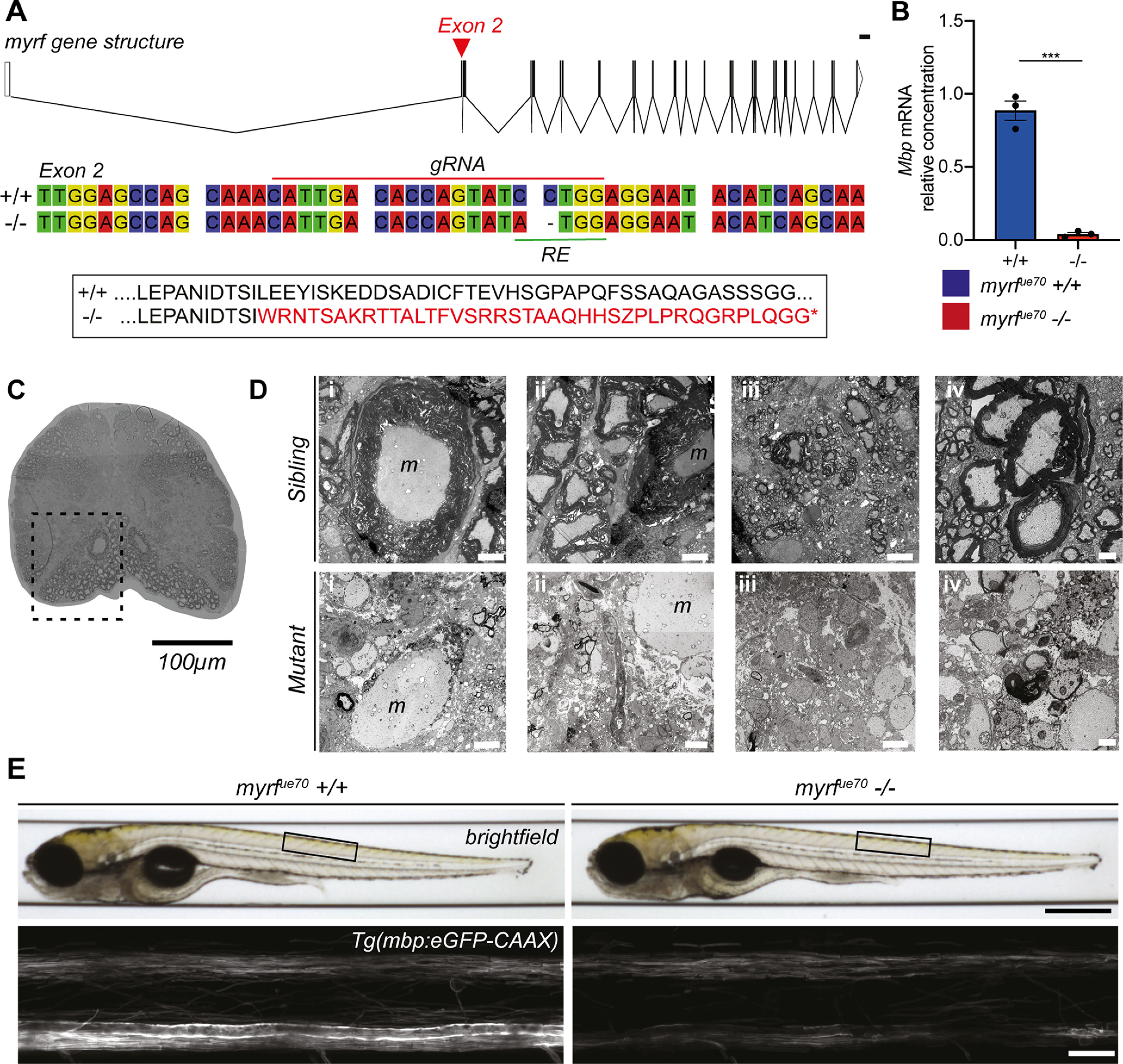
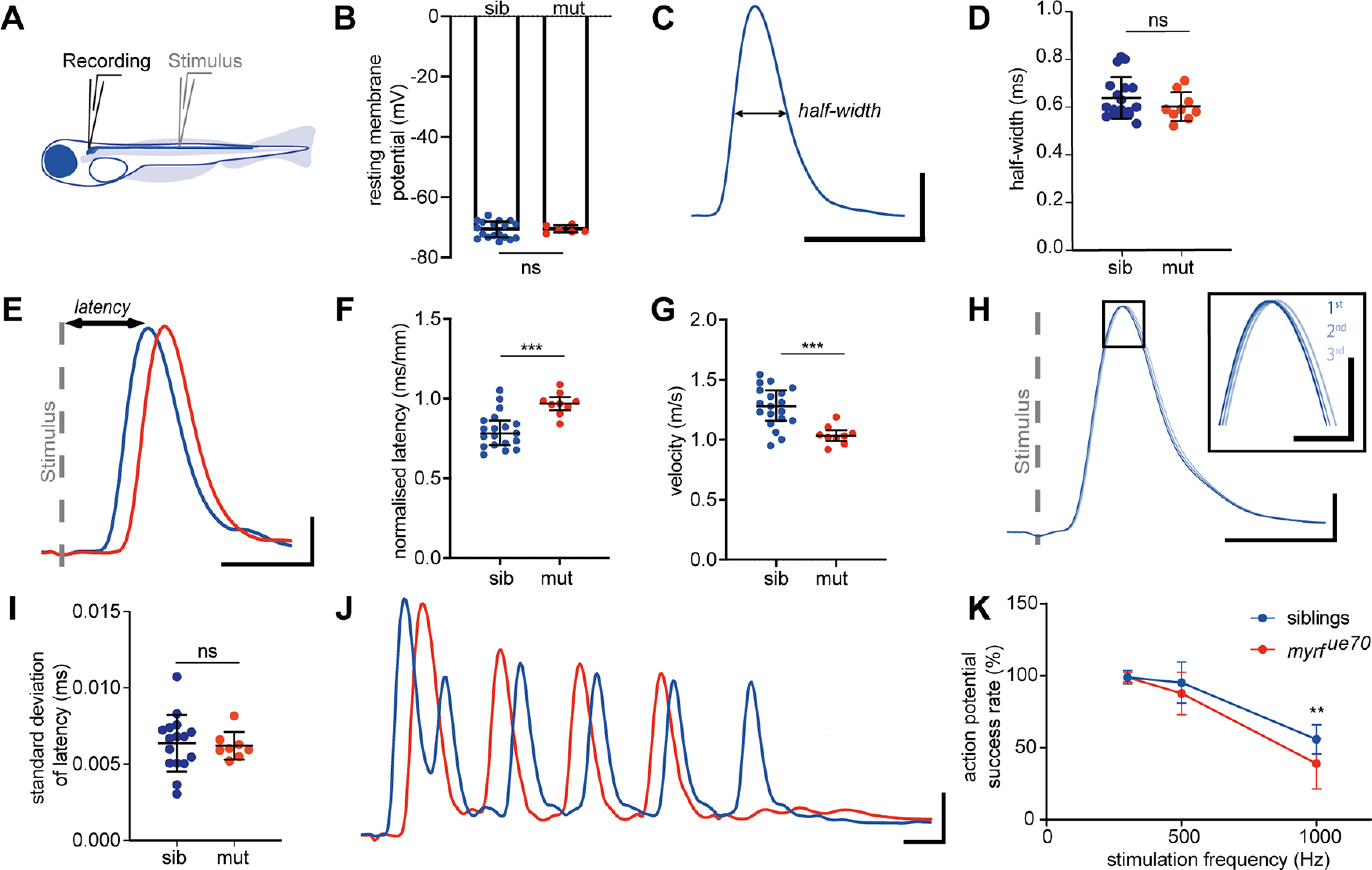
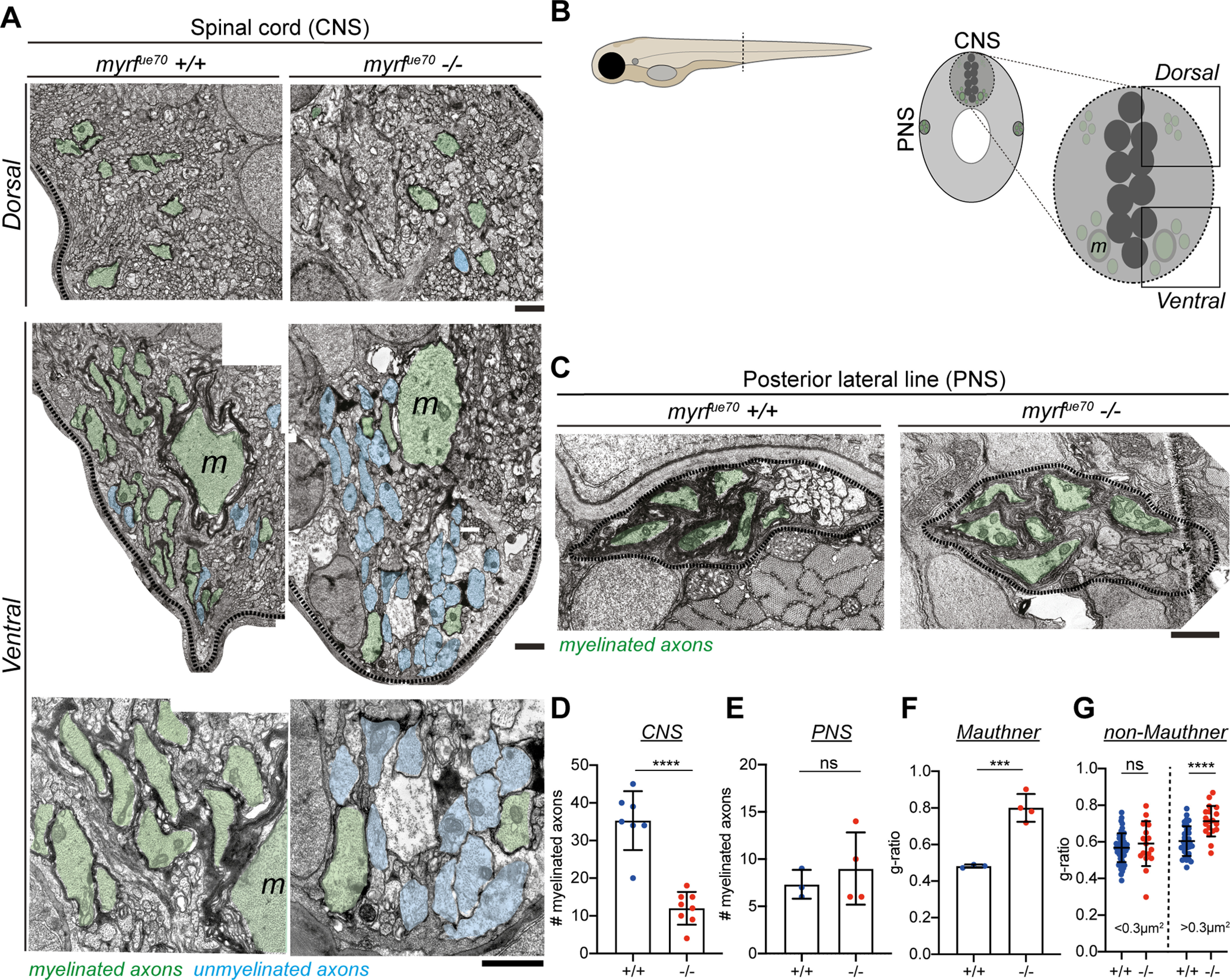
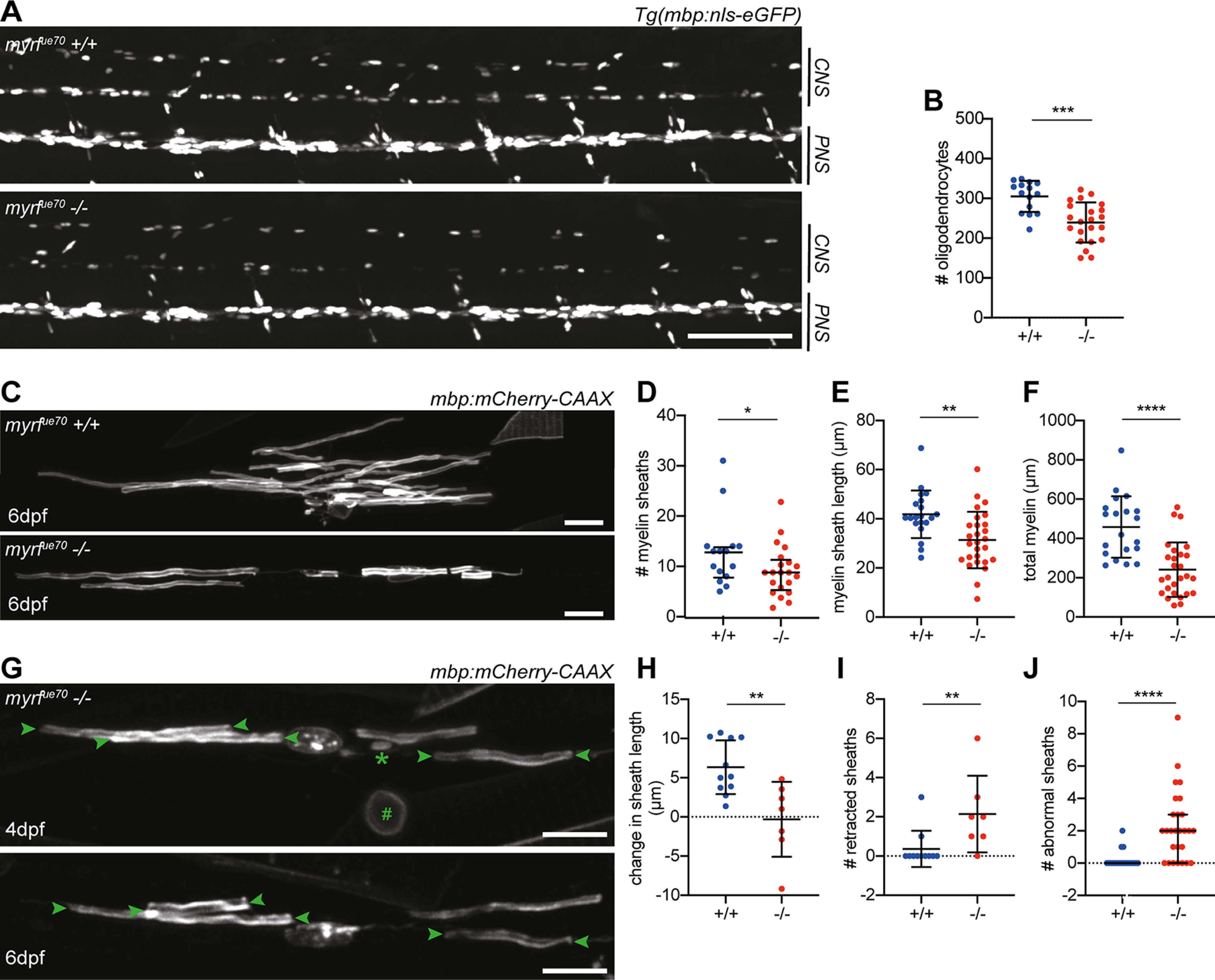
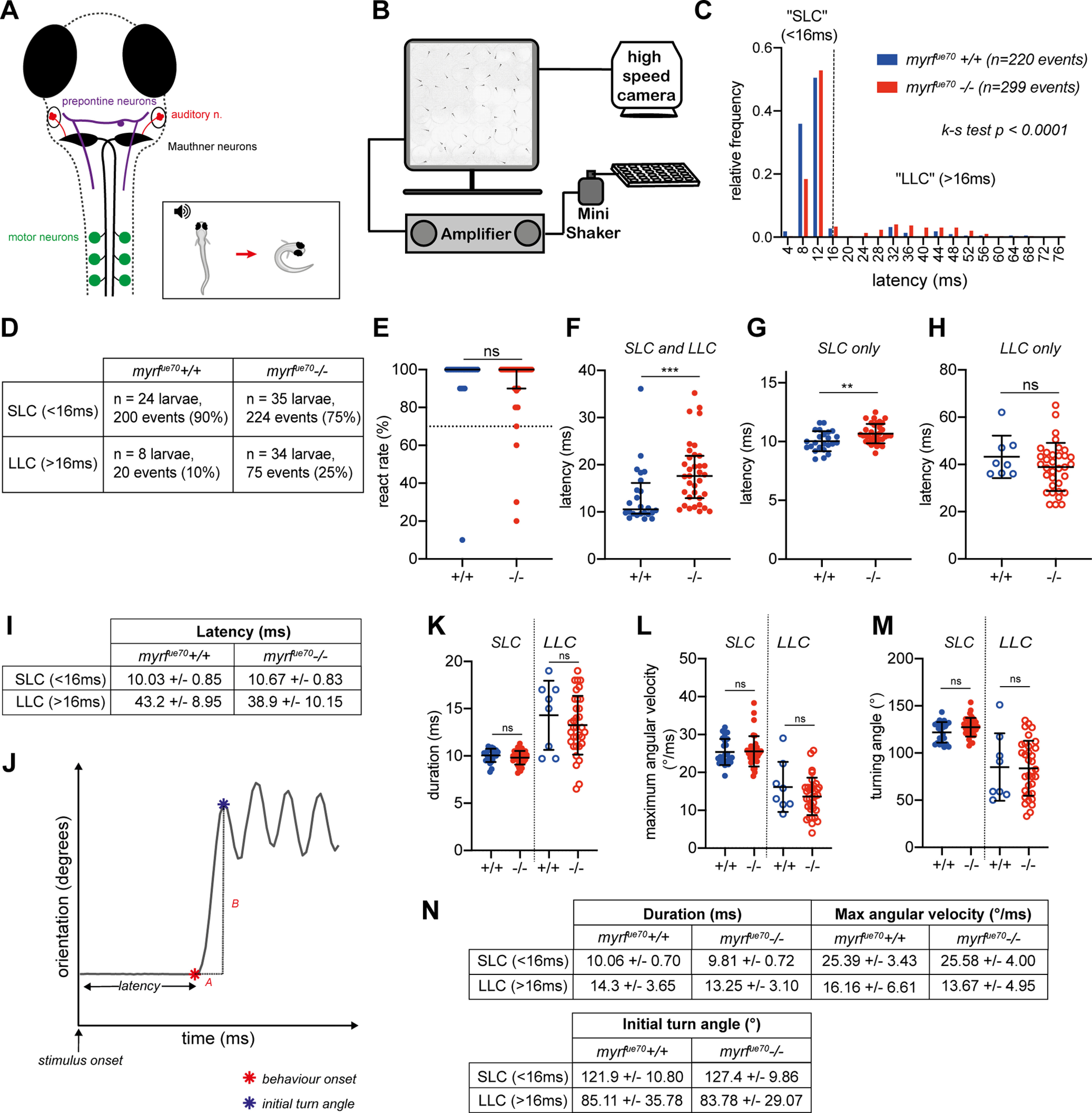
Myelination is essential for central nervous system (CNS) formation, health and function. As a model organism, larval zebrafish have been extensively employed to investigate the molecular and cellular basis of CNS myelination, because of their genetic tractability and suitability for non-invasive live cell imaging. However, it has not been assessed to what extent CNS myelination affects neural circuit function in zebrafish larvae, prohibiting the integration of molecular and cellular analyses of myelination with concomitant network maturation. To test whether larval zebrafish might serve as a suitable platform with which to study the effects of CNS myelination and its dysregulation on circuit function, we generated zebrafish myelin regulatory factor () mutants with CNS-specific hypomyelination and investigated how this affected their axonal conduction properties and behavior. We found that mutant larvae exhibited increased latency to perform startle responses following defined acoustic stimuli. Furthermore, we found that hypomyelinated animals often selected an impaired response to acoustic stimuli, exhibiting a bias toward reorientation behavior instead of the stimulus-appropriate startle response. To begin to study how myelination affected the underlying circuitry, we established electrophysiological protocols to assess various conduction properties along single axons. We found that the hypomyelinated mutants exhibited reduced action potential conduction velocity and an impaired ability to sustain high-frequency action potential firing. This study indicates that larval zebrafish can be used to bridge molecular and cellular investigation of CNS myelination with multiscale assessment of neural circuit function. Myelination of CNS axons is essential for their health and function, and it is now clear that myelination is a dynamic life-long process subject to modulation by neuronal activity. However, it remains unclear precisely how changes to myelination affects animal behavior and underlying action potential conduction along axons in intact neural circuits. In recent years, zebrafish have been employed to study cellular and molecular mechanisms of myelination, because of their relatively simple, optically transparent, experimentally tractable vertebrate nervous system. Here we find that changes to myelination alter the behavior of young zebrafish and action potential conduction along individual axons, providing a platform to integrate molecular, cellular, and circuit level analyses of myelination using this model.
髓鞘形成对于中枢神经系统 (CNS) 的形成、健康和功能至关重要。作为一种模式生物,幼体斑马鱼被广泛用于研究 CNS 髓鞘形成的分子和细胞基础,因为它们具有遗传可操作性,并且适合进行非侵入性的活细胞成像。然而,尚未评估 CNS 髓鞘形成在多大程度上影响幼体斑马鱼的神经回路功能,这阻碍了髓鞘形成的分子和细胞分析与伴随的网络成熟相整合。为了测试幼体斑马鱼是否可以作为研究 CNS 髓鞘形成及其失调对回路功能影响的合适平台,我们生成了 CNS 特异性少突胶质细胞形成缺陷的斑马鱼髓鞘调节因子 () 突变体,并研究了这对它们的轴突传导特性和行为的影响。我们发现,突变体幼体在接收到定义的声刺激后,表现出做出惊跳反应的潜伏期增加。此外,我们发现少突胶质细胞形成缺陷的动物通常会对声刺激做出受损的反应,表现出重新定向行为的倾向,而不是做出适当的惊跳反应。为了开始研究髓鞘形成如何影响基础回路,我们建立了电生理协议来评估单个轴突上的各种传导特性。我们发现,少突胶质细胞形成缺陷的 突变体表现出动作电位传导速度降低和维持高频动作电位发射的能力受损。这项研究表明,幼体斑马鱼可用于将 CNS 髓鞘形成的分子和细胞研究与神经回路功能的多尺度评估联系起来。中枢神经系统轴突的髓鞘形成对于它们的健康和功能至关重要,现在很明显,髓鞘形成是一个动态的终身过程,受神经元活动的调节。然而,确切地说,髓鞘形成的变化如何影响动物行为以及完整神经回路中轴突上的基础动作电位传导仍然不清楚。近年来,斑马鱼被用于研究髓鞘形成的细胞和分子机制,因为它们具有相对简单、光学透明、实验上易于操作的脊椎动物神经系统。在这里,我们发现髓鞘形成的变化改变了幼体斑马鱼的行为和单个轴突上的动作电位传导,为使用这种模型整合髓鞘形成的分子、细胞和回路水平分析提供了一个平台。