Department of Musculoskeletal and Ageing Science, Faculty of Health and Life Sciences, University of Liverpool, Liverpool, UK.
Department of Design, KASK & Conservatorium, The School of Arts of HoGent and HoWest, Ghent, Belgium.
Sci Rep. 2021 Sep 20;11(1):18648. doi: 10.1038/s41598-021-98070-0.
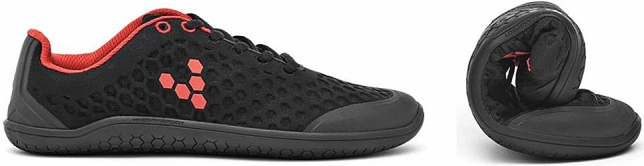
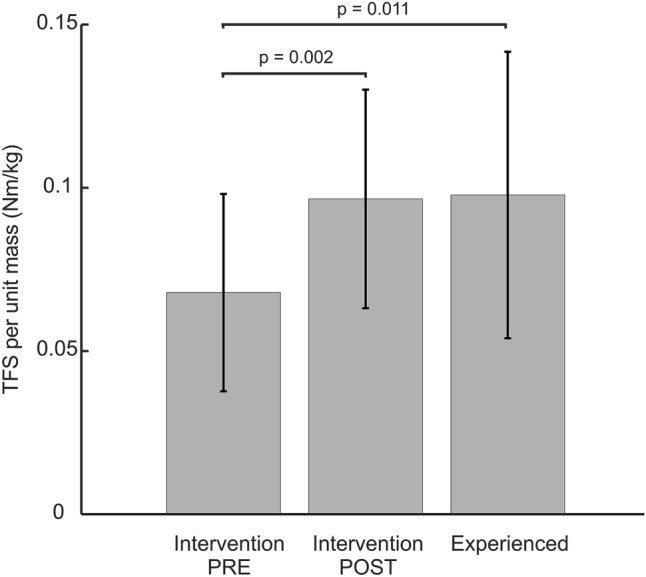
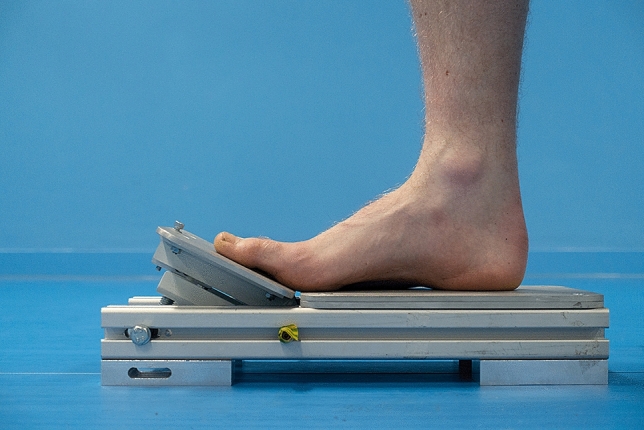
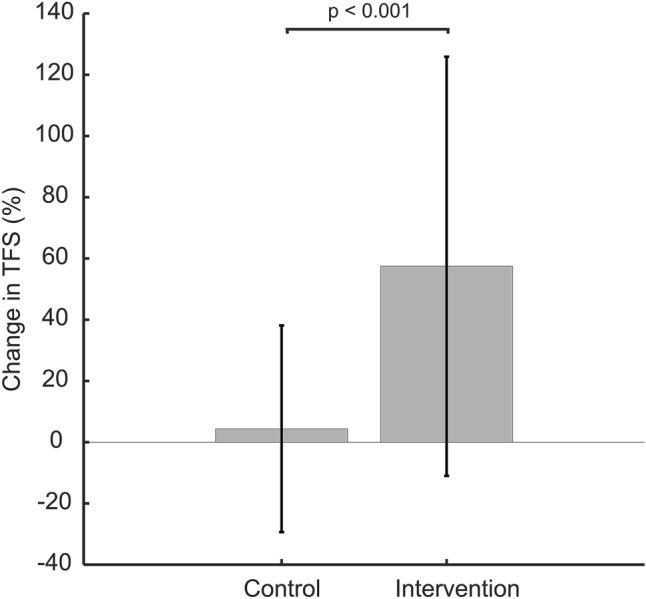
The human foot is uniquely adapted to bipedal locomotion and has a deformable arch of variable stiffness. Intrinsic foot muscles regulate arch deformation, making them important for foot function. In this study we explore the hypothesis that normal daily activity in minimal footwear, which provides little or no support, increases foot muscle strength. Western adults wore minimal footwear for a six-month period (the "intervention" group). Foot strength, i.e., maximum isometric plantarflexion strength at the metatarsophalangeal joints, and foot biometrics were measured before and after the intervention. An additional group was investigated to add further insight on the long-term effects of footwear, consisting of Western adults with an average 2.5 years of experience in minimal footwear (the "experienced" group). This study shows that foot strength increases by, on average, 57.4% (p < 0.001) after six months of daily activity in minimal footwear. The experienced group had similar foot strength as the post intervention group, suggesting that six months of regular minimal footwear use is sufficient to gain full strength, which may aid healthy balance and gait.
人的脚具有独特的适应双足行走的能力,并且具有可变形的、刚度可变的足弓。内在的足部肌肉调节足弓的变形,这使得它们对足部功能很重要。在这项研究中,我们探索了一个假设,即在提供很少或没有支撑的最小化鞋类中进行正常的日常活动会增加足部肌肉力量。西方成年人穿着最小化的鞋子进行了为期六个月的(“干预”组)的活动。在干预前后测量了足部力量,即跖趾关节处的最大等长足底屈肌力量,以及足部生物力学指标。为了进一步深入了解鞋类的长期影响,还调查了一个额外的组,即平均有 2.5 年穿着最小化鞋子经验的西方成年人(“经验”组)。这项研究表明,在穿着最小化鞋子进行日常活动六个月后,足部力量平均增加了 57.4%(p<0.001)。经验组的足部力量与干预后组相似,这表明六个月的定期穿着最小化鞋子足以获得全部力量,这可能有助于健康的平衡和步态。