Molecular Immunity Unit, University of Cambridge Department of Medicine, MRC-Laboratory of Molecular Biology, Cambridge, UK.
Department of Veterinary Medicine, University of Cambridge, Cambridge, UK.
Nat Microbiol. 2021 Oct;6(10):1279-1288. doi: 10.1038/s41564-021-00963-3. Epub 2021 Sep 20.
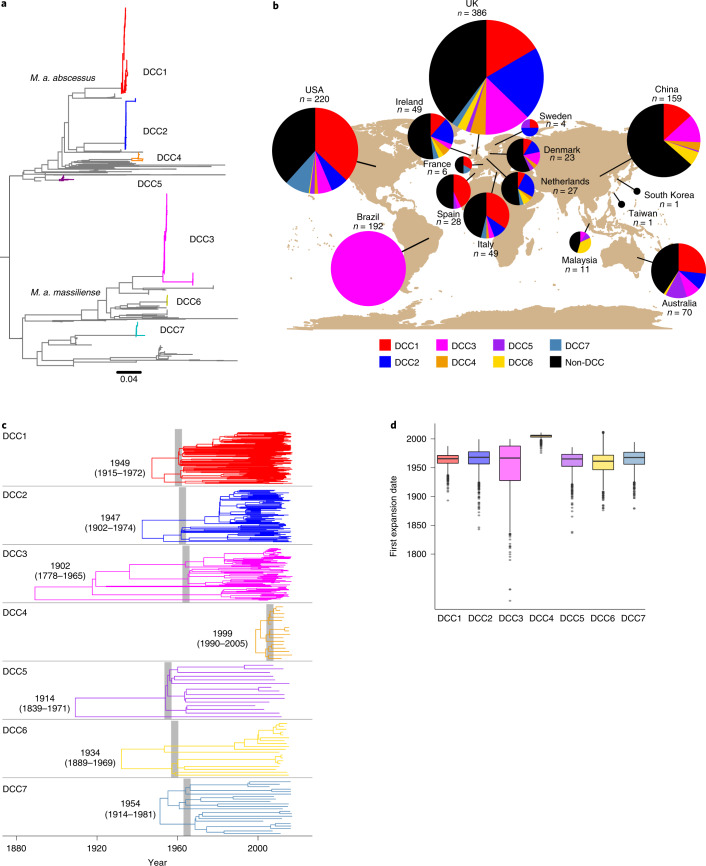
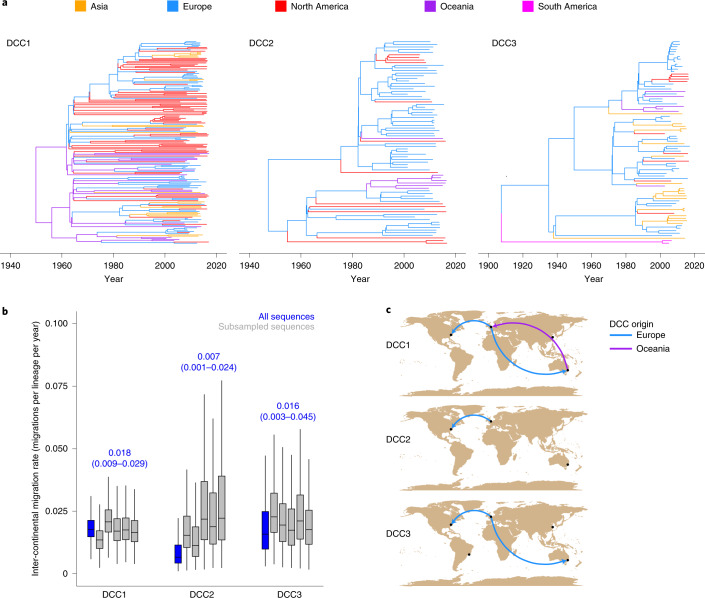
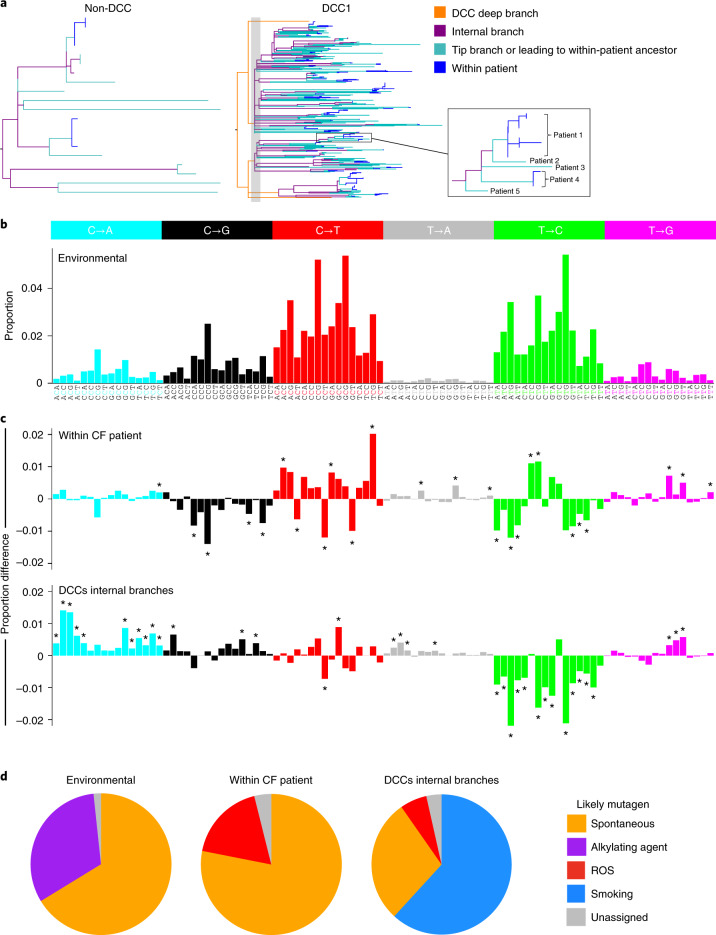
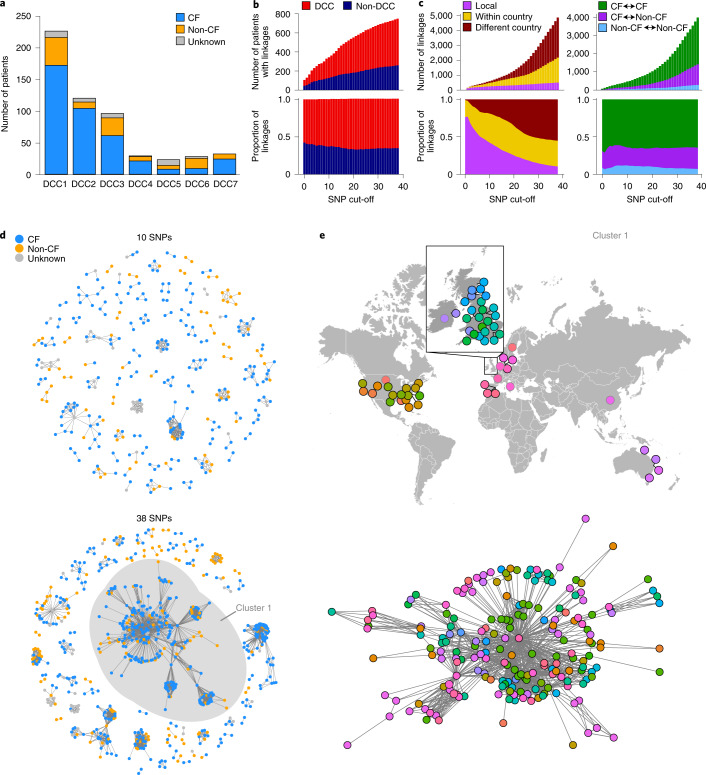
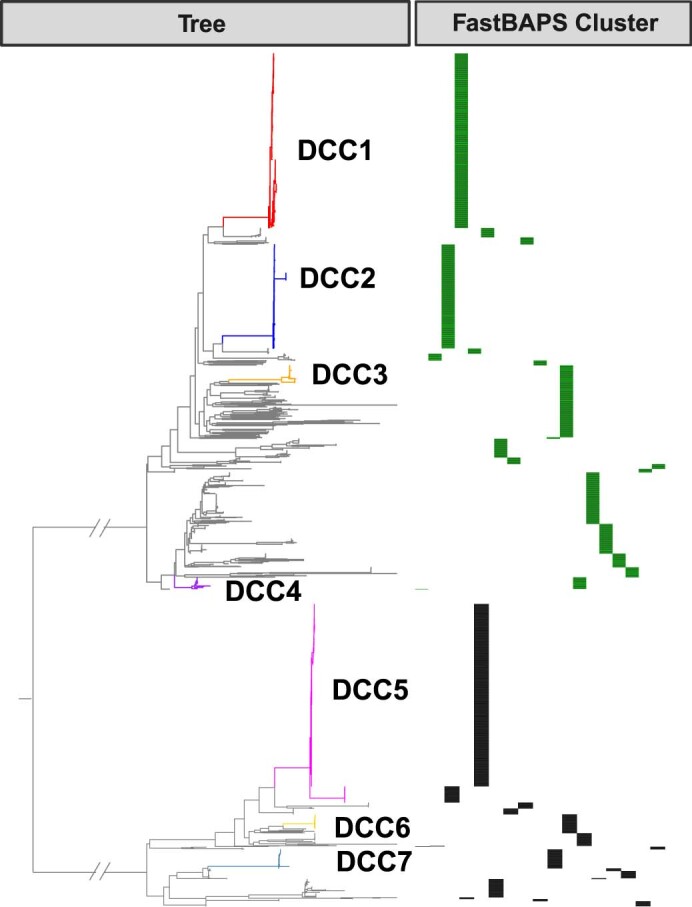
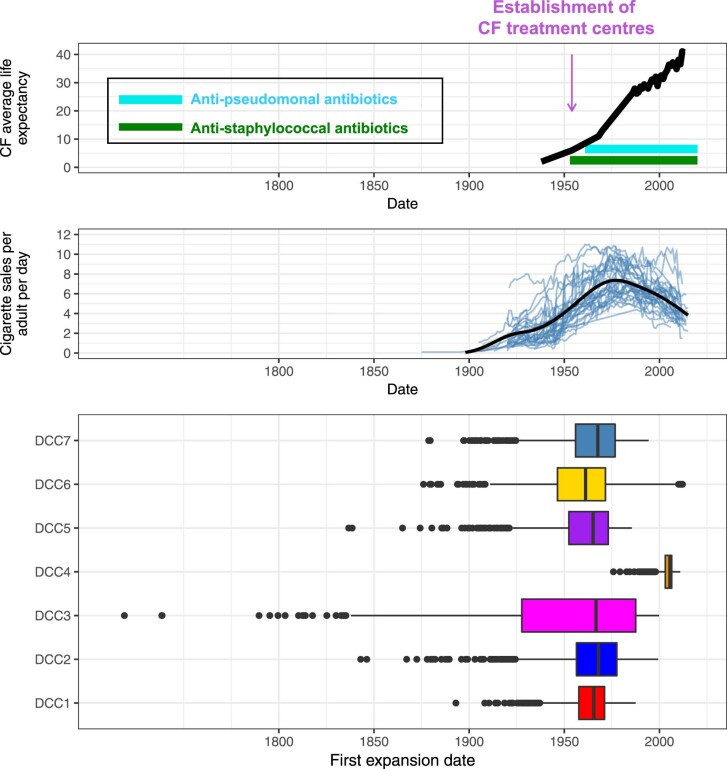
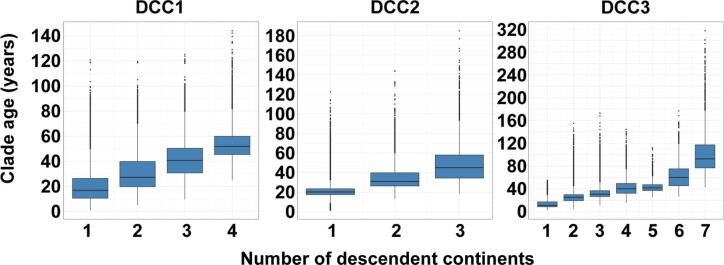
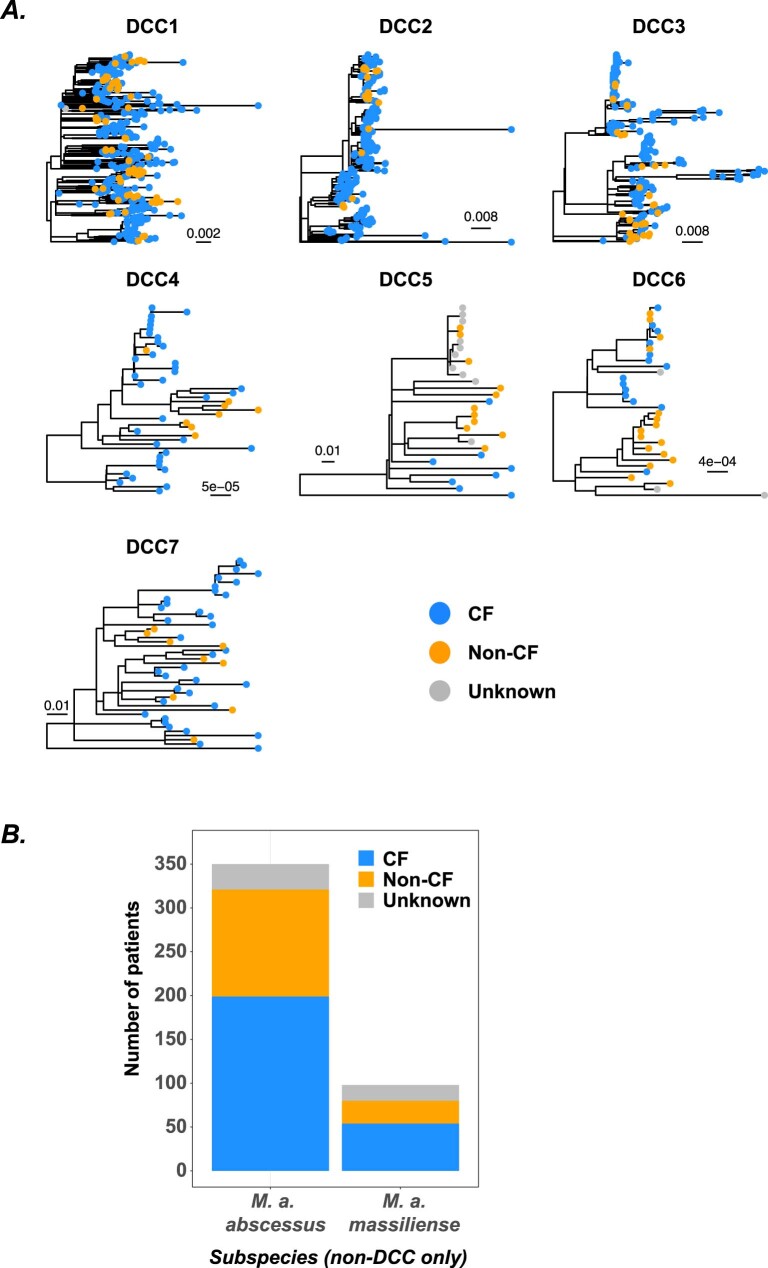
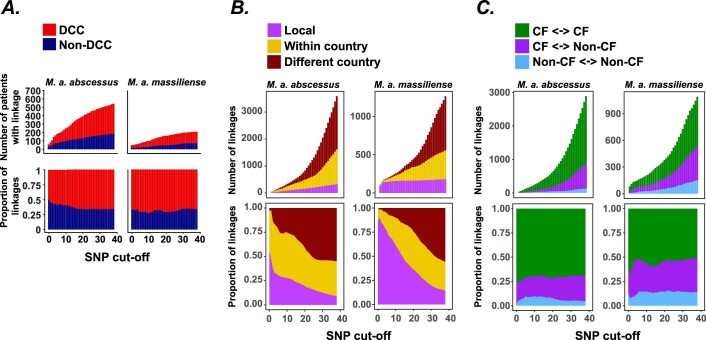
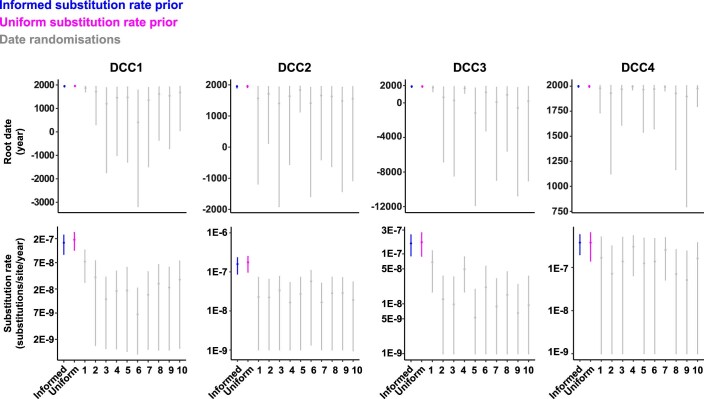
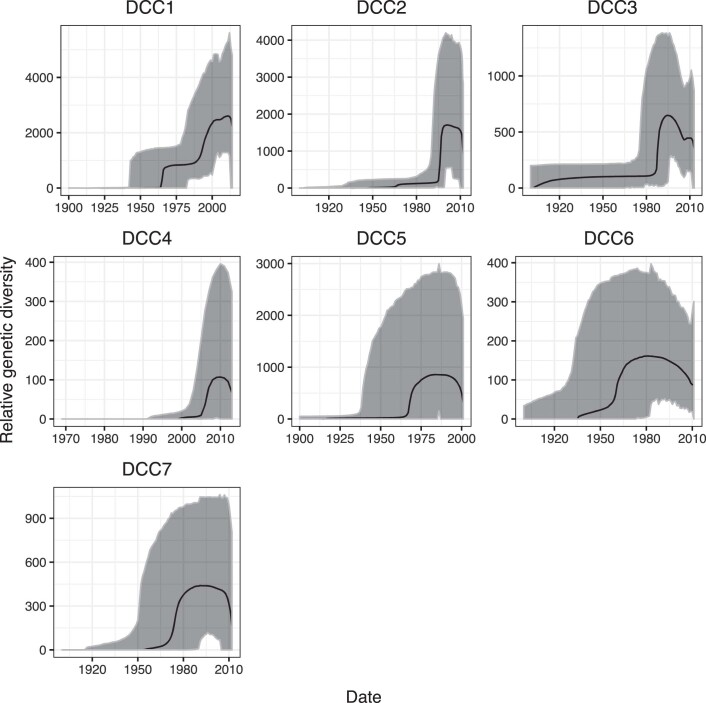
Mycobacterium abscessus, a multidrug-resistant nontuberculous mycobacterium, has emerged as a major pathogen affecting people with cystic fibrosis (CF). Although originally thought to be acquired independently from the environment, most individuals are infected with one of several dominant circulating clones (DCCs), indicating the presence of global transmission networks of M. abscessus. How and when these clones emerged and spread globally is unclear. Here, we use evolutionary analyses of isolates from individuals both with and without CF to reconstruct the population history, spatiotemporal spread and recent transmission networks of the DCCs. We demonstrate synchronous expansion of six unrelated DCCs in the 1960s, a period associated with major changes in CF care and survival. Each of these clones has spread globally as a result of rare intercontinental transmission events. We show that the DCCs, but not environmentally acquired isolates, exhibit a specific smoking-associated mutational signature and that current transmission networks include individuals both with and without CF. We therefore propose that the DCCs initially emerged in non-CF populations but were then amplified and spread through the CF community. While individuals with CF are probably the most permissive host, non-CF individuals continue to play a key role in transmission networks and may facilitate long-distance transmission.
脓肿分枝杆菌是一种耐多药的非结核分枝杆菌,已成为影响囊性纤维化 (CF) 患者的主要病原体。虽然最初认为它是从环境中独立获得的,但大多数人感染的是几种主要流行克隆群 (DCC) 之一,这表明存在脓肿分枝杆菌的全球传播网络。这些克隆是如何以及何时出现并在全球范围内传播的尚不清楚。在这里,我们使用来自 CF 患者和非 CF 患者的分离株的进化分析来重建 DCC 的种群历史、时空传播和最近的传播网络。我们证明了六个不相关的 DCC 在 20 世纪 60 年代同步扩张,这一时期与 CF 护理和生存的重大变化有关。由于罕见的洲际传播事件,每个克隆都在全球范围内传播。我们表明,DCC 而不是环境获得的分离株,表现出特定的与吸烟相关的突变特征,并且当前的传播网络包括 CF 患者和非 CF 患者。因此,我们提出 DCC 最初在非 CF 人群中出现,但随后在 CF 人群中扩增和传播。虽然 CF 患者可能是最易受感染的宿主,但非 CF 患者继续在传播网络中发挥关键作用,并可能促进远距离传播。