Patterson-Fahy Kirby, Carter Robyn, Taylor Steven L, Guo Jianhua, Thomson Rachel M
The University of Queensland, Greenslopes Clinical School, Gallipoli Medical Research, Greenslopes, Queensland, Australia.
Microbiome and Host Health Program, South Australia Health and Medical Research Institute, Adelaide, South Australia, Australia.
Microbiol Spectr. 2025 Jul;13(7):e0337424. doi: 10.1128/spectrum.03374-24. Epub 2025 Jun 10.
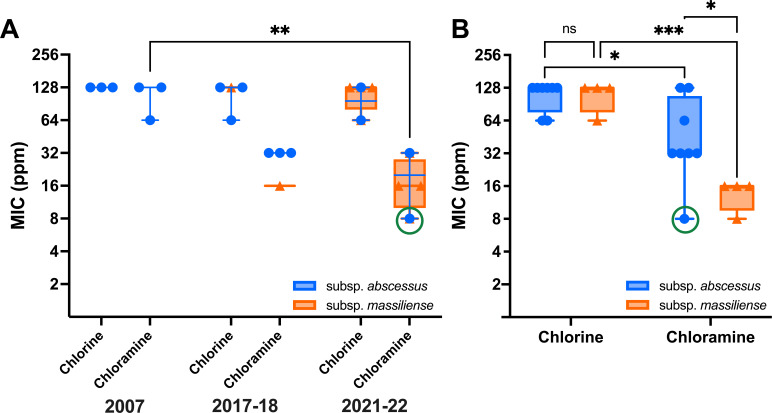
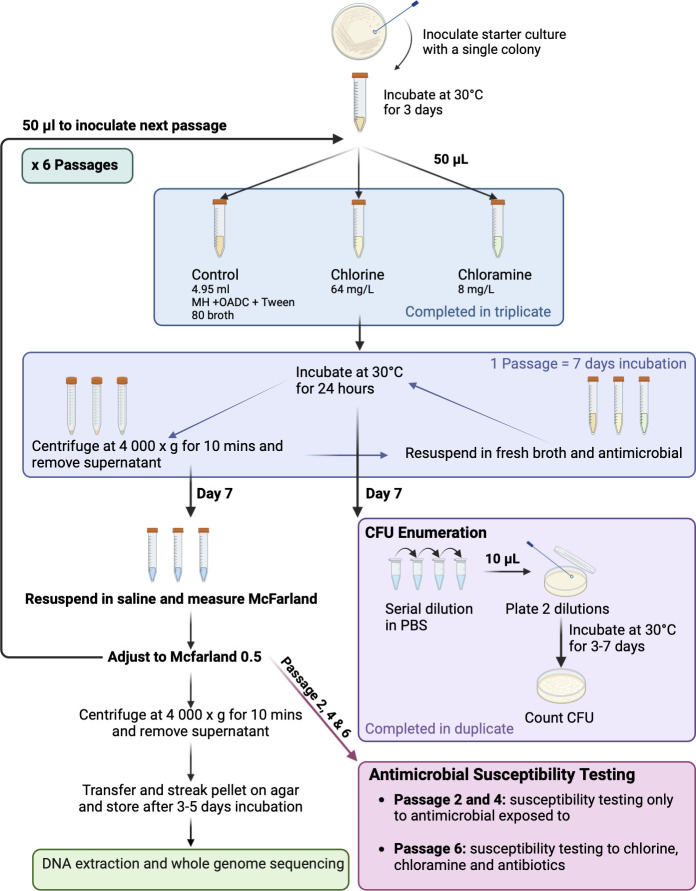
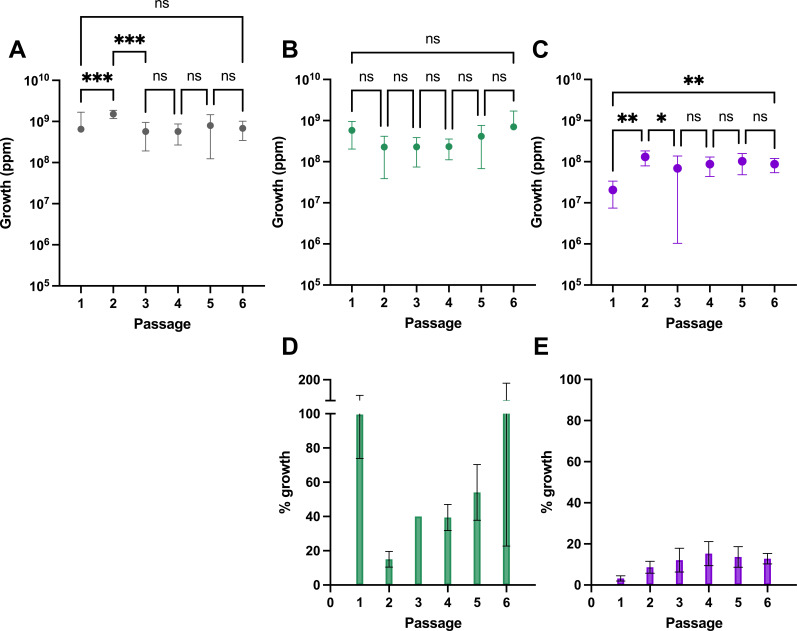
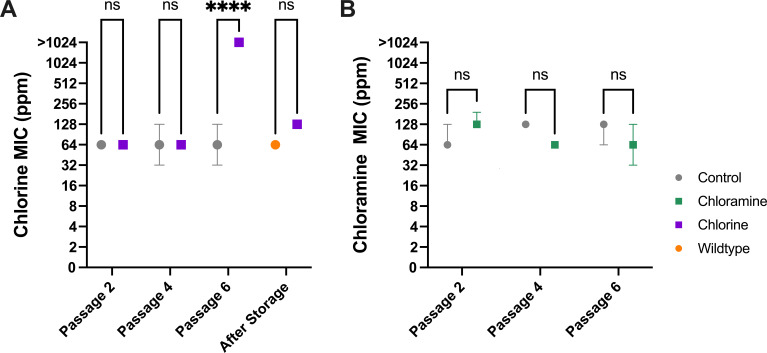
has been found in drinking water distribution systems worldwide, and infections have been increasing in frequency. The emergence of dominant circulating clones within clinical settings and during chronic disease has been considered a potential cause of the increasing frequency of disease. However, has been thought to be largely environmentally acquired, and how selective pressures in the environment may be influencing evolution has not previously been considered. This study aimed to investigate the disinfectant and antibiotic susceptibility of isolated from drinking water treated with both chlorine and chloramine in 2007, 2017-2018, and 2021-2022 as well as a laboratory evolution experiment. There was no trend in disinfectant or antibiotic resistance of water isolates over time, although there were significant differences between subspecies and dominant circulating clones. isolates were found to be significantly more susceptible to chloramine than chlorine, yet both MICs were greater than the concentrations used in water treatment. The laboratory evolution experiment resulted in a chlorine-resistant phenotype that was not a heritable genetic change. Exposure to chloramine resulted in decreased imipenem susceptibility without a change in chloramine susceptibility. Overall, the results of this study show that is highly resistant to disinfection, and exposure to disinfectants within drinking water distribution systems could influence antimicrobial susceptibility.IMPORTANCE causes significant disease and is present in drinking water distribution systems where it is exposed to chlorine and chloramine. In this study, drinking water isolates were highly resistant to both chlorine and chloramine, with significant differences within the group. A laboratory evolution experiment induced chlorine resistance, and exposure to chloramine resulted in decreased imipenem susceptibility. These results suggest that exposure to disinfectants within drinking water distribution systems could result in increased disinfectant and antibiotic resistance, potentially contributing to the increasing frequency of disease.
已在全球范围内的饮用水分配系统中被发现,且感染频率一直在增加。临床环境中和慢性病期间优势循环克隆的出现被认为是疾病频率增加的一个潜在原因。然而,一直被认为很大程度上是通过环境获得的,而环境中的选择压力如何影响其进化此前尚未被考虑。本研究旨在调查2007年、2017 - 2018年以及2021 - 2022年从经氯和氯胺处理的饮用水中分离出的该菌的消毒剂和抗生素敏感性,以及进行一项实验室进化实验。随着时间推移,水中分离株的消毒剂或抗生素抗性没有趋势,尽管亚种和优势循环克隆之间存在显著差异。发现该菌分离株对氯胺的敏感性明显高于氯,但两种最低抑菌浓度均高于水处理中使用的浓度。实验室进化实验产生了一种耐氯表型,但这不是一种可遗传的基因变化。暴露于氯胺导致亚胺培南敏感性降低,而氯胺敏感性没有变化。总体而言,本研究结果表明该菌对消毒具有高度抗性,且在饮用水分配系统中接触消毒剂可能会影响抗菌药物敏感性。重要性该菌会引发重大疾病,且存在于饮用水分配系统中,在那里它会接触到氯和氯胺。在本研究中,该菌的饮用水分离株对氯和氯胺均具有高度抗性,在该菌群内部存在显著差异。一项实验室进化实验诱导出了耐氯性,且暴露于氯胺导致亚胺培南敏感性降低。这些结果表明,在饮用水分配系统中接触消毒剂可能会导致消毒剂和抗生素抗性增加,这可能是疾病频率增加的一个潜在原因。