Emerg Infect Dis. 2021 Oct;27(10):2628-2637. doi: 10.3201/eid2710.211265.
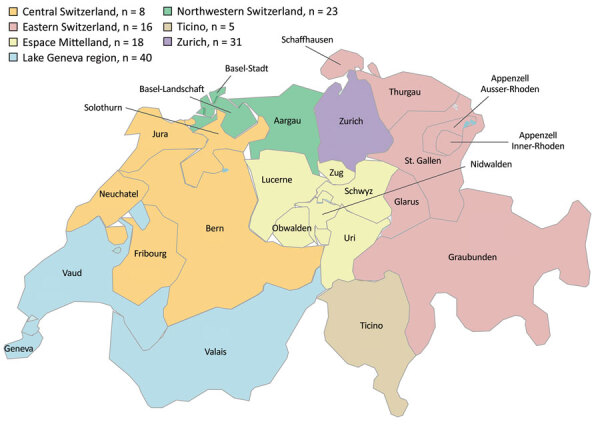
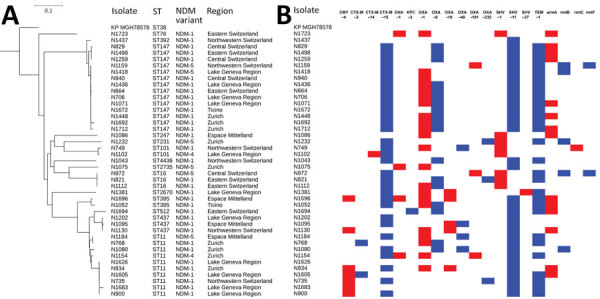
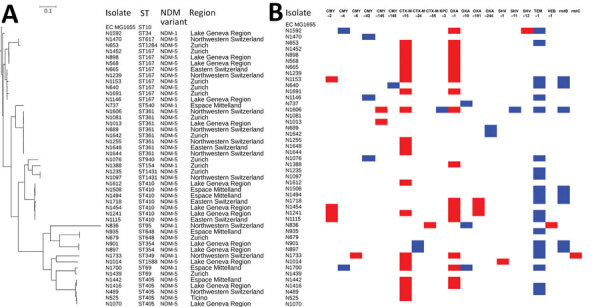
Carbapenemase-producing Enterobacterales (CPE) bacteria are a critical global health concern; New Delhi metallo-β-lactamase (NDM) enzymes account for >25% of all CPE found in Switzerland. We characterized NDM-positive CPE submitted to the Swiss National Reference Center for Emerging Antibiotic Resistance during a 2-year period (January 2019-December 2020) phenotypically and by using whole-genome sequencing. Most isolates were either Klebsiella pneumoniae (59/141) or Escherichia coli (52/141), and >50% were obtained from screening swabs. Among the 108 sequenced isolates, NDM-1 was the most prevalent variant, occurring in 56 isolates, mostly K. pneumoniae (34/56); the next most prevalent was NDM-5, which occurred in 49 isolates, mostly E. coli (40/49). Fourteen isolates coproduced a second carbapenemase, predominantly an OXA-48-like enzyme, and almost one third of isolates produced a 16S rRNA methylase conferring panresistance to aminoglycosides. We identified successful plasmids and global lineages as major factors contributing to the increasing prevalence of NDMs in Switzerland.
产碳青霉烯酶肠杆菌科(CPE)细菌是一个严重的全球健康问题;在瑞士发现的所有 CPE 中,超过 25%是新德里金属β-内酰胺酶(NDM)酶。在 2019 年 1 月至 2020 年 12 月的 2 年期间,我们通过表型和全基因组测序对提交给瑞士国家新兴抗生素耐药性参考中心的 NDM 阳性 CPE 进行了特征描述。大多数分离株要么是肺炎克雷伯菌(59/141),要么是大肠埃希菌(52/141),超过 50%是从筛查拭子中获得的。在测序的 108 个分离株中,NDM-1 是最常见的变异株,存在于 56 个分离株中,主要是肺炎克雷伯菌(34/56);其次是 NDM-5,存在于 49 个分离株中,主要是大肠埃希菌(40/49)。有 14 个分离株共同产生第二种碳青霉烯酶,主要是 OXA-48 样酶,几乎三分之一的分离株产生 16S rRNA 甲基酶,对氨基糖苷类药物具有泛耐药性。我们确定了成功的质粒和全球谱系是导致 NDM 在瑞士流行率增加的主要因素。