Department of Biochemistry & Molecular Pharmacology, New York University School of Medicine, New York, NY 10016, USA.
Department of Biochemistry & Structural Biology, University of Texas Health Science Center at San Antonio, San Antonio, TX 78229, USA.
Cell Rep. 2021 Sep 28;36(13):109754. doi: 10.1016/j.celrep.2021.109754. Epub 2021 Sep 8.
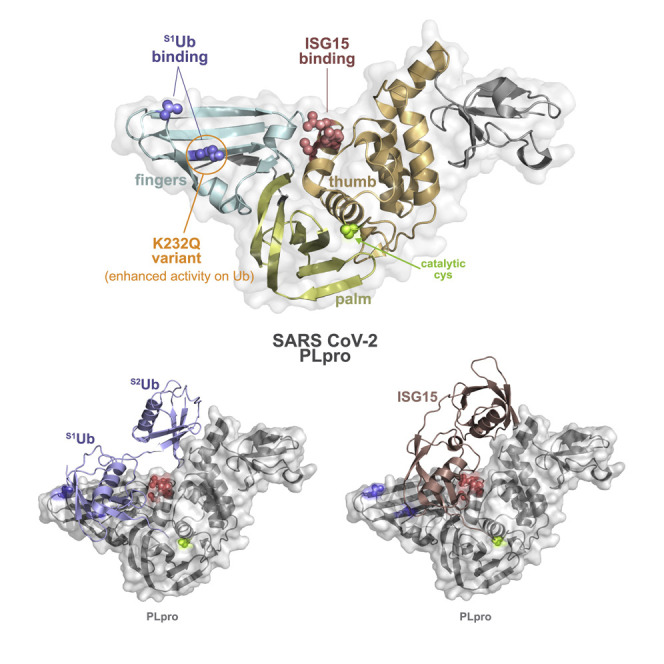
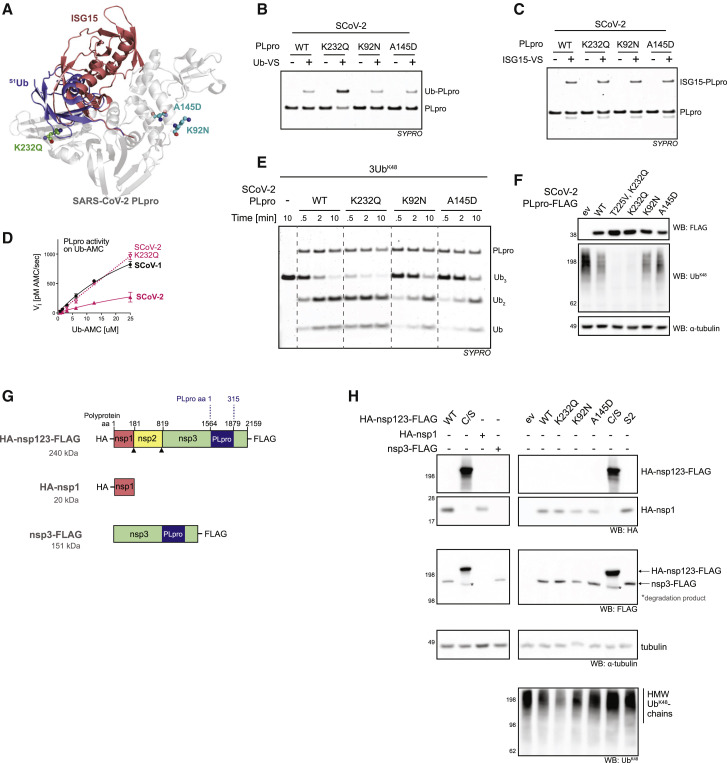
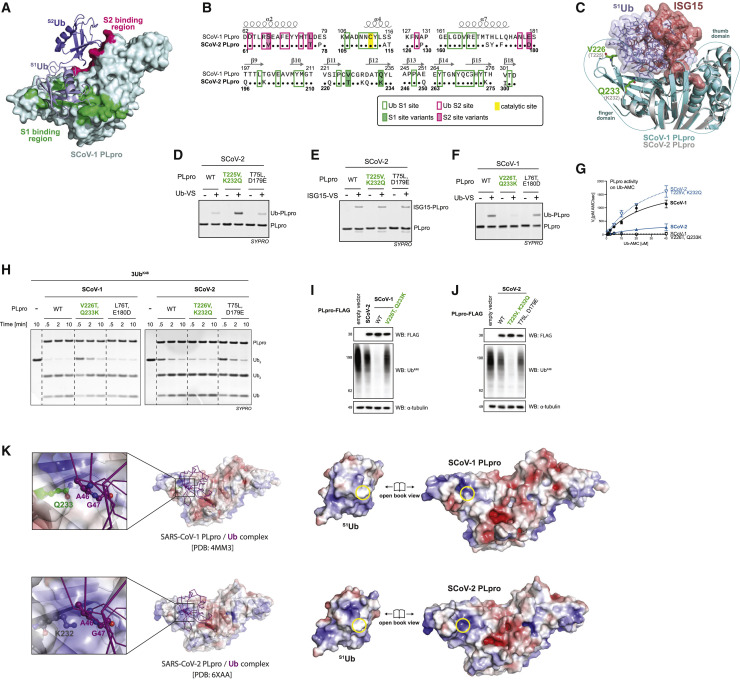
The SARS-CoV-2 papain-like protease (PLpro) is a target for antiviral drug development. It is essential for processing viral polyproteins for replication and functions in host immune evasion by cleaving ubiquitin (Ub) and ubiquitin-like protein (Ubl) conjugates. While highly conserved, SARS-CoV-2 and SARS-CoV PLpro have contrasting Ub/Ubl substrate preferences. Using a combination of structural analyses and functional assays, we identify a molecular sensor within the S1 Ub-binding site of PLpro that serves as a key determinant of substrate specificity. Variations within the S1 sensor specifically alter cleavage of Ub substrates but not of the Ubl interferon-stimulated gene 15 protein (ISG15). Significantly, a variant of concern associated with immune evasion carries a mutation in the S1 sensor that enhances PLpro activity on Ub substrates. Collectively, our data identify the S1 sensor region as a potential hotspot of variability that could alter host antiviral immune responses to newly emerging SARS-CoV-2 lineages.
严重急性呼吸综合征冠状病毒 2 型(SARS-CoV-2)的木瓜蛋白酶样蛋白酶(PLpro)是抗病毒药物开发的靶标。它对于病毒多蛋白的复制加工至关重要,通过切割泛素(Ub)和泛素样蛋白(Ubl)缀合物来实现宿主免疫逃逸。尽管高度保守,但 SARS-CoV-2 和 SARS-CoV 的 PLpro 对 Ub/Ubl 底物具有不同的偏好。我们使用结构分析和功能测定的组合,确定了 PLpro 的 S1 Ub 结合位点内的分子传感器,该传感器是决定底物特异性的关键决定因素。S1 传感器内的变异特异性改变 Ub 底物的切割,但不改变 Ubl 干扰素刺激基因 15 蛋白(ISG15)的切割。重要的是,与免疫逃逸相关的一个关注变体在 S1 传感器中携带一个突变,该突变增强了 PLpro 在 Ub 底物上的活性。总的来说,我们的数据确定了 S1 传感器区域作为一个潜在的变异热点,可能会改变宿主对新出现的 SARS-CoV-2 谱系的抗病毒免疫反应。