Food System Integrity team, Hopkirk Research Institute, AgResearch Ltd, Massey University, 4474, Palmerston North, New Zealand.
School of Food and Advanced Technology, Massey University, 4442, Palmerston North, New Zealand.
BMC Genomics. 2021 Sep 22;22(1):686. doi: 10.1186/s12864-021-08005-2.
Soil bacteria are a major source of specialized metabolites including antimicrobial compounds. Yet, one of the most diverse genera of bacteria ubiquitously present in soil, Clostridium, has been largely overlooked in bioactive compound discovery. As Clostridium spp. thrive in extreme environments with their metabolic mechanisms adapted to the harsh conditions, they are likely to synthesize molecules with unknown structures, properties, and functions. Therefore, their potential to synthesize small molecules with biological activities should be of great interest in the search for novel antimicrobial compounds. The current study focused on investigating the antimicrobial potential of four soil Clostridium isolates, FS01, FS2.2 FS03, and FS04, using a genome-led approach, validated by culture-based methods.
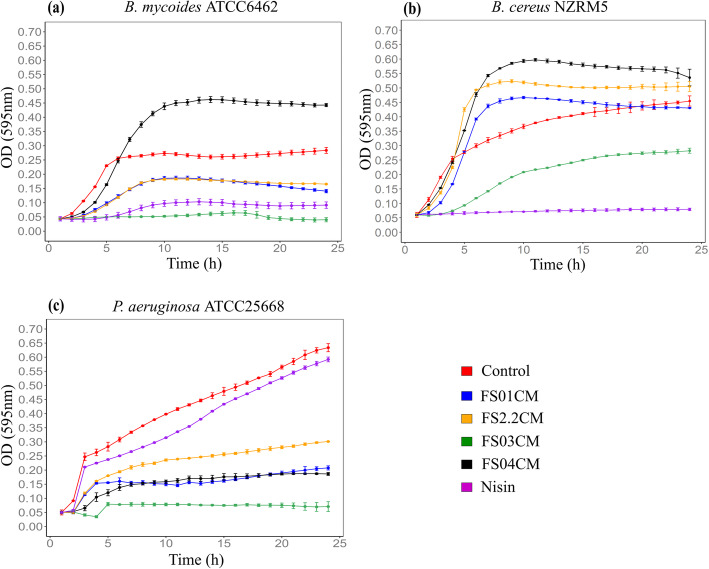
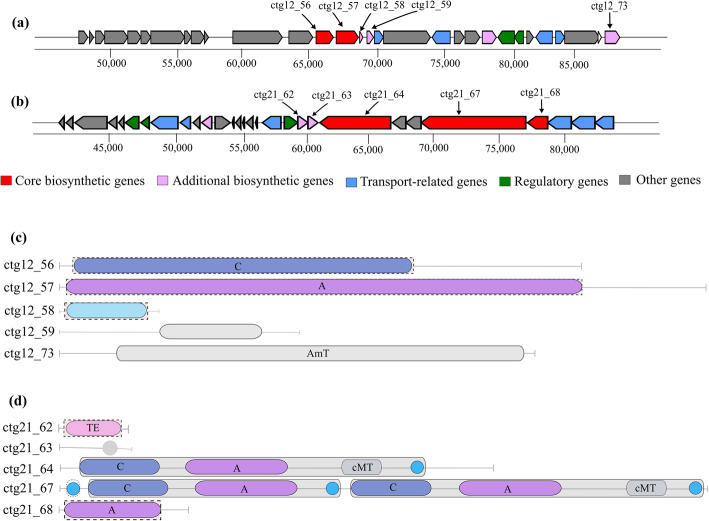
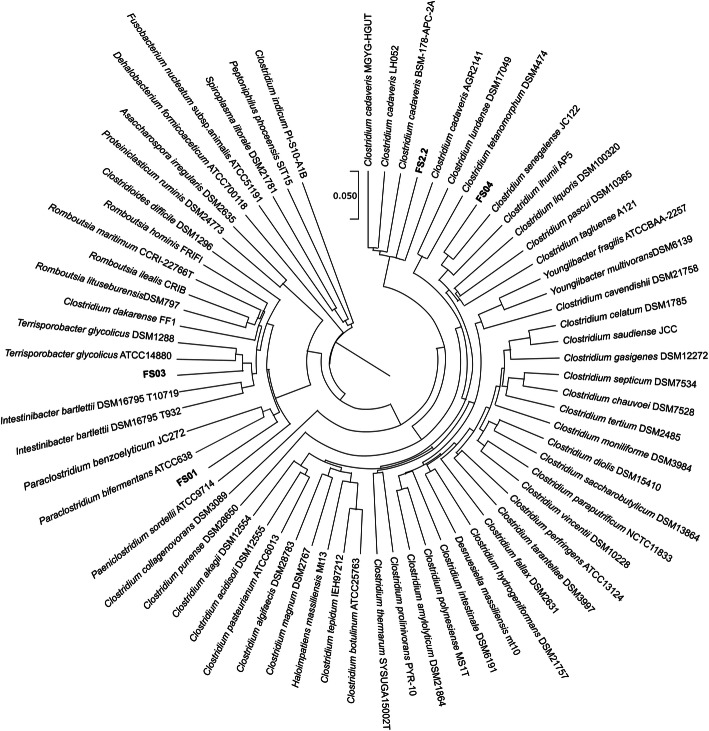
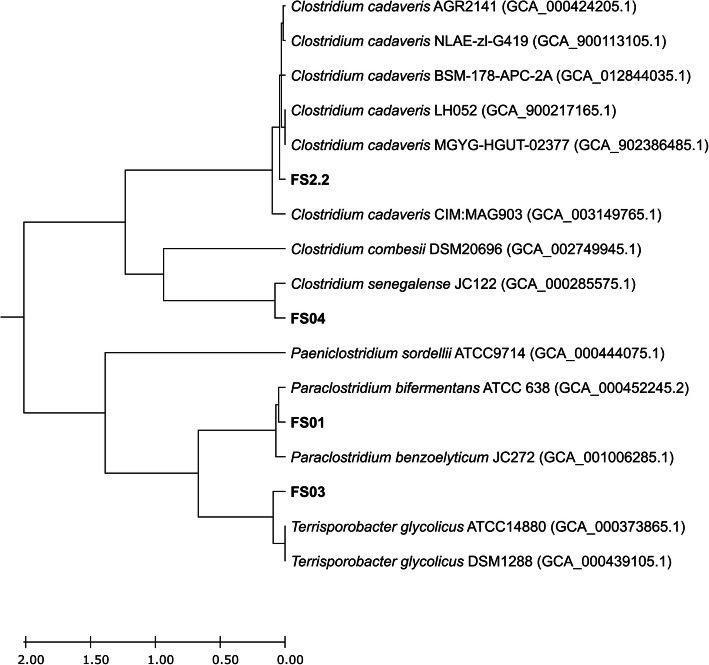
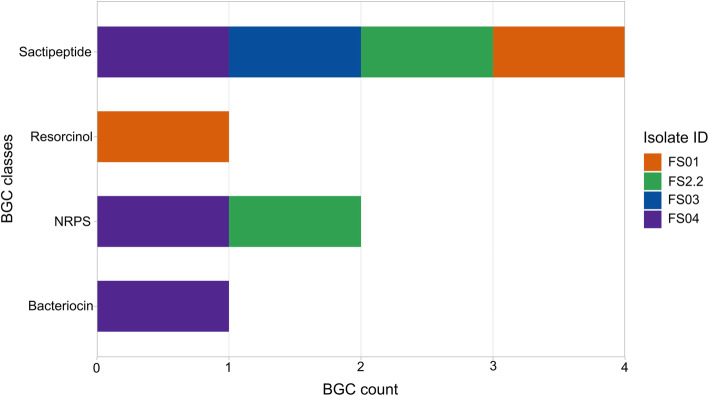
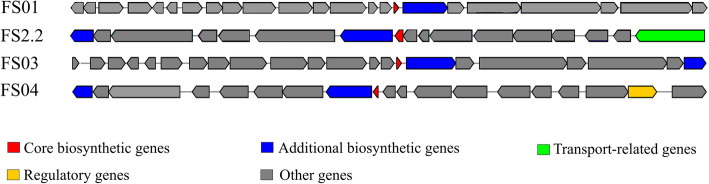
Conditioned/spent media from all four Clostridium isolates showed varying levels of antimicrobial activity against indicator microorganism; all four isolates significantly inhibited the growth of Pseudomonas aeruginosa. FS01, FS2.2, and FS04 were active against Bacillus mycoides and FS03 reduced the growth of Bacillus cereus. Phylogenetic analysis together with DNA-DNA hybridization (dDDH), average nucleotide identity (ANI), and functional genome distribution (FGD) analyses confirmed that FS01, FS2.2, and FS04 belong to the species Paraclostridium bifermentans, Clostridium cadaveris, and Clostridium senegalense respectively, while FS03 may represent a novel species of the genus Clostridium. Bioinformatics analysis using antiSMASH 5.0 predicted the presence of eight biosynthetic gene clusters (BGCs) encoding for the synthesis of ribosomally synthesized post-translationally modified peptides (RiPPs) and non-ribosomal peptides (NRPs) in four genomes. All predicted BGCs showed no similarity with any known BGCs suggesting novelty of the molecules from those predicted gene clusters. In addition, the analysis of genomes for putative virulence factors revealed the presence of four putative Clostridium toxin related genes in FS01 and FS2.2 genomes. No genes associated with the main Clostridium toxins were identified in the FS03 and FS04 genomes.
The presence of BGCs encoding for uncharacterized RiPPs and NRPSs in the genomes of antagonistic Clostridium spp. isolated from farm soil indicated their potential to produce novel secondary metabolites. This study serves as a basis for the identification and characterization of potent antimicrobials from these soil Clostridium spp. and expands the current knowledge base, encouraging future research into bioactive compound production in members of the genus Clostridium.
土壤细菌是包括抗菌化合物在内的特殊代谢物的主要来源。然而,在生物活性化合物的发现中,土壤中存在的最具多样性的细菌属之一梭菌(Clostridium)基本上被忽视了。由于梭菌属在其代谢机制适应恶劣条件的极端环境中茁壮成长,因此它们很可能合成具有未知结构、性质和功能的分子。因此,它们合成具有生物活性的小分子的潜力应该是寻找新型抗菌化合物的极大兴趣所在。本研究采用基于基因组的方法,通过培养方法进行验证,重点研究了来自土壤的四种梭菌(FS01、FS2.2、FS03 和 FS04)的抗菌潜力。
来自所有四种梭菌的条件培养基/代谢培养基对指示微生物表现出不同程度的抗菌活性;所有四种分离物均显著抑制铜绿假单胞菌的生长。FS01、FS2.2 和 FS04 对粘质沙雷氏菌有活性,FS03 则降低了蜡状芽孢杆菌的生长。系统发育分析以及 DNA-DNA 杂交(dDDH)、平均核苷酸同一性(ANI)和功能基因组分布(FGD)分析均证实 FS01、FS2.2 和 FS04 分别属于双歧梭菌(Paraclostridium bifermentans)、腐败梭菌(Clostridium cadaveris)和塞内加尔梭菌(Clostridium senegalense),而 FS03 可能代表梭菌属的一个新种。使用 antiSMASH 5.0 进行的生物信息学分析预测了四个基因组中存在编码核糖体合成后修饰肽(RiPPs)和非核糖体肽(NRPs)的生物合成基因簇(BGCs)的存在。所有预测的 BGC 均与任何已知的 BGC 没有相似性,表明这些预测基因簇中的分子具有新颖性。此外,对潜在毒力因子的基因组分析表明,FS01 和 FS2.2 基因组中存在四个疑似梭菌毒素相关基因。FS03 和 FS04 基因组中未鉴定出与主要梭菌毒素相关的基因。
从农田土壤中分离出的拮抗梭菌属的基因组中存在编码未鉴定的 RiPPs 和 NRPSs 的 BGCs,表明它们具有产生新型次级代谢物的潜力。本研究为从这些土壤梭菌属中鉴定和表征强效抗菌剂提供了基础,并扩展了当前的知识库,鼓励未来对梭菌属成员生物活性化合物生产的研究。