National reference centre for inherited sensory diseases, University Hospital of Montpellier, University of Montpellier, Montpellier, France.
Sensgene Care Network, Strasbourg, France.
Sci Rep. 2021 Sep 21;11(1):18703. doi: 10.1038/s41598-021-98150-1.
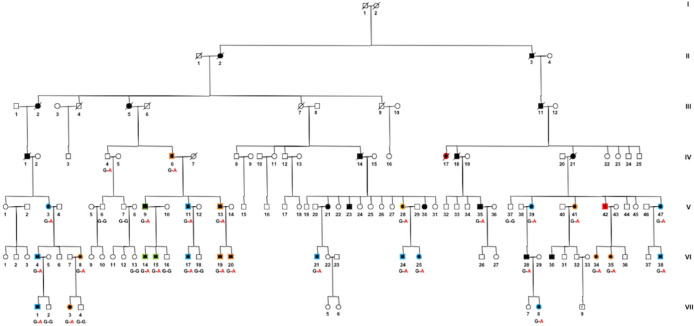
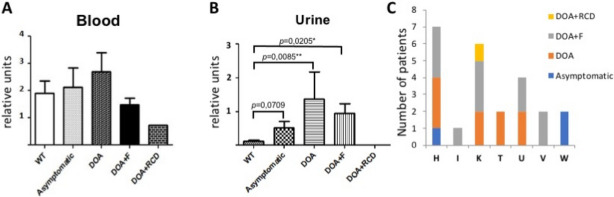
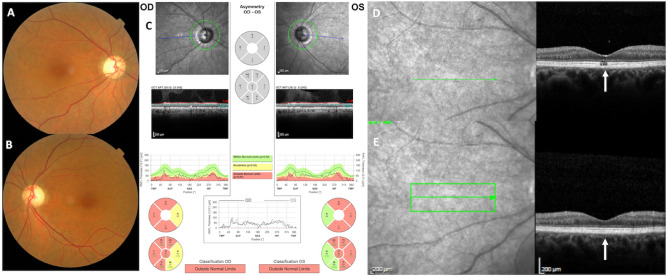
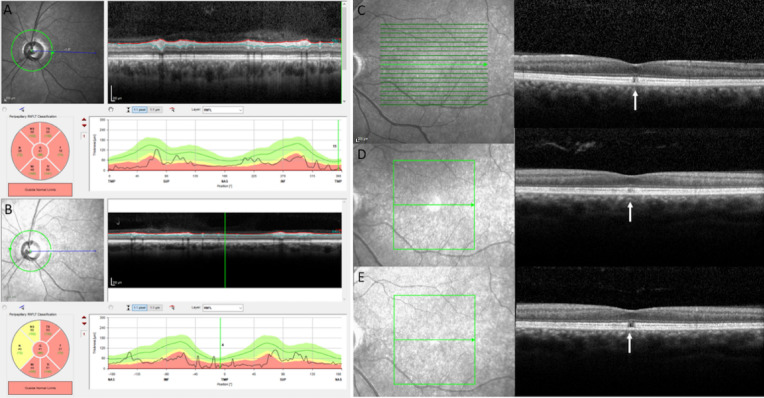
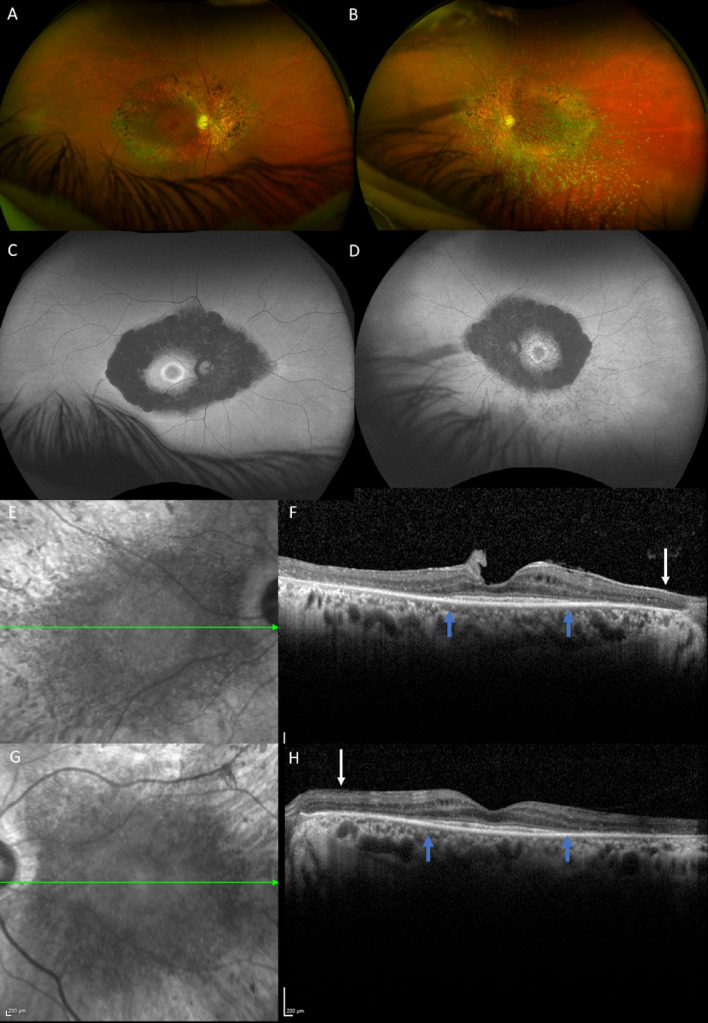
Dominant optic atrophy (DOA) is genetically heterogeneous and most commonly caused by mutations in OPA1. To distinguish between the classical OPA1-related and the recently identified SSBP1-related DOAs, the retina and fovea of 27 patients carrying the SSBP1 p.Arg38Gln variant were scrutinized using 20° × 20° macular cube and 30° and 55° field fundus autofluorescence photographs. Age of onset, visual acuity, retinal nerve fiber layer and macular thicknesses were recorded. Three SSBP1-patients were asymptomatic, 10 had isolated DOA, and 12 had a combined DOA plus foveopathy. The foveopathy, with a tiny defect of the ellipsoid and interdigitation lines, was similar in all patients, independent of age. There were no significant statistical differences in terms of visual acuity and SD-OCT measurements between patients with isolated DOA (mean visual acuity in decimals: 0.54 ± 0.41) and those with combined foveopathy (0.50 ± 0.23). Two patients over 50 years of age developed a progressive rod-cone dystrophy, leading to severe visual impairment. SSBP1-related DOA shares similarities with OPA1-related DOA with an incomplete penetrance and an early childhood visual impairment. Nevertheless, the presence of a congenital foveopathy with no impact on visual acuity is a major criterion to distinguish SSBP1 cases and orient the appropriate genetic analysis.
显性视神经萎缩(DOA)具有遗传异质性,最常见的原因是 OPA1 突变。为了区分经典的 OPA1 相关 DOA 和最近发现的 SSBP1 相关 DOA,对携带 SSBP1 p.Arg38Gln 变异的 27 名患者的视网膜和黄斑进行了 20°×20° 黄斑立方和 30° 和 55° 视野眼底自发荧光照片检查。记录发病年龄、视力、视网膜神经纤维层和黄斑厚度。3 名 SSBP1 患者无症状,10 名孤立性 DOA,12 名合并 DOA 加黄斑病变。所有患者的黄斑病变均具有小的椭圆体和交织线缺陷,与年龄无关。孤立性 DOA 患者(十进制平均视力:0.54±0.41)和合并性黄斑病变患者(0.50±0.23)之间的视力和 SD-OCT 测量值没有显著统计学差异。两名 50 岁以上的患者出现进行性视杆-视锥细胞营养不良,导致严重视力损害。SSBP1 相关 DOA 与 OPA1 相关 DOA 具有相似性,表现为不完全外显率和儿童早期视力损害。然而,存在先天性黄斑病变而不影响视力是区分 SSBP1 病例并指导适当的基因分析的主要标准。