Department of Biology, University of North Carolina at Chapel Hillgrid.10698.36, Chapel Hill, North Carolina, USA.
Department of Microbiology and Immunology, University of North Carolina at Chapel Hillgrid.10698.36, Chapel Hill, North Carolina, USA.
Appl Environ Microbiol. 2021 Nov 10;87(23):e0141121. doi: 10.1128/AEM.01411-21. Epub 2021 Sep 22.
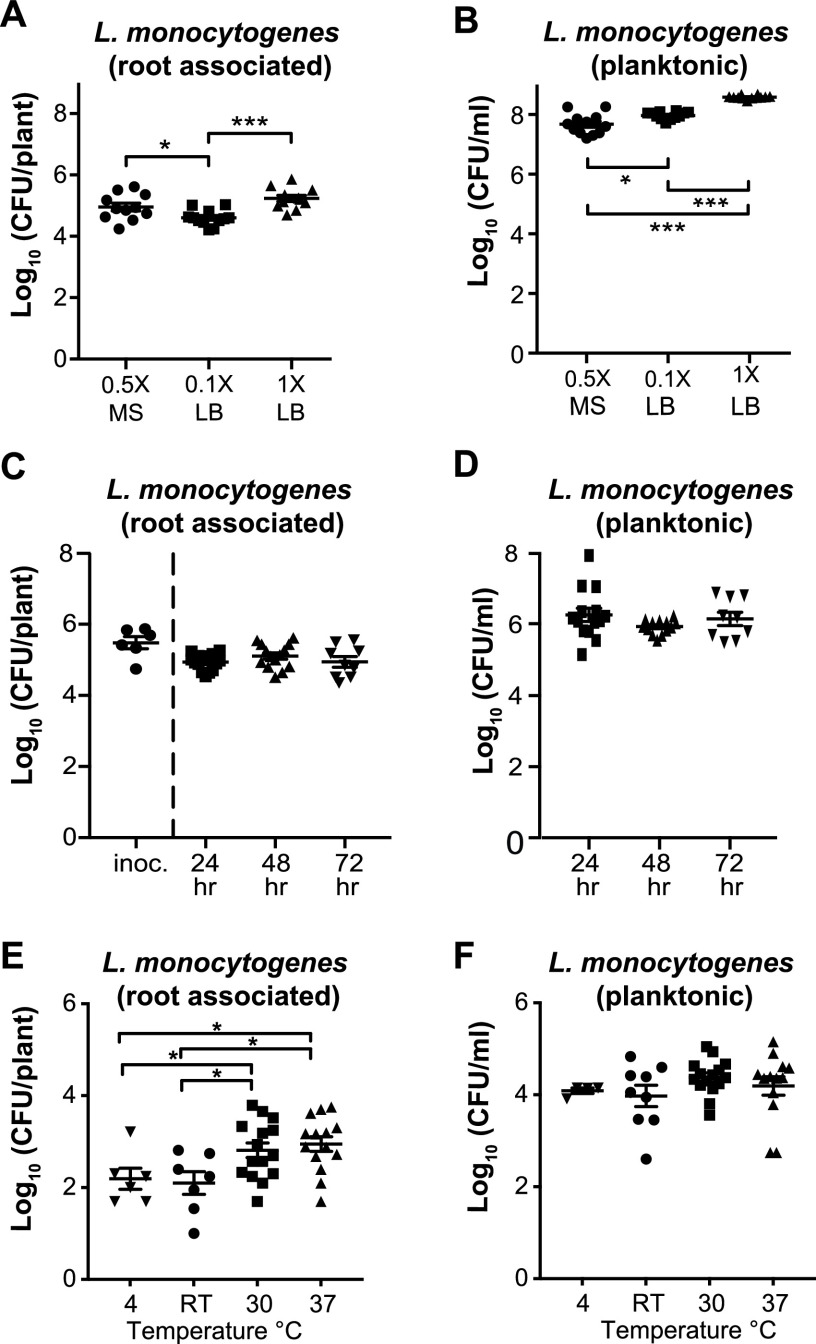
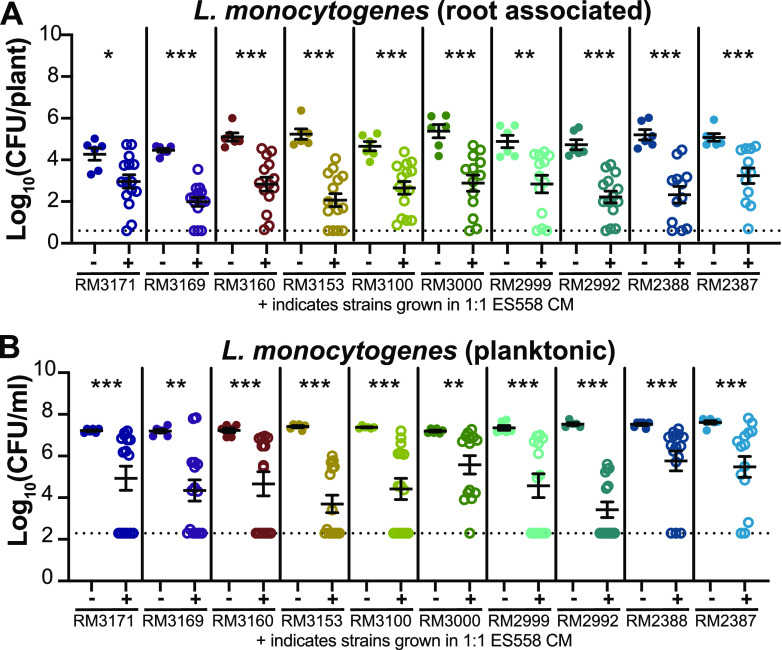
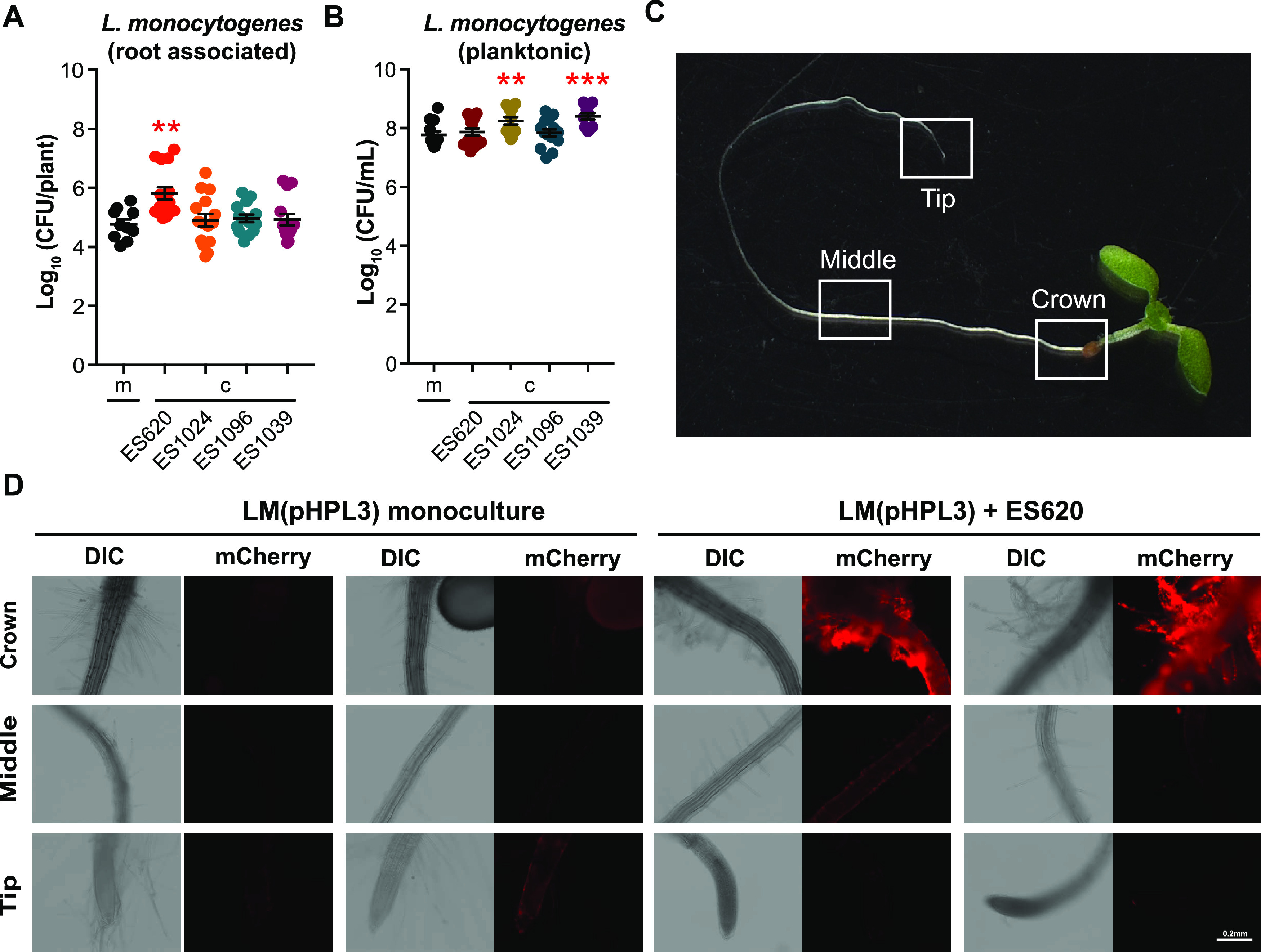
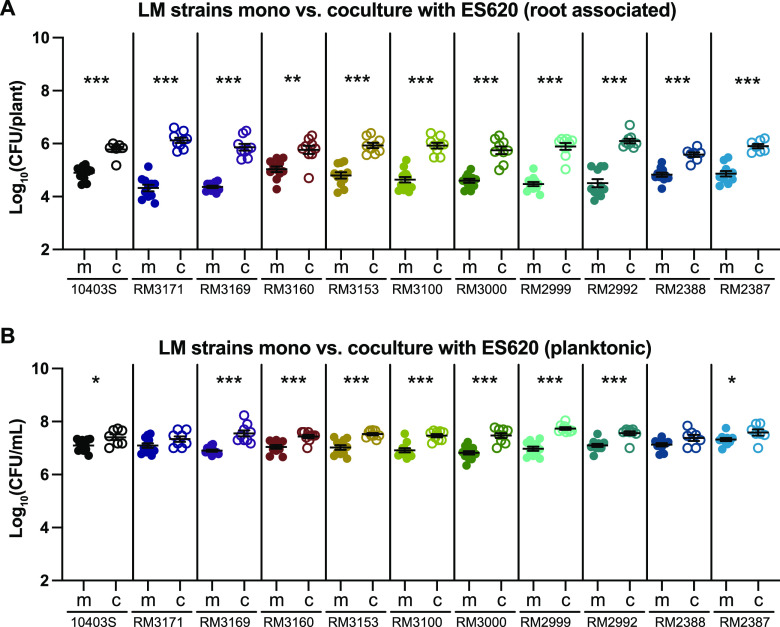
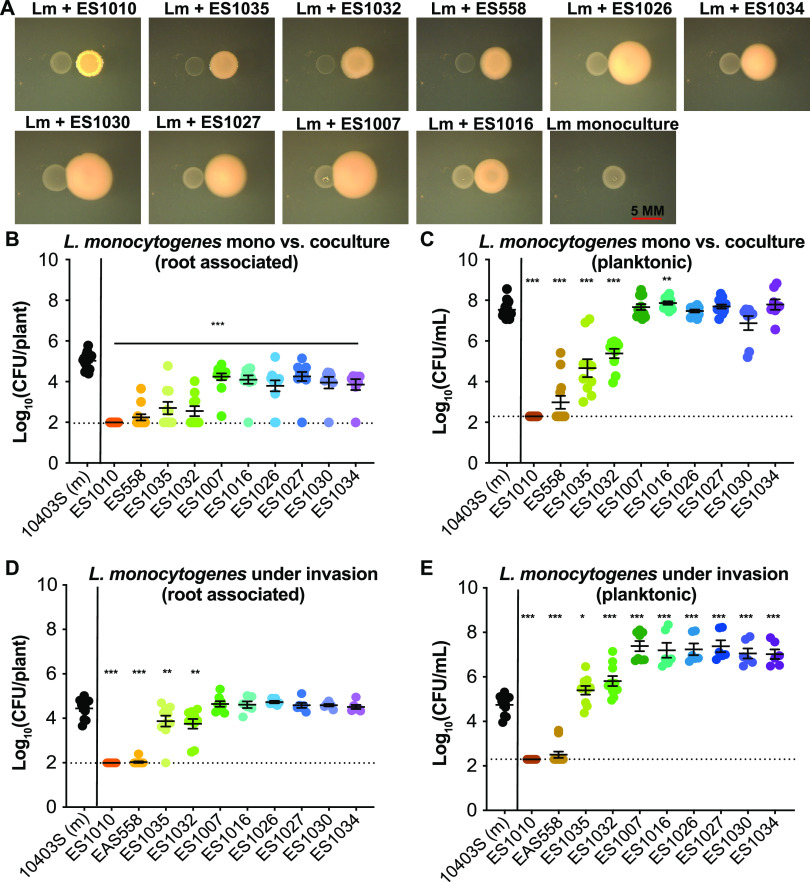
In spite of its relevance as a foodborne pathogen, we have limited knowledge about Listeria monocytogenes in the environment. L. monocytogenes outbreaks have been linked to fruits and vegetables; thus, a better understanding of the factors influencing its ability to colonize plants is important. We tested how environmental factors and other soil- and plant-associated bacteria influenced L. monocytogenes' ability to colonize plant roots using Arabidopsis thaliana seedlings in a hydroponic growth system. We determined that the successful root colonization of L. monocytogenes 10403S was modestly but significantly enhanced by the bacterium being pregrown at higher temperatures, and this effect was independent of the biofilm and virulence regulator PrfA. We tested 14 rhizosphere-derived bacteria for their impact on L. monocytogenes 10403S, identifying one that enhanced and 10 that inhibited the association of 10403S with plant roots. We also characterized the outcomes of these interactions under both coinoculation and invasion conditions. We characterized the physical requirements of five of these rhizobacteria to impact the association of L. monocytogenes 10403S with roots, visualizing one of these interactions by microscopy. Furthermore, we determined that two rhizobacteria (one an inhibitor, the other an enhancer of 10403S root association) were able to similarly impact 10 different L. monocytogenes strains, indicating that the effects of these rhizobacteria on L. monocytogenes are not strain specific. Taken together, our results advance our understanding of the parameters that affect L. monocytogenes plant root colonization, knowledge that may enable us to deter its association with and, thus, downstream contamination of, food crops. Listeria monocytogenes is ubiquitous in the environment, being found in or on soil, water, plants, and wildlife. However, little is known about the requirements for L. monocytogenes' existence in these settings. Recent L. monocytogenes outbreaks have been associated with contaminated produce; thus, we used a plant colonization model to investigate factors that alter L. monocytogenes' ability to colonize plant roots. We show that L. monocytogenes colonization of roots was enhanced when grown at higher temperatures prior to inoculation but did not require a known regulator of virulence and biofilm formation. Additionally, we identified several rhizobacteria that altered the ability of 11 different strains of L. monocytogenes to colonize plant roots. Understanding the factors that impact L. monocytogenes physiology and growth will be crucial for finding mechanisms (whether chemical or microbial) that enable its removal from plant surfaces to reduce L. monocytogenes contamination of produce and eliminate foodborne illness.
尽管李斯特菌作为食源性病原体具有重要意义,但我们对其在环境中的了解有限。李斯特菌暴发与水果和蔬菜有关;因此,更好地了解影响其定植植物的因素非常重要。我们使用拟南芥幼苗在水培生长系统中测试了环境因素和其他土壤和植物相关细菌如何影响李斯特菌定植植物根系的能力。我们发现,在较高温度下预培养细菌可适度但显著增强李斯特菌 10403S 的成功定植,并且该效应独立于生物膜和毒力调节因子 PrfA。我们测试了 14 种根际衍生细菌对李斯特菌 10403S 的影响,确定其中一种细菌可增强,而 10 种细菌可抑制 10403S 与植物根系的关联。我们还在共接种和入侵条件下对这些相互作用的结果进行了表征。我们描述了这 5 种根际细菌中 5 种对李斯特菌 10403S 与根系关联的物理要求,通过显微镜观察到其中一种相互作用。此外,我们确定两种根际细菌(一种抑制剂,另一种增强剂)能够类似地影响 10 种不同的李斯特菌菌株,表明这些根际细菌对李斯特菌的影响不是菌株特异性的。总的来说,我们的结果推进了我们对影响李斯特菌植物根系定植的参数的理解,这些知识可能使我们能够阻止其与食物作物的关联,从而阻止其下游污染。李斯特菌普遍存在于环境中,存在于土壤、水、植物和野生动物中或之上。然而,对于李斯特菌在这些环境中的生存要求知之甚少。最近的李斯特菌暴发与受污染的农产品有关;因此,我们使用植物定植模型来研究改变李斯特菌定植植物根系能力的因素。我们表明,在接种前于较高温度下培养时,李斯特菌对根的定植增强,但不依赖于已知的毒力和生物膜形成调节剂。此外,我们鉴定了几种改变 11 种不同李斯特菌菌株定植植物根系能力的根际细菌。了解影响李斯特菌生理学和生长的因素对于寻找能够从植物表面去除李斯特菌的机制(无论是化学的还是微生物的)至关重要,这可以减少农产品的李斯特菌污染并消除食源性疾病。