Chair of Wildlife Ecology and Management, University of Freiburg, Tennenbacher Str. 4, 79106, Freiburg, Germany.
Swiss Federal Research Institute WSL, Zürcherstrasse 111, 8903, Birmensdorf, Switzerland.
BMC Biol. 2021 Sep 23;19(1):210. doi: 10.1186/s12915-021-01136-8.
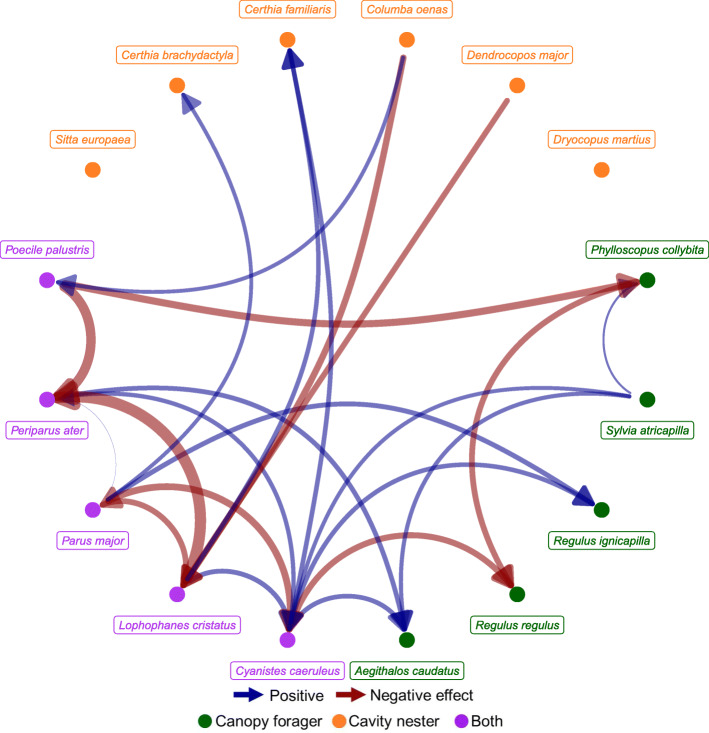
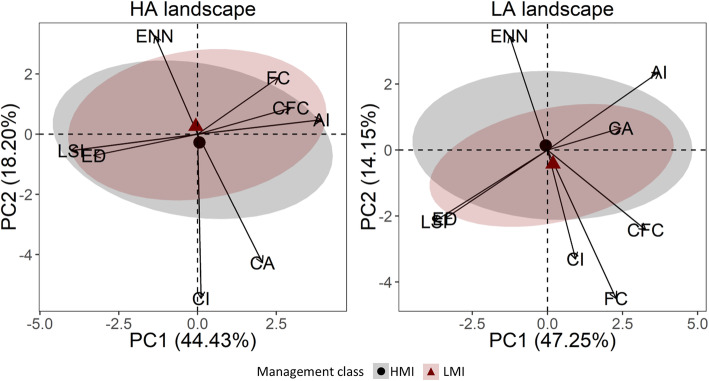
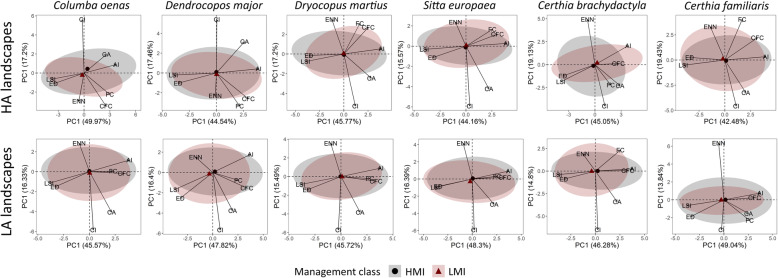
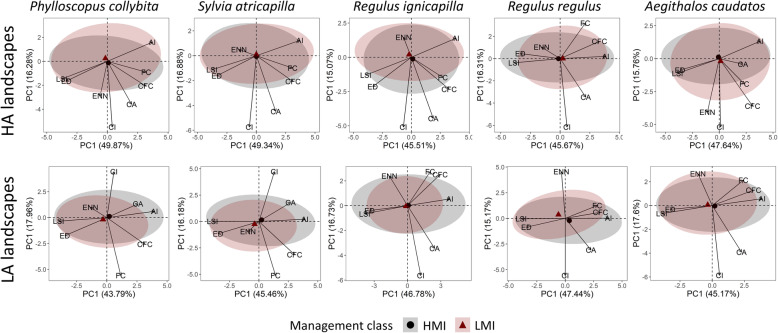
Species co-occurrences can have profound effects on the habitat use of species, and therefore habitat structure alone cannot fully explain observed abundances. To account for this aspect of community organization, we developed multi-species abundance models, incorporating the local effect of co-occurring and potentially associated species, alongside with environmental predictors, linked mainly to forest management intensity. We coupled it with a landscape-scale analysis to further examine the role of management intensity in modifying the habitat preferences in connection with the landscape context. Using empirical data from the Black Forest in southern Germany, we focused on the forest bird assemblage and in particular on the cavity-nesting and canopy-foraging guilds. We included in the analysis species that co-occur and for which evidence suggests association is likely.
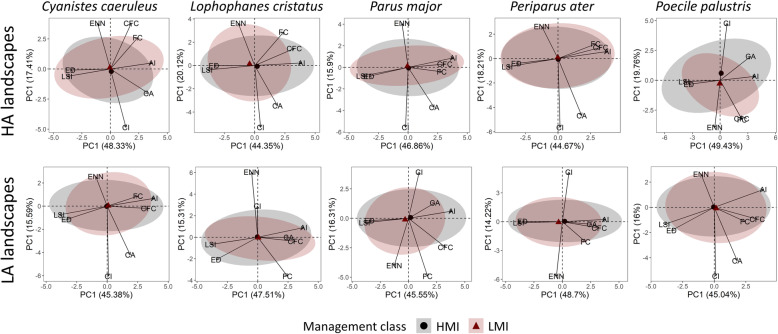
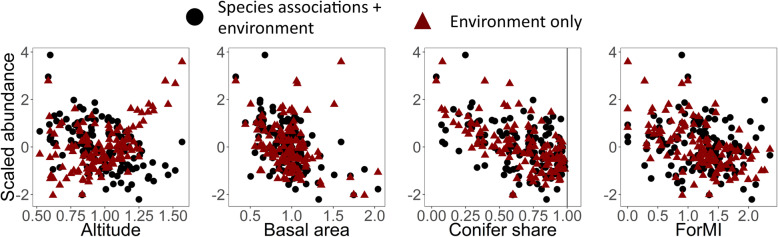
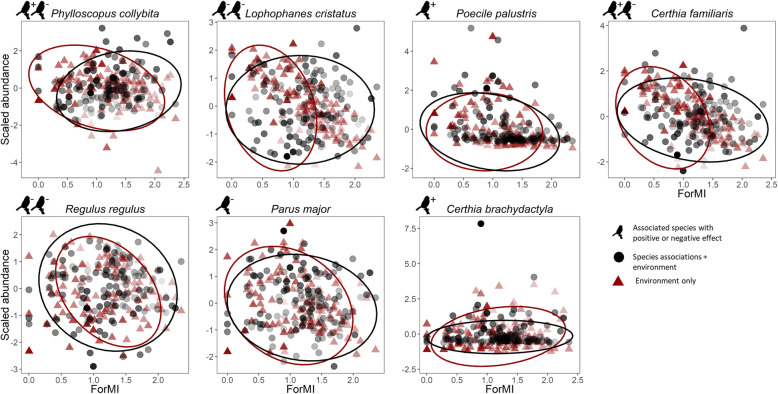
Our findings show that the local effect of species associations can mitigate the effects of management intensity on forest birds. We also found that bird species express wider habitat preferences in forests under higher management intensity, depending on the landscape context.
We suspect that species associations may facilitate the utilization of a broader range of environmental conditions under intensive forest management, which benefits some species over others. Networks of associations may be a relevant factor in the effectiveness of conservation-oriented forest management.
物种共存对物种的栖息地利用有深远的影响,因此仅靠栖息地结构无法完全解释观察到的丰度。为了考虑到群落组织的这一方面,我们开发了多物种丰度模型,将共存和潜在相关物种的局部效应与环境预测因子结合起来,这些预测因子主要与森林管理强度有关。我们将其与景观尺度分析相结合,进一步研究管理强度在改变与景观背景相关的栖息地偏好方面的作用。利用来自德国南部黑森林的实证数据,我们专注于森林鸟类组合,特别是树洞巢和树冠觅食的鸟类。我们在分析中纳入了共存的物种,并有证据表明它们之间可能存在关联。
我们的研究结果表明,物种关联的局部效应可以减轻管理强度对森林鸟类的影响。我们还发现,取决于景观背景,鸟类在管理强度较高的森林中表现出更广泛的栖息地偏好。
我们怀疑物种关联可能有助于在密集的森林管理下利用更广泛的环境条件,这使某些物种受益于其他物种。关联网络可能是面向保护的森林管理有效性的一个相关因素。