Hatanaka Kosaku, Ito Takashi, Madokoro Yutaro, Kamikokuryo Chinatsu, Niiyama Shuhei, Yamada Shingo, Maruyama Ikuro, Kakihana Yasuyuki
Department of Emergency and Intensive Care Medicine, Kagoshima University Graduate School of Medical and Dental Sciences, Kagoshima, Japan.
Department of Systems Biology in Thromboregulation, Kagoshima University Graduate School of Medical and Dental Sciences, Kagoshima, Japan.
Front Cardiovasc Med. 2021 Sep 7;8:730553. doi: 10.3389/fcvm.2021.730553. eCollection 2021.
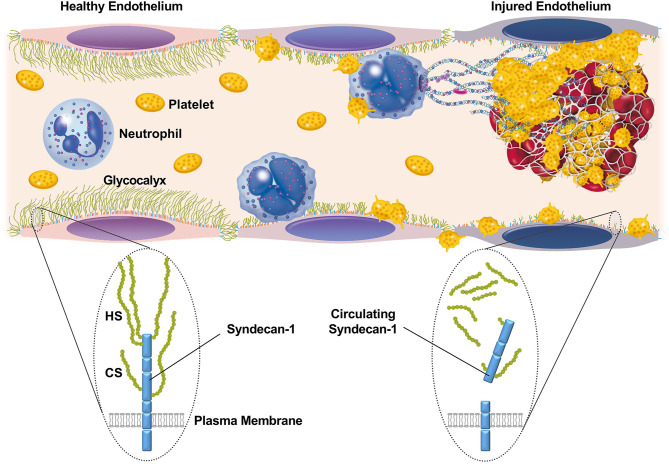
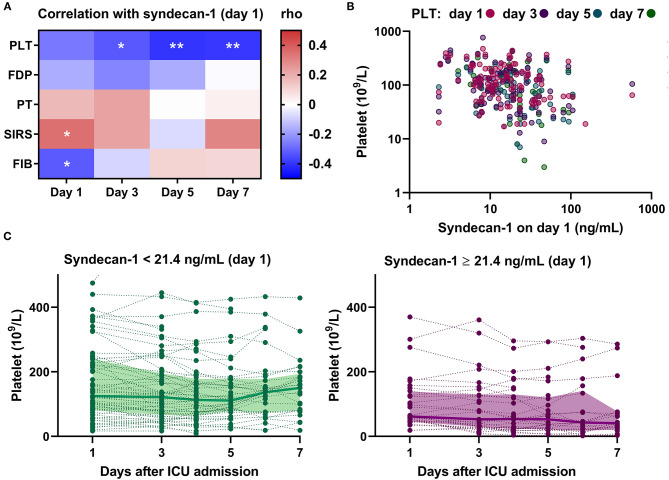
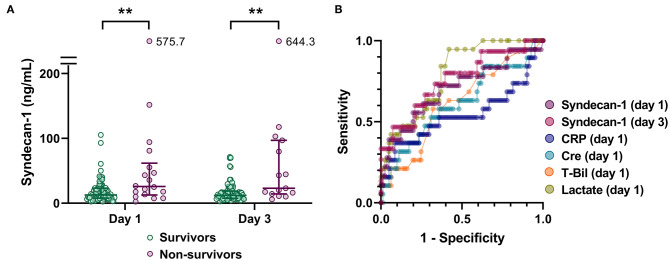
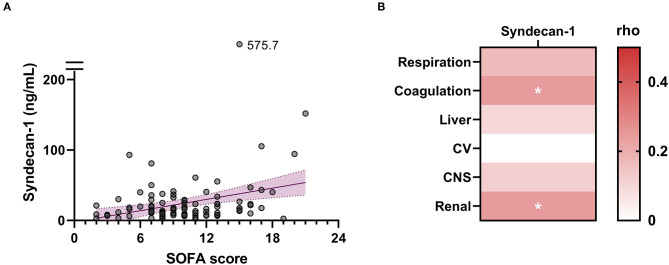
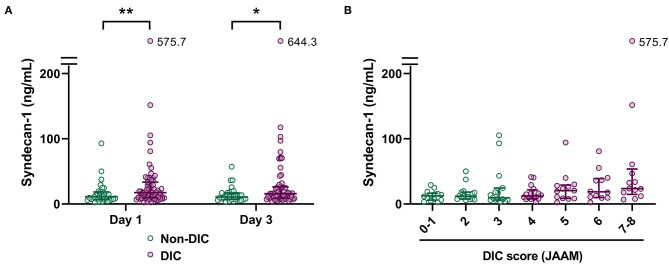
Sepsis is defined as life-threatening organ dysfunction caused by dysregulated host responses to infection. Recent studies have suggested that endotheliopathy may be the common basis for multiple organ failure in sepsis. Under septic conditions, accumulation of proteases accelerates shedding of proteoglycans, such as syndecan-1, from the endothelial surface, resulting in augmented leukocyte adhesion to the vascular wall, enhanced vascular permeability, and intravascular coagulation. The purpose of this study was to determine the potential utility of syndecan-1 as a biomarker linking endotheliopathy to organ failure. One hundred patients with suspected infections who were admitted to the intensive care unit (ICU) at Kagoshima University Hospital were consecutively enrolled in the study. Serum syndecan-1 levels were measured using an in-house enzyme-linked immunosorbent assay. The difference between serum syndecan-1 levels in 28-day survivors and non-survivors was analyzed by the Mann-Whitney -test. Receiver-operating characteristics curve analysis with area under the curve calculation was used to quantify the predictive performance of serum syndecan-1 for 28-day mortality. The correlations between serum syndecan-1 and coagulation markers were analyzed by Spearman's rank correlation test. Serum syndecan-1 levels in non-survivors were significantly higher than those in survivors on Day 1 and Day 3 ( < 0.01). Among multiple organ failures, coagulation failure and renal failure were significantly correlated with serum syndecan-1. Spearman's rank correlation test indicated that serum syndecan-1 was weakly but significantly correlated with disseminated intravascular coagulation score (rho = 0.33, < 0.01). Patients with serum syndecan-1 ≥21.4 ng/mL showed delayed recovery from thrombocytopenia relative to patients with serum syndecan-1 <21.4 ng/mL. Elevated circulating syndecan-1 on the first day of ICU admission was associated with persistent thrombocytopenia and lethal outcome in patients with suspected sepsis.
脓毒症被定义为由宿主对感染的反应失调引起的危及生命的器官功能障碍。最近的研究表明,内皮病变可能是脓毒症多器官功能衰竭的共同基础。在脓毒症状态下,蛋白酶的积累加速了蛋白聚糖(如syndecan-1)从内皮表面的脱落,导致白细胞与血管壁的粘附增加、血管通透性增强和血管内凝血。本研究的目的是确定syndecan-1作为将内皮病变与器官衰竭联系起来的生物标志物的潜在效用。连续纳入了100名入住鹿儿岛大学医院重症监护病房(ICU)的疑似感染患者。使用内部酶联免疫吸附测定法测量血清syndecan-1水平。通过Mann-Whitney检验分析28天存活者和非存活者血清syndecan-1水平的差异。采用曲线下面积计算的受试者工作特征曲线分析来量化血清syndecan-1对28天死亡率的预测性能。通过Spearman等级相关检验分析血清syndecan-1与凝血标志物之间的相关性。非存活者第1天和第3天的血清syndecan-1水平显著高于存活者(<0.01)。在多器官功能衰竭中,凝血功能衰竭和肾衰竭与血清syndecan-1显著相关。Spearman等级相关检验表明,血清syndecan-1与弥散性血管内凝血评分呈弱但显著的相关性(rho = 0.33,<0.01)。血清syndecan-1≥21.4 ng/mL的患者相对于血清syndecan-1<21.4 ng/mL的患者,血小板减少症的恢复延迟。ICU入院第一天循环syndecan-1升高与疑似脓毒症患者的持续性血小板减少症和致命结局相关。