Ni Xijun, Ji Qiang, Wu Wensheng, Shao Qingfeng, Ji Yannan, Zhang Chi, Liang Lei, Ge Junyi, Guo Zhen, Li Jinhua, Li Qiang, Grün Rainer, Stringer Chris
Hebei GEO University, Shijiazhuang 050031, China.
CAS Center for Excellence in Life and Paleoenvironment, Chinese Academy of Science, Beijing 100044, China.
Innovation (Camb). 2021 Aug 28;2(3):100130. doi: 10.1016/j.xinn.2021.100130.
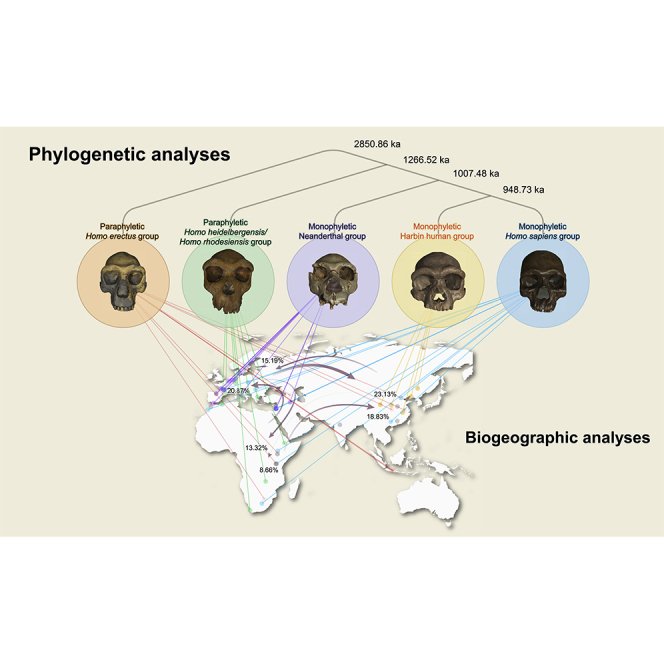
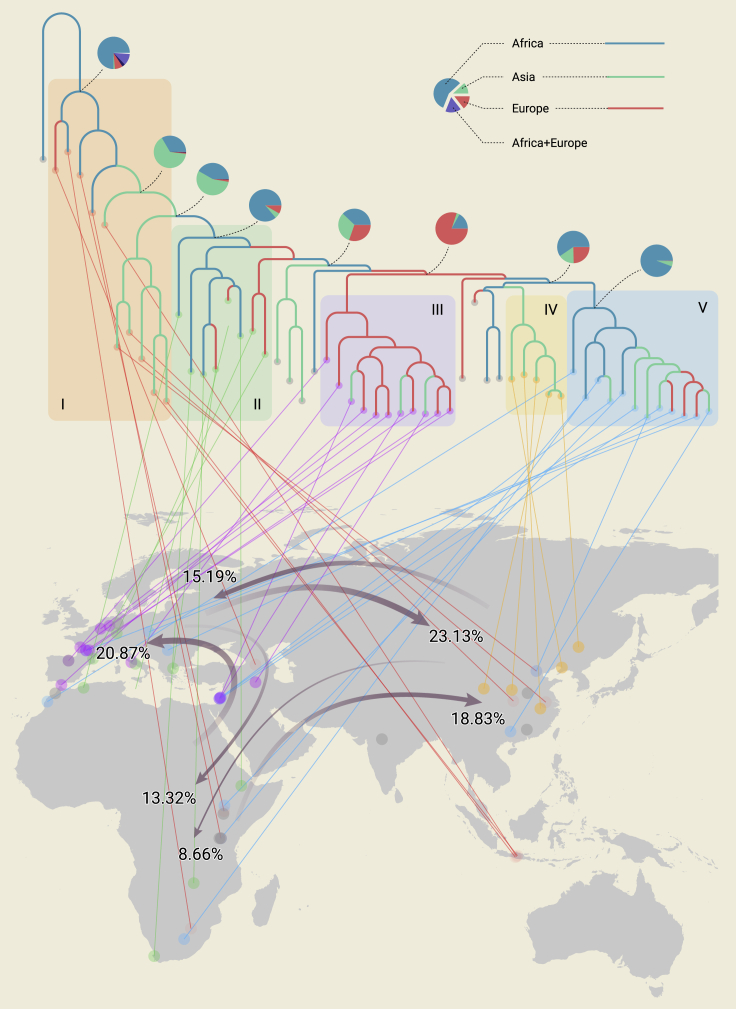
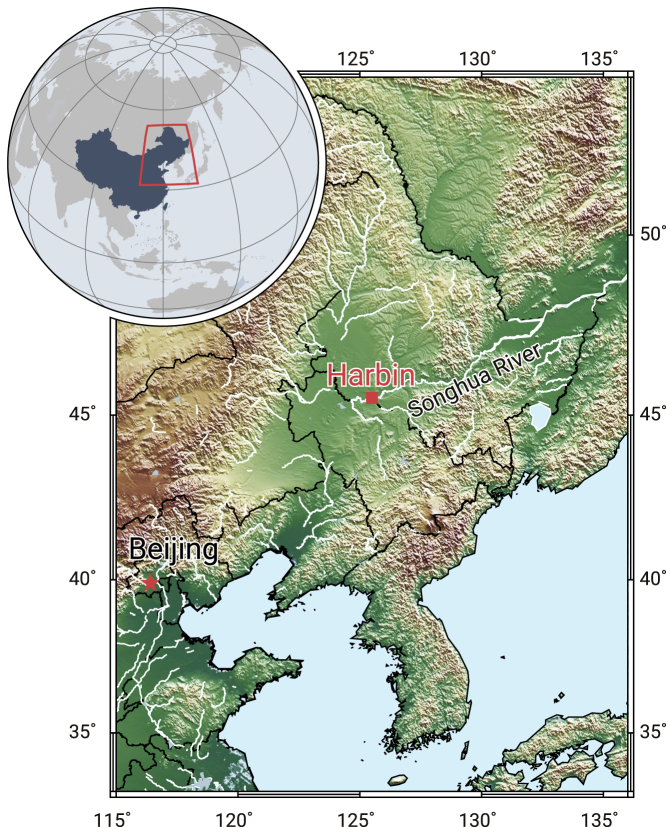
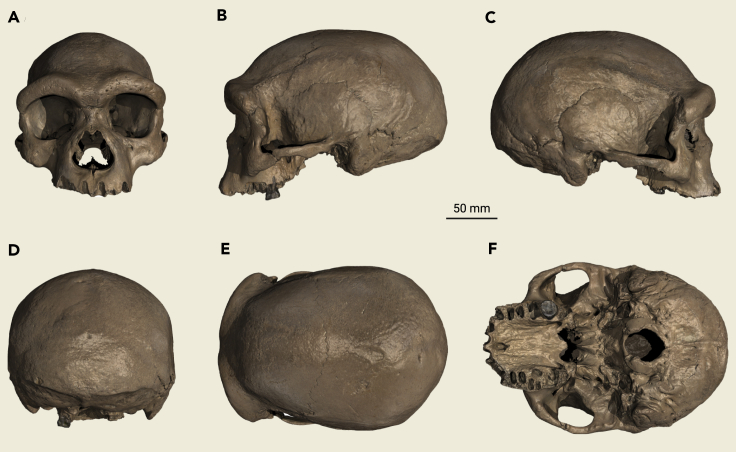
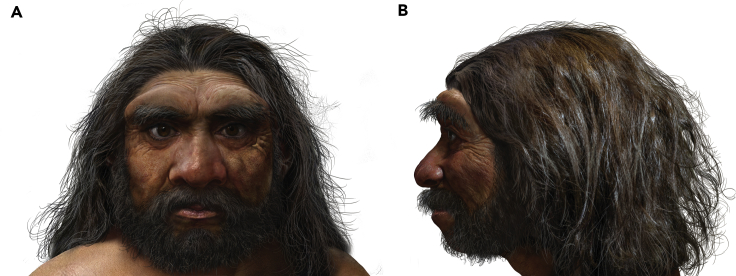
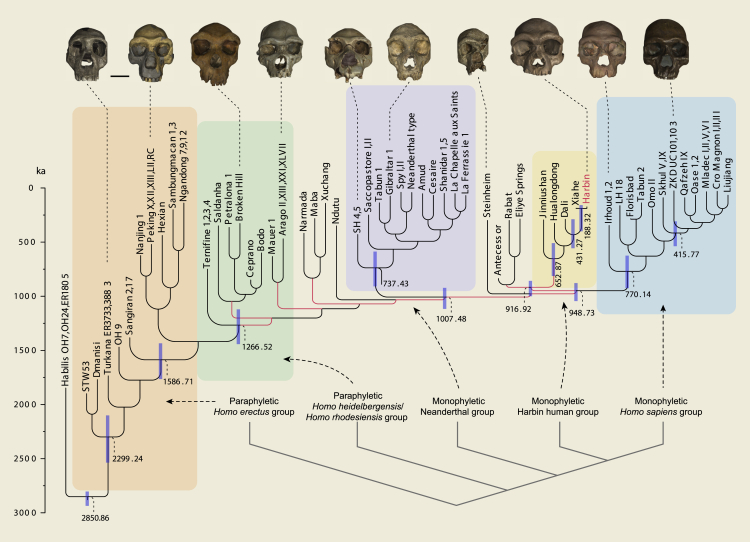
It has recently become clear that several human lineages coexisted with during the late Middle and Late Pleistocene. Here, we report an archaic human fossil that throws new light on debates concerning the diversification of the genus and the origin of . The fossil was recovered in Harbin city in northeastern China, with a minimum uranium-series age of 146 ka. This cranium is one of the best preserved Middle Pleistocene human fossils. Its massive size, with a large cranial capacity (∼1,420 mL) falling in the range of modern humans, is combined with a mosaic of primitive and derived characters. It differs from all the other named species by presenting a combination of features, such as long and low cranial vault, a wide and low face, large and almost square orbits, gently curved but massively developed supraorbital torus, flat and low cheekbones with a shallow canine fossa, and a shallow palate with thick alveolar bone supporting very large molars. The excellent preservation of the Harbin cranium advances our understanding of several less-complete late Middle Pleistocene fossils from China, which have been interpreted as local evolutionary intermediates between the earlier species and later . Phylogenetic analyses based on parsimony criteria and Bayesian tip-dating suggest that the Harbin cranium and some other Middle Pleistocene human fossils from China, such as those from Dali and Xiahe, form a third East Asian lineage, which is a part of the sister group of the lineage. Our analyses of such morphologically distinctive archaic human lineages from Asia, Europe, and Africa suggest that the diversification of the genus may have had a much deeper timescale than previously presumed. Sympatric isolation of small populations combined with stochastic long-distance dispersals is the best fitting biogeographical model for interpreting the evolution of the genus.
最近已经明确,在中更新世晚期和晚更新世期间,有几支人类谱系共存。在此,我们报告了一具古人类化石,它为有关人属多样化和智人起源的争论提供了新线索。该化石在中国东北的哈尔滨市被发现,铀系测年最小年龄为14.6万年。这块头盖骨是保存最完好的中更新世人类化石之一。它体型巨大,脑容量大(约1420毫升),处于现代人的范围,同时兼具原始和衍生特征。它与所有其他已命名的人属物种不同,具有一系列特征组合,如颅顶长而低、面部宽而低、眼眶大且近乎方形、眉弓粗壮且略微弯曲、颧骨扁平且低、犬齿窝浅、腭浅且牙槽骨厚,支撑着非常大的臼齿。哈尔滨头盖骨的完美保存增进了我们对中国一些保存不太完整的中更新世晚期化石的理解,这些化石曾被解释为早期直立人和晚期智人之间的本土进化中间类型。基于简约标准和贝叶斯末端定年的系统发育分析表明,哈尔滨头盖骨和中国其他一些中更新世人类化石,如来自大理和夏河的化石,形成了东亚的第三支谱系,它是智人谱系姐妹群的一部分。我们对亚洲、欧洲和非洲这种形态独特的古人类谱系的分析表明,人属的多样化可能具有比先前推测更深的时间尺度。小种群的同域隔离与随机的长距离扩散相结合,是解释人属进化的最符合生物地理学的模型。