Evolutionary Genomics Section, Globe Institute, University of Copenhagen, Copenhagen, Denmark.
Computational Systems Biochemistry, Max Planck Institute of Biochemistry, Martinsried, Germany.
Nature. 2020 Apr;580(7802):235-238. doi: 10.1038/s41586-020-2153-8. Epub 2020 Apr 1.
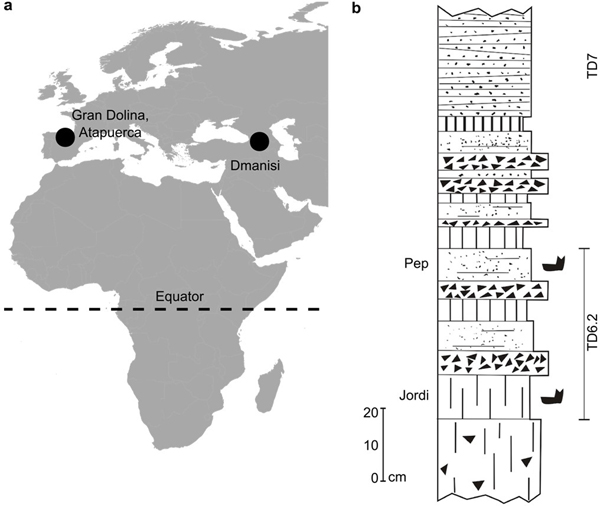
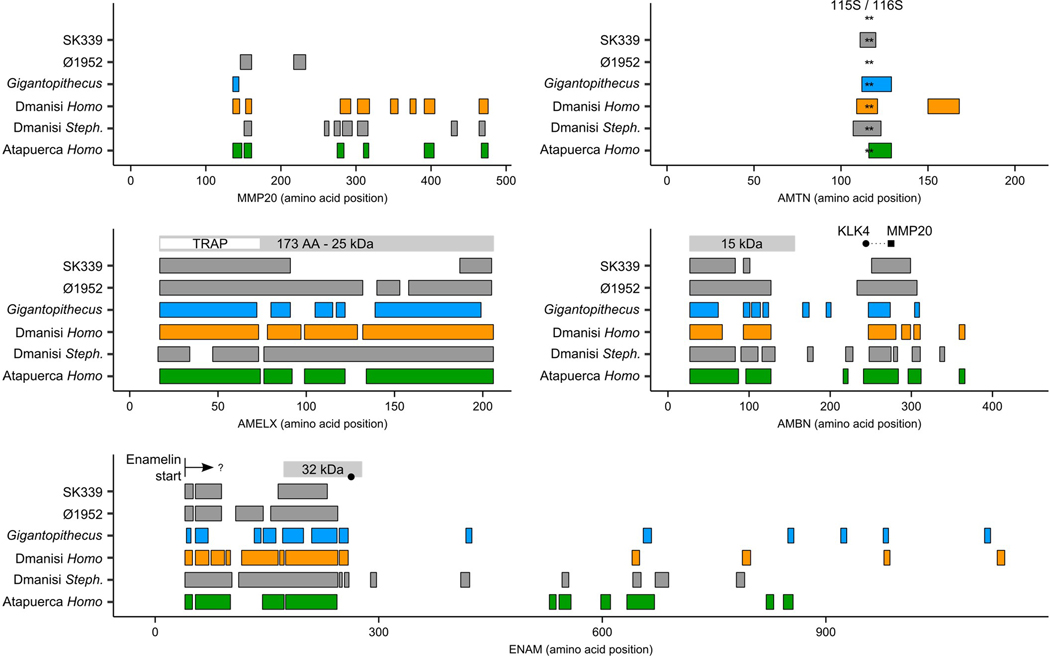
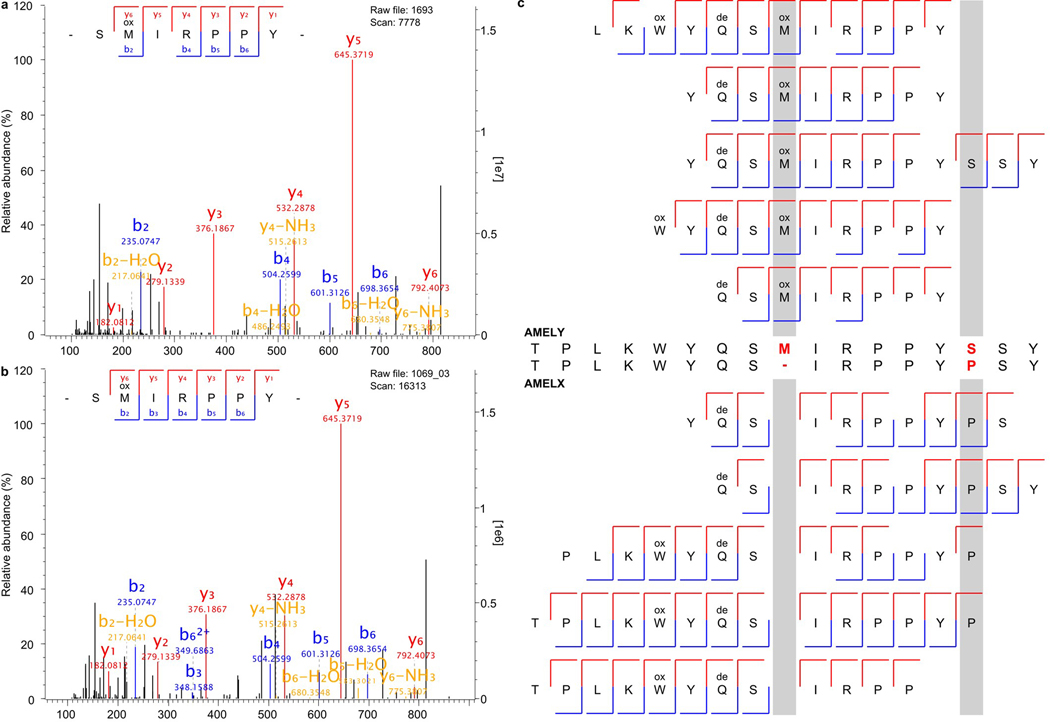
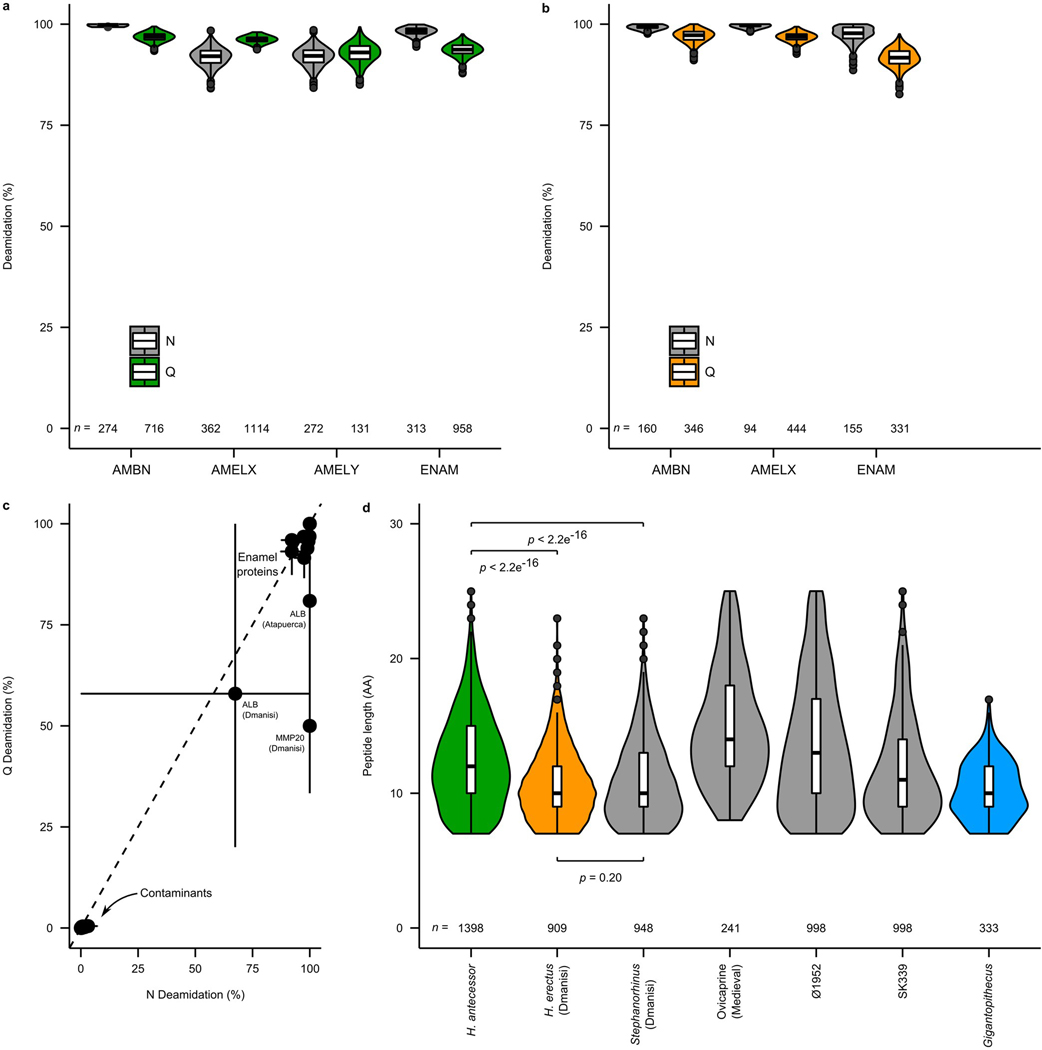
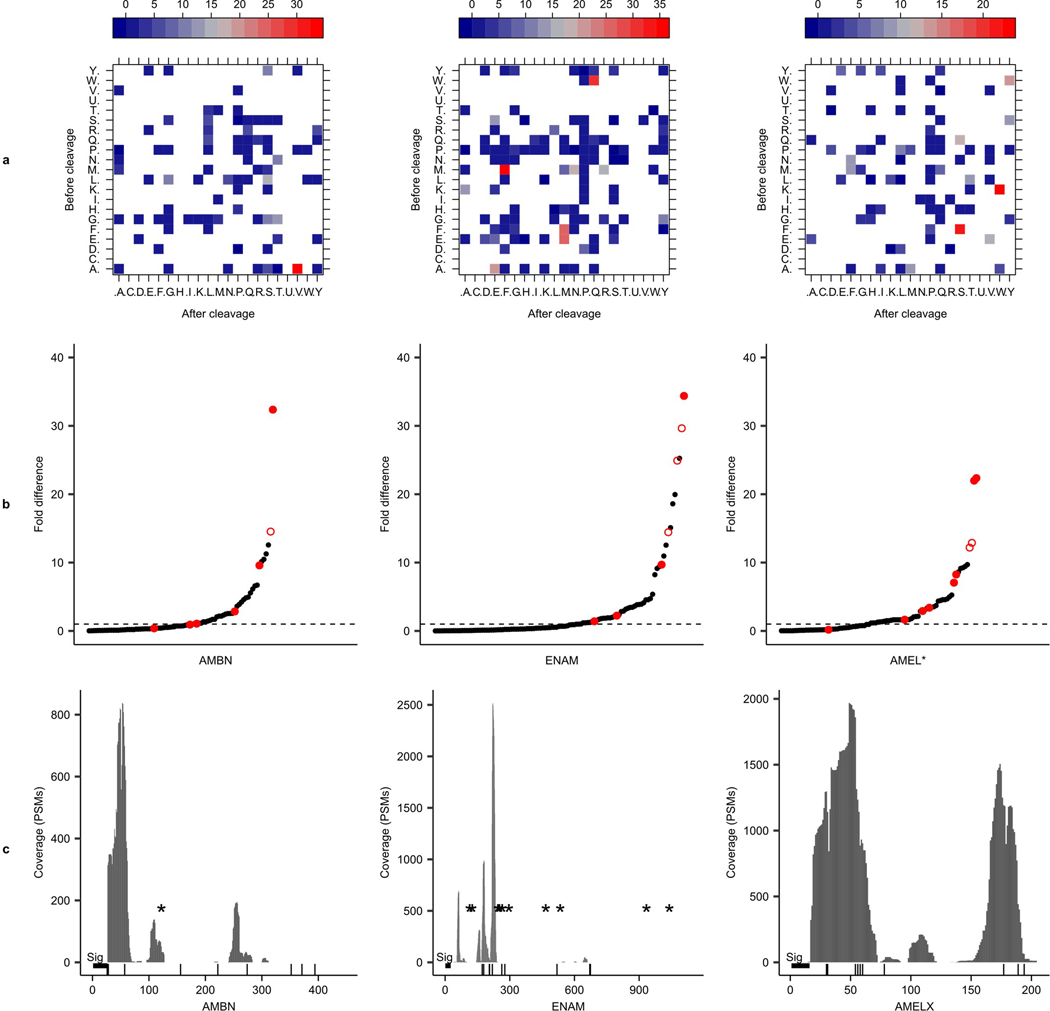
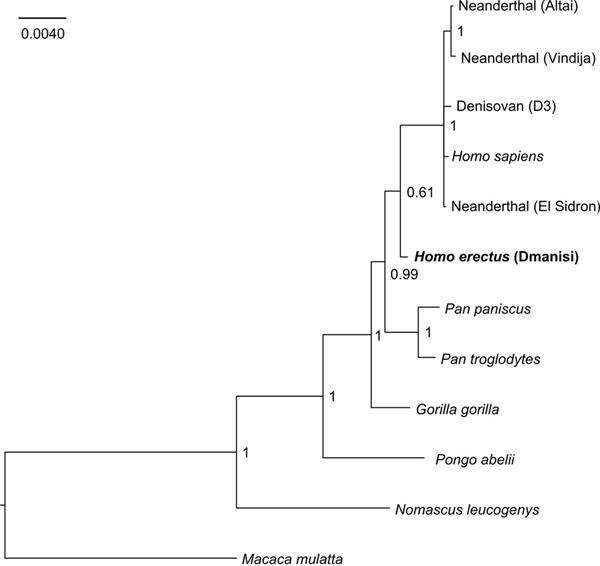
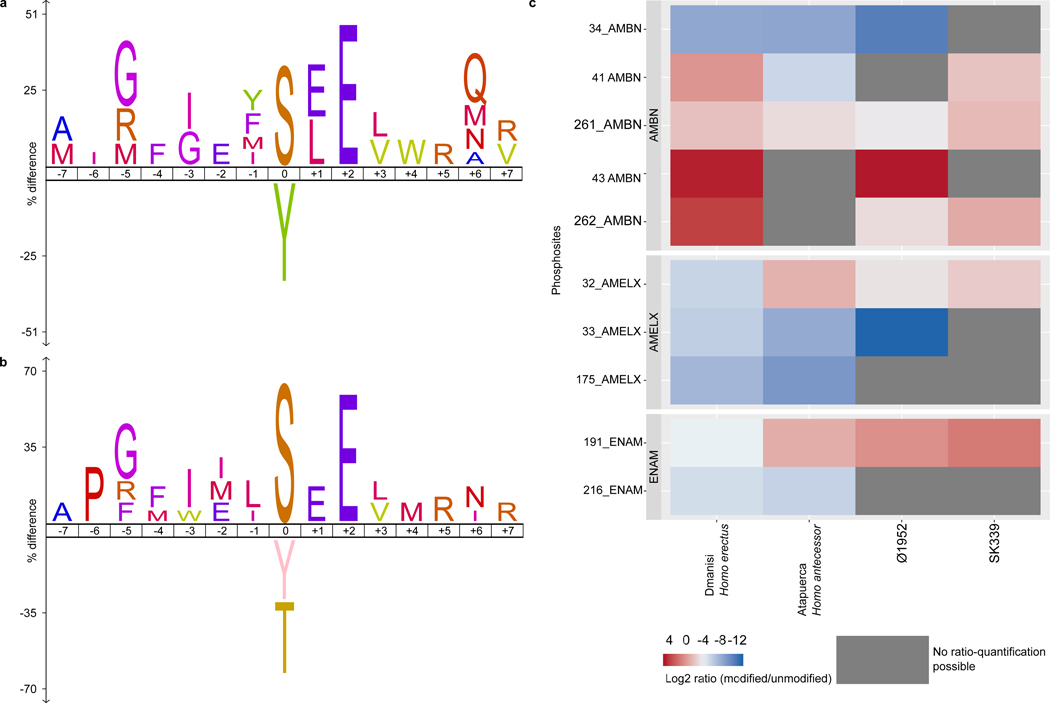
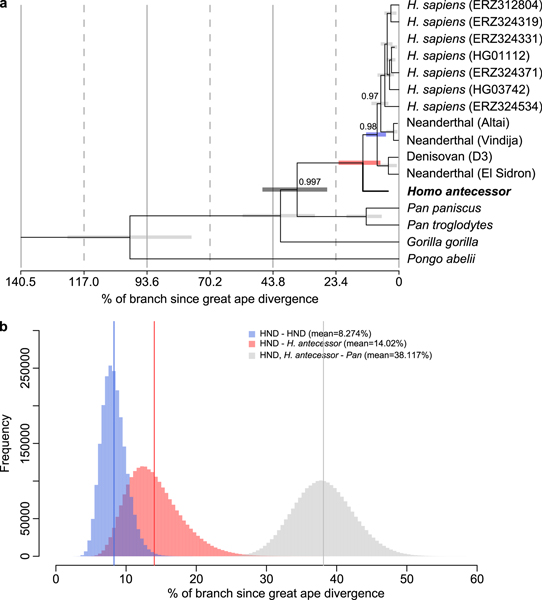
The phylogenetic relationships between hominins of the Early Pleistocene epoch in Eurasia, such as Homo antecessor, and hominins that appear later in the fossil record during the Middle Pleistocene epoch, such as Homo sapiens, are highly debated. For the oldest remains, the molecular study of these relationships is hindered by the degradation of ancient DNA. However, recent research has demonstrated that the analysis of ancient proteins can address this challenge. Here we present the dental enamel proteomes of H. antecessor from Atapuerca (Spain) and Homo erectus from Dmanisi (Georgia), two key fossil assemblages that have a central role in models of Pleistocene hominin morphology, dispersal and divergence. We provide evidence that H. antecessor is a close sister lineage to subsequent Middle and Late Pleistocene hominins, including modern humans, Neanderthals and Denisovans. This placement implies that the modern-like face of H. antecessor-that is, similar to that of modern humans-may have a considerably deep ancestry in the genus Homo, and that the cranial morphology of Neanderthals represents a derived form. By recovering AMELY-specific peptide sequences, we also conclude that the H. antecessor molar fragment from Atapuerca that we analysed belonged to a male individual. Finally, these H. antecessor and H. erectus fossils preserve evidence of enamel proteome phosphorylation and proteolytic digestion that occurred in vivo during tooth formation. Our results provide important insights into the evolutionary relationships between H. antecessor and other hominin groups, and pave the way for future studies using enamel proteomes to investigate hominin biology across the existence of the genus Homo.
欧亚大陆早更新世人类(如先驱人)与中更新世时期出现的人类(如智人)之间的系统发育关系存在很大争议。对于最古老的遗骸,由于古代 DNA 的降解,这些关系的分子研究受到阻碍。然而,最近的研究表明,古代蛋白质的分析可以解决这一挑战。在这里,我们展示了来自阿塔普埃卡(西班牙)的先驱人和来自德马尼西(格鲁吉亚)的直立人的牙釉质蛋白质组,这两个关键的化石组合在更新世人类形态、扩散和分化的模型中具有核心作用。我们提供的证据表明,先驱人与随后的中更新世和晚更新世人类(包括现代人类、尼安德特人和丹尼索万人)密切相关。这种关系意味着先驱人具有类似于现代人类的现代面孔可能具有相当深的人类属起源,而尼安德特人的颅骨形态代表了一种衍生形式。通过回收 AMELY 特异性肽序列,我们还得出结论,我们分析的来自阿塔普埃卡的先驱人磨牙碎片属于一个男性个体。最后,这些先驱人和直立人化石保存了牙釉质蛋白质组磷酸化和蛋白水解消化的证据,这些发生在牙齿形成过程中的体内。我们的研究结果为先驱人与其他人类群体之间的进化关系提供了重要的见解,并为未来使用牙釉质蛋白质组研究人类生物学在人类属的存在期间铺平了道路。