Department of Classics, Philosophy and History (DAFIST), Philosophy Section, University of Genoa, Via Balbi 4, 16126, Genoa, Italy.
Department for Life Quality Studies (QUVI), University of Bologna, Corso di Augusto 237, 47921, Rimini, Italy.
Hist Philos Life Sci. 2021 Sep 24;43(4):108. doi: 10.1007/s40656-021-00460-0.
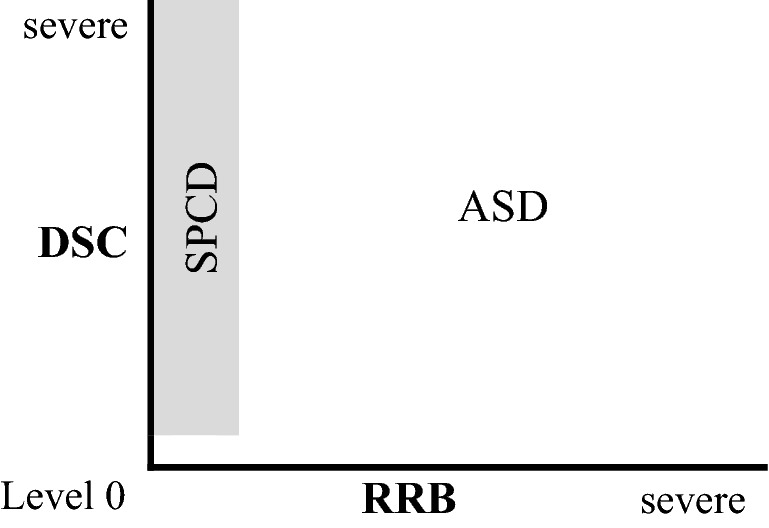
The latest edition of the Diagnostic and Statistical Manual of Mental Disorders (DSM-5) included the Social (Pragmatic) Communication Disorder (SPCD) as a new mental disorder characterized by deficits in pragmatic abilities. Although the introduction of SPCD in the psychiatry nosography depended on a variety of reasons-including bridging a nosological gap in the macro-category of Communication Disorders-in the last few years researchers have identified major issues in such revision. For instance, the symptomatology of SPCD is notably close to that of (some forms of) Autism Spectrum Disorder (ASD). This opens up the possibility that individuals with very similar symptoms can be diagnosed differently (with either ASD or SPCD) and receive different clinical treatments and social support. The aim of this paper is to review recent debates on SPCD, particularly as regards its independence from ASD. In the first part, we outline the major aspects of the DSM-5 nosological revision involving ASD and SPCD. In the second part, we focus on the validity and reliability of SPCD. First, we analyze literature on three potential validators of SPCD, i.e., etiology, response to treatment, and measurability. Then, we turn to reliability issues connected with the introduction of the grandfather clause and the use of the concepts of spectrum and threshold in the definition of ASD. In the conclusion, we evaluate whether SPCD could play any role in contemporary psychiatry other than that of an independent mental disorder and discuss the role that non-epistemic factors could play in the delineation of the future psychiatry nosography.
《精神障碍诊断与统计手册》(DSM-5)的最新版本将社交(语用)沟通障碍(SPCD)纳入一种新的精神障碍,其特征是语用能力缺陷。尽管 SPCD 在精神病学分类中引入的原因多种多样,包括弥合沟通障碍这一宏观类别中的分类差距,但在过去几年中,研究人员已经发现了这一修订中的主要问题。例如,SPCD 的症状与自闭症谱系障碍(ASD)的某些形式非常相似。这就使得具有非常相似症状的个体可能被诊断为不同的疾病(ASD 或 SPCD),并接受不同的临床治疗和社会支持。本文的目的是回顾 SPCD 的最新争议,特别是关于其与 ASD 的独立性。在第一部分中,我们概述了 DSM-5 分类修订中涉及 ASD 和 SPCD 的主要方面。在第二部分中,我们重点关注 SPCD 的有效性和可靠性。首先,我们分析了 SPCD 的三个潜在效标,即病因、治疗反应和可测量性的文献。然后,我们转向与祖父条款的引入以及在 ASD 定义中使用谱和阈值概念相关的可靠性问题。在结论部分,我们评估了 SPCD 是否除了作为一种独立的精神障碍之外,还能在当代精神病学中发挥任何作用,并讨论了非认识论因素在未来精神病学分类中的作用。