Chen Pengcheng, Fan Dingxin, Zhang Yunlong, Selloni Annabella, Carter Emily A, Arnold Craig B, Dankworth David C, Rucker Steven P, Chelikowsky James R, Yao Nan
Princeton Institute for the Science and Technology of Materials, Princeton University, Princeton, NJ, 08540-8211, USA.
McKetta Department of Chemical Engineering, University of Texas at Austin, Austin, TX, 78712-1589, USA.
Nat Commun. 2021 Sep 24;12(1):5635. doi: 10.1038/s41467-021-25932-6.
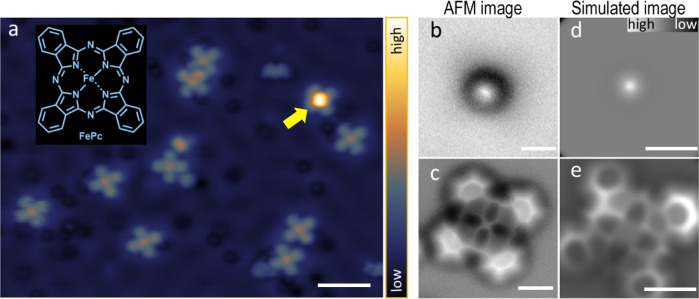
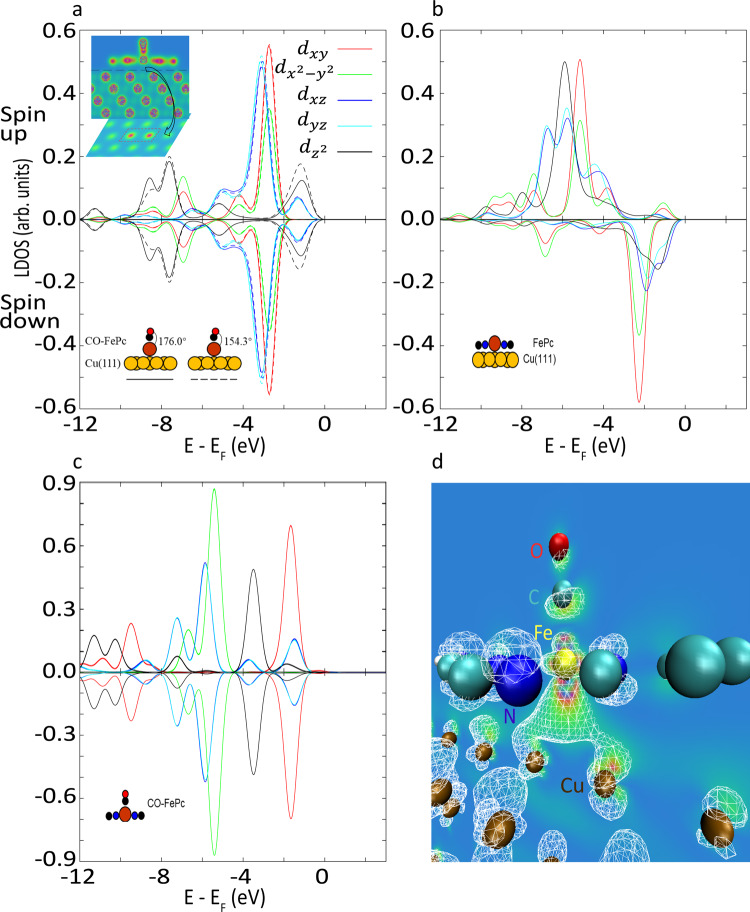
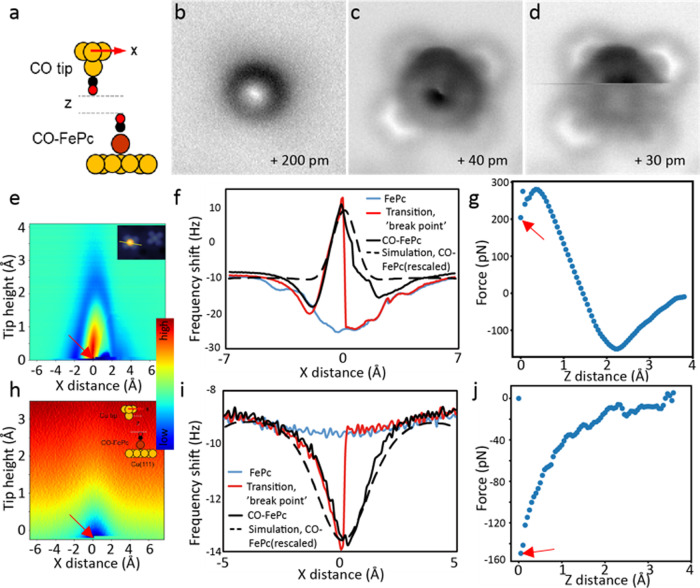
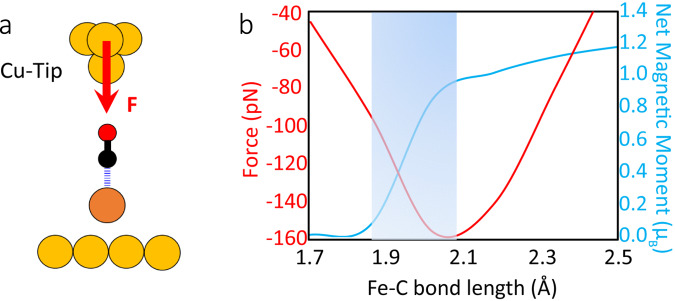
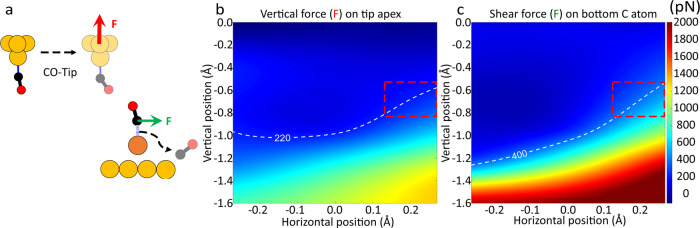
Bond breaking and forming are essential components of chemical reactions. Recently, the structure and formation of covalent bonds in single molecules have been studied by non-contact atomic force microscopy (AFM). Here, we report the details of a single dative bond breaking process using non-contact AFM. The dative bond between carbon monoxide and ferrous phthalocyanine was ruptured via mechanical forces applied by atomic force microscope tips; the process was quantitatively measured and characterized both experimentally and via quantum-based simulations. Our results show that the bond can be ruptured either by applying an attractive force of ~150 pN or by a repulsive force of ~220 pN with a significant contribution of shear forces, accompanied by changes of the spin state of the system. Our combined experimental and computational studies provide a deeper understanding of the chemical bond breaking process.
化学键的断裂和形成是化学反应的基本组成部分。最近,非接触原子力显微镜(AFM)已被用于研究单分子中共价键的结构和形成。在此,我们报告了使用非接触原子力显微镜对单个配位键断裂过程的详细研究。一氧化碳与亚铁酞菁之间的配位键通过原子力显微镜探针施加的机械力而断裂;该过程通过实验以及基于量子的模拟进行了定量测量和表征。我们的结果表明,通过施加约150 pN的吸引力或约220 pN的排斥力,并伴随着显著的剪切力作用,键均可断裂,同时体系的自旋状态会发生变化。我们结合实验和计算的研究为化学键断裂过程提供了更深入的理解。