Tri-Institutional Center for Translational Research in Neuroimaging and Data Science (TReNDS), Georgia State University, Georgia Institute of Technology, and Emory University, 55 Park Place, Atlanta, GA, 30303, USA.
School of Music, Georgia State University, Atlanta, GA, USA.
Sci Rep. 2021 Sep 24;11(1):19036. doi: 10.1038/s41598-021-98332-x.
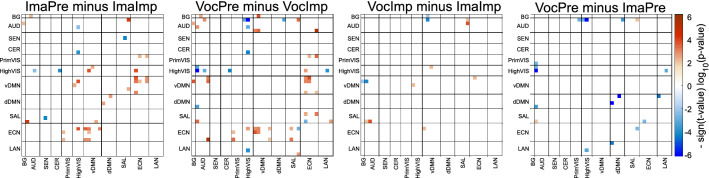
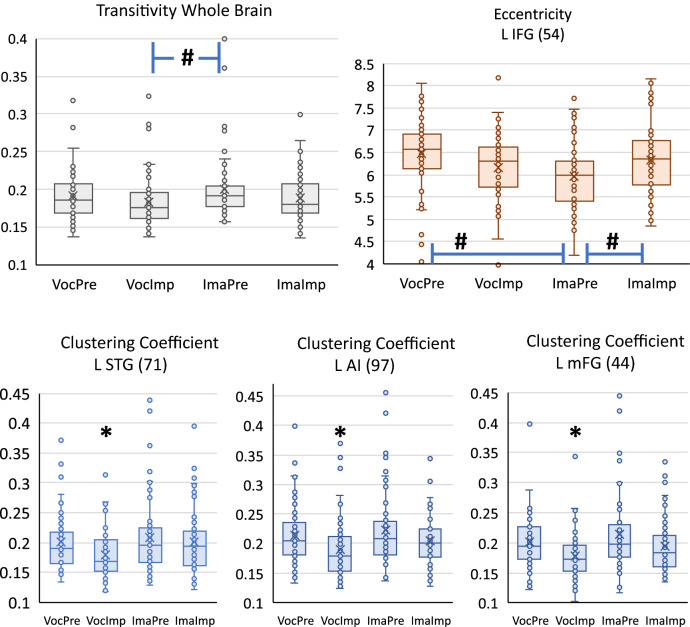
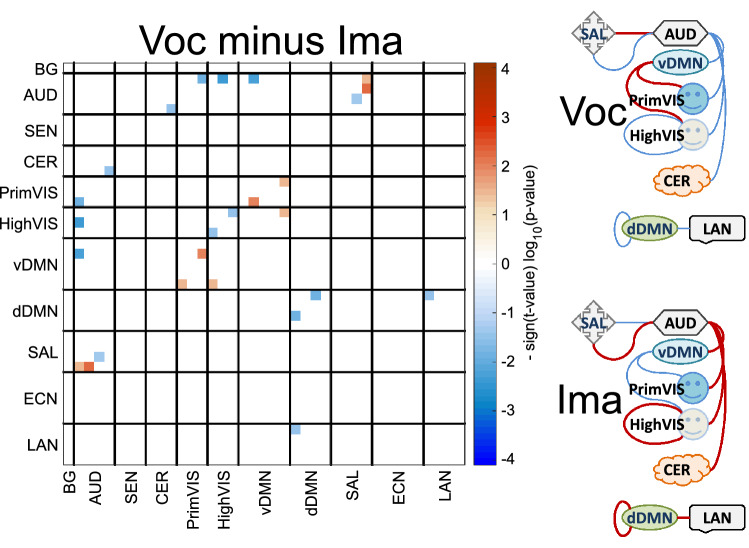
One of the most complex forms of creativity is musical improvisation where new music is produced in real time. Brain behavior during music production has several dimensions depending on the conditions of the performance. The expression of creativity is suspected to be different whether novel ideas must be externalized using a musical instrument or can be imagined internally. This study explores whole brain functional network connectivity from fMRI data during jazz music improvisation compared against a baseline of prelearned score performance. Given that creativity might be affected by external execution, another dimension where musicians imagine or vocalize the music was also tested. We found improvisation was associated with a state of weak connectivity necessary for attenuated executive control network recruitment associated with a feeling of "flow" allowing unhindered musical creation. In addition, elicited connectivity for sensorimotor and executive control networks is not different whether musicians imagine or externalize (through vocalization) musical performance.
创造力最复杂的形式之一是音乐即兴创作,即在实时创作新音乐。根据表演条件的不同,音乐创作过程中的大脑行为具有多个维度。人们怀疑,创造力的表现是否不同,具体取决于新颖的想法是否必须通过乐器外化,还是可以在内部想象。这项研究通过 fMRI 数据比较了爵士乐即兴创作与预先学习的乐谱演奏的基准状态,探讨了整个大脑功能网络连接。鉴于创造力可能受到外部执行的影响,还测试了音乐家想象或发声音乐的另一个维度。我们发现,即兴创作与一种弱连接状态有关,这种状态对于减弱与“心流”相关的执行控制网络招募是必要的,从而可以不受阻碍地进行音乐创作。此外,无论音乐家是想象还是通过发声(通过发声)外化音乐表现,感觉运动和执行控制网络的诱发连接都没有差异。