Healthcare-Associated Infections Group, Leeds Institute of Medical Research, Faculty of Medicine and Health, University of Leeds, Leeds, LS1 9JT, UK.
Microbiology, Leeds Teaching Hospitals NHS Trust, Old Medical School, Leeds General Infirmary, Leeds, LS1 3EX, UK.
J Antimicrob Chemother. 2021 Dec 24;77(1):148-154. doi: 10.1093/jac/dkab349.
The use of broad-spectrum cephalosporins is associated with induction of Clostridioides difficile infection (CDI). Recent knowledge on the importance of the healthy microbiota in preventing pathogen colonization/outgrowth highlights the caution needed when prescribing broad-spectrum antibiotics. The use of historical narrow-spectrum antibiotics, such as first-generation cephalosporins, is gaining increased attention once more as they have a reduced impact on the microbiota whilst treating infections. Here, the effects of two first-generation cephalosporins, compared with a third-generation cephalosporin, on the human microbiota were investigated and their propensity to induce simulated CDI.
Three in vitro chemostat models, which simulate the physiochemical conditions of the human colon, were seeded with a human faecal slurry and instilled with either narrow-spectrum cephalosporins, cefalexin and cefradine, or a broad-spectrum cephalosporin, ceftriaxone, at concentrations reflective of colonic levels.
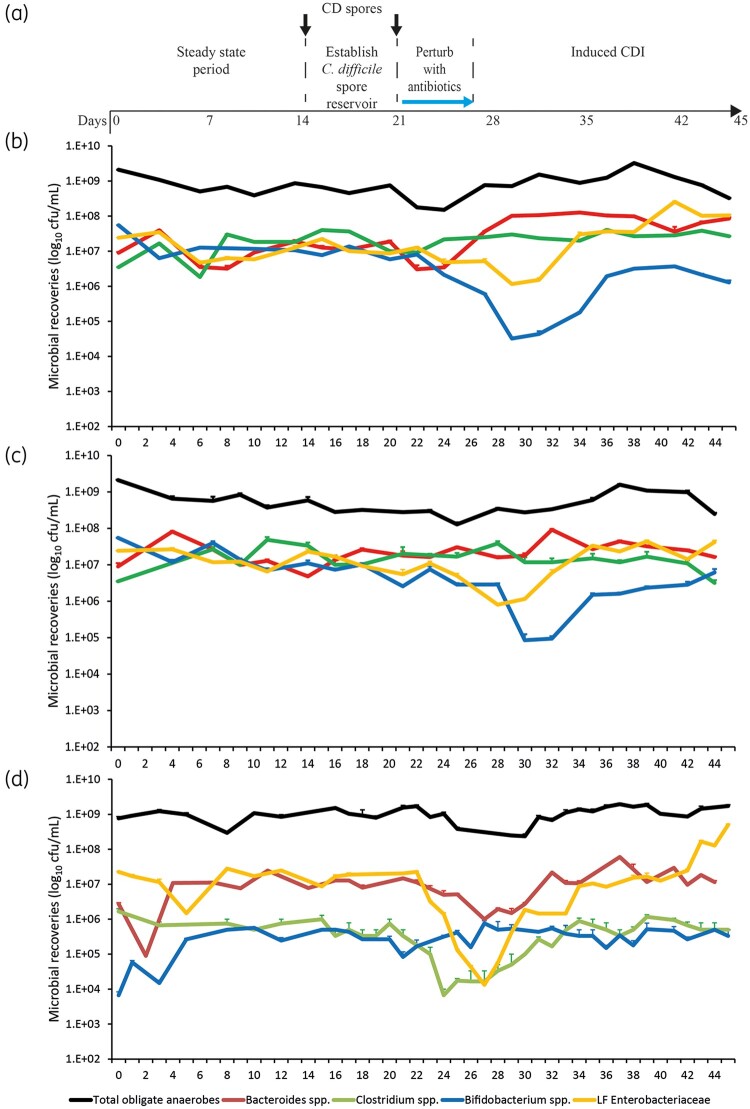
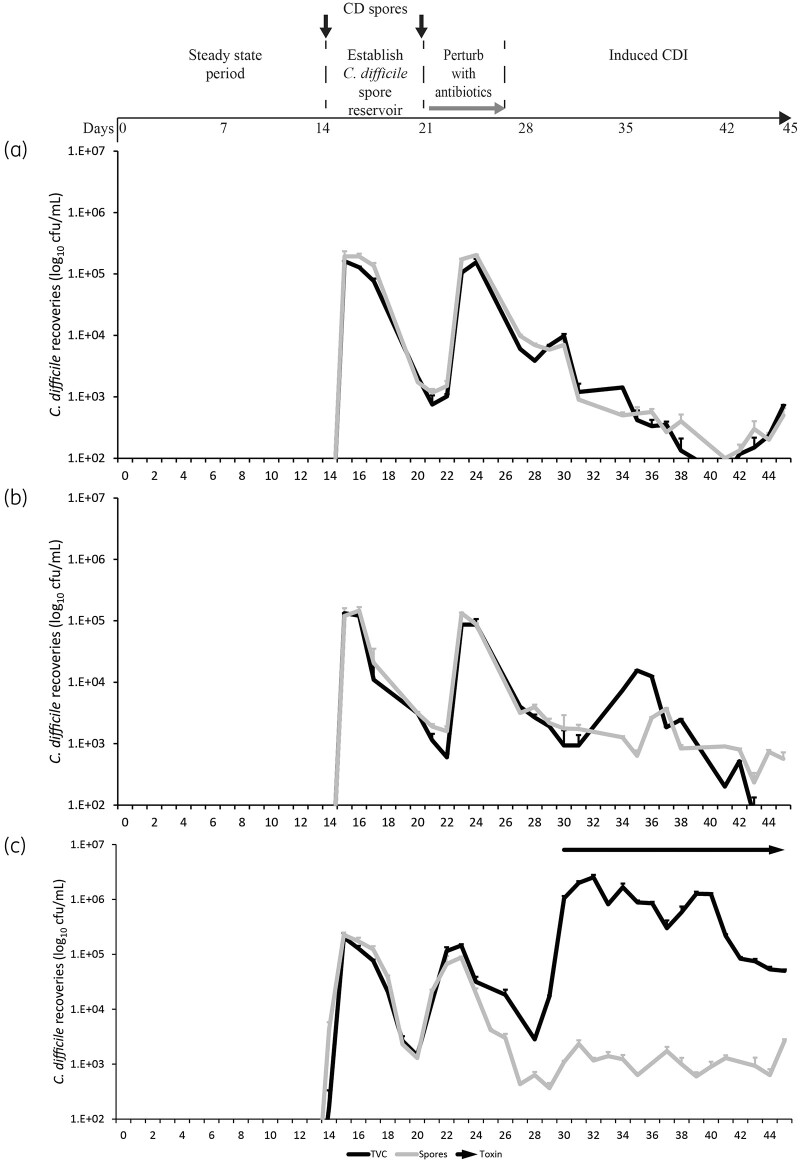
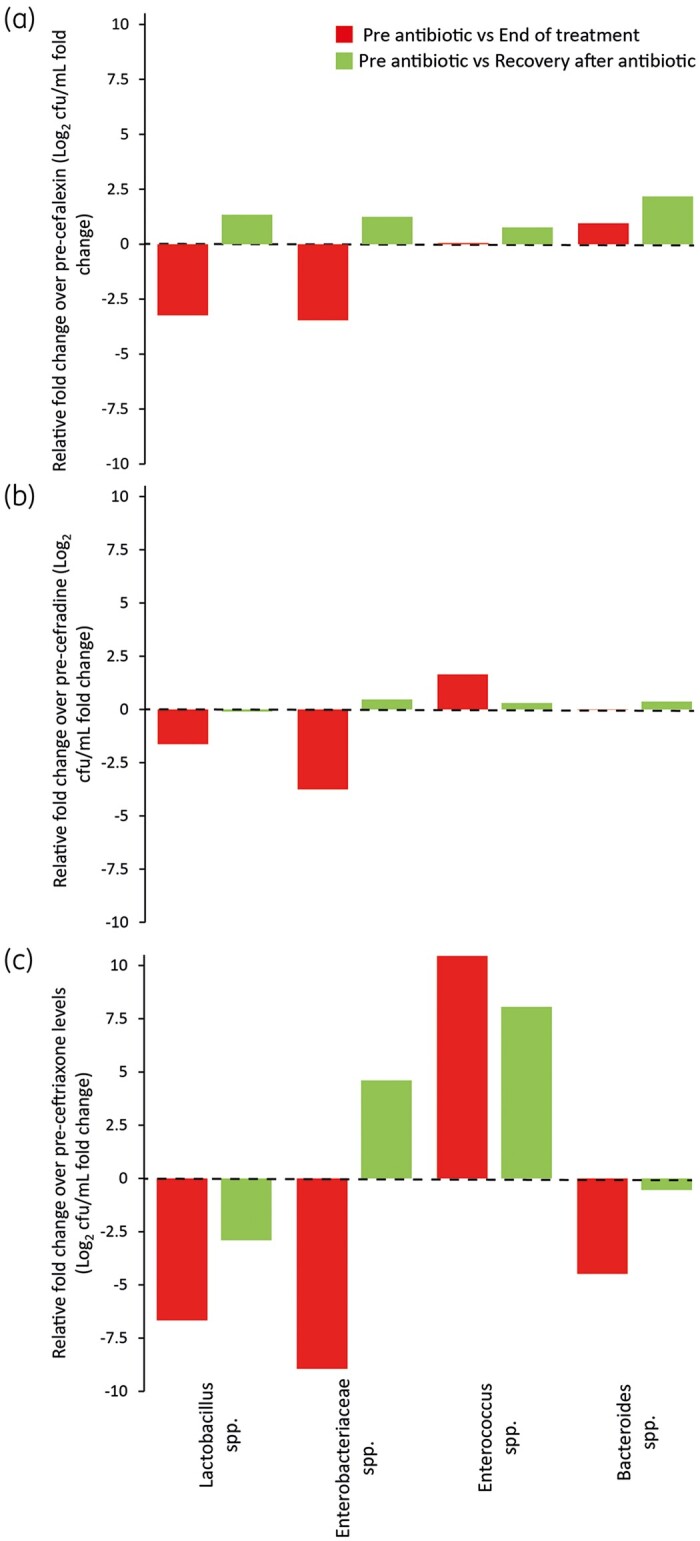
Instillation of cefalexin was associated with reduced recoveries of Bifidobacterium and Enterobacteriaceae; however, Clostridium spp. recoveries remained unaffected. Cefradine exposure was associated with decreased recoveries of Bifidobacterium spp., Bacteroides spp. and Enterobacteriaceae. These changes were not associated with induction of CDI, as we observed a lack of C. difficile spore germination/proliferation, thus no toxin was detected. This is in contrast to a model exposed to ceftriaxone, where CDI was observed.
These model data suggest that the minimal impact of first-generation cephalosporins, namely cefalexin and cefradine, on the intestinal microbiota results in a low propensity to induce CDI.
使用广谱头孢菌素会导致艰难梭菌感染(CDI)。最近关于健康微生物群在防止病原体定植/生长中的重要性的知识强调了在开广谱抗生素时需要谨慎。历史上窄谱抗生素(如第一代头孢菌素)的使用再次受到关注,因为它们在治疗感染时对微生物群的影响较小。在这里,比较了两种第一代头孢菌素与第三代头孢菌素对人体微生物群的影响,并研究了它们诱导模拟 CDI 的倾向。
三个体外恒化器模型,模拟人体结肠的理化条件,用人粪便浆接种,并以反映结肠水平的浓度注入窄谱头孢菌素头孢氨苄和头孢拉定,或广谱头孢菌素头孢曲松。
头孢氨苄的注入与双歧杆菌和肠杆菌科的回收率降低有关;然而,梭菌属的回收率不受影响。头孢拉定暴露与双歧杆菌属、拟杆菌属和肠杆菌科的回收率降低有关。这些变化与 CDI 的诱导无关,因为我们观察到缺乏艰难梭菌孢子发芽/增殖,因此没有检测到毒素。这与暴露于头孢曲松的模型形成对比,在该模型中观察到 CDI。
这些模型数据表明,第一代头孢菌素(即头孢氨苄和头孢拉定)对肠道微生物群的影响很小,导致诱导 CDI 的倾向较低。