Institute of Infection, Immunity and Inflammation, University of Glasgow, Glasgow G12 8TA, UK.
Instituto de Biomedicina de Valencia (IBV-CSIC) and CIBER de Enfermedades Raras (CIBERER), 46010 Valencia, Spain.
Curr Biol. 2021 Nov 22;31(22):5037-5045.e3. doi: 10.1016/j.cub.2021.08.072. Epub 2021 Sep 24.
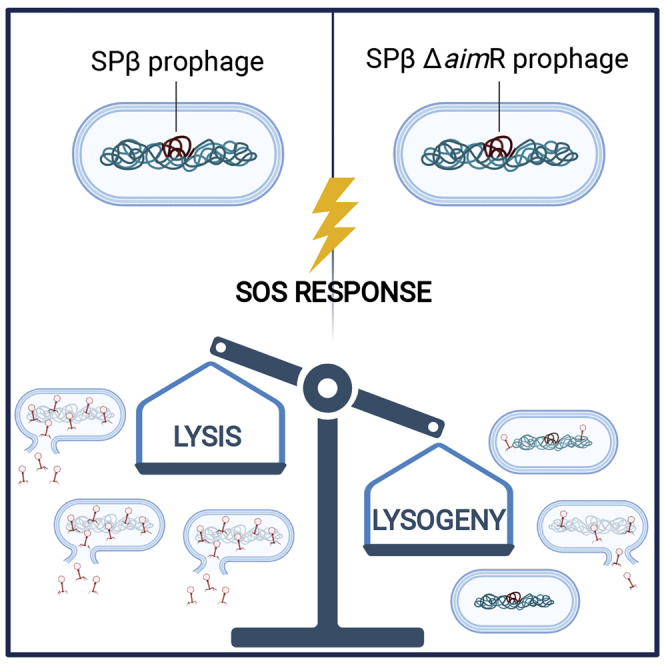
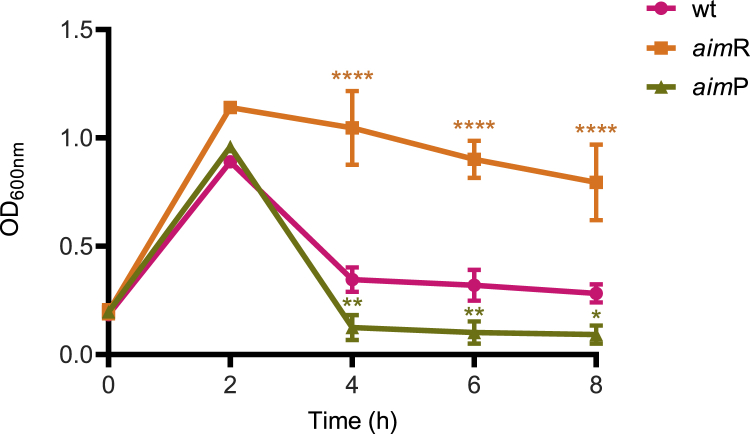
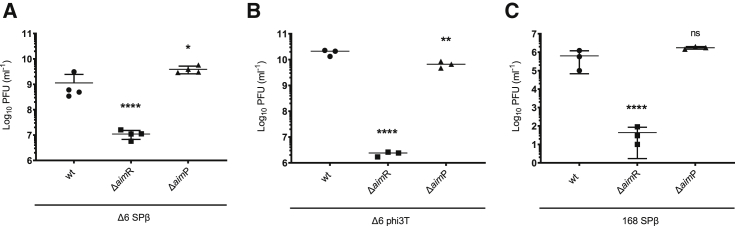
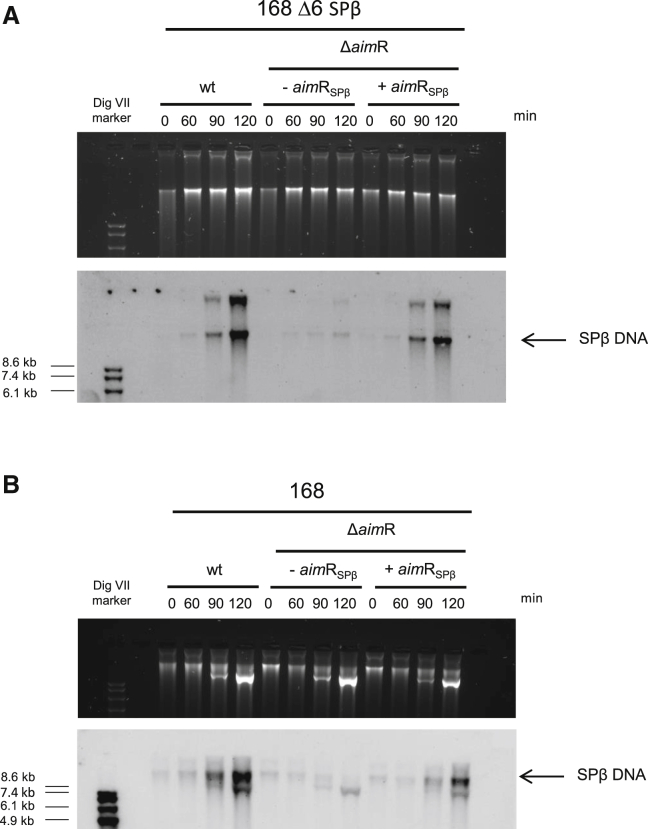
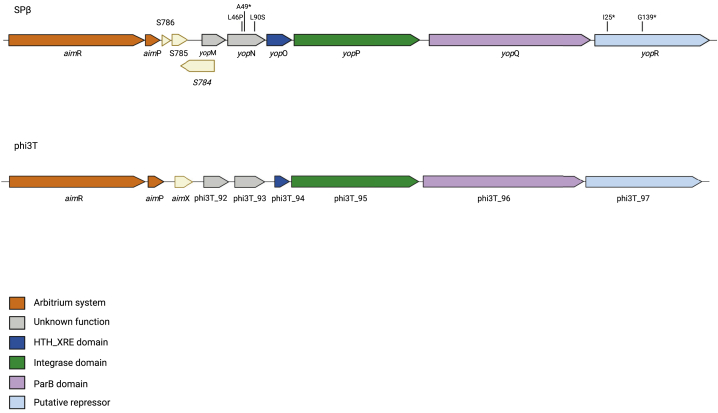
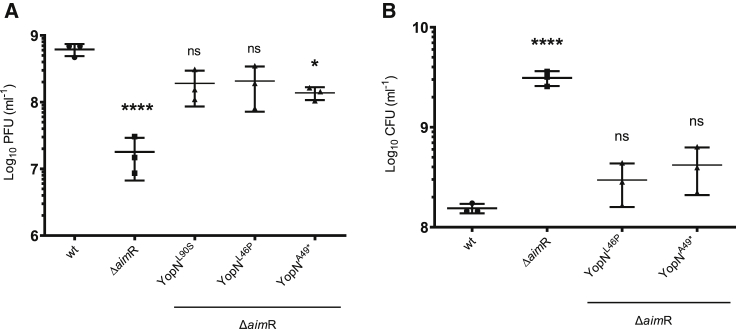
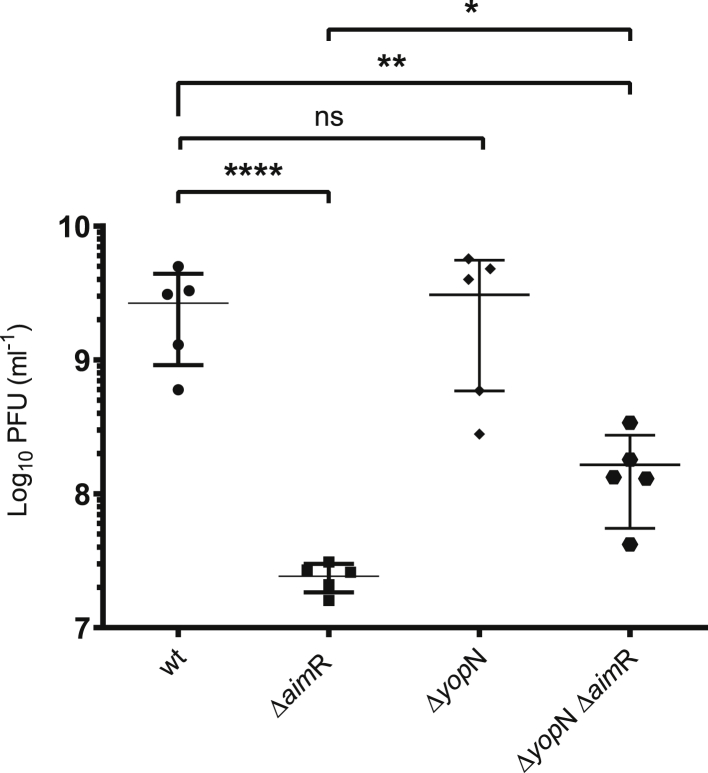
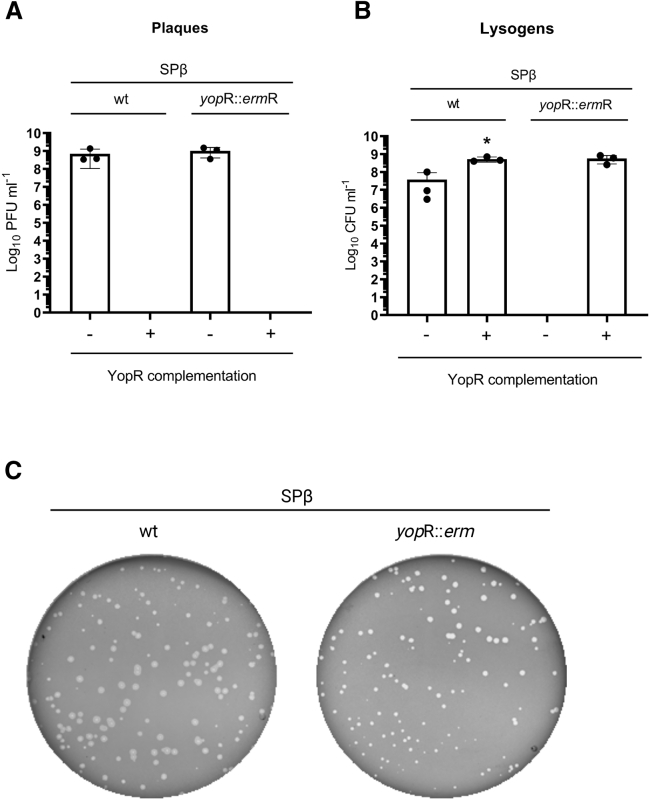
Some Bacillus-infecting bacteriophages use a peptide-based communication system, termed arbitrium, to coordinate the lysis-lysogeny decision. In this system, the phage produces AimP peptide during the lytic cycle. Once internalized by the host cell, AimP binds to the transcription factor AimR, reducing aimX expression and promoting lysogeny. Although these systems are present in a variety of mobile genetic elements, their role in the phage life cycle has only been characterized in phage phi3T during phage infection. Here, using the B. subtilis SPβ prophage, we show that the arbitrium system is also required for normal prophage induction. Deletion of the aimP gene increased phage reproduction, although the aimR deletion significantly reduced the number of phage particles produced after prophage induction. Moreover, our results indicated that AimR is involved in a complex network of regulation and brought forward two new players in the SPβ lysis-lysogeny decision system, YopN and the phage repressor YopR. Importantly, these proteins are encoded in an operon, the function of which is conserved across all SPβ-like phages encoding the arbitrium system. Finally, we obtained mutant phages in the arbitrium system, which behaved almost identically to the wild-type (WT) phage, indicating that the arbitrium system is not essential in the laboratory but is likely beneficial for phage fitness in nature. In support of this, by possessing a functional arbitrium system, the SPβ phage can optimize production of infective particles while also preserving the number of cells that survive after prophage induction, a strategy that increases phage persistence in nature.
一些感染芽孢杆菌的噬菌体使用一种基于肽的通讯系统,称为 arbitrium,来协调裂解-溶原决定。在这个系统中,噬菌体在裂解周期中产生 AimP 肽。一旦被宿主细胞内化,AimP 就会与转录因子 AimR 结合,降低 aimX 的表达并促进溶原。虽然这些系统存在于各种移动遗传元件中,但它们在噬菌体生命周期中的作用仅在噬菌体 phi3T 感染噬菌体时得到了描述。在这里,我们使用 B. subtilis SPβ 前噬菌体表明,arbitrium 系统也是正常前噬菌体诱导所必需的。缺失 aimP 基因会增加噬菌体的繁殖,尽管 aimR 缺失会显著减少前噬菌体诱导后产生的噬菌体颗粒数量。此外,我们的结果表明 AimR 参与了一个复杂的调控网络,并提出了 SPβ 裂解-溶原决定系统中的两个新成员,YopN 和噬菌体抑制剂 YopR。重要的是,这些蛋白编码在一个操纵子中,该操纵子的功能在所有编码 arbitrium 系统的 SPβ 样噬菌体中都保守。最后,我们获得了 arbitrium 系统中的突变噬菌体,它们的行为几乎与野生型(WT)噬菌体相同,表明 arbitrium 系统在实验室中不是必需的,但在自然界中可能有利于噬菌体的适应性。支持这一观点的是,SPβ 噬菌体通过拥有功能齐全的 arbitrium 系统,可以优化感染性颗粒的产生,同时也可以保留前噬菌体诱导后存活的细胞数量,这一策略增加了噬菌体在自然界中的持久性。