Department of Chemical Science and Technologies, University of Rome "Tor Vergata", Via della Ricerca Scientifica, 00133 Rome, Italy.
Institute of Crystallography (IC-CNR), Department of Chemical Sciences and Materials Technologies, Via Salaria km 29.300, 00015 Monterotondo, Italy.
Biosensors (Basel). 2021 Aug 31;11(9):310. doi: 10.3390/bios11090310.
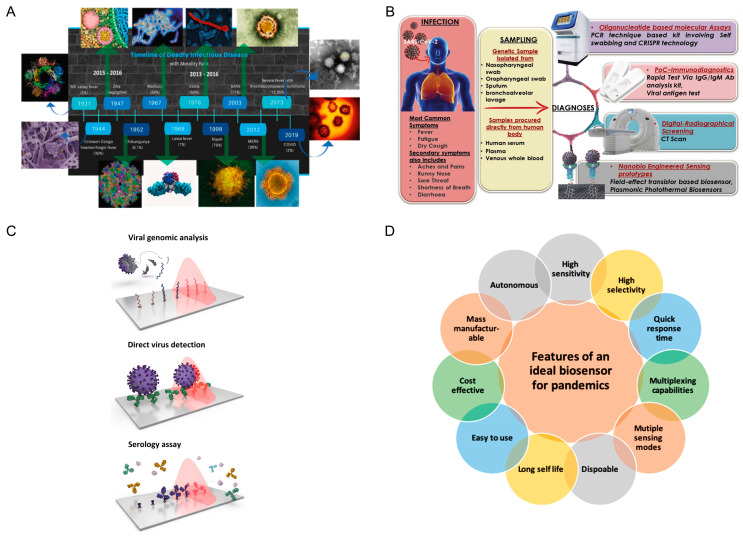
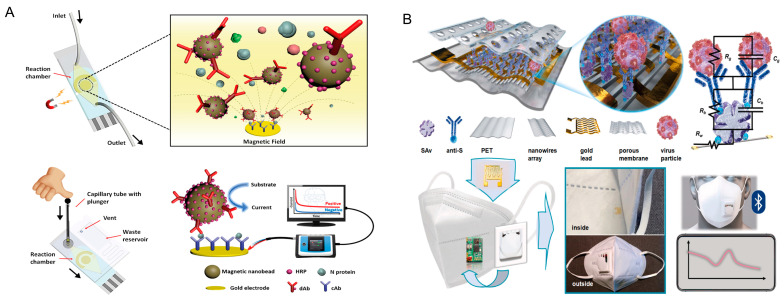
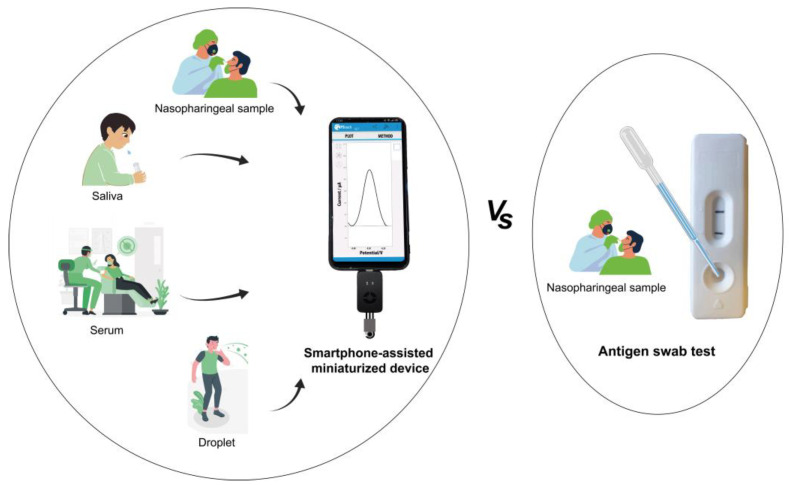
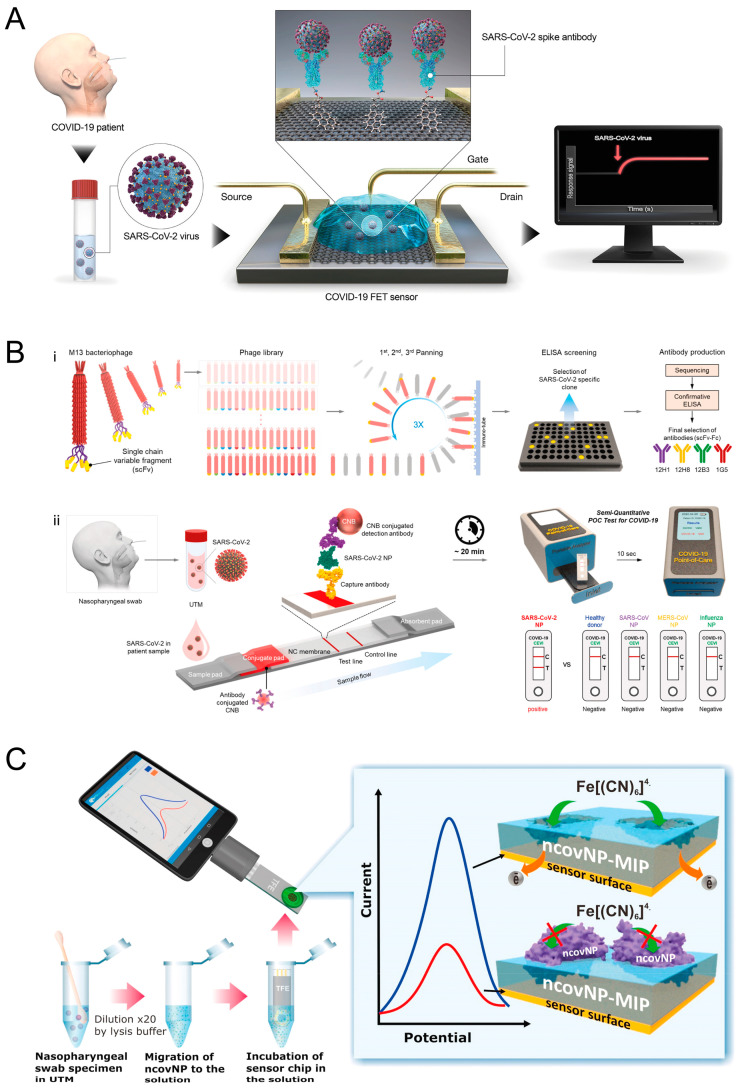
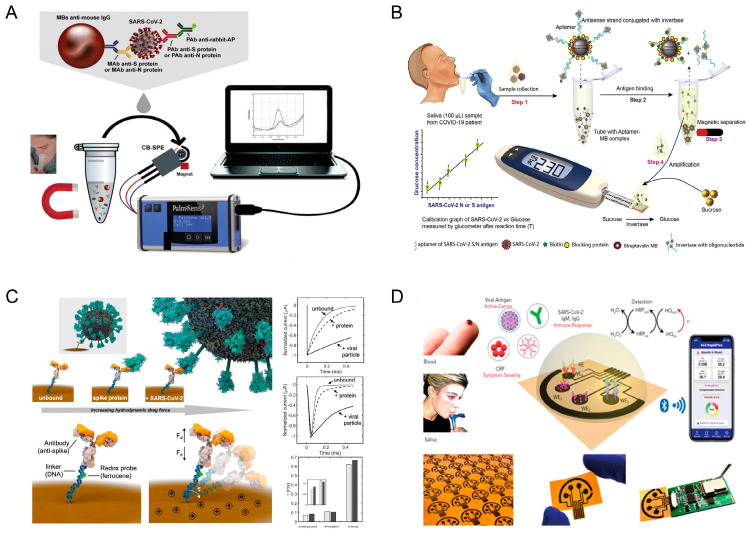
The recent global events of COVID-19 in 2020 have alerted the world to the risk of viruses and their impacts on human health, including their impacts in the social and economic sectors. Rapid tests are urgently required to enable antigen detection and thus to facilitate rapid and simple evaluations of contagious individuals, with the overriding goal to delimitate spread of the virus among the population. Many efforts have been achieved in recent months through the realization of novel diagnostic tools for rapid, affordable, and accurate analysis, thereby enabling prompt responses to the pandemic infection. This review reports the latest results on electrochemical and optical biosensors realized for the specific detection of SARS-CoV-2 antigens, thus providing an overview of the available diagnostics tested and marketed for SARS-CoV-2 antigens as well as their pros and cons.
2020 年全球爆发的 COVID-19 事件提醒人们注意病毒的风险及其对人类健康的影响,包括对社会和经济部门的影响。目前迫切需要快速检测方法来实现抗原检测,从而便于对传染性个体进行快速简单的评估,首要目标是限制病毒在人群中的传播。近几个月来,通过开发新型诊断工具实现了快速、经济且准确的分析,从而能够对大流行感染做出快速响应,因此取得了许多进展。本综述报告了针对 SARS-CoV-2 抗原的特定检测而实现的电化学和光学生物传感器的最新研究成果,从而概述了已测试和市售的用于 SARS-CoV-2 抗原的现有诊断方法及其优缺点。