• 文献检索
  • 文档翻译
  • 深度研究
  • 学术资讯
  • Suppr Zotero 插件Zotero 插件
  • 邀请有礼
  • 套餐&价格
  • 历史记录
应用&插件
Suppr Zotero 插件Zotero 插件浏览器插件Mac 客户端Windows 客户端微信小程序
定价
高级版会员购买积分包购买API积分包
服务
文献检索文档翻译深度研究API 文档MCP 服务
关于我们
关于 Suppr公司介绍联系我们用户协议隐私条款
关注我们

Suppr 超能文献

核心技术专利:CN118964589B侵权必究
粤ICP备2023148730 号-1Suppr @ 2026

文献检索

告别复杂PubMed语法,用中文像聊天一样搜索,搜遍4000万医学文献。AI智能推荐,让科研检索更轻松。

立即免费搜索

文件翻译

保留排版,准确专业,支持PDF/Word/PPT等文件格式,支持 12+语言互译。

免费翻译文档

深度研究

AI帮你快速写综述,25分钟生成高质量综述,智能提取关键信息,辅助科研写作。

立即免费体验

用于预测印度新冠肺炎疫情高峰和感染病例的自适应神经模糊推理系统

ANFIS for prediction of epidemic peak and infected cases for COVID-19 in India.

作者信息

Kumar Rajagopal, Al-Turjman Fadi, Srinivas L N B, Braveen M, Ramakrishnan Jothilakshmi

机构信息

Department of Electronics and Instrumentation Engineering, National Institute of Technology, Chumkedima, Dimapur, Nagaland 797103 India.

Artificial Intelligence Engineering Department, Research Centre for AI and IoT, Near East University, Nicosia, Mersin 10, Turkey.

出版信息

Neural Comput Appl. 2023;35(10):7207-7220. doi: 10.1007/s00521-021-06412-w. Epub 2021 Sep 21.

DOI:10.1007/s00521-021-06412-w
PMID:34566264
原文链接:https://pmc.ncbi.nlm.nih.gov/articles/PMC8452449/
Abstract

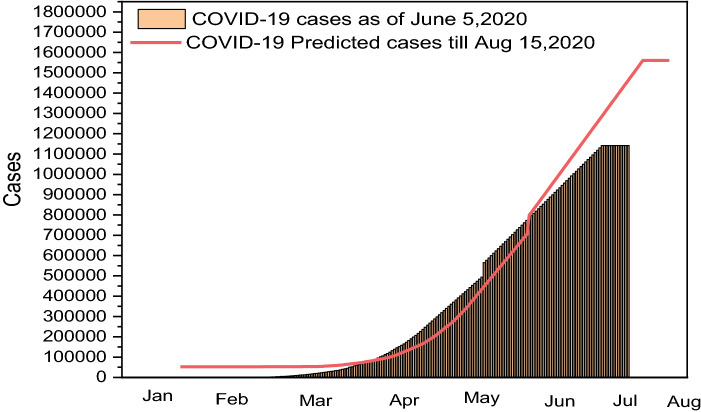
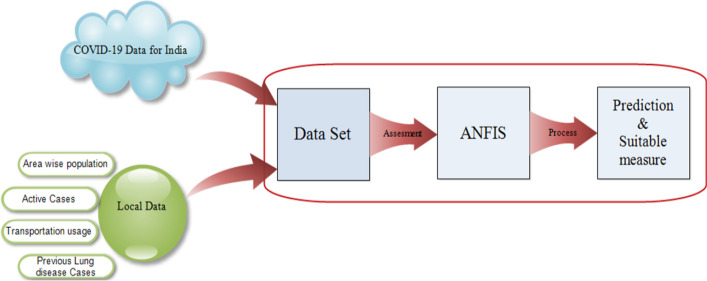
Corona Virus Disease 2019 (COVID-19) is a continuing extensive incident globally affecting several million people's health and sometimes leading to death. The outbreak prediction and making cautious steps is the only way to prevent the spread of COVID-19. This paper presents an Adaptive Neuro-fuzzy Inference System (ANFIS)-based machine learning technique to predict the possible outbreak in India. The proposed ANFIS-based prediction system tracks the growth of epidemic based on the previous data sets fetched from cloud computing. The proposed ANFIS technique predicts the epidemic peak and COVID-19 infected cases through the cloud data sets. The ANFIS is chosen for this study as it has both numerical and linguistic knowledge, and also has ability to classify data and identify patterns. The proposed technique not only predicts the outbreak but also tracks the disease and suggests a measurable policy to manage the COVID-19 epidemic. The obtained prediction shows that the proposed technique very effectively tracks the growth of the COVID-19 epidemic. The result shows the growth of infection rate decreases at end of 2020 and also has delay epidemic peak by 40-60 days. The prediction result using the proposed ANFIS technique shows a low Mean Square Error (MSE) of 1.184 × 10 with an accuracy of 86%. The study provides important information for public health providers and the government to control the COVID-19 epidemic.

摘要

2019冠状病毒病(COVID-19)是一场持续在全球范围内广泛爆发的公共卫生事件,影响着数百万人的健康,有时甚至会导致死亡。疫情预测并采取谨慎措施是防止COVID-19传播的唯一途径。本文提出了一种基于自适应神经模糊推理系统(ANFIS)的机器学习技术,用于预测印度可能出现的疫情爆发。所提出的基于ANFIS的预测系统根据从云计算获取的先前数据集来跟踪疫情的发展。所提出的ANFIS技术通过云数据集预测疫情高峰和COVID-19感染病例。本研究选择ANFIS是因为它兼具数值知识和语言知识,并且具有对数据进行分类和识别模式的能力。所提出的技术不仅能预测疫情爆发,还能跟踪疾病情况,并提出一项可衡量的政策来管理COVID-19疫情。所获得的预测结果表明,所提出的技术能非常有效地跟踪COVID-19疫情的发展。结果显示,感染率在2020年底下降,疫情高峰延迟了40至60天。使用所提出的ANFIS技术的预测结果显示均方误差(MSE)较低,为1.184×10,准确率为86%。该研究为公共卫生机构和政府控制COVID-19疫情提供了重要信息。
https://cdn.ncbi.nlm.nih.gov/pmc/blobs/f196/8452449/59f139a99a19/521_2021_6412_Fig12_HTML.jpg
https://cdn.ncbi.nlm.nih.gov/pmc/blobs/f196/8452449/c459a3e3def2/521_2021_6412_Fig1_HTML.jpg
https://cdn.ncbi.nlm.nih.gov/pmc/blobs/f196/8452449/8299438d704f/521_2021_6412_Fig2_HTML.jpg
https://cdn.ncbi.nlm.nih.gov/pmc/blobs/f196/8452449/70c54980e533/521_2021_6412_Fig3_HTML.jpg
https://cdn.ncbi.nlm.nih.gov/pmc/blobs/f196/8452449/8448b0bc92ce/521_2021_6412_Fig4_HTML.jpg
https://cdn.ncbi.nlm.nih.gov/pmc/blobs/f196/8452449/0a1d86833f21/521_2021_6412_Fig5_HTML.jpg
https://cdn.ncbi.nlm.nih.gov/pmc/blobs/f196/8452449/80afbb60eb49/521_2021_6412_Fig6_HTML.jpg
https://cdn.ncbi.nlm.nih.gov/pmc/blobs/f196/8452449/9e71a3694583/521_2021_6412_Fig7_HTML.jpg
https://cdn.ncbi.nlm.nih.gov/pmc/blobs/f196/8452449/e9a894c1e228/521_2021_6412_Fig8_HTML.jpg
https://cdn.ncbi.nlm.nih.gov/pmc/blobs/f196/8452449/492d32be7822/521_2021_6412_Fig9_HTML.jpg
https://cdn.ncbi.nlm.nih.gov/pmc/blobs/f196/8452449/60af7983dcac/521_2021_6412_Fig10_HTML.jpg
https://cdn.ncbi.nlm.nih.gov/pmc/blobs/f196/8452449/14d92d3db5fa/521_2021_6412_Fig11_HTML.jpg
https://cdn.ncbi.nlm.nih.gov/pmc/blobs/f196/8452449/59f139a99a19/521_2021_6412_Fig12_HTML.jpg
https://cdn.ncbi.nlm.nih.gov/pmc/blobs/f196/8452449/c459a3e3def2/521_2021_6412_Fig1_HTML.jpg
https://cdn.ncbi.nlm.nih.gov/pmc/blobs/f196/8452449/8299438d704f/521_2021_6412_Fig2_HTML.jpg
https://cdn.ncbi.nlm.nih.gov/pmc/blobs/f196/8452449/70c54980e533/521_2021_6412_Fig3_HTML.jpg
https://cdn.ncbi.nlm.nih.gov/pmc/blobs/f196/8452449/8448b0bc92ce/521_2021_6412_Fig4_HTML.jpg
https://cdn.ncbi.nlm.nih.gov/pmc/blobs/f196/8452449/0a1d86833f21/521_2021_6412_Fig5_HTML.jpg
https://cdn.ncbi.nlm.nih.gov/pmc/blobs/f196/8452449/80afbb60eb49/521_2021_6412_Fig6_HTML.jpg
https://cdn.ncbi.nlm.nih.gov/pmc/blobs/f196/8452449/9e71a3694583/521_2021_6412_Fig7_HTML.jpg
https://cdn.ncbi.nlm.nih.gov/pmc/blobs/f196/8452449/e9a894c1e228/521_2021_6412_Fig8_HTML.jpg
https://cdn.ncbi.nlm.nih.gov/pmc/blobs/f196/8452449/492d32be7822/521_2021_6412_Fig9_HTML.jpg
https://cdn.ncbi.nlm.nih.gov/pmc/blobs/f196/8452449/60af7983dcac/521_2021_6412_Fig10_HTML.jpg
https://cdn.ncbi.nlm.nih.gov/pmc/blobs/f196/8452449/14d92d3db5fa/521_2021_6412_Fig11_HTML.jpg
https://cdn.ncbi.nlm.nih.gov/pmc/blobs/f196/8452449/59f139a99a19/521_2021_6412_Fig12_HTML.jpg

相似文献

1
ANFIS for prediction of epidemic peak and infected cases for COVID-19 in India.用于预测印度新冠肺炎疫情高峰和感染病例的自适应神经模糊推理系统
Neural Comput Appl. 2023;35(10):7207-7220. doi: 10.1007/s00521-021-06412-w. Epub 2021 Sep 21.
2
Prediction of Epidemic Peak and Infected Cases for COVID-19 Disease in Malaysia, 2020.预测 2020 年马来西亚 COVID-19 疾病的疫情高峰和感染病例。
Int J Environ Res Public Health. 2020 Jun 8;17(11):4076. doi: 10.3390/ijerph17114076.
3
A Hybridized Machine Learning Approach for Predicting COVID-19 Using Adaptive Neuro-Fuzzy Inference System and Reptile Search Algorithm.一种使用自适应神经模糊推理系统和爬行动物搜索算法预测新冠肺炎的混合机器学习方法。
Diagnostics (Basel). 2023 May 6;13(9):1641. doi: 10.3390/diagnostics13091641.
4
An Empirical Mode Decomposition Fuzzy Forecast Model for COVID-19.一种用于新型冠状病毒肺炎的经验模态分解模糊预测模型
Neural Process Lett. 2022 Apr 25:1-22. doi: 10.1007/s11063-022-10836-3.
5
Analysis and Prediction of COVID-19 Pandemic in Bangladesh by Using ANFIS and LSTM Network.基于自适应神经模糊推理系统(ANFIS)和长短期记忆网络(LSTM)对孟加拉国新冠肺炎疫情的分析与预测
Cognit Comput. 2021;13(3):761-770. doi: 10.1007/s12559-021-09859-0. Epub 2021 Apr 12.
6
Application of machine learning in the prediction of COVID-19 daily new cases: A scoping review.机器学习在预测新型冠状病毒肺炎每日新增病例中的应用:一项范围综述
Heliyon. 2021 Oct;7(10):e08143. doi: 10.1016/j.heliyon.2021.e08143. Epub 2021 Oct 11.
7
Classification of COVID-19 individuals using adaptive neuro-fuzzy inference system.使用自适应神经模糊推理系统对新冠肺炎患者进行分类
Multimed Syst. 2022;28(4):1223-1237. doi: 10.1007/s00530-021-00774-w. Epub 2021 Mar 28.
8
A COVID-19 forecasting system for hospital needs using ANFIS and LSTM models: A graphical user interface unit.一种使用自适应神经模糊推理系统(ANFIS)和长短期记忆(LSTM)模型的用于医院需求的新冠肺炎预测系统:一个图形用户界面单元。
Digit Health. 2022 Mar 28;8:20552076221085057. doi: 10.1177/20552076221085057. eCollection 2022 Jan-Dec.
9
Research on air pollutant concentration prediction method based on self-adaptive neuro-fuzzy weighted extreme learning machine.基于自适应神经模糊加权极限学习机的空气污染物浓度预测方法研究。
Environ Pollut. 2018 Oct;241:1115-1127. doi: 10.1016/j.envpol.2018.05.072. Epub 2018 Jun 23.
10
COVID-19 cases prediction by using hybrid machine learning and beetle antennae search approach.基于混合机器学习和甲虫触角搜索算法的新型冠状病毒肺炎病例预测
Sustain Cities Soc. 2021 Mar;66:102669. doi: 10.1016/j.scs.2020.102669. Epub 2020 Dec 30.

引用本文的文献

1
Machine Learning Techniques Applied to COVID-19 Prediction: A Systematic Literature Review.应用于新冠肺炎预测的机器学习技术:系统文献综述
Bioengineering (Basel). 2025 May 13;12(5):514. doi: 10.3390/bioengineering12050514.
2
A Hybridized Machine Learning Approach for Predicting COVID-19 Using Adaptive Neuro-Fuzzy Inference System and Reptile Search Algorithm.一种使用自适应神经模糊推理系统和爬行动物搜索算法预测新冠肺炎的混合机器学习方法。
Diagnostics (Basel). 2023 May 6;13(9):1641. doi: 10.3390/diagnostics13091641.
3
Integrating bio medical sensors in detecting hidden signatures of COVID-19 with Artificial intelligence.

本文引用的文献

1
Predicting the growth and trend of COVID-19 pandemic using machine learning and cloud computing.利用机器学习和云计算预测新冠疫情的发展与趋势。
Internet Things (Amst). 2020 Sep;11:100222. doi: 10.1016/j.iot.2020.100222. Epub 2020 May 12.
2
AI Techniques for COVID-19.用于新冠疫情的人工智能技术
IEEE Access. 2020 Jul 8;8:128776-128795. doi: 10.1109/ACCESS.2020.3007939. eCollection 2020.
3
A Three Layered Decentralized IoT Biometric Architecture for City Lockdown During COVID-19 Outbreak.一种用于新冠疫情期间城市封锁的三层去中心化物联网生物识别架构。
将生物医学传感器与人工智能相结合以检测新冠病毒的隐藏特征。
Measurement (Lond). 2022 May 15;194:111054. doi: 10.1016/j.measurement.2022.111054. Epub 2022 Mar 26.
IEEE Access. 2020 Sep 4;8:163608-163617. doi: 10.1109/ACCESS.2020.3021983. eCollection 2020.
4
Genomic sequence analysis of lung infections using artificial intelligence technique.利用人工智能技术进行肺部感染的基因组序列分析。
Interdiscip Sci. 2021 Jun;13(2):192-200. doi: 10.1007/s12539-020-00414-3. Epub 2021 Feb 8.
5
A Web-Based Platform on Coronavirus Disease-19 to Maintain Predicted Diagnostic, Drug, and Vaccine Candidates.基于网络的新型冠状病毒肺炎平台,用于维护预测的诊断、药物和疫苗候选物。
Monoclon Antib Immunodiagn Immunother. 2020 Dec;39(6):204-216. doi: 10.1089/mab.2020.0035. Epub 2020 Oct 30.
6
Clinically Applicable AI System for Accurate Diagnosis, Quantitative Measurements, and Prognosis of COVID-19 Pneumonia Using Computed Tomography.使用计算机断层扫描对新冠肺炎肺炎进行准确诊断、定量测量和预后评估的临床适用人工智能系统
Cell. 2020 Sep 3;182(5):1360. doi: 10.1016/j.cell.2020.08.029.
7
Partial derivative Nonlinear Global Pandemic Machine Learning prediction of COVID 19.新冠疫情的偏导数非线性全局大流行机器学习预测
Chaos Solitons Fractals. 2020 Oct;139:110056. doi: 10.1016/j.chaos.2020.110056. Epub 2020 Jun 25.
8
Time Series Analysis and Forecast of the COVID-19 Pandemic in India using Genetic Programming.基于遗传规划的印度新冠肺炎疫情时间序列分析与预测
Chaos Solitons Fractals. 2020 Sep;138:109945. doi: 10.1016/j.chaos.2020.109945. Epub 2020 May 30.
9
COVID-19: Transmission, prevention, and potential therapeutic opportunities.新型冠状病毒肺炎:传播、预防和潜在治疗机会。
Clin Chim Acta. 2020 Sep;508:254-266. doi: 10.1016/j.cca.2020.05.044. Epub 2020 May 29.
10
Evaluation of the potential incidence of COVID-19 and effectiveness of containment measures in Spain: a data-driven approach.评估西班牙 COVID-19 的潜在发病率和遏制措施的效果:一种基于数据的方法。
BMC Med. 2020 May 27;18(1):157. doi: 10.1186/s12916-020-01619-5.