Amadoro Giuseppina, Latina Valentina, Balzamino Bijorn Omar, Squitti Rosanna, Varano Monica, Calissano Pietro, Micera Alessandra
Institute of Translational Pharmacology (IFT)-CNR, Rome, Italy.
European Brain Research Institute, Rome, Italy.
Front Neurosci. 2021 Sep 9;15:735928. doi: 10.3389/fnins.2021.735928. eCollection 2021.
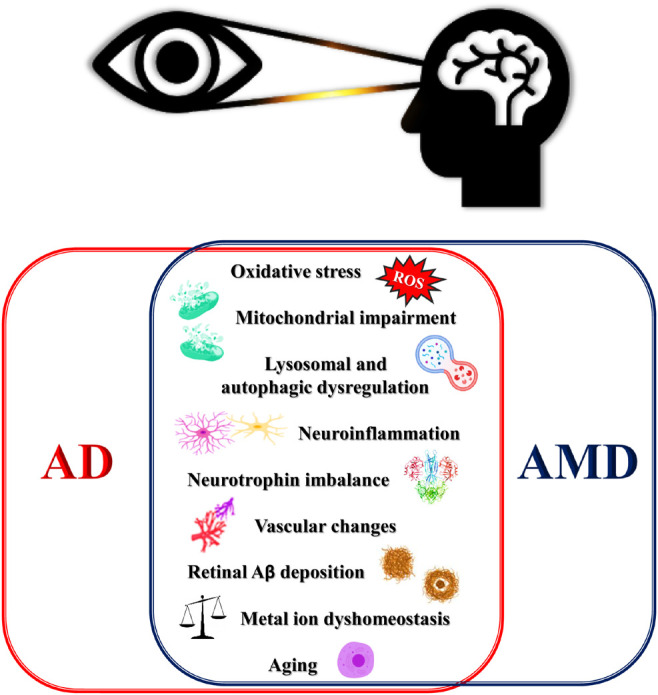
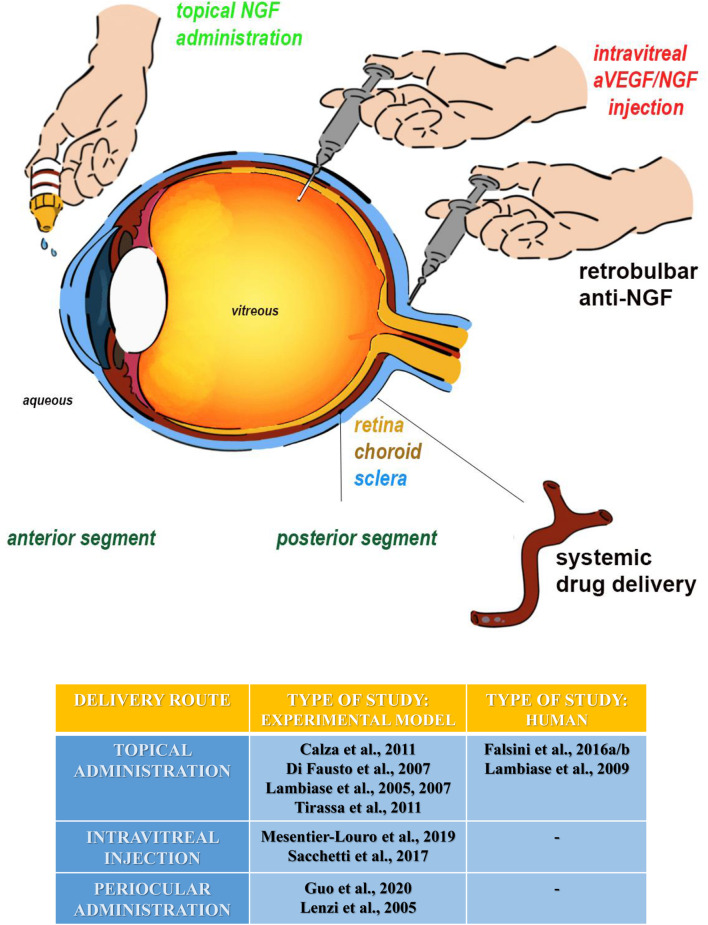
Alzheimer's disease (AD) is an age-associated neurodegenerative disease which is the most common cause of dementia among the elderly. Imbalance in nerve growth factor (NGF) signaling, metabolism, and/or defect in NGF transport to the basal forebrain cholinergic neurons occurs in patients affected with AD. According to the cholinergic hypothesis, an early and progressive synaptic and neuronal loss in a vulnerable population of basal forebrain involved in memory and learning processes leads to degeneration of cortical and hippocampal projections followed by cognitive impairment with accumulation of misfolded/aggregated Aβ and tau protein. The neuroprotective and regenerative effects of NGF on cholinergic neurons have been largely demonstrated, both in animal models of AD and in living patients. However, the development of this neurotrophin as a disease-modifying therapy in humans is challenged by both delivery limitations (inability to cross the blood-brain barrier (BBB), poor pharmacokinetic profile) and unwanted side effects (pain and weight loss). Age-related macular degeneration (AMD) is a retinal disease which represents the major cause of blindness in developed countries and shares several clinical and pathological features with AD, including alterations in NGF transduction pathways. Interestingly, nerve fiber layer thinning, degeneration of retinal ganglion cells and changes of vascular parameters, aggregation of Aβ and tau protein, and apoptosis also occur in the retina of both AD and AMD. A protective effect of ocular administration of NGF on both photoreceptor and retinal ganglion cell degeneration has been recently described. Besides, the current knowledge about the detection of essential trace metals associated with AD and AMD and their changes depending on the severity of diseases, either systemic or locally detected, further pave the way for a promising diagnostic approach. This review is aimed at describing the employment of NGF as a common therapeutic approach to AMD and AD and the diagnostic power of detection of essential trace metals associated with both diseases. The multiple approaches employed to allow a sustained release/targeting of NGF to the brain and its neurosensorial ocular extensions will be also discussed, highlighting innovative technologies and future translational prospects.
阿尔茨海默病(AD)是一种与年龄相关的神经退行性疾病,是老年人痴呆最常见的病因。在AD患者中,神经生长因子(NGF)信号传导、代谢失衡,和/或NGF向基底前脑胆碱能神经元的转运缺陷会出现。根据胆碱能假说,参与记忆和学习过程的基底前脑脆弱群体中早期和进行性的突触和神经元丧失,会导致皮质和海马投射的退化,随后因错误折叠/聚集的Aβ和tau蛋白积累而出现认知障碍。NGF对胆碱能神经元的神经保护和再生作用在AD动物模型和活体患者中均已得到充分证明。然而,将这种神经营养因子开发为人类疾病修饰疗法受到递送限制(无法穿过血脑屏障(BBB),药代动力学特征不佳)和不良副作用(疼痛和体重减轻)的挑战。年龄相关性黄斑变性(AMD)是一种视网膜疾病,是发达国家失明的主要原因,与AD有一些临床和病理特征相同,包括NGF转导途径的改变。有趣的是,AD和AMD的视网膜中也会出现神经纤维层变薄、视网膜神经节细胞退化、血管参数变化、Aβ和tau蛋白聚集以及细胞凋亡。最近有报道称,眼部给药NGF对光感受器和视网膜神经节细胞退化均有保护作用。此外,目前关于与AD和AMD相关的必需微量元素检测及其随疾病严重程度变化的知识,无论是全身还是局部检测到的,都为一种有前景的诊断方法进一步铺平了道路。本综述旨在描述将NGF用作AMD和AD的常见治疗方法以及检测与这两种疾病相关的必需微量元素的诊断能力。还将讨论为使NGF持续释放/靶向大脑及其神经感觉眼部延伸所采用的多种方法,突出创新技术和未来的转化前景。