Fan Liyuan, Li Baosheng, Li Zhao, Sun Liang
Cheeloo College of Medicine, Shandong University, Jinan, China.
Department of Radiation Oncology, Shandong Cancer Hospital and Institute, Shandong First Medical University and Shandong Academy of Medical Sciences, Jinan, China.
Front Genet. 2021 Sep 9;12:730003. doi: 10.3389/fgene.2021.730003. eCollection 2021.
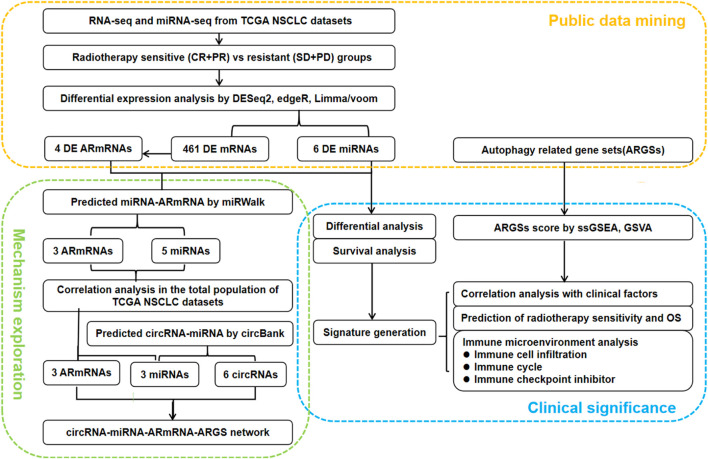
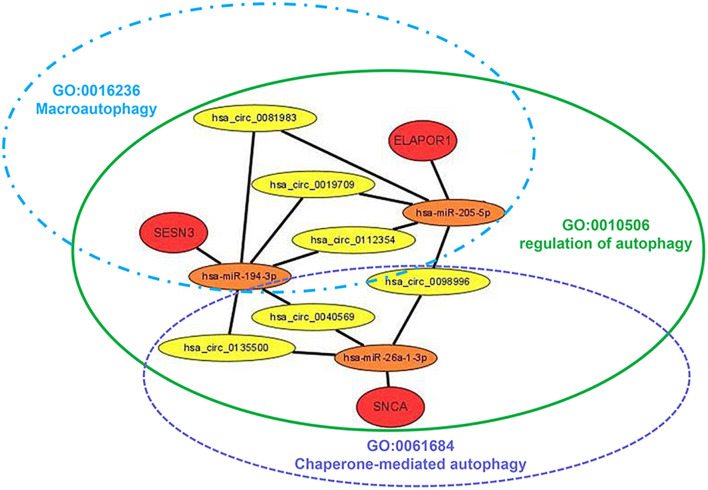
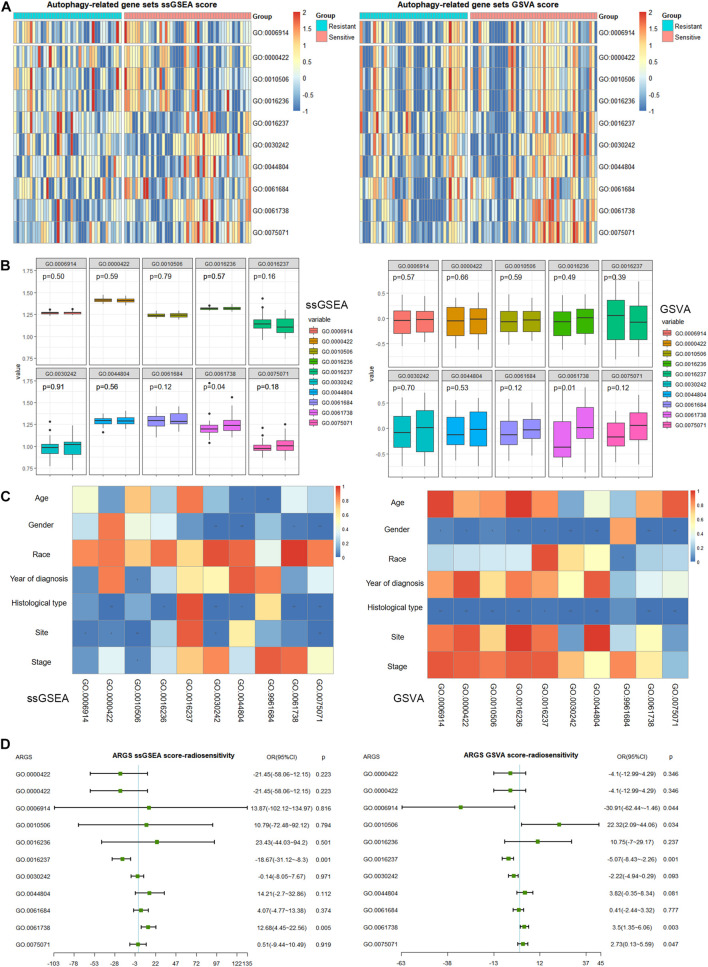
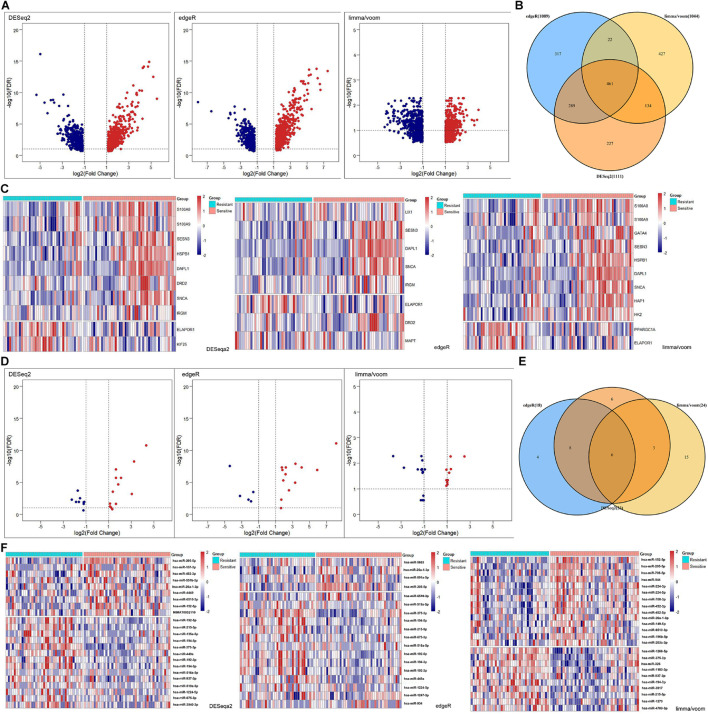
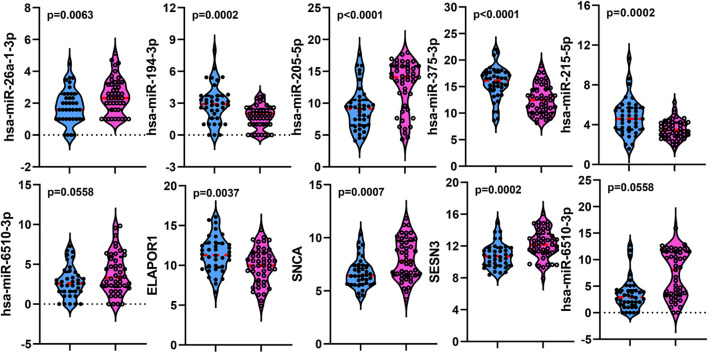
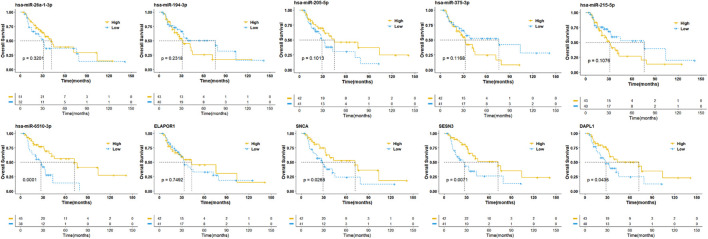
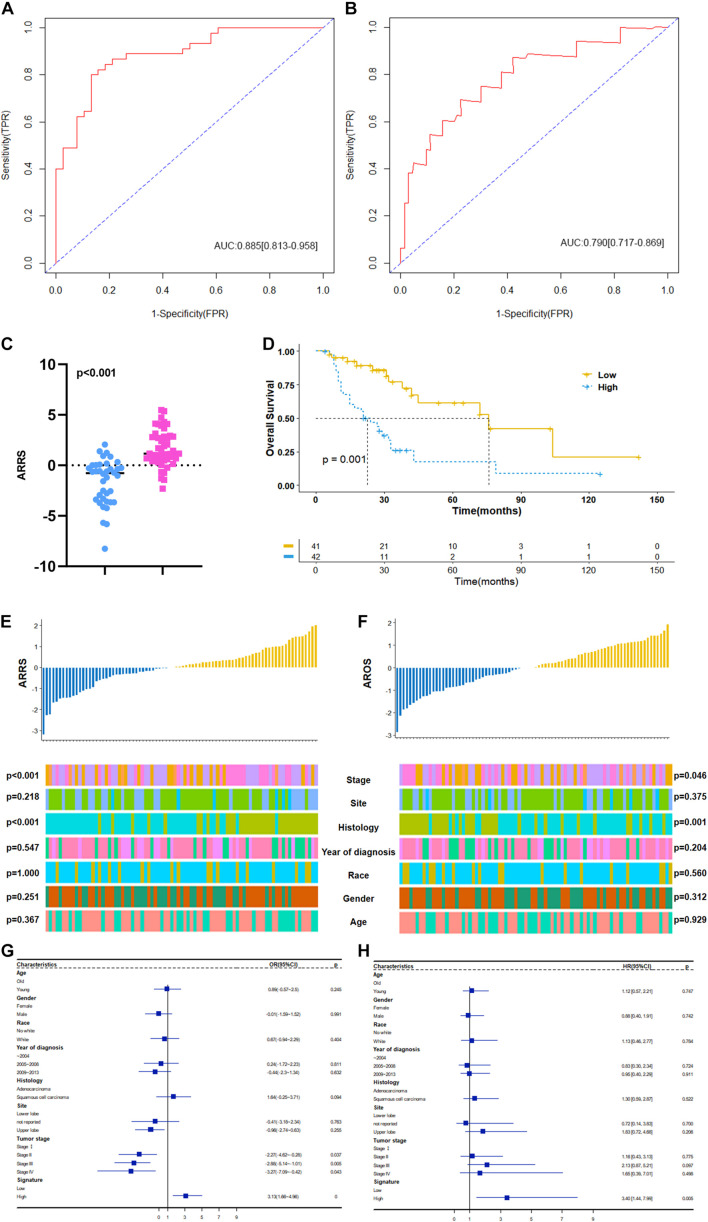
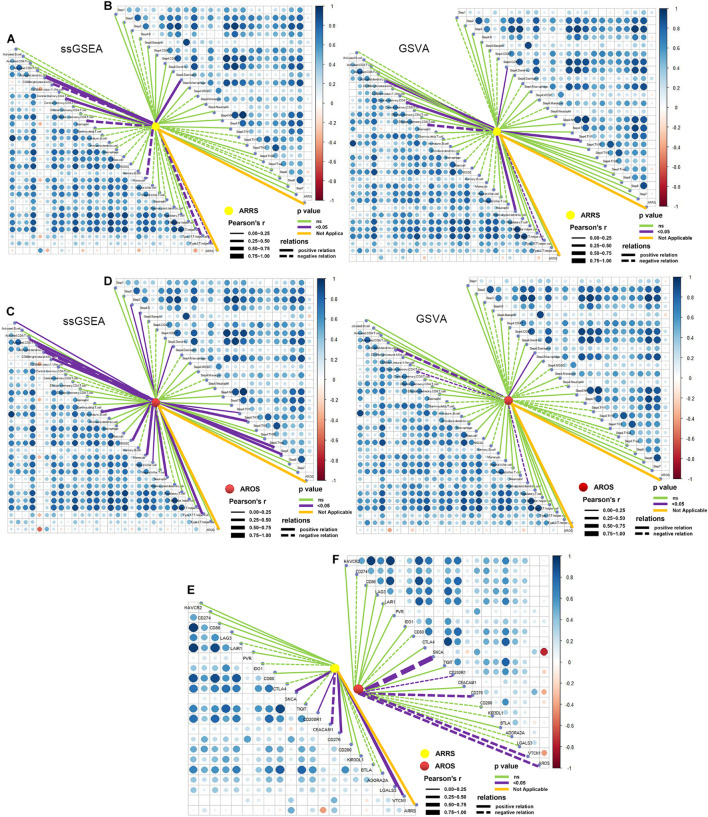
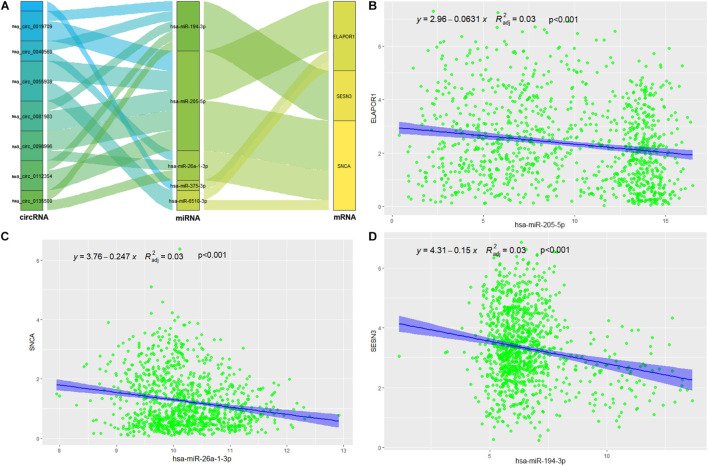
Lung cancer (LC) is one of the most frequently diagnosed cancers and the leading cause of cancer death worldwide, and most LCs are non-small cell lung cancer (NSCLC). Radiotherapy is one of the most effective treatments for patients with lung cancer, either alone or in combination with other treatment methods. However, radiotherapy responses vary considerably among NSCLC patients. The efficacy of radiotherapy is influenced by several factors, among which autophagy is of importance. Autophagy is induced by radiotherapy and also influences cell responses to radiation. We explored the clinical significance of autophagy-related genes (ARGs) and gene sets (ARGSs) and the underlying mechanism in NSCLC patients treated with radiotherapy. First, differentially expressed ARGs (SNCA, SESN3, DAPL1, and ELAPOR1) and miRNAs (miR-205-5p, miR-26a-1-3p, miR-6510-3p, miR-194-3p, miR-215-5p, and miR-375-3p) were identified between radiotherapy-resistant and radiotherapy-sensitive groups. An autophagy-related radiosensitivity risk signature (ARRS) by nine ARmRNAs/miRNAs and an autophagy-related overall survival risk signature (AROS) by three ARmRNAs were then constructed with estimated AUCs of 0.8854 (95% CI: 0.8131-0.9576) and 0.7901 (95% CI: 0.7168-0.8685), respectively. The correlations between ARGSs or prognostic signatures and clinicopathological factors, short-term radiotherapy responses (radiotherapy sensitivity), long-term radiotherapy responses (overall survival), and immune characteristics were analyzed. Both ARGSs and prognostic signatures were related to immune checkpoint inhibitors (ICIs), infiltration of tumor-infiltrating immune cells (TIICs), and the activity of the cancer immune cycle. Finally, after target prediction and correlation analysis, circRNA (hsa_circ_0019709, hsa_circ_0081983, hsa_circ_0112354, hsa_circ_0040569, hsa_circ_0135500, and hsa_circ_0098966)-regulated miRNA/ARmRNA axes (miR-194-3p/SESN3, miR-205-5p/ELAPOR1, and miR-26a-1-3p/SNCA) were considered potential modulatory mechanisms by influencing the regulation of autophagy, macroautophagy, and chaperone-mediated autophagy.
肺癌(LC)是全球最常被诊断出的癌症之一,也是癌症死亡的主要原因,并且大多数肺癌是非小细胞肺癌(NSCLC)。放射治疗是肺癌患者最有效的治疗方法之一,可单独使用或与其他治疗方法联合使用。然而,NSCLC患者的放射治疗反应差异很大。放射治疗的疗效受多种因素影响,其中自噬很重要。放射治疗可诱导自噬,自噬也会影响细胞对辐射的反应。我们探讨了自噬相关基因(ARG)和基因集(ARGS)在接受放射治疗的NSCLC患者中的临床意义及其潜在机制。首先,在放射治疗抵抗组和放射治疗敏感组之间鉴定出差异表达的ARG(突触核蛋白α(SNCA)、硒蛋白N3(SESN3)、二酰基甘油磷酸脂酶样1(DAPL1)和ELAPOR1)和微小RNA(miR-205-5p、miR-26a-1-3p、miR-6510-3p、miR-194-3p、miR-215-5p和miR-375-3p)。然后,由9个AR信使核糖核酸/微小RNA构建了一个自噬相关的放射敏感性风险特征(ARRS),由3个AR信使核糖核酸构建了一个自噬相关的总生存风险特征(AROS),其估计的曲线下面积(AUC)分别为0.8854(95%置信区间:0.8131-0.9576)和0.7901(95%置信区间:0.7168-0.8685)。分析了ARGS或预后特征与临床病理因素、短期放射治疗反应(放射治疗敏感性)、长期放射治疗反应(总生存)和免疫特征之间的相关性。ARGS和预后特征均与免疫检查点抑制剂(ICI)、肿瘤浸润免疫细胞(TIIC)的浸润以及癌症免疫循环的活性有关。最后,经过靶点预测和相关性分析,环状核糖核酸(hsa_circ_0019709、hsa_circ_0081983、hsa_circ_0112354、hsa_circ_0040569、hsa_circ_0135500和hsa_circ_0098966)调控的微小RNA/AR信使核糖核酸轴(miR-194-3p/SESN3、miR-205-5p/ELAPOR1和miR-26a-1-3p/SNCA)被认为是通过影响自噬、巨自噬和伴侣介导的自噬的调控而成为潜在的调节机制。