Vonk Thijs, Bakker Esmee A, Zegers Erwin S, Hopman Maria T E, Eijsvogels Thijs M H
Department of Physiology, Radboudumc, Nijmegen, The Netherlands.
Department of Cardiology, Canisius Wilhelmina Ziekenhuis, Nijmegen, The Netherlands.
BMJ Open Sport Exerc Med. 2021 Sep 12;7(3):e001159. doi: 10.1136/bmjsem-2021-001159. eCollection 2021.
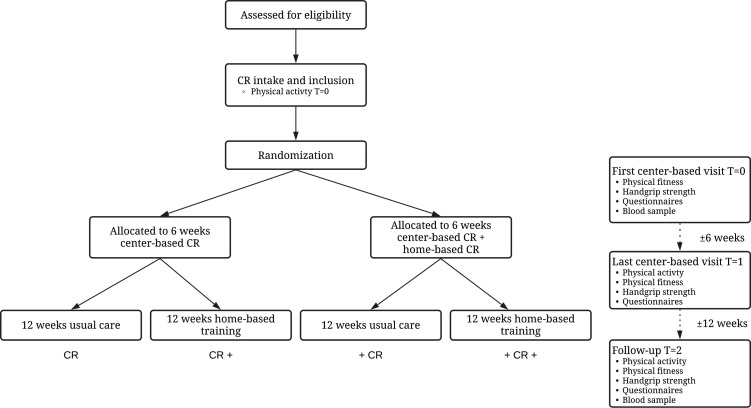
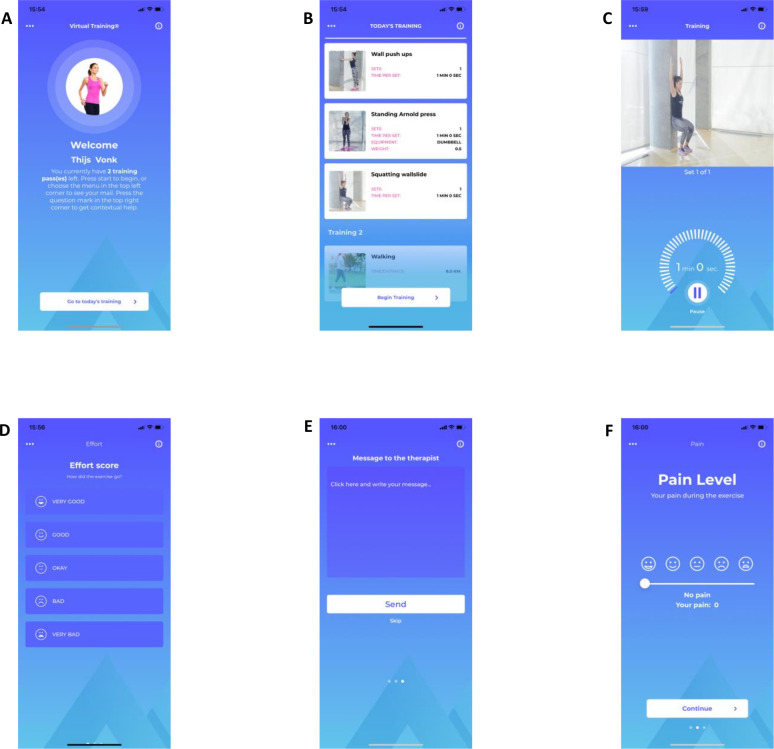
Many patients lapse into a physically inactive lifestyle within months after cardiac rehabilitation (CR) programme completion. A mobile-health (mHealth) home-based training application can be used to intensify and/or prolong the CR programme to induce long-lasting improvements of habitual physical activity levels. This study will assess the effect of an additional home-based training module during CR and post-CR on habitual physical activity levels among coronary artery disease patients. A total of 132 patients (>18 years old) will be recruited in an 18-week randomised controlled trial with four arms: (1) 6 weeks centre-based CR (ie, standard care), (2) 6 weeks combined centre-based+mHealth home-based CR, (3) 6 weeks centre-based CR followed by 12 weeks mHealth home-based CR, (4) 6 weeks combined centre-based+mHealth home-based CR followed by 12 weeks mHealth home-based CR. The intervention groups will receive a daily and personalised exercise training using a smartphone application (Virtual Training) in addition to and/or as extension of the centre-based CR programme. The participants will be assessed prior to the centre-based CR programme, after completion of the 6-week CR programme and after the 12 weeks extension. Primary outcome will be objectively measured habitual physical activity levels expressed as moderate to vigorous intensity activities (min/week). Secondary outcome parameters include sedentary behaviour, physical fitness (estimated VOmax), handgrip strength, cardiovascular risk profile, quality of life and cardiac anxiety scores. The findings of the Cardiac RehApp study will provide insight into the added value of a personalised mHealth home-based training application on physical activity levels during and after centre-based CR. Trial registration number: NL72182.091.019.
许多患者在完成心脏康复(CR)计划后的数月内就会陷入缺乏身体活动的生活方式。基于移动健康(mHealth)的家庭训练应用程序可用于强化和/或延长CR计划,以促使习惯性身体活动水平得到持久改善。本研究将评估在CR期间及CR后增加一个家庭训练模块对冠心病患者习惯性身体活动水平的影响。在一项为期18周的随机对照试验中,将招募总共132名年龄大于18岁的患者,试验分为四个组:(1)6周的中心式CR(即标准护理),(2)6周的中心式+基于mHealth的家庭式CR,(3)6周的中心式CR,随后是12周的基于mHealth的家庭式CR,(4)6周的中心式+基于mHealth的家庭式CR,随后是12周的基于mHealth的家庭式CR。干预组除了接受中心式CR计划之外和/或作为其扩展,还将使用智能手机应用程序(虚拟训练)接受每日个性化运动训练。将在中心式CR计划之前、6周CR计划完成后以及12周扩展期结束后对参与者进行评估。主要结局将客观测量以中度至剧烈强度活动表示的习惯性身体活动水平(分钟/周)。次要结局参数包括久坐行为、体能(估计的最大摄氧量)、握力、心血管风险状况、生活质量和心脏焦虑评分。心脏康复应用程序(Cardiac RehApp)研究的结果将深入了解个性化的基于mHealth的家庭训练应用程序对中心式CR期间及之后身体活动水平的附加价值。试验注册号:NL72182.091.019。