Peng Kai-Yen, Jiang Shih-Sheng, Lee Yu-Wei, Tsai Fang-Yu, Chang Chia-Chi, Chen Li-Tzong, Yen B Linju
Regenerative Medicine Research Group, Institute of Cellular & System Medicine, National Health Research Institutes (NHRI), Zhunan, Taiwan.
National Institute of Cancer Research, NHRI, Zhunan, Taiwan.
Front Oncol. 2021 Sep 10;11:716055. doi: 10.3389/fonc.2021.716055. eCollection 2021.
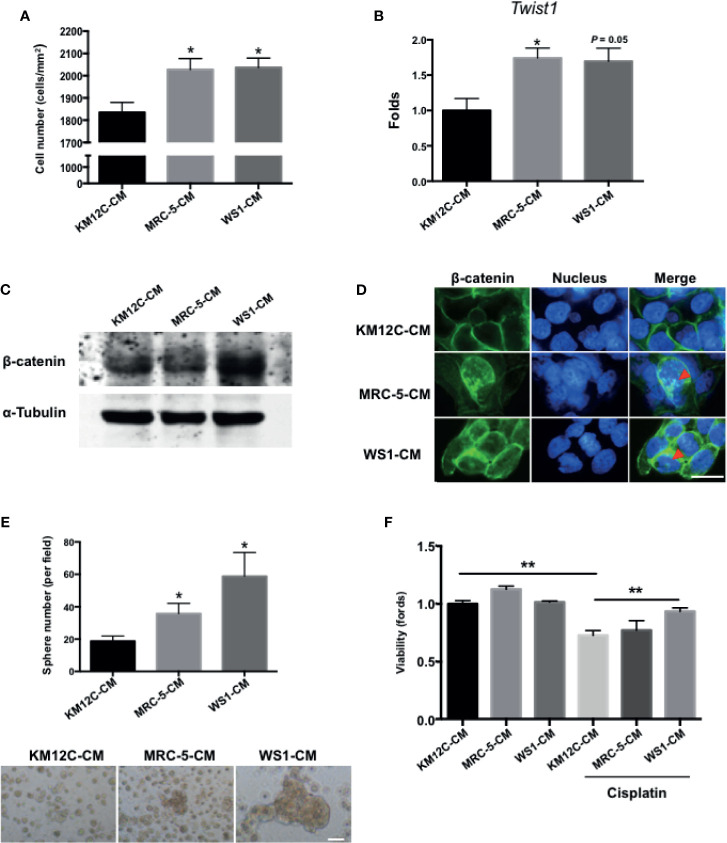
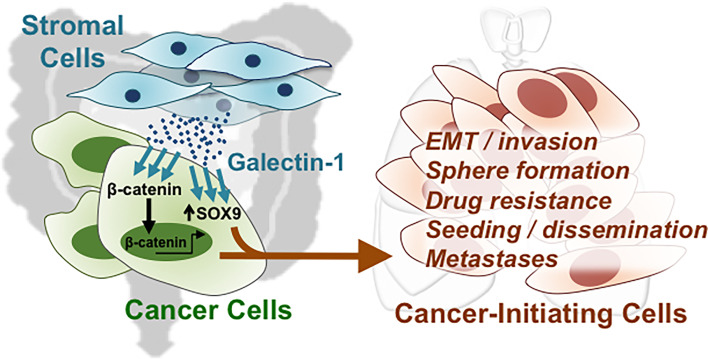
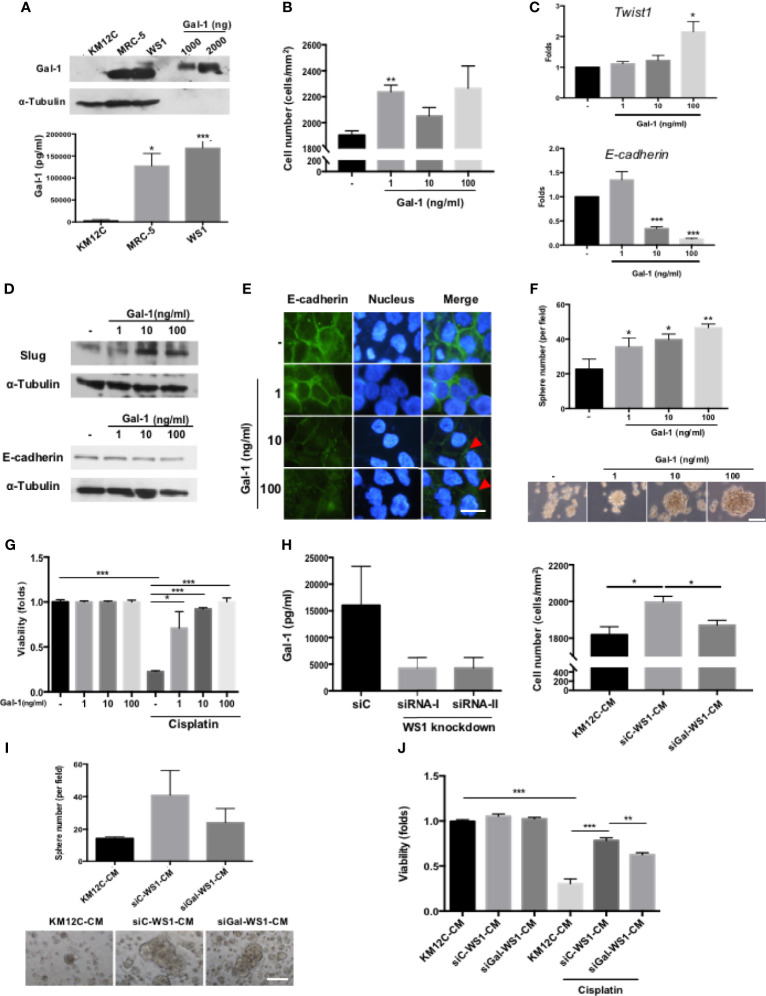
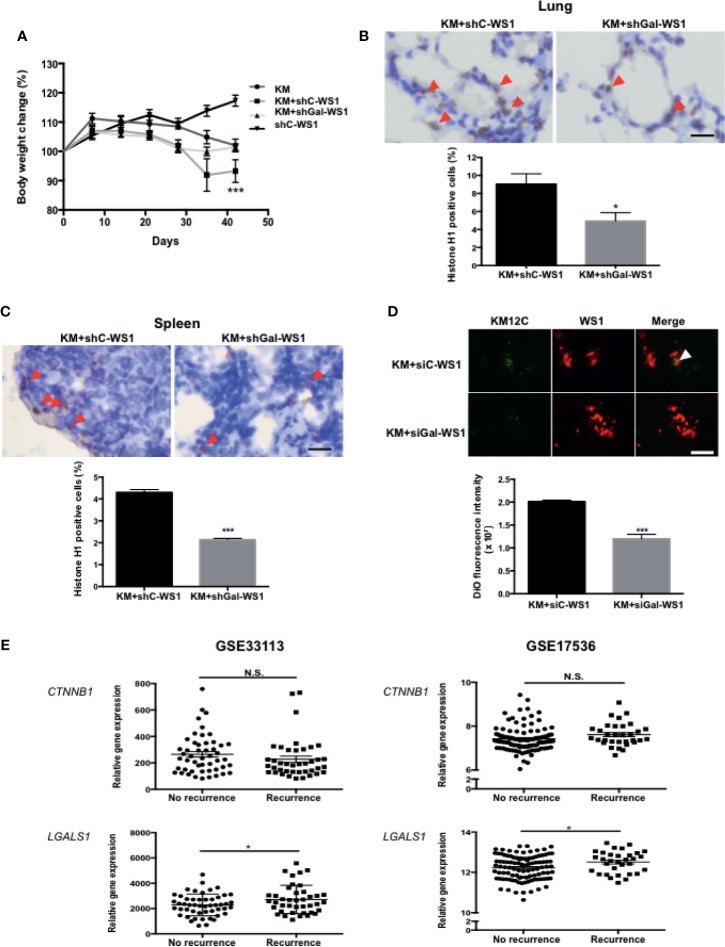
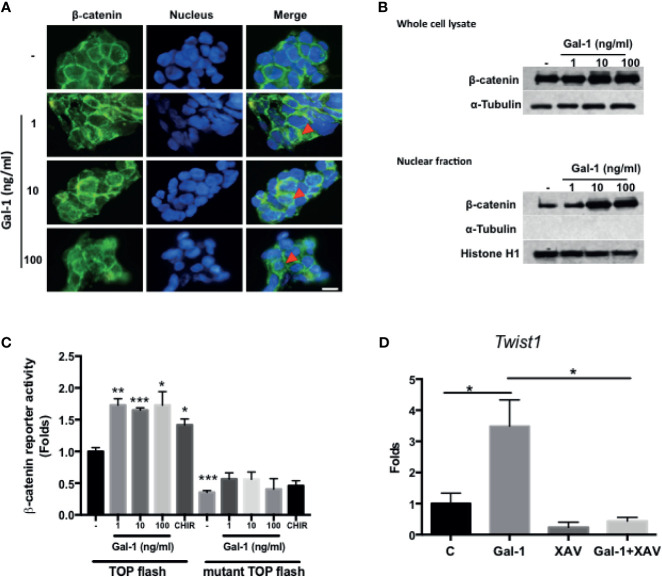
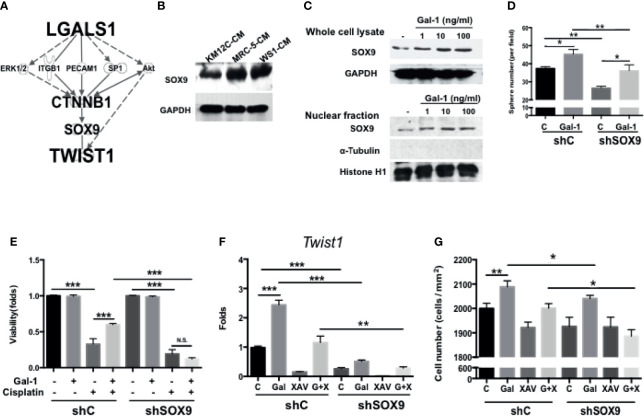
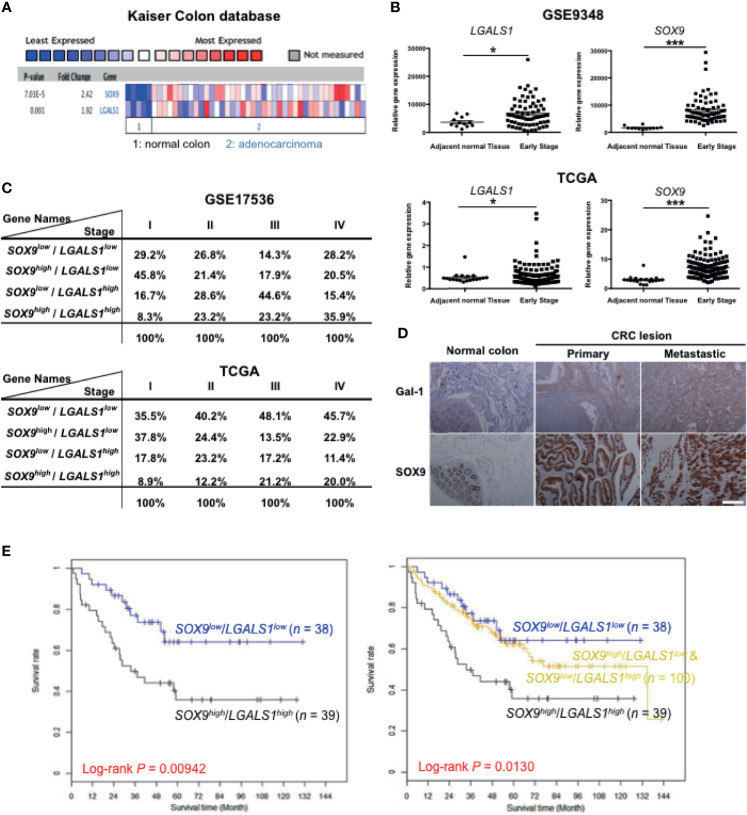
Over 90% of colorectal cancer (CRC) patients have mutations in the Wnt/β-catenin pathway, making the development of biomarkers difficult based on this critical oncogenic pathway. Recent studies demonstrate that CRC tumor niche-stromal cells can activate β-catenin in cancer-initiating cells (CICs), leading to disease progression. We therefore sought to elucidate the molecular interactions between stromal and CRC cells for the development of prognostically relevant biomarkers. Assessment of CIC induction and β-catenin activation in CRC cells with two human fibroblast cell-conditioned medium (CM) was performed with subsequent mass spectrometry (MS) analysis to identify the potential paracrine factors. assessment with the identified factor and validation using two mouse models of disease dissemination and metastasis was performed. Prediction of additional molecular players with Ingenuity pathway analysis was performed, with subsequent and translational validation using human CRC tissue microarray and multiple transcriptome databases for analysis. We found that fibroblast-CM significantly enhanced multiple CIC properties including sphere formation, β-catenin activation, and drug resistance in CRC cells. MS identified galectin-1 (Gal-1) to be the secreted factor and Gal-1 alone was sufficient to induce multiple CIC properties and disease progression in both mouse models. IPA predicted SOX9 to be involved in the Gal-1/β-catenin interactions, which was validated , with Gal-1 and/or SOX9-particularly Gal-1/SOX9 samples-significantly correlating with multiple aspects of clinical disease progression. Stromal-secreted Gal-1 promotes CIC-features and disease dissemination in CRC through SOX9 and β-catenin, with Gal-1 and SOX9 having a strong clinical prognostic value.
超过90%的结直肠癌(CRC)患者在Wnt/β-连环蛋白信号通路中存在突变,这使得基于这一关键致癌通路开发生物标志物变得困难。最近的研究表明,CRC肿瘤微环境中的基质细胞可激活癌症起始细胞(CIC)中的β-连环蛋白,从而导致疾病进展。因此,我们试图阐明基质细胞与CRC细胞之间的分子相互作用,以开发具有预后相关性的生物标志物。我们用两种人成纤维细胞条件培养基(CM)评估CRC细胞中的CIC诱导和β-连环蛋白激活情况,随后进行质谱(MS)分析以鉴定潜在的旁分泌因子。我们用鉴定出的因子进行评估,并使用两种疾病播散和转移的小鼠模型进行验证。我们用 Ingenuity 通路分析预测其他分子参与者,随后使用人CRC组织微阵列和多个转录组数据库进行分析和转化验证。我们发现,成纤维细胞CM显著增强了多种CIC特性,包括CRC细胞中的球形成、β-连环蛋白激活和耐药性。MS鉴定出半乳凝素-1(Gal-1)为分泌因子,单独的Gal-1足以在两种小鼠模型中诱导多种CIC特性和疾病进展。IPA预测SOX9参与Gal-1/β-连环蛋白相互作用,这一预测得到了验证,Gal-1和/或SOX9(特别是Gal-1/SOX9样本)与临床疾病进展的多个方面显著相关。基质分泌的Gal-1通过SOX9和β-连环蛋白促进CRC中的CIC特征和疾病播散,Gal-1和SOX9具有很强的临床预后价值。