Yang Dongmei, Li Qing, Shang Renduo, Yao Liwen, Wu Lianlian, Zhang Mengjiao, Zhang Lihui, Xu Ming, Lu Zihua, Zhou Jie, Huang Li, Huang Xiaodong, Cheng Du, Yang Yanning, Yu Honggang
Department of Gastroenterology, Renmin Hospital of Wuhan University, Wuhan, 430060, China.
Hubei Key Laboratory of Digestive System Disease, Renmin Hospital of Wuhan University, Wuhan, 430060, China.
J Exp Clin Cancer Res. 2020 Nov 23;39(1):251. doi: 10.1186/s13046-020-01774-w.
Wingless and Int-related protein (Wnt) ligands are aberrantly expressed in patients with colorectal cancer (CRC). However, the aberrant level of Wnt ligands in serum have not been explored. Here, we aimed to identify the levels of WNT4 in serum and explored its oncogenic role in CRC.
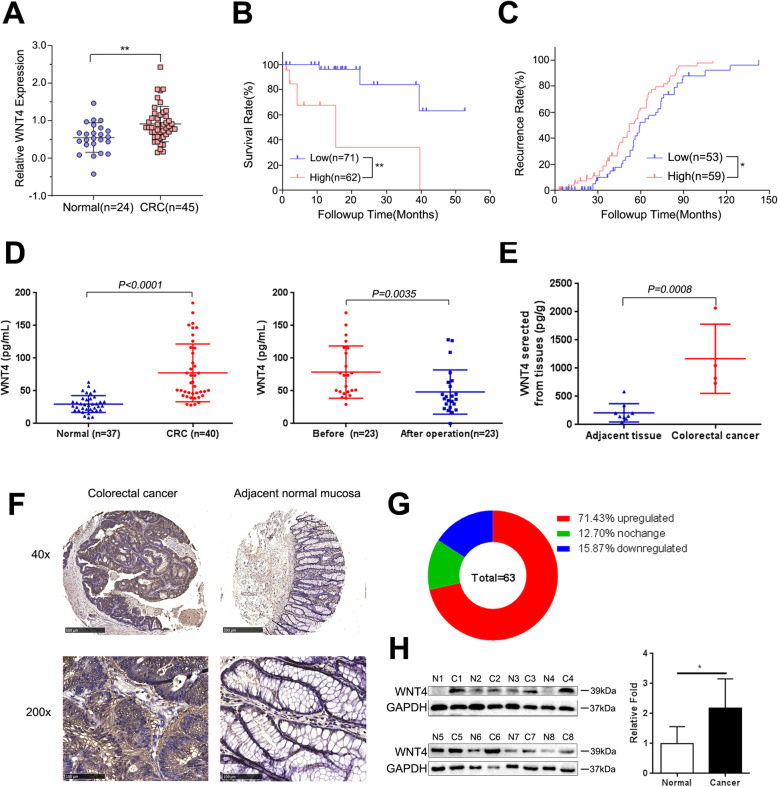
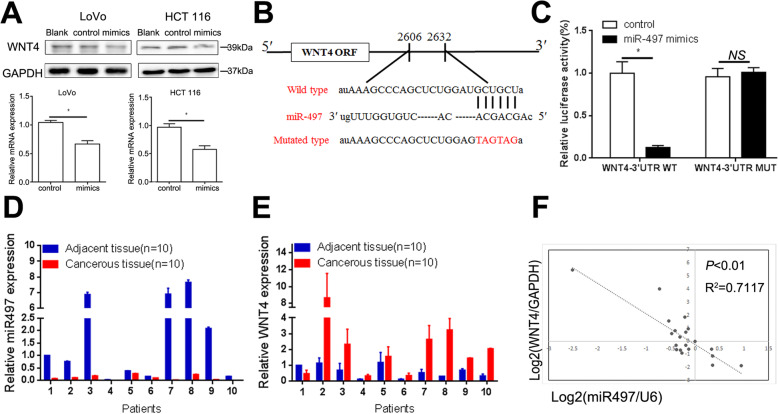
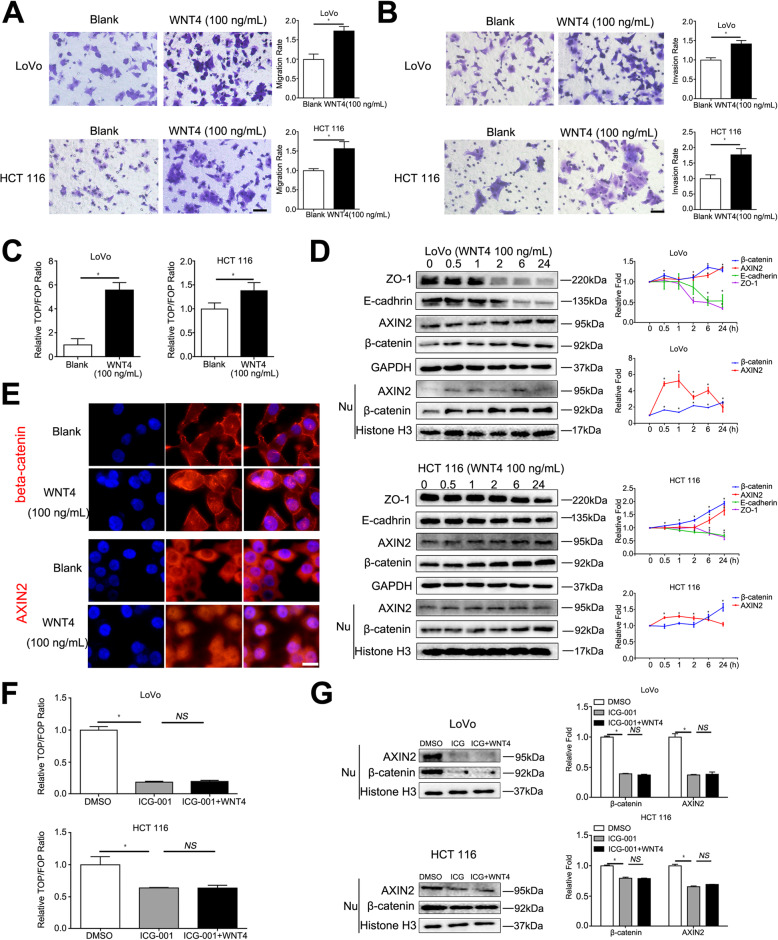
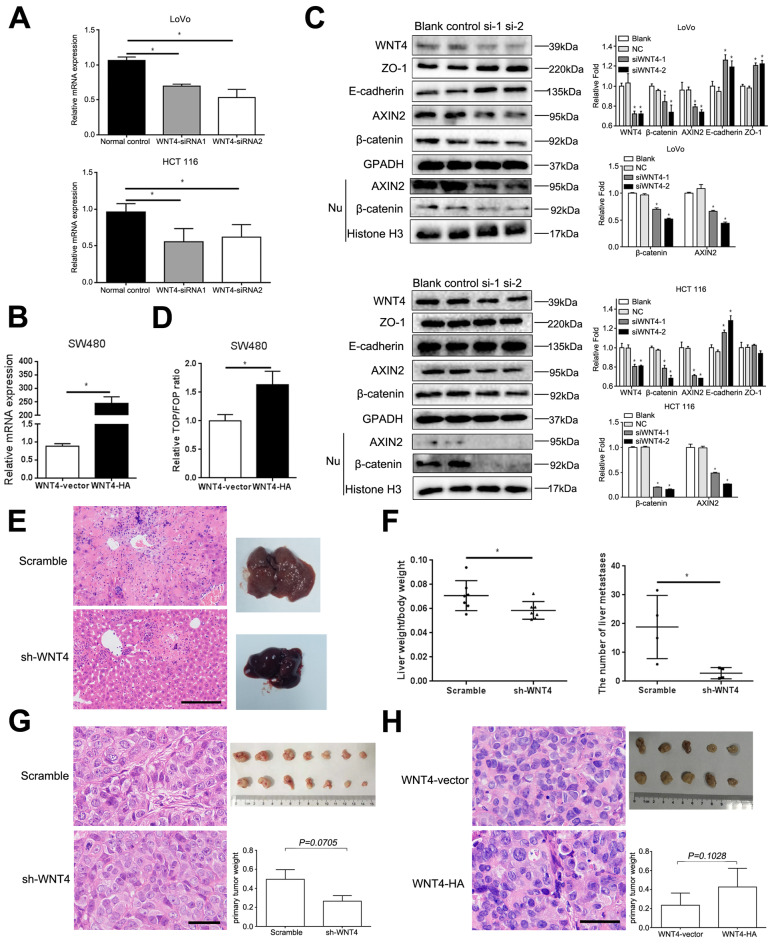
The Oncomine database was used to analyze the relationship between WNT4 and the prognosis of CRC. ELISA was performed to measure WNT4 levels in serum and conditioned medium from fresh CRC tissues and adjacent normal tissues. Western blot and immunohistochemistry were carried out to measure the expression of WNT4 in human CRC tissues and adjacent normal tissues. The migration and invasion of CRC cells were determined by trans-well assay, and the effects of WNT4 on CRC invasion and metastasis in vivo were verified by tumor xenograft in nude mice. Cancer-associated fibroblasts (CAFs) and angiogenesis in subcutaneous nodules were detected by immunofluorescence (IF). In addition, the suspended spheres formation and tube formation assay were performed to explore the effects of WNT4 on CAFs and angiogenesis respectively.
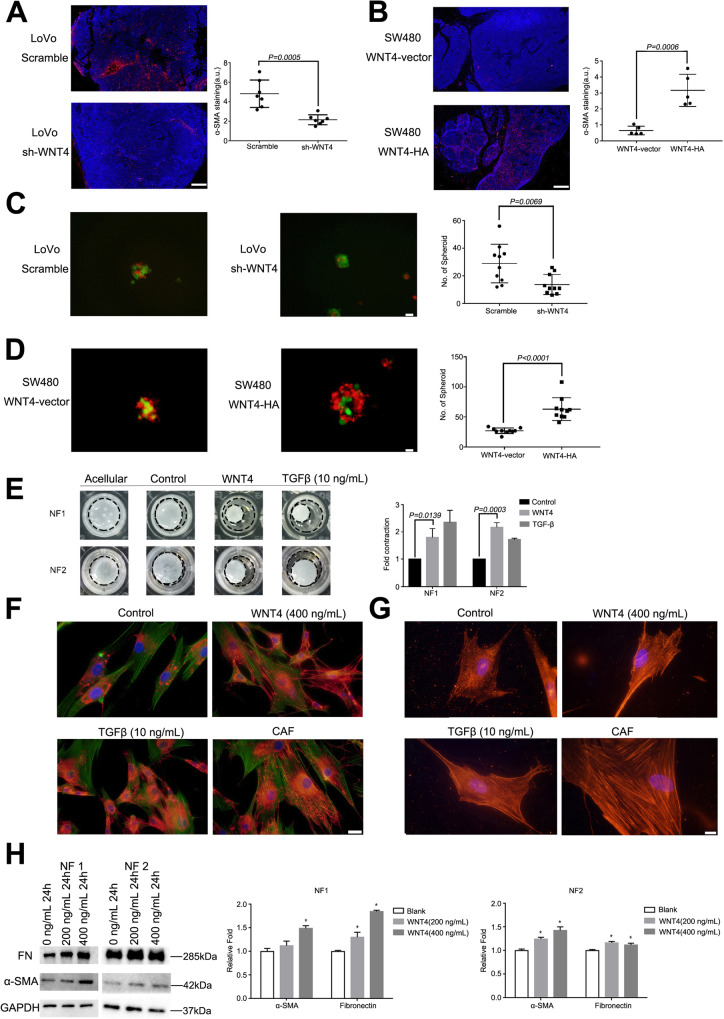
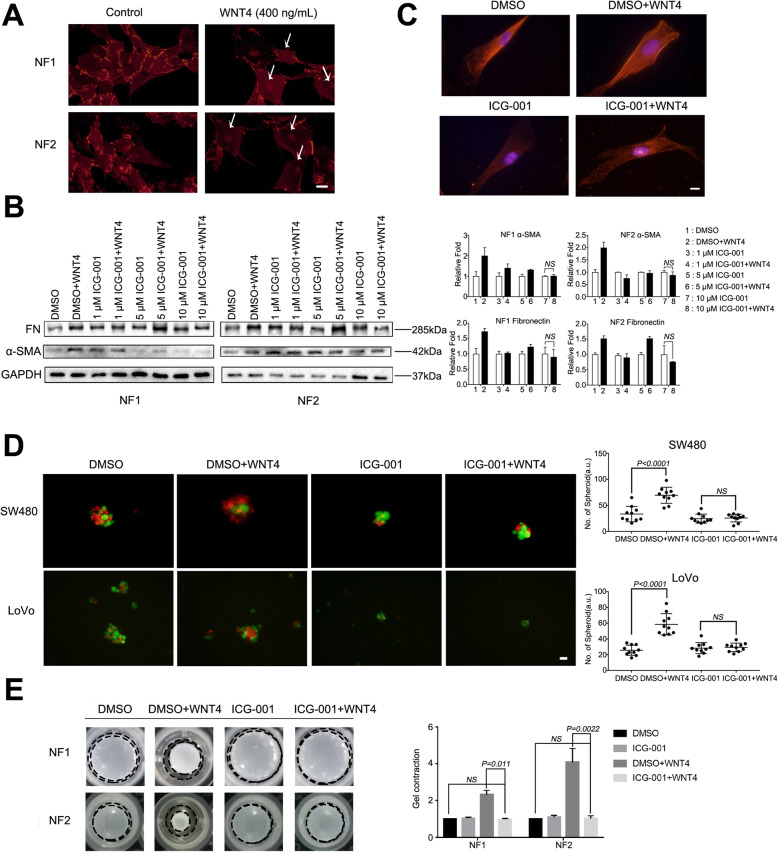
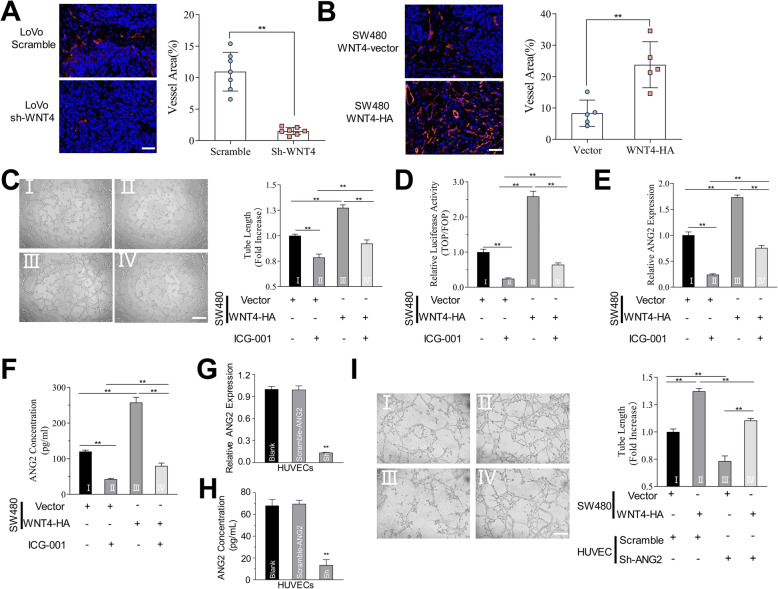
WNT4 was significantly upregulated in serum of CRC patients, and CRC tissues were identified as an important source of elevated WNT4 levels in CRC patients. Interestingly, elevated levels of WNT4 in serum were downregulated after tumor resection. Furthermore, we found that WNT4 contributed to epithelial-to-mesenchymal transition (EMT) and activated fibroblasts by activating the WNT4/β-catenin pathway in vitro and in vivo. Moreover, angiogenesis was induced via the WNT4/β-catenin/Ang2 pathway. Those effects could be reversed by ICG-001, a β-catenin/TCF inhibitor.
Our findings indicated that serum levels of WNT4 may be a potential biomarker for CRC. WNT4 secreted by colorectal cancer tissues promote the progression of CRC by inducing EMT, activate fibroblasts and promote angiogenesis through the canonical Wnt/β-catenin signalling pathway.
无翅型MMTV整合位点家族(Wnt)配体在结直肠癌(CRC)患者中异常表达。然而,血清中Wnt配体的异常水平尚未得到研究。在此,我们旨在确定血清中WNT4的水平,并探讨其在CRC中的致癌作用。
使用Oncomine数据库分析WNT4与CRC预后的关系。采用酶联免疫吸附测定(ELISA)检测新鲜CRC组织及癌旁正常组织血清和条件培养基中WNT4水平。进行蛋白质免疫印迹法(Western blot)和免疫组织化学检测人CRC组织及癌旁正常组织中WNT4的表达。采用Transwell实验检测CRC细胞的迁移和侵袭能力,并通过裸鼠肿瘤异种移植实验验证WNT4对CRC体内侵袭和转移的影响。通过免疫荧光(IF)检测皮下结节中的癌症相关成纤维细胞(CAF)和血管生成。此外,分别进行悬浮球形成实验和管形成实验,以探讨WNT4对CAF和血管生成的影响。
CRC患者血清中WNT4显著上调,CRC组织被确定为CRC患者血清中WNT4水平升高的重要来源。有趣的是,肿瘤切除后血清中升高的WNT4水平下调。此外,我们发现WNT4在体外和体内通过激活WNT4/β-连环蛋白信号通路促进上皮-间质转化(EMT)并激活成纤维细胞。此外,通过WNT4/β-连环蛋白/血管生成素2(Ang2)信号通路诱导血管生成。这些作用可被β-连环蛋白/转录因子(TCF)抑制剂ICG-001逆转。
我们的研究结果表明,血清WNT4水平可能是CRC的潜在生物标志物。结直肠癌组织分泌的WNT4通过诱导EMT促进CRC进展,通过经典的Wnt/β-连环蛋白信号通路激活成纤维细胞并促进血管生成。