Lazzari Lorenzo, Ruggeri Annalisa, Lupo Stanghellini Maria Teresa, Mastaglio Sara, Messina Carlo, Giglio Fabio, Lorusso Alessandro, Perini Tommaso, Piemontese Simona, Marcatti Magda, Lorentino Francesca, Xue Elisabetta, Clerici Daniela, Corti Consuelo, Bernardi Massimo, Assanelli Andrea, Greco Raffaella, Ciceri Fabio, Peccatori Jacopo
Haematology and Bone Marrow Transplant Unit, IRCCS San Raffaele Scientific Institute, Milan, Italy.
Department of Hematology, Oncology and Tumor Immunology, Charité-Universitätsmedizin Berlin, Berlin,Germany.
Front Oncol. 2021 Sep 10;11:731478. doi: 10.3389/fonc.2021.731478. eCollection 2021.
Reducing toxicities while preserving efficacy in allogeneic stem cell transplant (allo-HCT) remains a particularly challenging problem. Different strategies to enhance the antitumor activity without increasing early and late adverse toxicities of the conditioning regimens have been investigated.
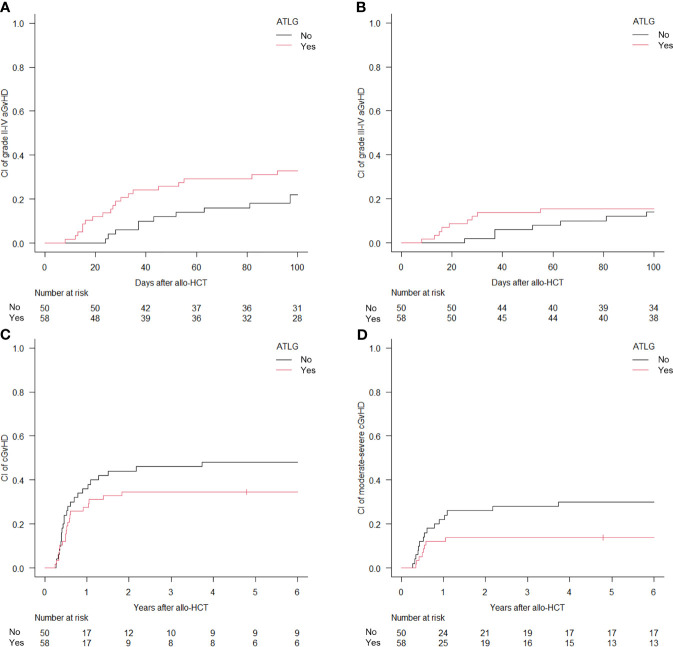
The aim of "AlloTreo" prospective phase 2 clinical trial was to evaluate the efficacy and safety of a conditioning regimen based on Treosulfan (42 g/m) and fludarabine (https://clinicaltrials.gov/ct2/show/NCT00598624). We enrolled 108 patients with hematological diseases who received a first allo-HCT between June 2005 and January 2011, inside the frame of this trial at our center. Median age at allo-HCT was 49 (21-69) years. Disease Risk Index was low in 14 (13%) patients, intermediate in 73 (67.7%), high in 17 (15.7%), and very high in 4 (3.7%). Donors were human leukocyte antigen (HLA)-matched related in 50 cases, 10/10-matched unrelated in 36, and 9/10-mismatched unrelated in 22. Graft--host disease (GvHD) prophylaxis consisted of cyclosporine-A and methotrexate. Anti-T-lymphocyte globulin (ATLG) was administered in patients receiving unrelated allo-HCT. Stem cell source was mainly peripheral blood stem cells (95%).
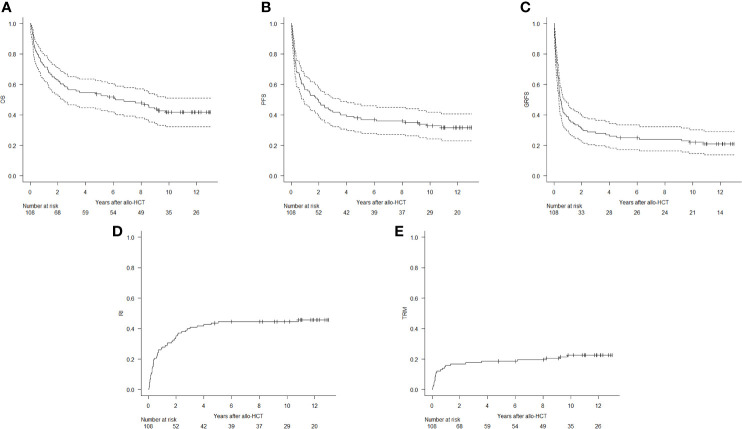
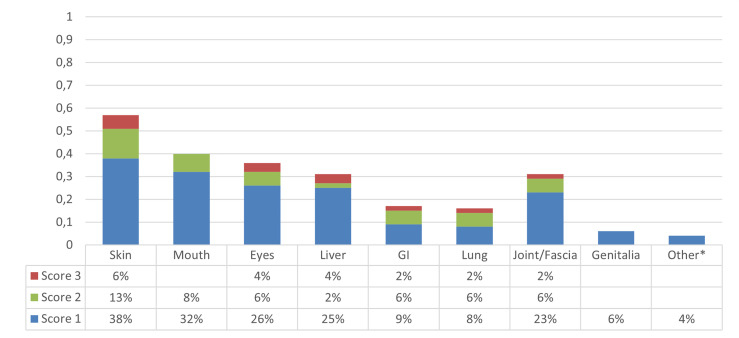
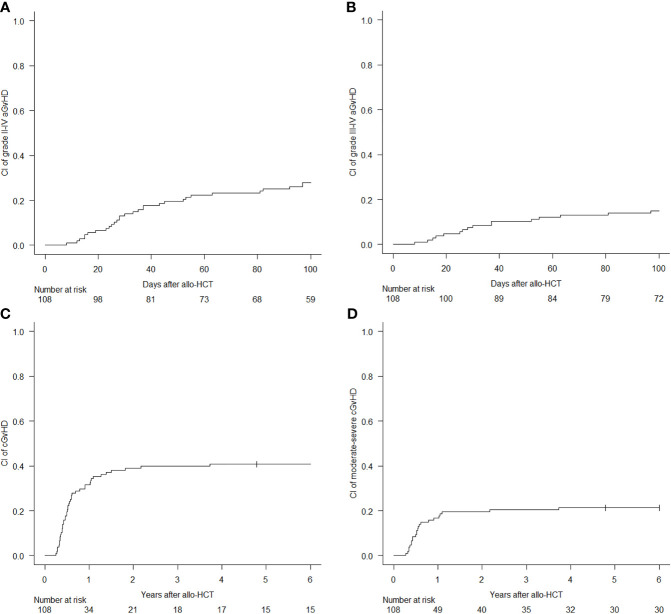
Conditioning regimen was well tolerated. Full donor chimerism was documented for most patients (88%) at day +30. At 12 years, overall survival (OS) was 41.7% (32.2%-50.9%), progression-free survival (PFS) was 31.7% (23%-40.7%), GvHD-free/relapse-free survival was 20.9% (13.7%-29.1%), cumulative incidence (CI) of relapse was 44.5% (34.9%-53.6%), and transplant-related mortality (TRM) was 22.5% (15.1%-30.9%). CI of acute GvHD grades II-IV was 27.8% (19.7%-36.5%) at 100 days; 12-year CI of chronic GvHD was 40.7% (31.3%-49.9%). Relevant long-term adverse effects were 10 secondary malignancy, 3 fatal cardiovascular events, and 1 late-onset transplant-associated thrombotic microangiopathy. Ten successful pregnancies were reported after allo-HCT. In multivariate analysis, older age (≥60 years) at transplant [hazard ratio (HR), 2.157; p = 0.004] and a high/very high disease risk index (HR, 1.913; p = 0.026) were significantly associated with a lower OS.
Overall, our data confirmed the myeloablative potential and safe toxicity profile of full dose Treo (42 g/m) especially for the younger population.
在异基因干细胞移植(allo-HCT)中,在保持疗效的同时降低毒性仍然是一个特别具有挑战性的问题。人们已经研究了不同的策略来增强抗肿瘤活性,同时不增加预处理方案的早期和晚期不良毒性。
“AlloTreo”前瞻性2期临床试验的目的是评估基于曲奥舒凡(42 g/m²)和氟达拉滨的预处理方案的疗效和安全性(https://clinicaltrials.gov/ct2/show/NCT00598624)。在本试验框架内,我们中心纳入了108例血液系统疾病患者,他们在2005年6月至2011年1月期间接受了首次allo-HCT。allo-HCT时的中位年龄为49(21-69)岁。疾病风险指数低的患者有14例(13%),中等的有73例(67.7%),高的有17例(15.7%),非常高的有4例(3.7%)。供者为人类白细胞抗原(HLA)匹配的亲属50例,10/10匹配的非亲属36例,9/10不匹配的非亲属22例。移植物抗宿主病(GvHD)预防方案包括环孢素A和甲氨蝶呤。接受非亲属allo-HCT的患者给予抗T淋巴细胞球蛋白(ATLG)。干细胞来源主要是外周血干细胞(95%)。
预处理方案耐受性良好。大多数患者(88%)在+30天时实现了完全供者嵌合。12年时,总生存率(OS)为41.7%(32.2%-50.9%),无进展生存率(PFS)为31.7%(23%-40.7%),无GvHD/无复发生存率为20.9%(13.7%-29.1%),复发累积发生率(CI)为44.5%(34.9%-53.6%),移植相关死亡率(TRM)为22.5%(15.1%-30.9%)。100天时急性II-IV级GvHD的CI为27.8%(19.7%-36.5%);慢性GvHD的12年CI为40.7%(31.3%-49.9%)。相关的长期不良反应包括10例继发性恶性肿瘤、3例致命心血管事件和1例迟发性移植相关血栓性微血管病。allo-HCT后报告了10例成功妊娠。多因素分析显示,移植时年龄较大(≥60岁)[风险比(HR),2.157;p = 0.004]和疾病风险指数高/非常高(HR,1.913;p = 0.026)与较低的OS显著相关。
总体而言,我们的数据证实了全剂量曲奥舒凡(42 g/m²)的清髓潜力和安全的毒性特征,尤其适用于年轻人群。